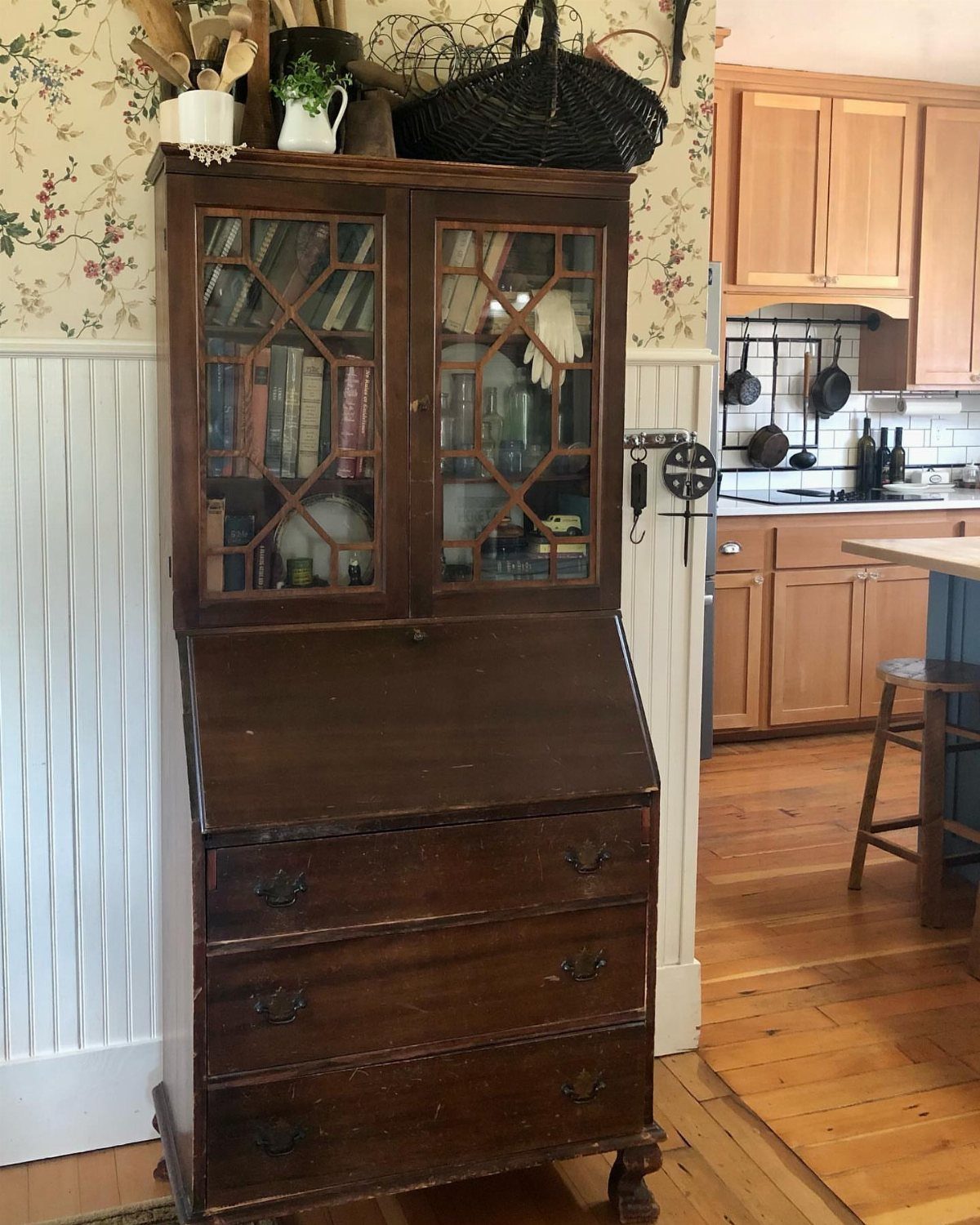
When you close the drop-front, the whole piece reads as a cabinet rather than a workspace, so it fits into a living room or bedroom without turning the corner into an office.
You’ll find them in painted finishes and light wood, in mahogany with bonnet tops and burl veneer, with the upper section holding books behind glass doors, pottery on open shelves or supplies behind solid panels.
1. Secretary Desk with Hutch
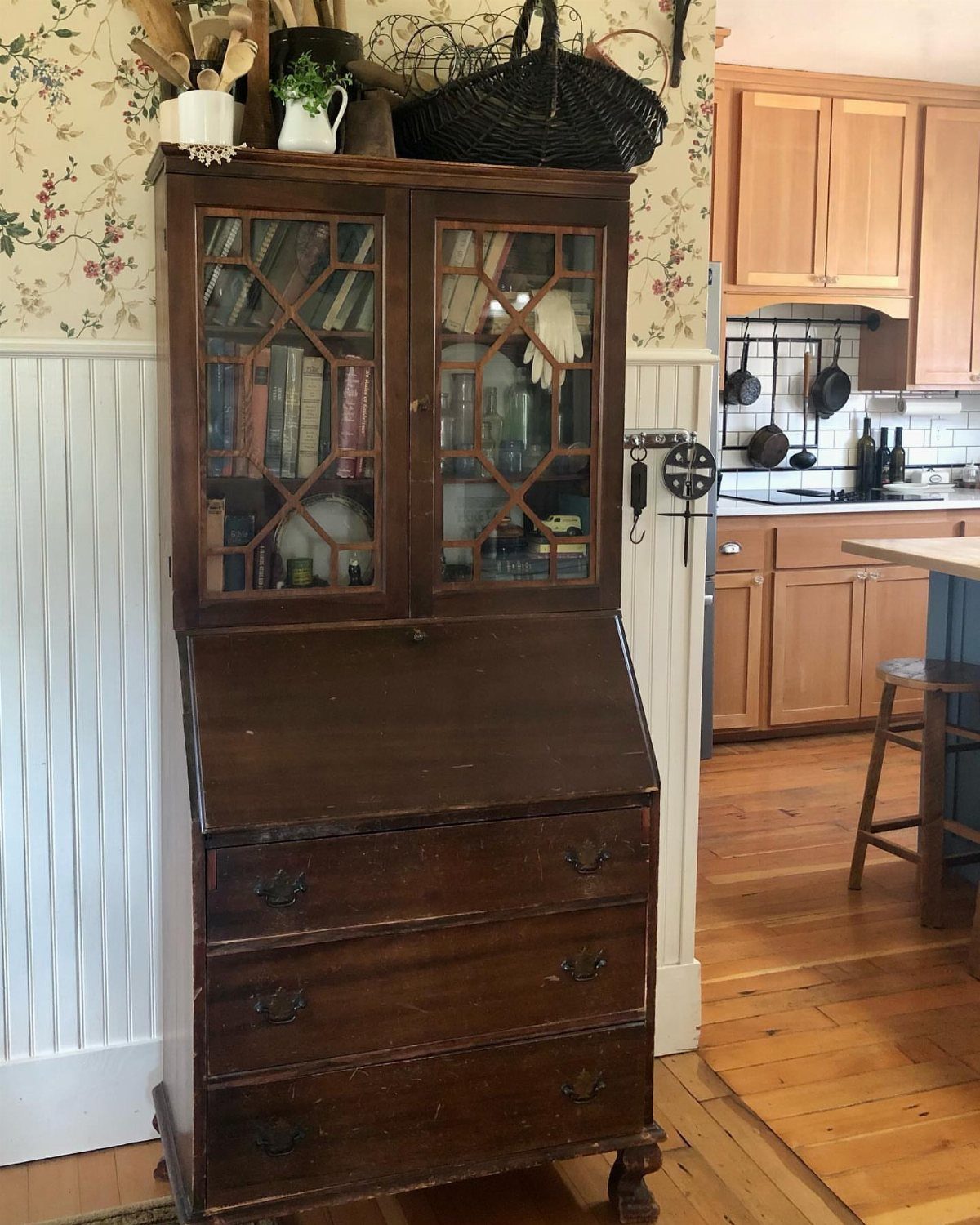
A drop-down writing surface folds out from the lower cabinet, and the upper hutch holds books, papers or display pieces behind glass or open shelves.
The two-tier form gives you a compact workspace that closes up completely when you’re done, which makes it a good fit for a living room, hallway or bedroom where you need a desk that doesn’t announce itself all day.
Look for solid construction in the hinges and supports that hold the writing surface; those see the most wear. The hutch should sit stable on the base without rocking.
2. Secretary with Glass Hutch
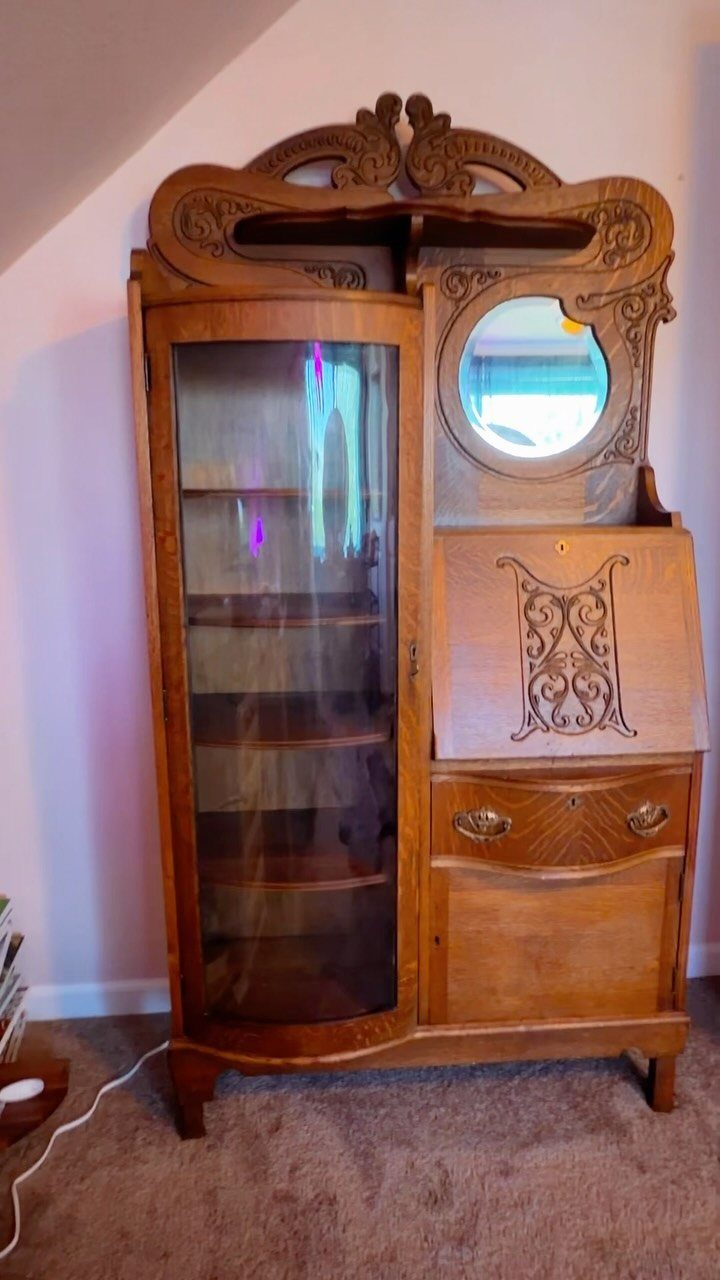
Glass doors or panes in the upper hutch let you display pottery, books or glassware without dust settling on them.
The glazing can be flat, curved or divided into small panes by wooden muntins, and curved glass usually signals a piece from the late Victorian or Edwardian era.
Check the glass for cracks and the wood frame for loose joints when you inspect a piece. Original wavy glass adds character, but replacement panes are easier to source if one breaks.
3. Chippendale Secretary

Chippendale secretaries typically feature carved details, cabriole legs and ball-and-claw feet, with proportions that read as more vertical than wide. The style dates to the mid-18th century, though reproductions were common in the early 20th.
The writing surface often has a leather or felt inset, which you can replace if it’s worn. Drawers below the desk hold files or supplies, and the hutch interior may have small cubbies for sorting mail or organizing pens.
4. Drop-front Secretary

The hinged front drops down to form the writing surface, supported by chains, sliding rails or pull-out supports called lopers. When closed, the front hides the desk interior completely, which keeps your workspace tidy without any extra effort.
Make sure the hinges work smoothly and the lopers extend evenly on both sides.
Uneven support can stress the hinges over time. Interior cubbies and small drawers help sort mail, stamps or office supplies.
5. Painted Secretary Desk

A painted finish, whether original or added later, changes the look from traditional wood to something lighter or more colorful.
If you’re repainting a piece yourself, sand lightly, prime and use a durable furniture paint or chalk paint with a topcoat. Gold or brass hardware stands out well against darker paint colors.
6. Empire Secretary Desk

Empire secretaries favor bold proportions, dark mahogany or cherry, and decorative details like gilt stenciling, brass mounts or carved columns flanking the hutch doors.
The style leans formal, which makes it a good match for a traditional home office or study.
The lower desk section often includes a single wide drawer, and the hutch may have solid or glass-fronted doors. Upholstery on a matching stool can be replaced if worn, and new fabric updates the look without changing the wood.
7. Mahogany Secretary

Mahogany gives a reddish-brown color that darkens to a deeper tone with age and polish. The wood takes detail well, so many mahogany secretaries have carved moldings or turned legs.
The finish usually shows a high gloss, which needs occasional waxing to stay smooth. Scratches show more on dark wood, but light sanding and touch-up pens work for minor marks.
8. Bonnet-top Secretary

The curved pediment at the top, called a bonnet or scroll top, rises in a rounded or broken arch above the hutch doors. It can sit centered or have a finial at the peak.
This detail adds height and formality, so the piece reads best in a room with tall ceilings.
Versions with a full arch close the curve completely; broken-arch bonnets leave the center open, which lets you display a small object or urn on the flat section behind it.
9. Slant-top Desk
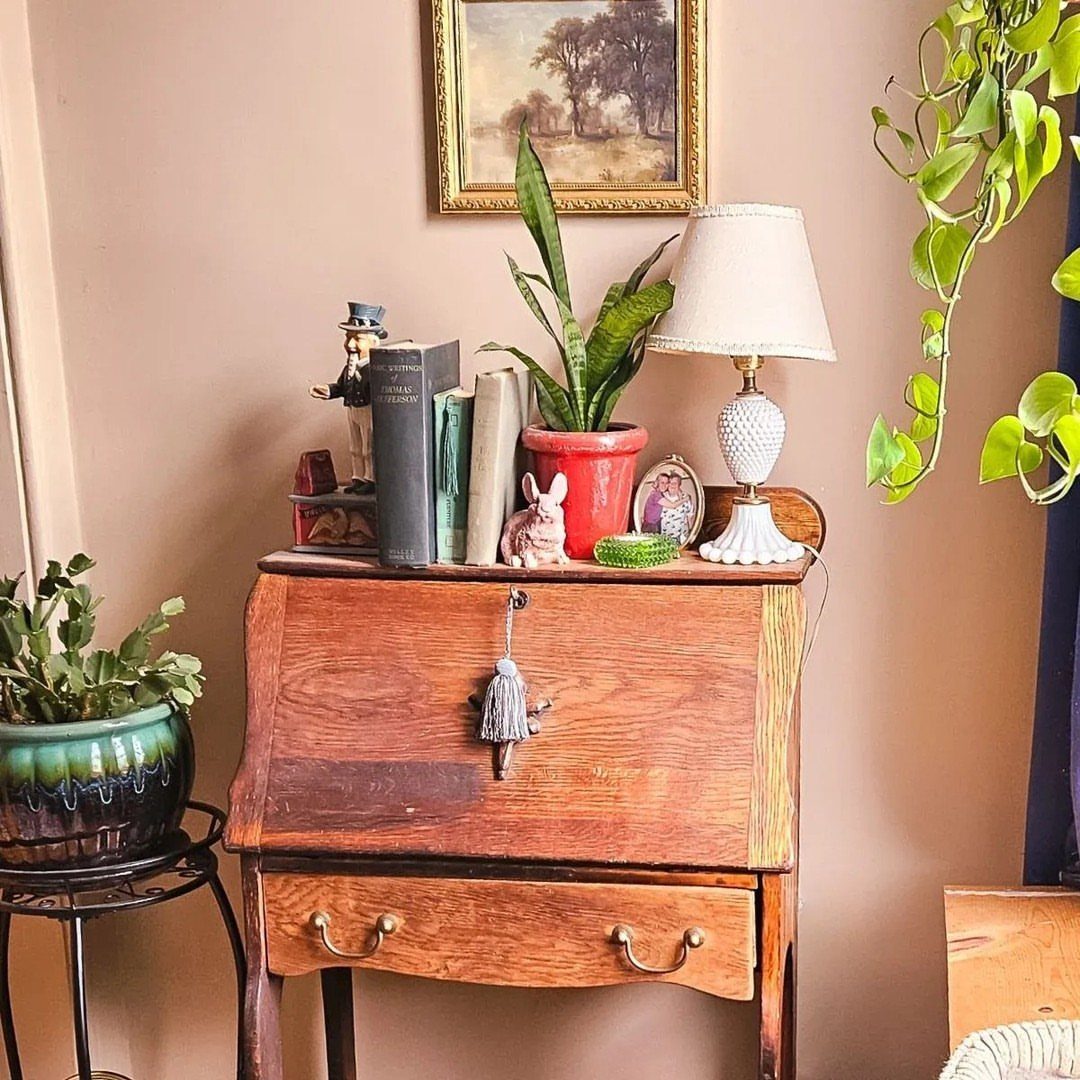
A slant-front desk without an upper hutch opens to a writing surface and interior compartments but stays low enough to sit under a window or fit in a room with limited wall height.
The angled lid lifts up to reveal cubbies and small drawers for sorting papers.
When closed, the desktop stays clear for a lamp or books. This version works well in a bedroom or entryway where you need a desk but not the full height of a hutch.
10. Louis XVI Secretary
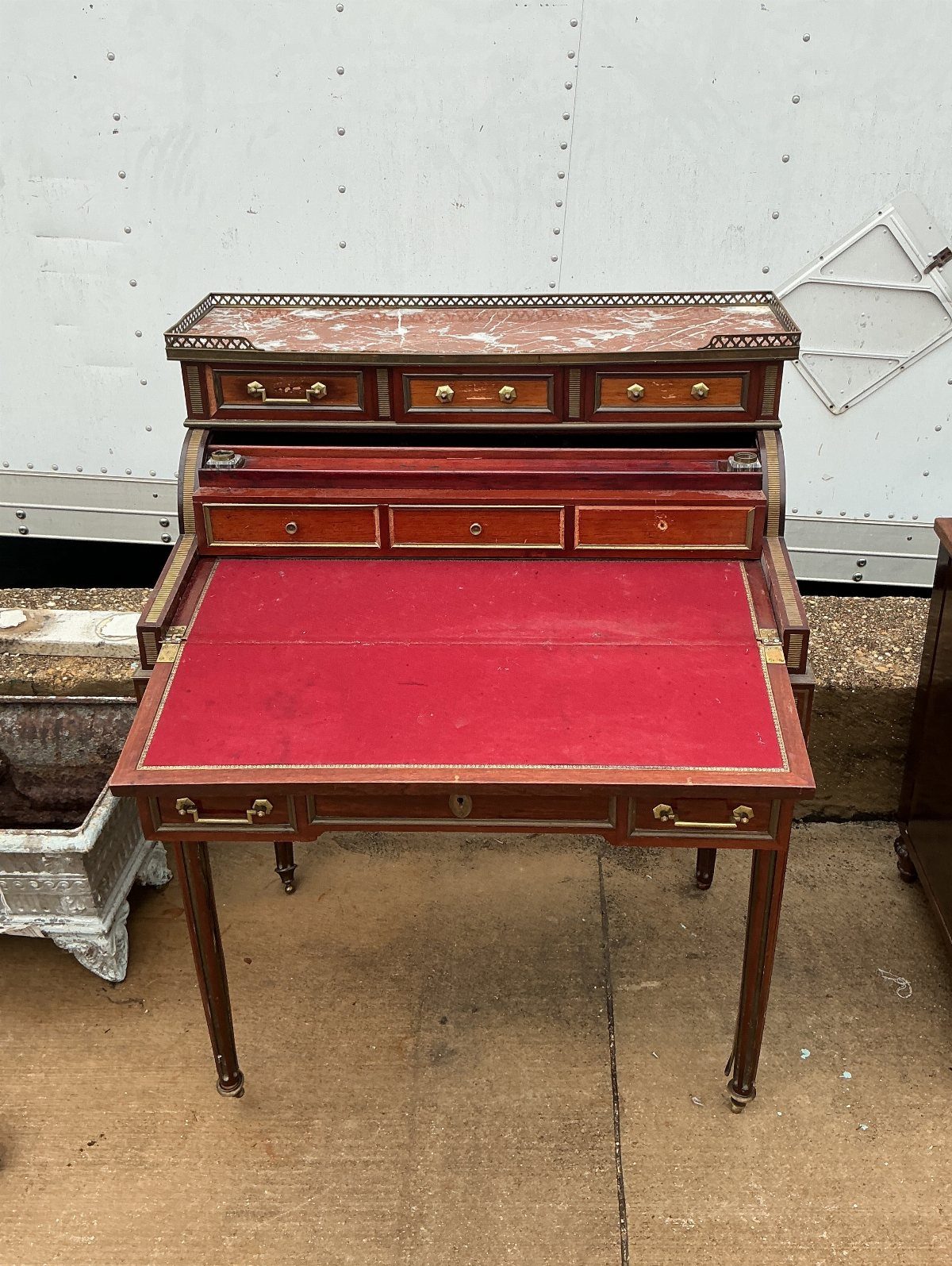
Louis XVI secretaries favor straight lines, tapered legs and restrained ornament, which gives them a lighter profile than earlier French styles. The look leans neater and more geometric than rococo curves.
Marble tops were common, as were brass gallery rails around the upper shelf. The writing surface can be inset with leather or felt, and replacements are straightforward if the original is torn or stained.
11. Chinoiserie Secretary

Chinoiserie finishes layer painted scenes, often in gold or bright colors over a dark or pale ground, with motifs like pagodas, birds and flowering branches.
The decoration can cover the whole piece or sit as panels on the doors and drawer fronts.
The style mixes well with other furniture when the room has one or two bold pieces rather than matching sets. Hardware in brass or gold fits the finish better than silver or chrome.
12. Federal Secretary

Federal secretaries use inlay, veneers and thin proportions rather than heavy carving. The wood is often mahogany or cherry, with lighter wood inlaid as stringing or small motifs around drawer fronts and door panels.
Brass pulls and escutcheons are small and geometric.
The lines stay narrow, so the piece fits well in a hallway or small office. Drawers below the writing surface usually have dividers for files or supplies.
13. Renaissance Revival Secretary

Heavy carving and burl panels give this style its formal weight. The Renaissance Revival period favored architectural details like columns, pediments and medallions pressed into the woodwork, and walnut was the common choice.
A soft brush works better than a cloth for cleaning the carved details since they collect dust.
Burl veneer on drawer fronts and door panels can lift at the edges if the glue dries out; a furniture restorer can re-glue loose sections before they peel further.
14. Bombé-front Secretary

The lower drawers curve outward in a swell called a bombé front, which adds volume to the same footprint. The shape is associated with French and Dutch cabinetmaking from the 18th century, though many examples date to later reproductions.
The curve makes the drawers harder to fit and harder to replace, so check that they slide smoothly when you look at one.
A piece with a bombé base and a flat-front upper hutch mixes 2 profiles, which can look unbalanced if the proportions don’t match, but a well-made example reads as intentional rather than mismatched.
15. Eastlake Secretary

Flat panels, incised lines and geometric shapes mark the Eastlake style, which rejected the heavy carving of earlier Victorian furniture in favor of surface decoration that stayed close to the wood.
Walnut and burl veneer were typical, and the hardware leans toward brass pulls with angular shapes.
The open hutch shelves let you reach books and supplies without opening doors, which makes the desk more practical for daily use.
Burl panels can show checking or small cracks as the wood ages; these are cosmetic and don’t affect the structure, but a furniture wax helps minimize their appearance.
16. French Carved Oak Secretary
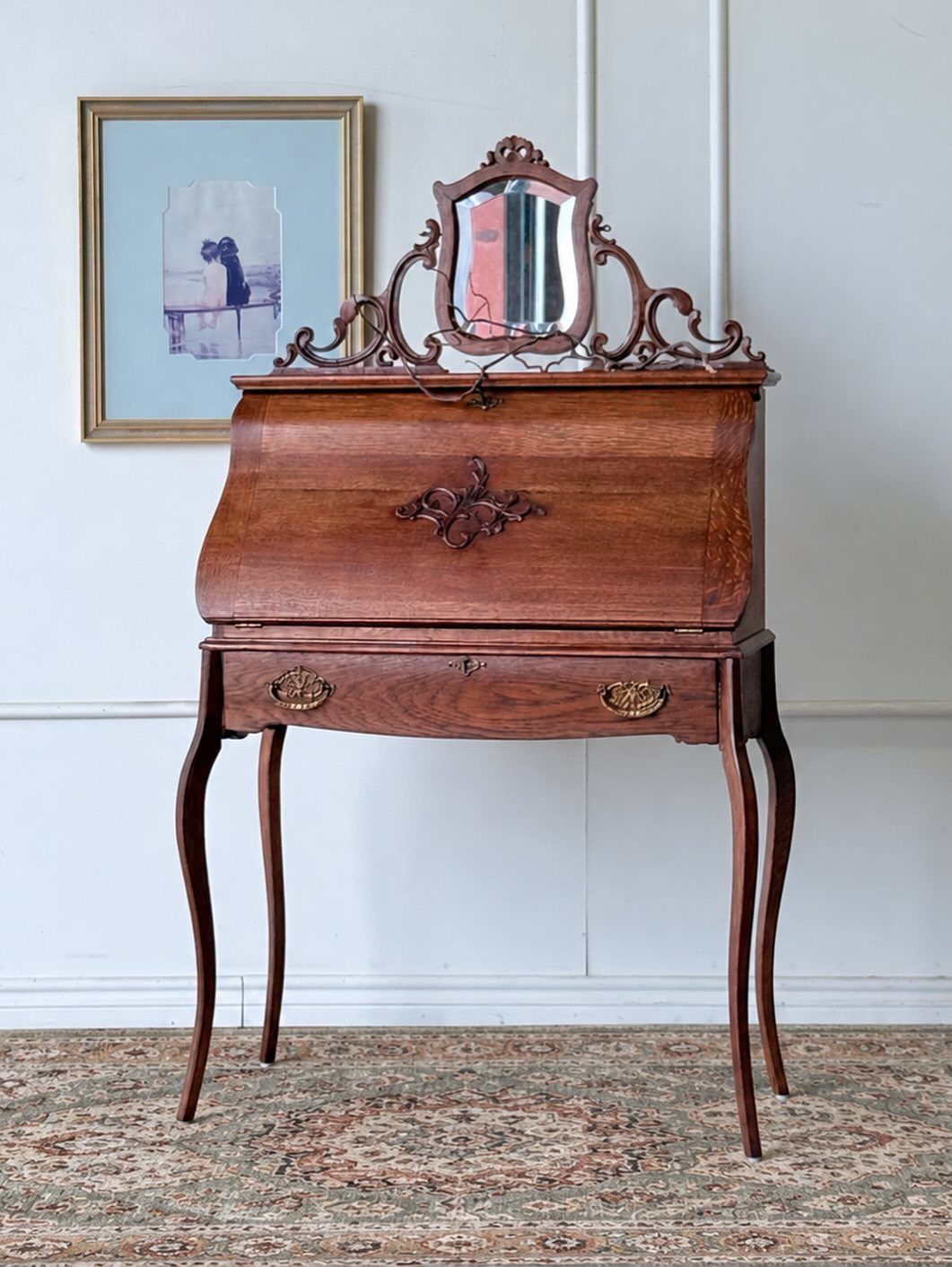
Carved oak secretaries from France, often in the Louis XV style, feature cabriole legs, shaped aprons and relief carving on the drawer fronts and hutch doors.
A small mirror or gallery shelf at the top adds display space for a vase or clock.
Oak is harder and heavier than mahogany, so the piece stays stable but takes more effort to move.
The curved legs can make the desk wobble on uneven floors, so shims or felt pads help if the room has an old foundation or wide plank floors that have settled.
17. Secretary with Kneehole
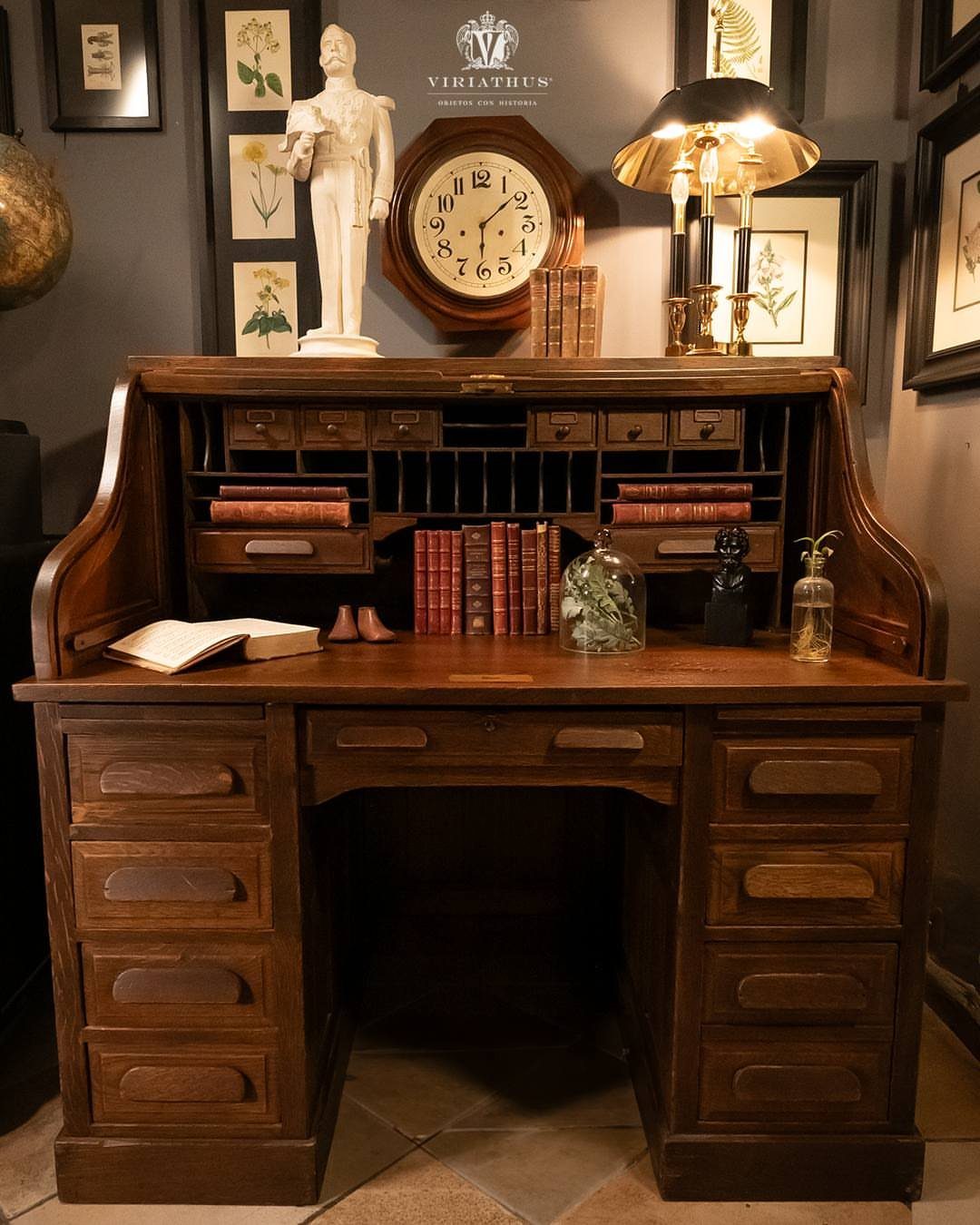
The open space in the center of the lower section lets you sit at the desk without your knees hitting a drawer front.
This layout suits someone who plans to use the desk for writing or computer work rather than just storage, since it gives room to pull a chair in close.
The kneehole is usually flanked by stacks of drawers on each side, which keeps storage capacity high. Desks with this feature tend to be wider than drop-front versions, so measure your wall space before you commit to one.
18. Secretary with Mirrored Doors

Mirrors in place of wood or glass on the hutch doors bounce light around the room and make the piece feel less heavy.
The reflective surface works well in a dim hallway or a room with limited natural light, though it shows fingerprints and dust more readily than plain wood.
The mirrors are often beveled at the edges, which adds a finished look. Check the backing for silver loss or dark spots, which are common in old mirrors but hard to repair without replacing the glass entirely.
19. Exotic Wood Secretary

Rosewood, kingwood and other decorative woods show grain patterns and colors you don’t get with mahogany or walnut. Rosewood runs dark red to purple-brown with black streaks; kingwood leans violet with fine dark lines.
These woods were often used as veneers on drawer fronts and door panels, sometimes combined with marquetry or banding in contrasting tones.
The finish needs occasional waxing to keep the color from drying out. Scratches and water rings show more on figured wood, so placement away from high-traffic spots helps.
20. Secretary Desk as Dry Bar

The drop-front or hutch shelves hold glassware and bottles instead of office supplies. A secretary with interior compartments keeps liquor organized and closes completely when not in use, so you skip the bar cart.
The writing surface becomes a mixing station.
Line the interior with a small tray or felt to protect the wood from spills. Brass or gold hardware suits the bar setup better than chrome, and the closed front keeps bottles out of sight during the day.
21. Side-by-side Secretary

The desk section sits beside a bookcase with glass doors or open shelves, both built into one piece. The layout gives you a writing surface and display storage without buying 2 separate units.
The bookcase side usually has adjustable shelves for books or pottery.
The combined width runs wider than a standard secretary, so measure your wall before you commit. Glass doors on the bookcase stop dust from settling on what you display.
22. Cylinder Roll Secretary

The curved tambour lid slides up and back into the case rather than dropping down. When open, the writing surface and interior compartments stay visible; when closed, the roll hides everything without needing clearance in front of the desk.
The tambour slats can stick if the track gets dusty or if the wood swells in humid weather.
A little paste wax on the track keeps it moving smoothly. The closed profile works well in a narrow hallway or a room where you want the desk tucked away visually.
23. Secretary with Wire-mesh Hutch

Wire mesh in place of solid wood or glass lets air circulate while keeping dust down. The mesh can be brass, steel or painted to match the frame, and the weave is usually fine enough that small items stay inside.
A painted finish like this one softens the look compared to dark wood, and the mesh adds texture without adding visual weight.
24. Secretary with Painted Hutch Doors
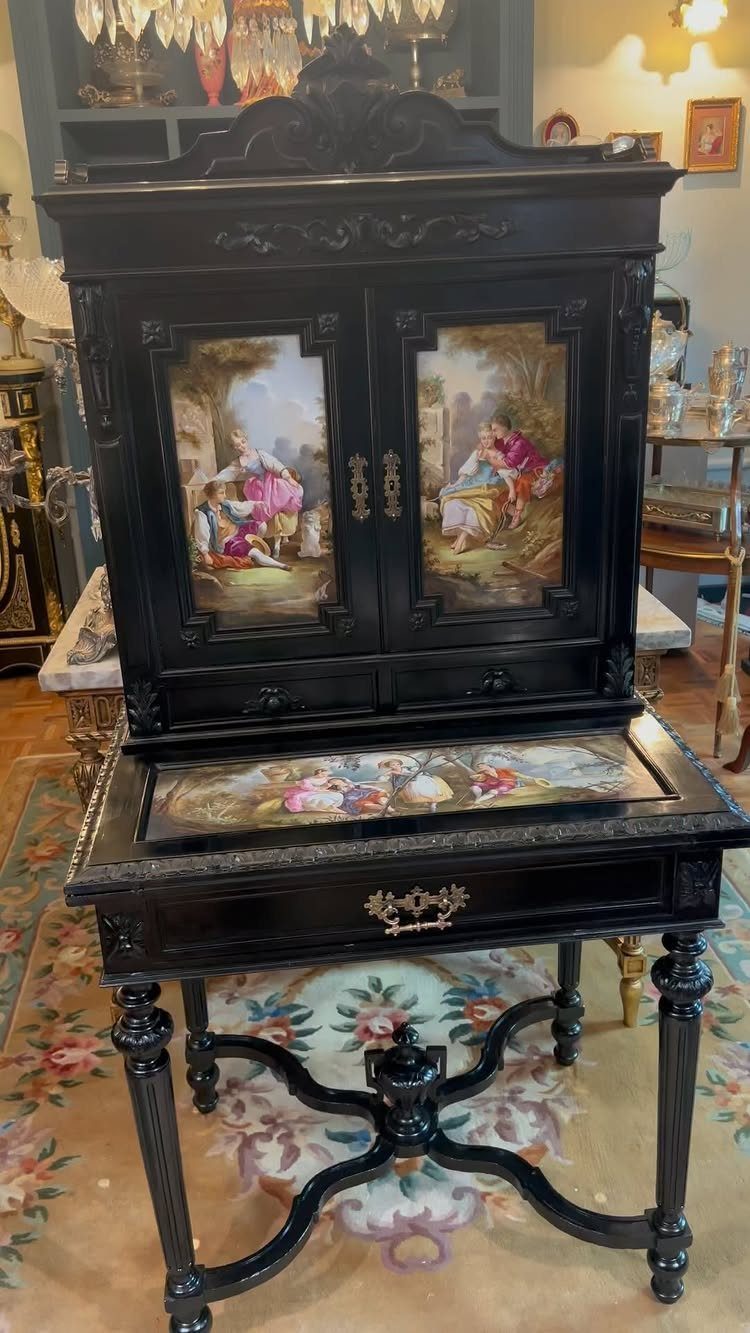
Hand-painted scenes on the hutch doors and drop-front turn the piece into a decorative focal point. Romantic or pastoral subjects were common on European secretaries, and the painting can be original to the piece or added later.
The painted surface needs gentler cleaning than plain wood. A soft cloth works better than furniture polish, which can dull the finish.
If the paint is flaking, a conservator can stabilize it before more lifts off. Black backgrounds make the painted details stand out more than lighter colors.
25. Secretary with Two-door Hutch

2 doors cover the upper section and open to shelves for books or supplies. The closed front keeps what you store out of sight when the desk is not in use.
A secretary desk with a two-door hutch works well in a room where you want storage that stays neat visually but opens completely when you need it.
26. Secretary with Blue Inlay

The fold-down surface is inset with a blue panel, usually leather or felt, which gives you a soft surface for writing and a color accent when the desk is open.
The inlay protects the wood underneath and can be replaced if it stains or wears through.
Blue reads cooler than the brown or green leather you see on most old desks, so it stands out more when the front is down.
The carved details on the hutch and drawer fronts add formality, which suits a room with other traditional furniture.
27. Secretary in a Living Room

Placing a secretary in a living room instead of a home office lets you use it for display and occasional writing without dedicating a whole room to it.
The hutch holds books, plants or pottery, and the desk surface stays clear for a lamp or seasonal decoration when you are not using it to pay bills or write notes.
The piece adds storage and a focal point in one spot. A chair that matches the room’s other seating ties the desk into the space rather than making it look like office furniture that wandered in.
28. Open-shelf Hutch

This layout suits a desk you sit at most days and supplies you pull constantly.
Felt is easier to replace than leather if it gets ink stains or wears thin at the edges.
29. Hutch with Glass Doors

Glass doors protect what you display from dust but keep it visible, which works well for books with decorative spines or pottery you want to show off.
The sage green finish softens the piece compared to dark wood and fits rooms with a lighter palette.
The fold-down desk surface opens to interior compartments for sorting mail or office supplies. Glass doors can rattle if the fit loosens over time, but a small felt pad inside the cabinet frame stops the noise.
30. Ornate Inlaid Wood

Burl wood panels on the drawer fronts and hutch doors show a swirling grain pattern that stands out against the black finish.
The gold marquetry figures add detail and formality, and the mirrored interior reflects light when the desk is open.
Burl veneer can lift at the edges as the glue dries out, so run your fingers along the seams when you look at one.
A furniture restorer can re-glue any loose sections. The black finish shows dust and scratches more than brown wood, so a soft cloth works better than a treated duster.
31. Secretary as Art Station

The hutch shelves hold paint tubes, brushes and jars instead of books, and the drop-front surface becomes a work table for sketching or mixing colors. Interior compartments sort smaller supplies like pencils and tape.
A secretary keeps supplies contained when you need to clear the space for other uses, which works better than an open cart in a room that does double duty. The hutch doors close to hide the clutter between projects.
32. Secretary as Display Cabinet

Closing the drop-front keeps the desk neat when you are not using it for display, and the interior compartments organize smaller pieces like figurines or framed photos.
A dark wood finish grounds the cabinet and keeps the focus on what you display. Glass or open shelves let you change what sits inside without rearranging furniture.
33. Secretary with Leather Writing Surface

The drop-front is covered in leather, which gives you a smooth surface for writing and protects the wood underneath. Red leather stands out when the desk is open; brown and green are more common and read more neutral.
The leather can dry out or crack over time, so a leather conditioner every few months keeps it supple.
Interior cubbies sort mail or office supplies, and the small drawers hold stamps or paperclips where you can reach them without opening the lower section.
Using a Secretary at Home
A secretary fits a room that has to work 2 ways. The closed front turns the piece into a cabinet or bookcase; open the drop-front and the room becomes an office.
The folding desk keeps work contained, which matters in a living room or bedroom where you don’t want papers and cables visible all day. When you’re done, fold the surface up and the room reads as finished space again.
The shelves and cubbies inside hold what you need for short tasks: sorting mail, writing notes, paying bills.
If you need room for a monitor and keyboard full-time, a secretary works only if the drop-front is deep and strong, giving you space for both without sagging under the weight.
The hutch holds books or supplies within reach but off the desk surface.
Antique Pricing and Condition
Antique secretaries sell for hundreds to several thousand dollars depending on age, maker, condition and style. Listings include pieces sold as-is with worn finishes, fully restored examples and age-worn originals with some damage.
Shipping adds cost and complication. Larger pieces may require freight, and some sellers list the desk as local pickup only, which limits your options if you’re not near the seller.
A worn finish doesn’t mean the piece is unsound. Scratches, faded varnish and surface marks are cosmetic and can be addressed with refinishing, but loose joints, cracked panels and missing hardware affect function and take more work to fix.
Condition drives price more than age alone. A secretary from 1909 in good structural shape but with a tired finish may sell for less than a well-kept mid-century piece.
Frequently Asked Questions
What is the point of a secretary desk?
A secretary desk gives you a workspace that folds away completely when you finish, so you can keep a desk in a living room or bedroom without it taking over the room visually.
The hutch adds storage for books and supplies, and the drop-front hides your papers and pens behind a closed surface instead of leaving them out on a table.
Are old secretary desks worth anything?
An old secretary desk can hold value when the construction is solid, the style is recognizable, and the wood or details are original.
Chippendale, Federal, and Empire styles with intact carving or inlay sell for more than plain reproductions, and pieces in mahogany or exotic woods like rosewood tend to carry higher prices than painted or veneer examples.
Check the hinges, lopers, and joints since repairs cut into resale value.
How do I date a secretary desk?
Look at the style details, wood choice, and hardware to narrow the period. Curved glass in the hutch usually signals late Victorian or Edwardian work, and flat panels with incised lines point to Eastlake.
Is a desk hutch worth it?
A hutch keeps books, supplies, and display pieces within reach but off the desktop, which matters when your workspace sits in a shared room and you want it to stay organized without extra furniture.
Glass doors keep dust off what you store, and open shelves give instant access.
Why is it called a secretary desk?
The name comes from the French secrétaire à abattant, meaning a writing desk with a drop leaf.
The style was likely developed by German cabinetmaker Jean-François Oeben in 18th-century France, and the English terms secretary and secretaire are shortened versions of that French name.