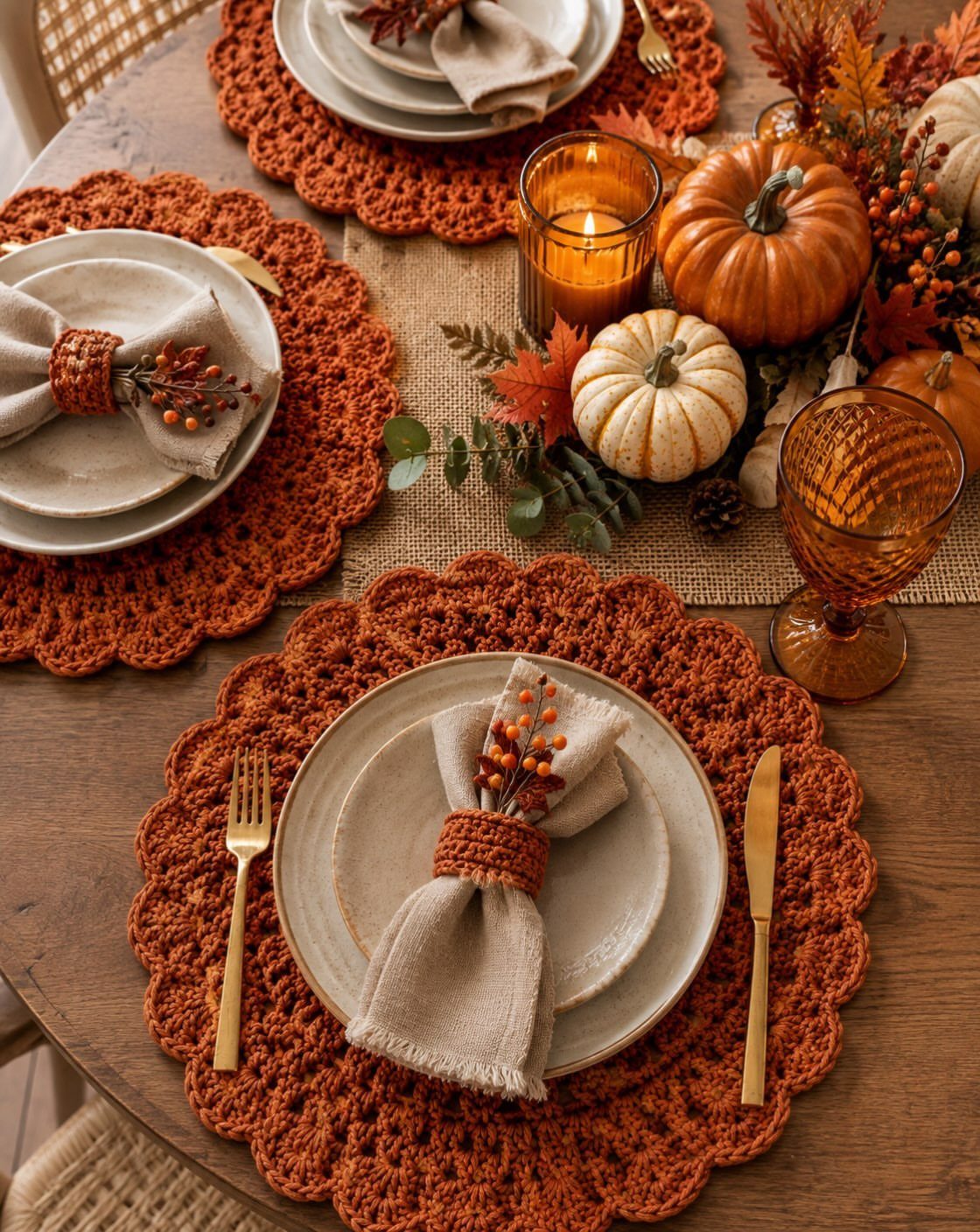
Round tables need decor that follows the curve with placemats or a runner while leaving room at the center, and the choice shifts between a table kept meal-ready and one dressed for display.
A tall vase centerpiece lifts flowers above the sightline so guests see across the table, while a low bowl keeps arrangements at conversation height.
1. Vase of Fresh Flowers
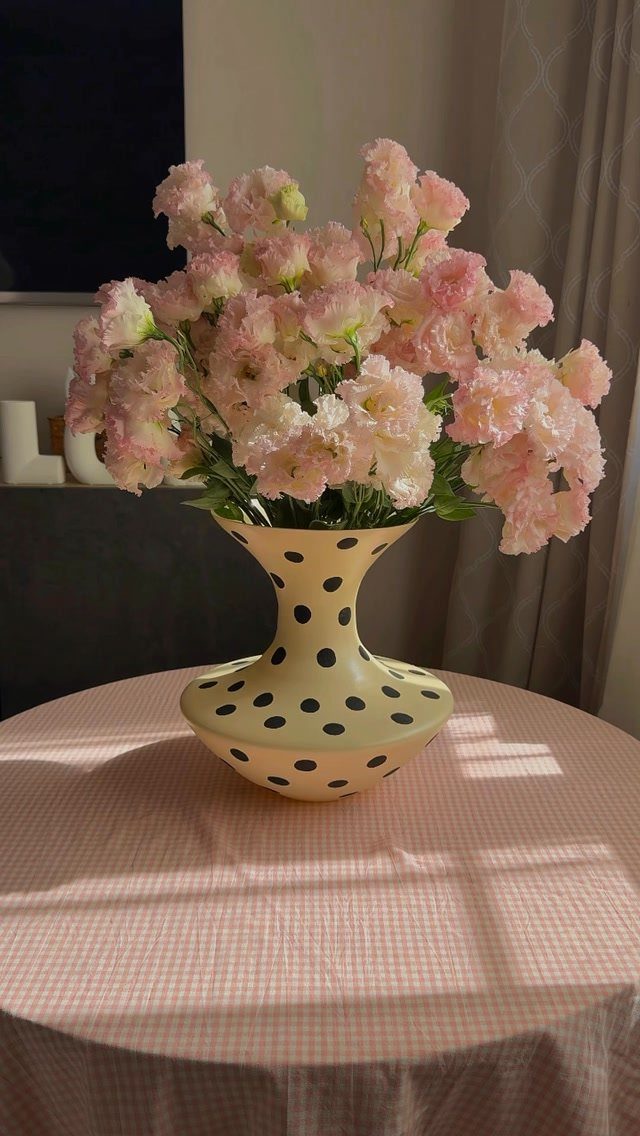
A single vase of flowers in the center pulls the table together without taking over the surface. Fresh blooms add color and life, and the arrangement stays small enough that guests can see each other across the table.
Pick a vase that fits the table’s scale.
A vase sized to the table keeps the center from crowding the place settings. Keep the height under 12 inches so it does not block sightlines during a meal.
2. Use Round Placemats
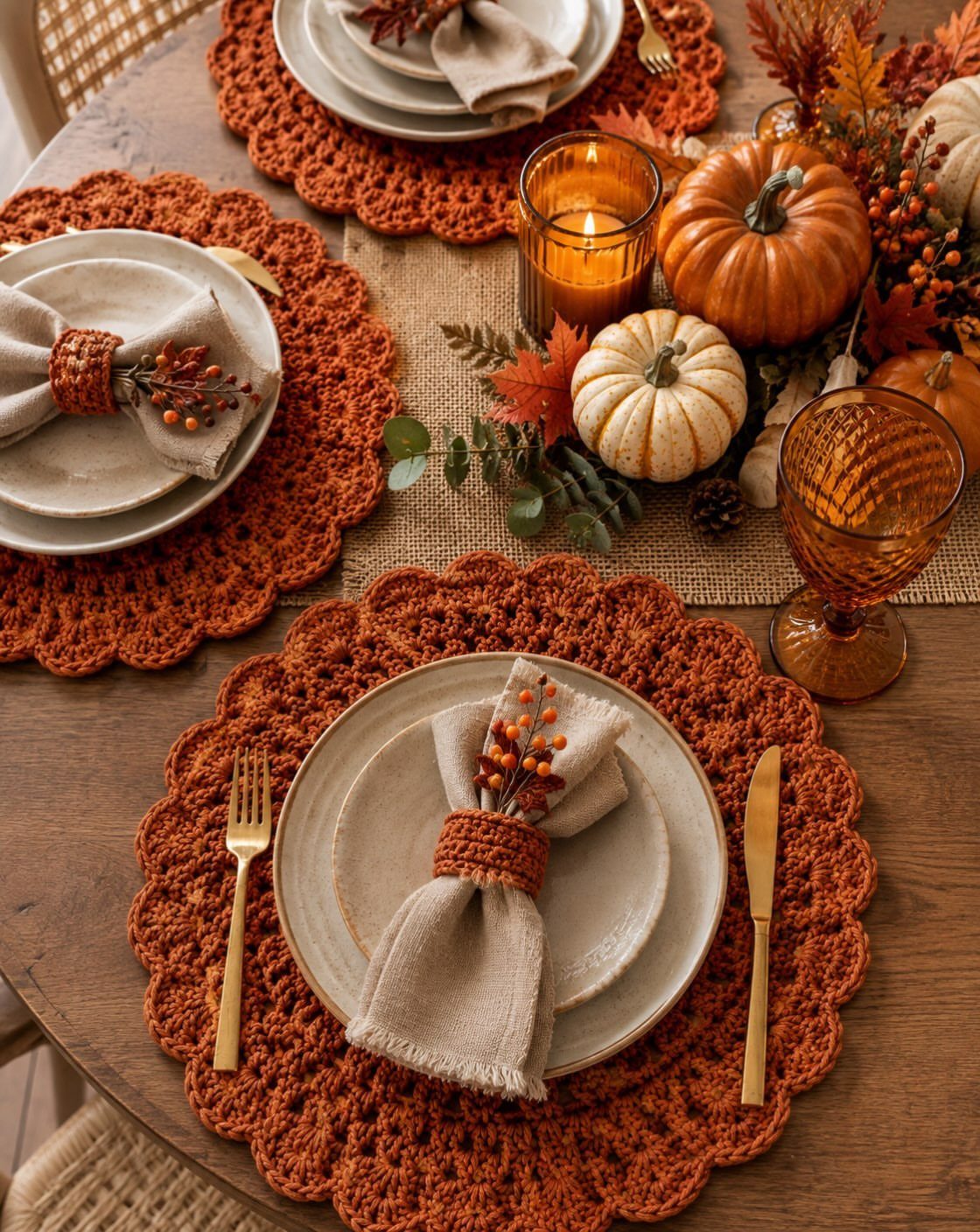
Round placemats repeat the table’s shape and give each seat its own defined space. They frame the plate and create a finished look without covering the whole tabletop.
Size them so each setting has breathing room without overlapping the next. Woven or crocheted mats add texture, while vinyl or cork cleans up easily after kids or messy meals.
3. Potted Plant
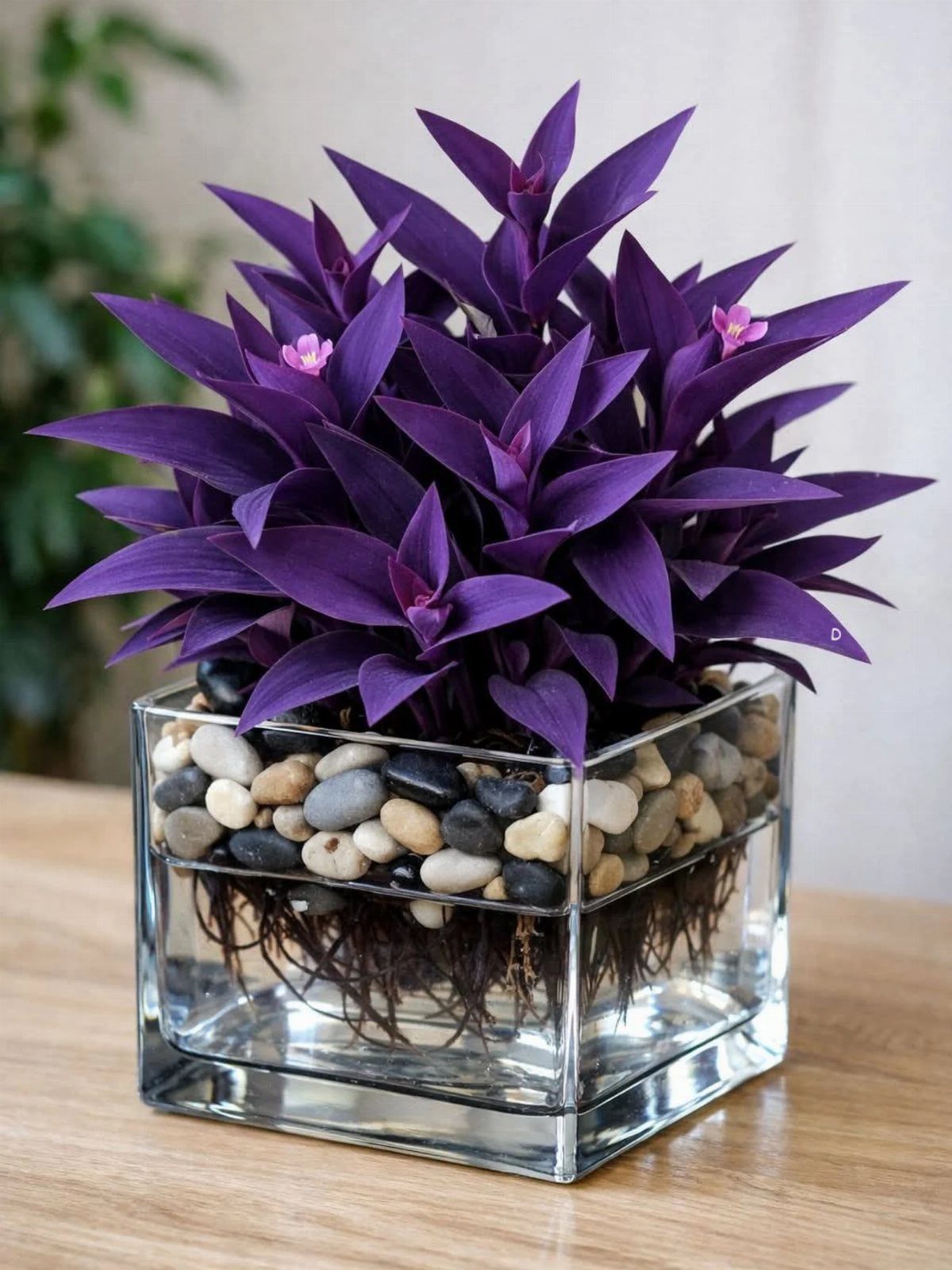
A potted plant in the center brings greenery that lasts longer than cut flowers. The pot stays compact, leaving room for dishes and serving pieces, and the plant can move to a shelf or counter after the meal.
Pick a pot that suits the table size.
Pick a pot that fits the table’s footprint without taking over the center. Flowering plants like African violets or kalanchoe add a pop of color, while herbs double as decor and garnish.
4. Use a Table Runner

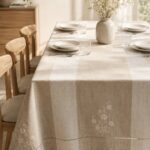
A fabric runner softens the table without hiding its shape. Draped straight across or laid diagonally, it adds a layer of color or texture and defines the center where dishes or candles sit.
Choose a width that leaves the table edges visible.
Match the runner width to the table diameter so it drapes without hanging off or disappearing into the middle. Linen or cotton gauze drape naturally, and a solid or subtle pattern keeps the focus on the place settings.
5. Layered Dinner Plates

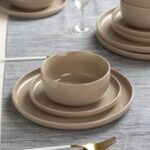
Stacking plates in different colors or patterns dresses up each place setting and adds depth to the table. A charger under the dinner plate creates a layered look, and the top plate can be switched out between courses.
Start with a charger 2 inches wider than the dinner plate.
Place the dinner plate on top, then a salad or appetizer plate if the meal needs it. Mix materials for contrast: a woven charger under white porcelain, or gold-rimmed china over a solid charger.
6. Add Candles

Candles in the center add warmth and make the table feel set for an occasion. Pillar candles or votives in glass holders stay stable and give off enough light to see without overwhelming the space.
Group 3 votives or use a single pillar for a small table; 5 or more votives suit a larger one.
Keep flames below eye level so guests can talk across the table. Battery-operated candles skip the open flame and still give the glow.
7. Choose a Soft Palette
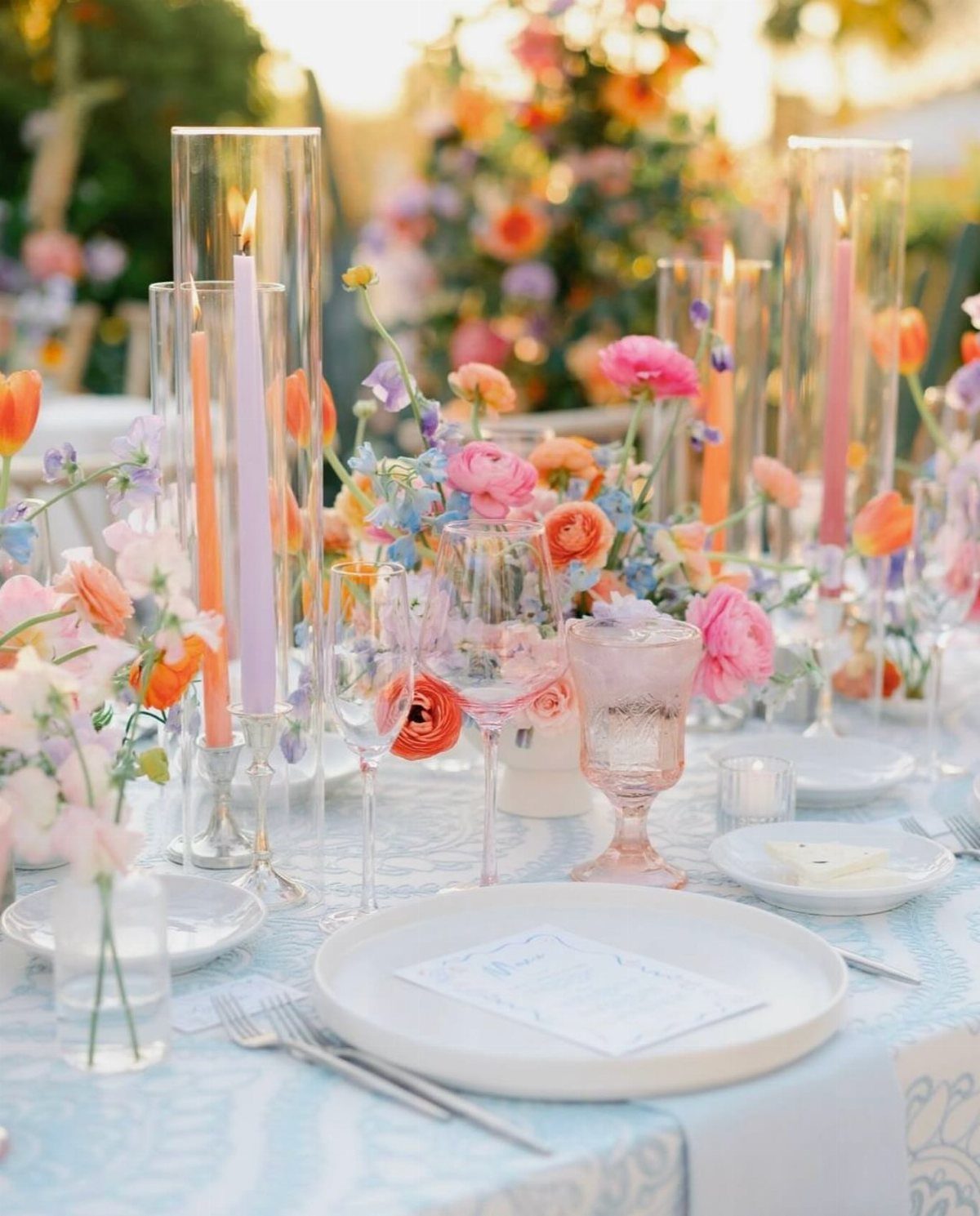
Pastels keep the table calm and make the whole room feel lighter. Soft pink, lavender, pale blue and mint pair well without competing, and they work for brunch, showers or spring dinners where you want the mood easy.
Layer the palette across linens, plates and glassware rather than matching everything exactly.
A pastel runner under white dishes, colored taper candles in clear holders, or flowers in two or three soft shades tied together by tone. The look stays cohesive without feeling rigid.
8. Tall Vase Centerpiece
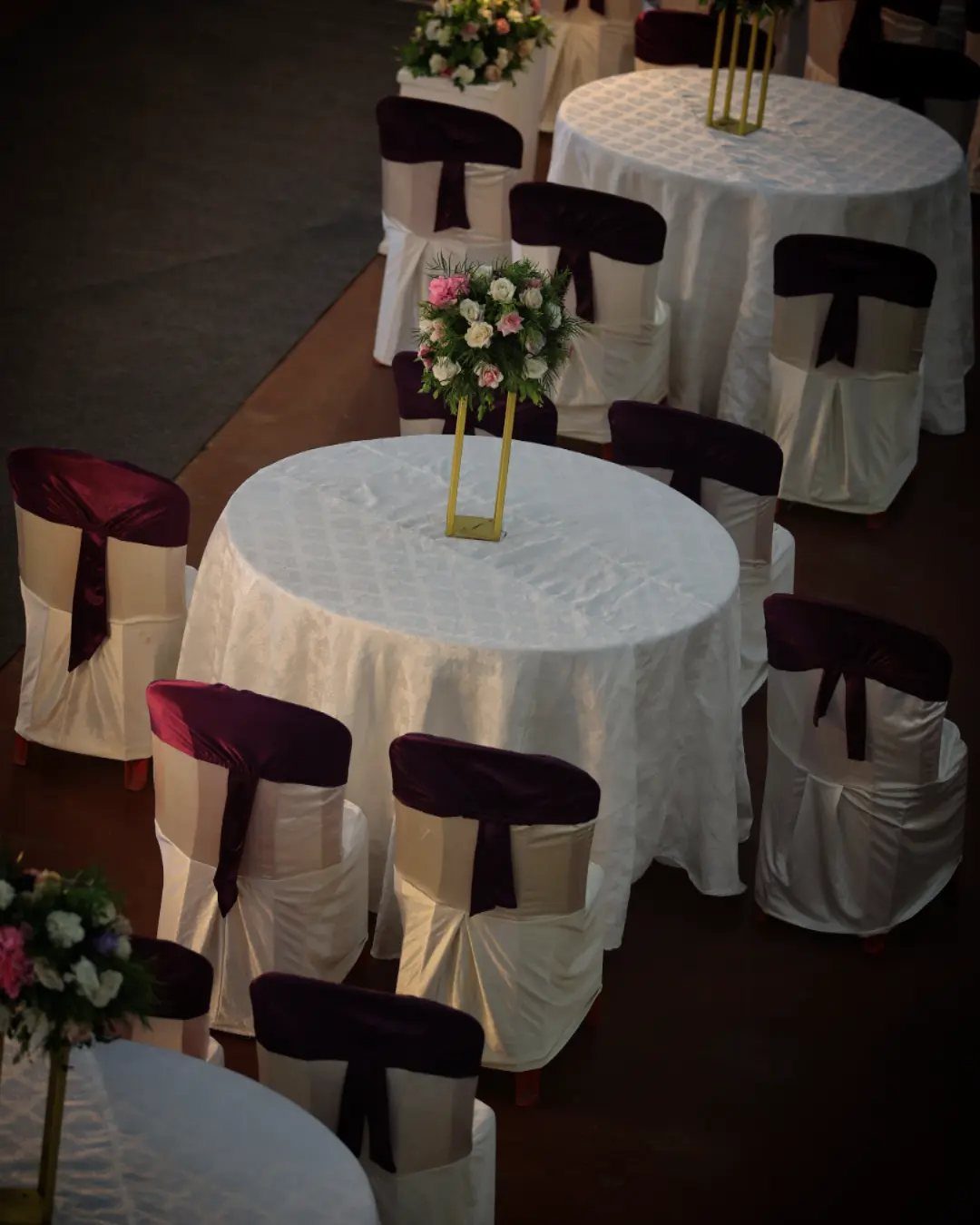
A tall arrangement on a stand lifts flowers or greenery above the table and keeps the surface clear for place settings. The height creates a focal point and still lets guests see across to each other.
Use a tall stand so the arrangement clears plates and glasses.
Gold or black metal stands hold the stems steady and add a formal touch. This setup suits events where the table stays set for display rather than passed dishes.
9. Metallic Table Runner

A metallic runner catches the light and adds shine without covering the whole table. Sequins or woven metallics in gold, rose gold or silver give the surface texture and make the table feel dressed up.
Keep the width narrow enough to leave room for plates at each seat.
A runner works on most round tables and leaves the edges open. Pair it with simple dishes so the runner stays the statement piece, and wipe sequins clean with a damp cloth after the meal.
10. Birthday Table Decor

Balloons, a banner and a themed centerpiece mark the table for a celebration. The setup makes it clear which table is for the birthday guest, and it photographs well for the people who show up to take pictures.
Keep the centerpiece low so guests can talk across the table, and anchor balloons away from the food so they do not drift into serving dishes.
Match the linens and cutlery to the party colors, and skip the disposable tableware for a more finished setup.
11. Use Seasonal Decor
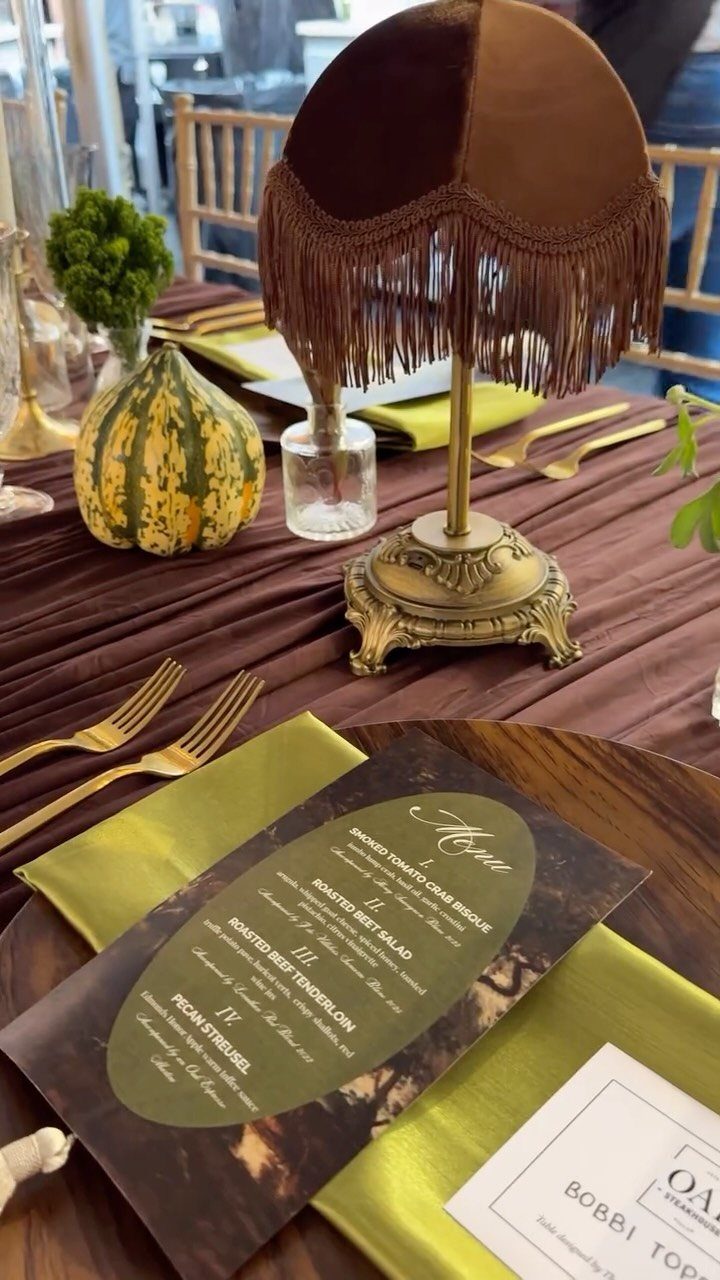
Gourds in fall, bare branches in winter, flowers in spring and citrus in summer bring the season to the table with objects that already look right for the time of year.
The decor changes with what is available, and it feels current without much effort.
Pile small pumpkins or pinecones on a tray, set a potted mum in the center, or arrange lemons and eucalyptus in a low bowl. Keep the palette tied to the season so the table reads as intentional rather than random.
12. Use Fruit as Decor
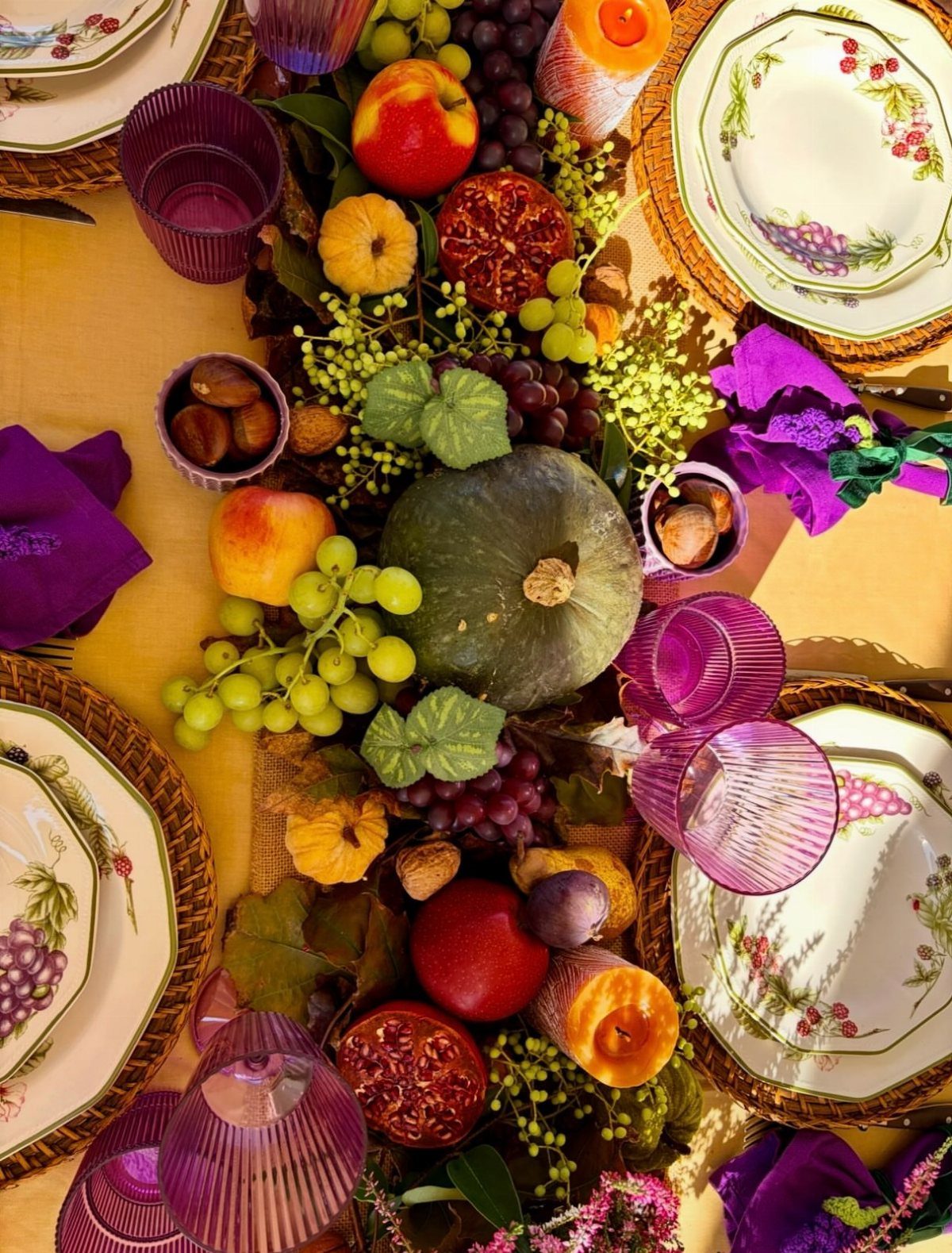
Fruit stacked in the center adds color and texture, and it costs less than flowers while filling the same space.
Pumpkins, apples, pears, grapes and pomegranates hold their shape on the table and can be eaten or composted after the meal.
Group fruit by color or size for a clean look, or mix varieties for a more abundant arrangement.
Set the fruit on a tray or directly on the tablecloth, and tuck in a few candles or sprigs of greenery to finish the display. Wipe the fruit clean before setting it out so it looks fresh.
13. Low Bowl Centerpiece
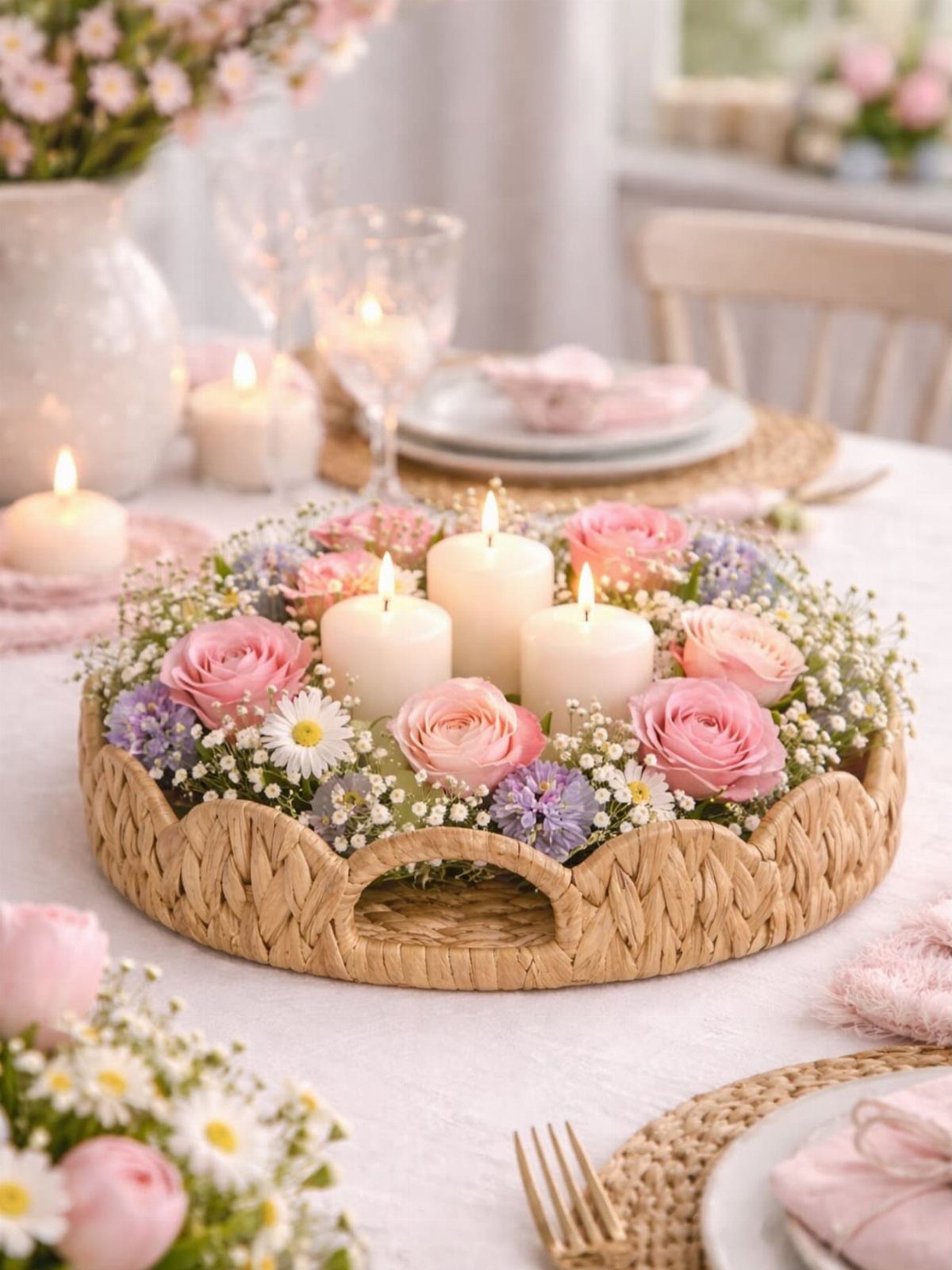
A shallow bowl filled with flowers and candles keeps the arrangement at table height so nothing blocks conversation. The low profile gives you a full centerpiece without losing the sightline across the table.
Choose a bowl deep enough to hold water and wide enough that the stems sit without crowding. Woven trays, ceramic bowls or wooden dishes all work.
Trim flower stems short and arrange them with a few candles tucked between the blooms. Roses, daisies and baby’s breath stay compact and hold up through a meal, and the candles add light without adding height.
Keep the Table Meal-ready
Guests should be able to see one another without leaning sideways or moving stems out of the way.
Before you commit to an arrangement, sit down at the table and check the view from every seat. The centerpiece that looks balanced from the doorway can still block conversation once people are seated.
Pick pieces you can lift off in one trip. An arrangement that breaks into 5 separate items takes longer to clear when it is time to serve, and something usually gets left behind or knocked over in the process.
If the table sees homework, crafts or large meals most days, a bare surface is more practical than a centerpiece that needs constant moving.
Coordinate Color and Texture
Start with the cloth, then pull your accent shades into the napkins, the flatware and whatever sits at center. A white or cream cloth gives you a quiet base that pairs with nearly anything you add.
Mix textures to add depth without adding clutter.
Burlap against linen, metal next to stoneware, or a wicker charger beside glass votives builds the kind of contrast that holds attention. Cotton feels relaxed, linen leans formal.
Wood, ceramic and fresh stems add warmth without tipping into fuss. Layer different heights and finishes so the eye moves across the surface instead of landing on one flat plane.
Scale the Dining Area
You need 36 inches from table edge to wall or sideboard so people can pull their chairs out without turning sideways. Wider upholstered chairs or armchairs need more clearance, so save them for larger dining rooms.
Size the rug so that chair legs stay on fabric when someone pushes back or stands.
Hang the fixture 30 to 36 inches above the table surface and line it up dead center so light spreads evenly.
Frequently Asked Questions
What do you put in the middle of a round dining table?
A single vase of flowers, a potted plant, or a low bowl filled with blooms and candles keeps the center styled without blocking sightlines.
Pick something under 12 inches tall so guests can see each other across the table. Fresh fruit stacked on a tray or a small grouping of candles also fills the space and leaves room for serving dishes.
What looks nice on a round table?
Round placemats, a fabric runner, and a compact centerpiece like flowers or a potted plant give the table a finished look without covering too much surface.
Layered plates at each setting add depth, and candles in the center bring warmth. Texture from woven mats, linen runners, or ceramic dishes keeps the table from looking flat.
How to make a round table look nice?
Start with one clear centerpiece that stays below 12 inches, then add round placemats or a runner to define the space.
Layer plates in different colors or materials at each seat, and bring in texture through linen, woven chargers, or fresh greenery. I pull out a chair and sit in it to test the view before I call the setup done.
Should a round dining table have a round centerpiece?
A round centerpiece echoes the table, but a rectangular tray or square planter cuts a cleaner line if you want contrast.
Balance and visual interest matter more than matching the silhouette. A low bowl, a fabric runner laid diagonally, or fruit stacked on a rectangular tray all fit a round table without echoing its curve.
What is the best shape chandelier for a round dining table?
A round or circular chandelier creates visual harmony with the table’s shape, but a properly sized linear or elongated fixture also works.
I hang it 30 to 36 inches up and center it so every seat gets even light. Size matters more than shape: the fixture should fit the table’s footprint without overwhelming the room.
Can you use round placemats on a round dining table?
Yes. They echo the table’s curve, mark each seat cleanly, and catch drips and heat before they reach the wood.
Size them so each one sits inside its slice of the circle without nudging into the next person’s space. Square or rectangular mats add contrast if you prefer a different look, but round ones feel like a natural fit.
How do you decorate a round table for a party without it looking crowded?
Keep the centerpiece compact and under 12 inches tall so it does not block conversation. Give each setting enough elbow room, and skip anything tall or wide that crowds the middle.
Start with a tablecloth or runner, add one focal piece in the center, then layer in candles or seasonal accents that can be lifted off in one trip when it is time to serve.
Should you use a tablecloth or a runner on a round table?
Both work well depending on the look you want. A cloth covers the whole surface and reads formal; a runner keeps it light and lets the table show at the edges.
A runner laid straight across or diagonally defines the center without covering the whole table, and you can skip both if the table surface is part of the look.
How many colors should you use when decorating a round table?
I stick to 2 or 3 colors so the table reads as one idea instead of a grab bag. More than that gets noisy fast on a round table because every angle sees everything at once.
How do you make a round table feel more formal?
Drop a full-length cloth, set a charger under every plate, and match the napkins to the runner so the whole table speaks the same language.
Keep the centerpiece low and refined, set each place in mirror image to the next, and bring in glass or metal to catch the light.
Candles in matching holders and a fabric runner in linen or cotton gauze add polish without fuss.
Can you decorate a round table on a budget and still make it look nice?
Yes. Put your effort into one thing that matters, a vase of fresh stems or a wood bowl piled with fruit, then fill in with plain plates and a handful of votives.
Fruit costs less than flowers and fills the same space, and a potted plant lasts longer than cut stems. Mix textures through woven mats, linen napkins, or ceramic pieces you already own.
How do you decorate a small round table for a party?
Scale everything down. Choose a single low centerpiece like a small vase or a few votives, and use slim place settings that leave room for food.
Skip the tablecloth if the surface is part of the look, or use a narrow runner that does not cover too much of the table.
Strip it down to what people need to eat and one small accent in the center so there’s room to pass a plate without knocking something over.