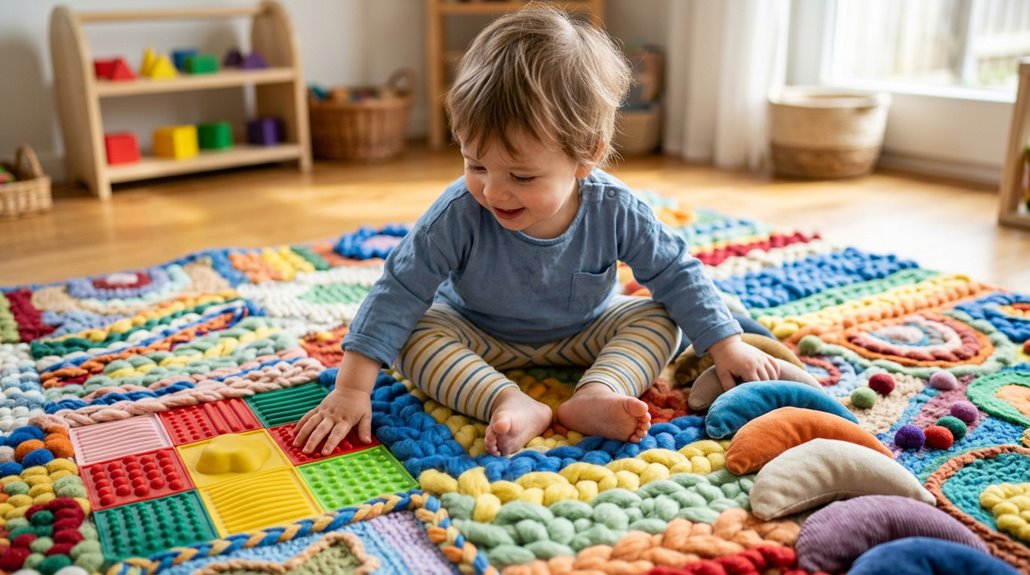
Sensory rugs function as brain activators for your feet and mind. Those varied textures, including shaggy, bumpy, and smooth surfaces, fire up your sensory receptors and anchor your attention.
Your proprioception, your body’s spatial awareness system, gets a significant workout, strengthening foot muscles and improving balance.
Additionally, they serve as social tools that spark collaboration. The textures channel restless energy into focused, purposeful movement, transforming everything from your posture to your social interactions.
Enhances Sensory Stimulation Through Textures and Colors
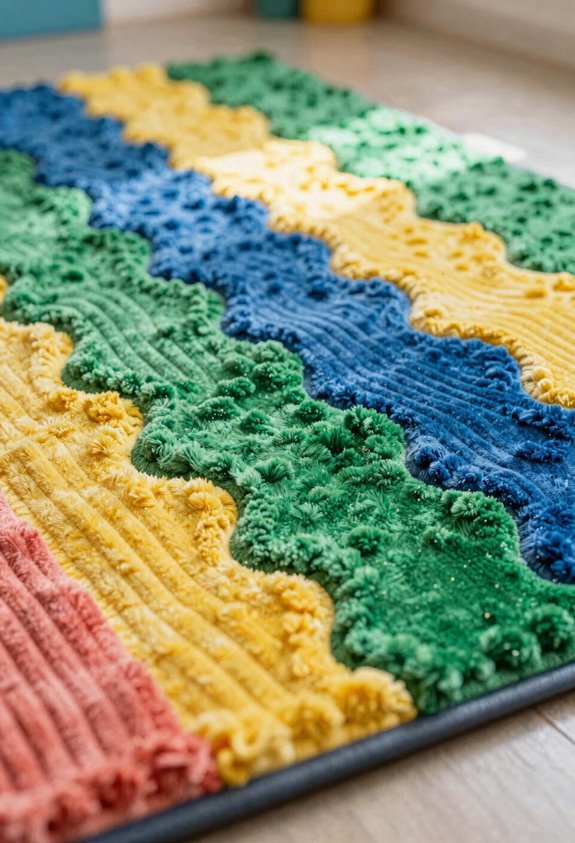
Ever wondered why kids respond so actively on a sensory rug. When your child goes barefoot on different textures, shaggy, smooth, and bumpy surfaces activate cutaneous receptors across their feet. This awakens their tactile sense and strengthens the connection between feet and environment, supporting physical development. Adding bright, bold colors and varied patterns increases visual attention and encourages exploratory behavior. The combination of visual stimulation and tactile textures engages multiple sensory systems simultaneously, creating a comprehensive learning environment that naturally supports brain development.

Assorted Textured Sensory Mats: 8 sets of colorful sensory mats with different textures, designed to stimulate tactile perception and encourage sensory exploration for kids, toddlers, and babies

【MULTI-SENSORY EXPERIENCE】You can help your little one’s senses experience a stimulating journey with various textures and colors. Children can play and enjoy the soothing experience of the tactile fabrics of our sensory mat pets.

10 Different Square Sensory Mats: Sensory mini mats for autistic children contains 10 sensory mats in different colors and textures, which are enough to meet children's sensory development needs. Each sensory floor tile measures 8.66 X 8.66 inches. The sensory tiles are backed with a non-slip design, each with an edging design to keep kids safe while playing, which is sturdy enough to be gripped, pulled and step in home or in the classroom
Boosts Balance and Body Awareness
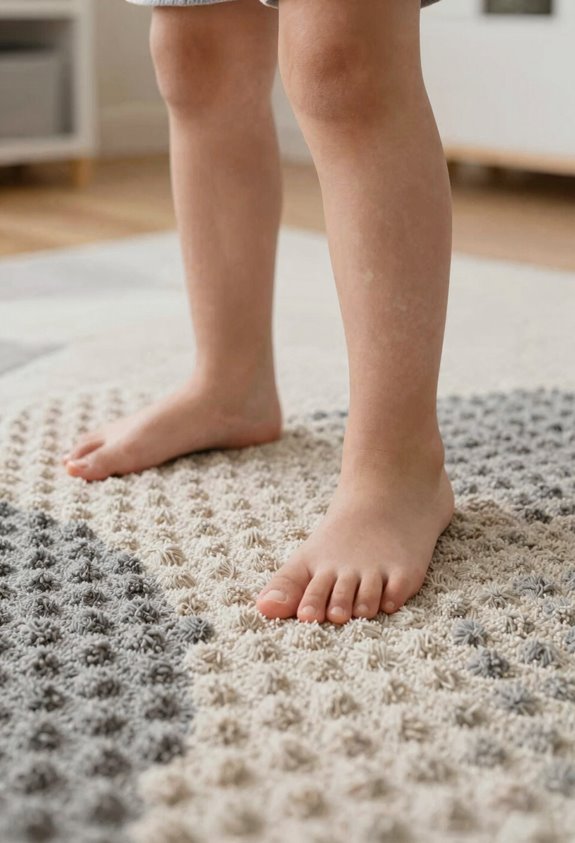
When you step onto a sensory rug’s bumpy, textured surface, your body must work harder to maintain balance, similar to standing on a wobbling surfboard but with greater safety. Those raised patterns and foam padding force your stabilizing muscles to engage constantly, which strengthens your proprioception (your body’s ability to know where it is in space) and sharpens your movement precision. Regular practice on varied textures builds measurable improvements in balance control and body awareness during everyday activities.

DUAL-TEXTURED SURFACE: The wobble cushion features larger bumps on one side and smaller bumps on the other for varied grip, sensory feedback, and balance training support during core exercises, active sitting, and stability work

HELP SIT CALMER & STAY ENGAGED:Designed as balance cushion and wobble cushion, it provides gentle movement and sensory feedback to help active kids feel more comfortable during homework, reading, classroom activities, and quiet time

Instant Home Studio in Any Room: Go ahead and stretch out like never before. Just unroll to transform any room into your own home studio. Room for any yoga pose, meditation, stretching, Pilates or barefoot bodyweight exercise, solo or with a friend.
Textured Surfaces Challenge Balance
How’d you like to give your body a mini workout just by standing on a rug? Textured surfaces challenge your balance through bumpy, raised patterns that trigger sensory processing. Your stabilizing muscles, especially in your legs and core, work harder to keep you steady. Your body adapts to increased difficulty much like progressing through harder levels in a video game.
Those raised textures send feedback to your brain about where you’re positioned in space, a process called proprioception. Your feet communicate uneven terrain directly to your brain. Over time, this mini obstacle course strengthens your postural stability. Non-slip designs keep you safe while you’re adjusting to changing heights. With consistent use, you’ll develop noticeably improved balance and coordination.
Proprioception And Body Positioning
Your feet are basically your body’s GPS system, and sensory rugs significantly amplify that signal. When you’re walking on textured surfaces, your brain receives constant feedback about where your body is in space. This proprioceptive awareness intensifies with regular use.
When you use sensory rugs regularly, several physiological changes occur:
- Your feet develop stronger stabilizing muscles that support better balance and posture
- Proprioceptive signals improve, helping you move with more precision during sports and daily activities
- Foot development accelerates as you naturally strengthen ankles and leg muscles through uneven surface exploration
Consider the difference between basic and advanced navigation technology. With sensory rugs, you move with measurable confidence and spatial awareness. Your feet land with deliberate precision rather than relying on guesswork. This enhanced body awareness stems directly from consistent tactile feedback on varied surfaces.
Strengthening Stabilizing Muscle Groups
Ever wondered why tightrope walkers train on unstable surfaces? When you step onto a textured sensory rug, your intrinsic foot muscles activate instantly, working overtime to keep you steady. Your feet respond like tiny acrobats to the challenge.
Here’s what happens:
| Muscle Group | Challenge | Result |
|---|---|---|
| Intrinsic foot muscles | Uneven textures | Stronger arches |
| Ankle stabilizers | Varied heights | Better balance |
| Core muscles | Postural adjustments | Improved coordination |
Your body makes constant micro-adjustments, strengthening those deep stabilizers you didn’t even know existed. The raised patterns force your proprioception into overdrive, creating pathways between your brain and muscles. You’re literally rewiring your balance and coordination system. This isn’t just standing around; it’s active, purposeful strengthening that transforms how you move.
Strengthens Motor Skills and Coordination
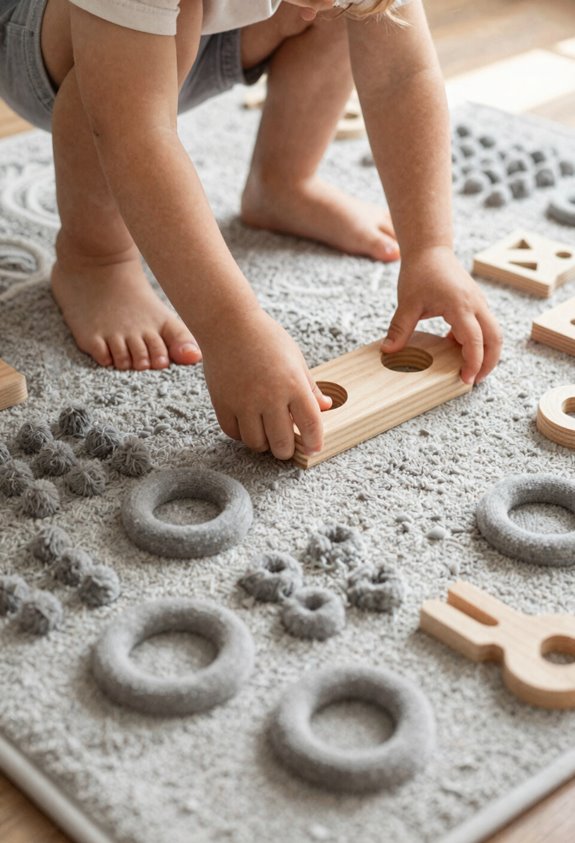
Why do barefoot kids on playgrounds seem so much steadier than the rest of us shuffling around in shoes? It’s sensory integration at work. When you walk on textured surfaces, your brain gets real-time feedback about where your body’s at in space. That’s proprioception firing on all cylinders.
Here’s what happens:
- Varied textures engage your feet differently, forcing constant micro-adjustments that strengthen motor skills
- Bumpy and soft areas challenge your balance, making you move with intention and precision
- Continuous practice builds coordination for sports, writing, and everyday activities
Those raised patterns and foam padding aren’t just randomly placed; they’re literally training your body to understand movement better. Your feet become translators, sending crucial signals to your brain. Over time, you’re not just walking steadier; you’re developing genuine body awareness that carries into everything you do.

Superior Surface Support – Achieve your goals on a high-density Sensu workout mat! With 8.5mm thickness, this durable mat cushions joints and supports balance, and should be a home gym essential for any workout enthusiast. Your fitness space or home gym deserves a reliable foundation—and this mat delivers comfort, stability, and long-lasting performance through every rep and stretch.

【Enhanced Stability and Safety】Our elliptical mat comes with a non-slip silicone pattern on the bottom to provides a stable base for your elliptical trainer, ensuring a secure workout environment and reducing the risk of accidental slippage or machine movement during use leg exerciser while sitting for seniors.(NOTE: If the exerciser machine still slides when it's placed on the black side, we recommend that you turn over the mat and place the machine on the grey side.)

【Versatile & Durable Exercise Mat for Home & Gym Use】-- Ideal for home gyms or outdoor workouts, this squat mat features clear foot positioning guides to enhance your form and performance. Its non-slip surface provides reliable stability during squats, weightlifting, lunges, and other leg exercises, significantly reducing slip-related risks and promoting safer training sessions. A practical addition to any fitness setup, it pairs greatly with balance trainers and other workout equipment
Supports Natural Arch Development From Toddlerhood
Healthy arches don’t just magically appear. They’re built from the ground up, literally. When you introduce your toddler to a sensory floor, you’re giving their foot muscles a gym membership. Those tiny feet need diverse textures to strengthen the intrinsic plantar muscles that support arch development. It’s like building a foundation for a house, except it’s all happening in those adorable little toes.
Varied surfaces on a sensory rug mimic natural terrains, encouraging barefoot exploration that rigid footwear can’t replicate. Your child’s feet adapt, adjust, and strengthen with each wobbly step across different textures. This proprioceptive input is crucial for balanced weight distribution. You’re essentially reducing their future reliance on arch-supporting inserts by allowing their feet to develop the strength they need naturally.
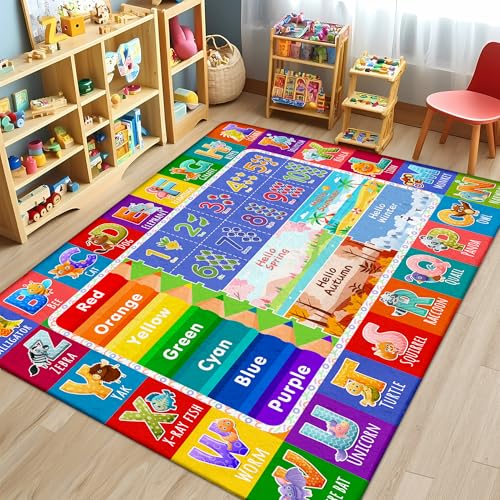
Interactive Alphabet with Animal Friends-This colorful rug introduces kids to the alphabet using playful A–Z animal pairings. Each letter features a cute, recognizable animal that helps toddlers and preschoolers build letter recognition and early vocabulary through visual association and fun

Educational and Fun: The kids room rug consists of 26 alphabets, animals, shapes, colors, months and so much more; Enhance the interaction between you and your children but also improve their cognitive and sensory abilities

Emotional Learning Visual Tool – This calming corner classroom rug features 16 brightly colored emotion expressions (happy, angry, sad, excited, etc.) with clear labels to help children identify and express their feelings. It is suitable for calm-down corners, social-emotional learning (SEL) activities, or classroom emotional education.
Helps Calm Overstimulation and Emotional Dysregulation
Imagine this: your kid’s melting down because there’s too much noise, too much light, too much everything happening at once. Sensory rugs work their magic by creating a calm zone that manages sensory input beautifully.
These rugs offer several key benefits:
- Varied textures offer controlled tactile experiences that organize overwhelming information
- Predictable routines on the rug build self-regulation skills and emotional stability
- Grounding practices like deep breathing become easier in this dedicated space
When your child explores different textures mindfully, they’re literally training their brain to handle stimulation better. The calming effects are measurable and documented. You’re giving them tools to recognize when they’re overwhelmed and actually do something about it. This builds genuine emotional resilience through consistent practice.

Package Content: you will receive 10 pieces of colorful sensory circles with 5 colors, pink, blue, yellow, purple, and green; They have 2 sizes, including 9.8 x 9.8 inches/ 25 x 25 cm and 2.8 x 2.8 inches/ 7 x 7 cm; They are suitable for people, and can attract and entertain your boys and girls

massage game mats: you will receive 8 sensory floor tiles in 8 assorted patterns, measuring approximately 9.8 x 9.8 inches/ 25 x 25 cm each, these sensory tiles for kids can easily be assembled and disassembled, allowing for various puzzle formations; This allows your kids to create diverse patterns, igniting their creativity and problem solving skills

Mixed Color and Assorted Textured Sensory Mat: The sensory floor tiles come in a variety of colors and textures to improve sensory cognition with kids' hands and feet. The sensory pads will immerse an amazing multi-sensory experience, and alleviate anxiety, irritability and restlessness
Improves Focus and Attention in Learning Environments
When you’re fidgeting constantly, your brain’s running multiple tasks simultaneously. Sensory rugs channel restless energy into structured texture exploration that helps you concentrate on what matters. The variety of textures keeps your senses engaged without overwhelming them, allowing you to sustain focus longer and complete tasks without your mind wandering.

【Multi-Surface Balance Trainer】Master your stability with the Sportneer wobble board, engineered for effective balance and core strength training. This versatile balance trainer acts as a powerful ankle strengthener, crucial for surfers, snowboarders, and athletes to prevent injuries and enhance performance.

【Light Up Sensory Puzzle Play Mat】Unlike flat liquid tiles, these raised sensory stones add height for a springier jump—every landing glows green LED through flowing liquid. Connect all 4 tiles into a glowing path, or scatter them for color-matching games. Height, glow, and motion create triple sensory fun.
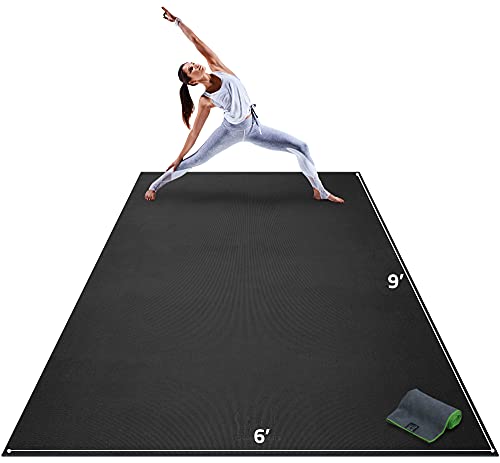
Instant Home Studio in Any Room: Go ahead and stretch out like never before. Just unroll to transform any room into your own home studio. Room for any yoga pose, meditation, stretching, Pilates or barefoot bodyweight exercise, solo or with a friend.
Sensory Engagement Sustains Concentration
Why do fidget spinners become so popular? People need outlets. Sensory rugs work because they give your brain what it needs:
- Multiple textures engage your hands and eyes simultaneously, reducing restlessness before it builds
- Visual patterns combined with tactile exploration speed up how your brain processes information, making focus feel natural
- Movement plus texture (like tracing patterns or stepping between designs) creates a focus state that sustains attention
When you stimulate your senses in structured ways, your body stops seeking distraction. You’re channeling excess energy into something productive. Your attention span improves because you’re finally meeting a genuine sensory need.
Energy Channeling Reduces Restlessness
Your brain’s got this constant hum of energy, like a browser with seventeen tabs open, and sensory rugs basically give that energy somewhere to go. When you’re fidgeting nonstop, you’re not being difficult; you’re actually craving sensory input to feel grounded. Sensory rugs transform that restlessness into purposeful movement. Instead of bouncing in your seat during homework, your feet explore different textures, and suddenly you’re channeling that excess energy productively. The varied surfaces keep your tactile system engaged without distracting you from learning. You’ve got a safe environment that supports steady exploration, meaning fewer interruptions. That non-slip design prevents wobbly moments that would yank your focus away. Over time, this structured setup trains your attention span. You’re not fighting your energy anymore; you’re working with it by redirecting physical restlessness into focused sensory engagement.
Texture Stimulation Enhances Attention
Your tactile nerves send signals that boost focus and concentration during learning tasks. Multiple textures engage different sensory pathways, keeping your mind anchored and engaged. Consistent texture interaction strengthens your ability to sustain attention over longer periods.
Research shows measurable improvements in attention. Kids with attention challenges demonstrate better focus with textured surfaces beneath their feet. Your brain responds to sensory input, and textured rugs provide consistent tactile stimulation that supports sustained concentration.
Prevents Flat Feet and Arch Collapse
Ever notice how some people walk like their feet are basically pancakes. That’s flat feet, and it’s totally preventable. Textured surfaces on sensory rugs work your foot arches like a mini gym session. When you walk barefoot on these bumpy mats, your intrinsic foot muscles engage and strengthen, which keeps your arches from collapsing. Those varying heights and patterns give your feet a diverse workout that builds a solid foundation. Regular use reduces flat foot development during growth years significantly. Your feet are getting an active workout every time you step on the rug. Strong arches mean better support, less pain, and measurable improvements in foot structure and function over time.

COACHED BALANCE WORK – Scan the QR code on the cloth bag for 30 days of access to our online coaching programs: a step-by-step video program from Dr Maddy showing how to...
Gives Kids Steadier Footing and Better Control
How do you think your feet know where they are without looking down? That’s proprioception, your body’s built-in GPS. Sensory rugs give you the sensory feedback your feet need, basically turning your living room into a balance-training zone.
What happens when you step on these textured surfaces:
- Raised patterns and foam padding challenge your muscles to constantly adjust, strengthening stabilizers you didn’t know existed
- Varied heights and textures send signals to your brain about foot placement, sharpening your awareness with every step
- Non-slip designs let you explore confidently without that sketchy sliding feeling
Walking across a mini obstacle-course-like rug layout develops your coordination while your feet get steadier, grounded feedback. Your balance improves naturally through consistent use. You’re literally training your body to move with intention and control.

【Classroom-Grade Non-Slip Safety for Heavy Daily Use】 Designed for pastel classroom rug spaces, reading nooks, and calm-down corners, this classroom rugs elementary features an upgraded non-slip backing to prevent shifting and slipping during activities, reducing fall risks for children. With reinforced, wear-resistant stitched edges, it withstands daily foot traffic and is a reliable classroom carpet educators can trust.

EDUCATIONAL PLAY MAT: Designed for imaginative learning and everyday play, this kids play rug features colorful printed scenes that encourage storytelling, exploration, creativity, and interactive activities for toddlers and young children.

Interactive Learning Spot: This rug turns any room into a lively learning zone, engaging kids with ABCs, numbers, shapes, and seasons. Perfect for game rooms, bedrooms, playrooms, or classrooms, it makes early education fun and hands-on
Sparks Social and Collaborative Play
Beyond building individual balance and body awareness, sensory rugs become social magnets that naturally draw kids together. When you gather around one, the textures and colors spark sensory play that inherently brings children together. You’ll notice collaboration flowing as children explore textures side-by-side, take turns discovering patterns, and build stories collectively.
| What Happens | Why It Matters |
|---|---|
| Shared sensory experiences | Creates belonging instantly |
| Turn-taking during play | Builds respect and patience |
| Group problem-solving games | Strengthens friendships fast |
The modular tiles let multiple kids participate simultaneously, promoting genuine social interaction without pressure. Whether your child struggles with peers or thrives socially, these rugs level the playing field. Everyone connects through shared textures and colors, creating an inclusive space where every kid feels they belong.

【Soft and Safe】Sensory floor tiles are made of high-quality materials, soft and skin-friendly, with a non-slip pad on the back, suitable for long-term use.

【MULTI-SENSORY EXPERIENCE】You can help your little one’s senses experience a stimulating journey with various textures and colors. Children can play and enjoy the soothing experience of the tactile fabrics of our sensory mats animals.

【MULTI-SENSORY EXPERIENCE】Keep your kids entertained and their senses stimulated with different textures and vibrant colors. Children can play and relax in a secure and interactive tactile environment with these sensory mats.