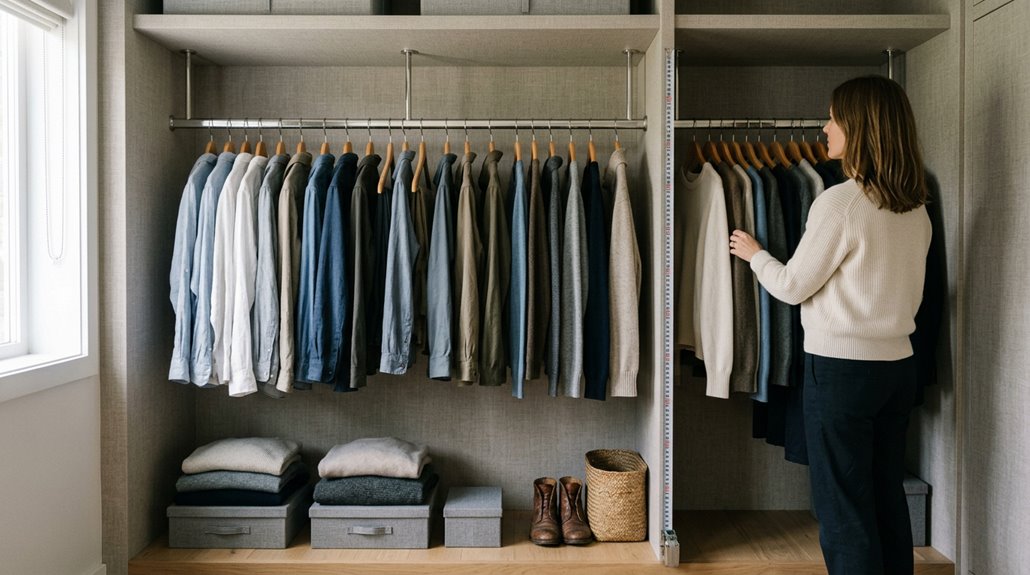
Here’s your 66-inch standard, the measurement for most adults from floor to rod bottom rather than the top. This height works well for shirts, pants, and dresses while keeping everything accessible.
For double-rod setups, stack them at 80 inches and 40 inches to maximize space. Leave 2 inches clearance above so hangers don’t jam, and mount 12 inches from the back wall. These specifications ensure proper closet functionality.
Standard Closet Rod Heights: The 66-Inch Rule
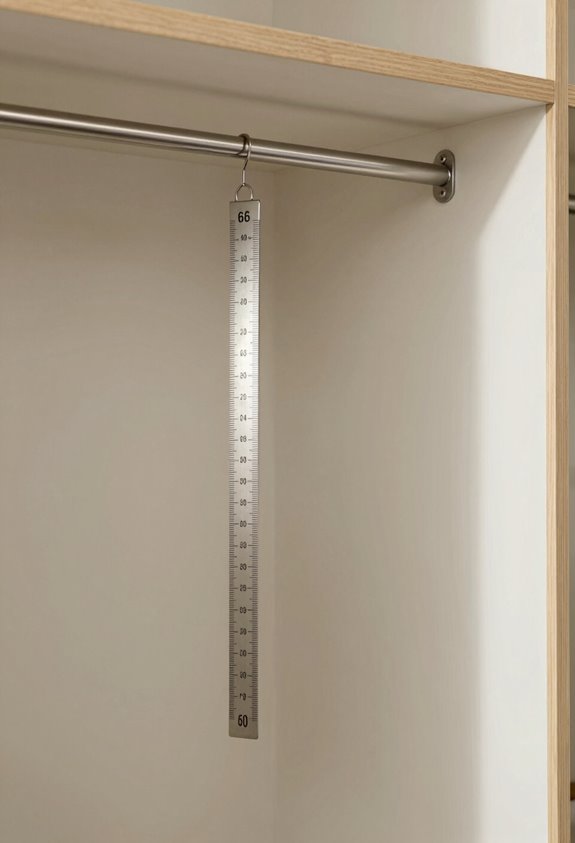
Why 66 inches for closet rods? It’s your sweet spot. This standard closet rod height works for basically everyone: shirts, pants, dresses, and more. Measure from the floor to the bottom of the rod, not the top. That’s how you nail your reach-in closet measurements.
Position that center support bracket at exactly 66 inches. Leave yourself 1–2 inches of top rod clearance above it so you’re not banging your knuckles when grabbing hangers. The standard closet rod height works because it balances accessibility with maximum hanging space. At 66 inches, you achieve optimal functionality.
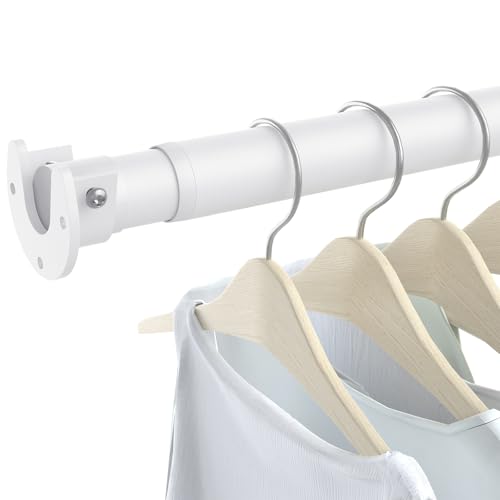
Stepless Adjustable Closet Rod: Closet rods feature a stepless design for precise adjustments without cutting. The stepless design means you won't be stuck with preset holes, and you can absolutely adjust the length of the closet hanging rod to fit your space.

Stepless Adjustment Closet Rod: The upgraded Supforce closet rod features the stepless adjustment design, allows you to precisely adjust according to your closet's specific size; Without any size gaps, No manual cutting is required.

Adjustable Closet Rod: The Mavivegue closet rod features a stepless adjustment design that allows you to adjust it precisely to the exact dimensions of your closet; there are no size gaps and no manual cutting required
Rod Height for Clothing Type: Shorts vs. Dresses vs. Coats
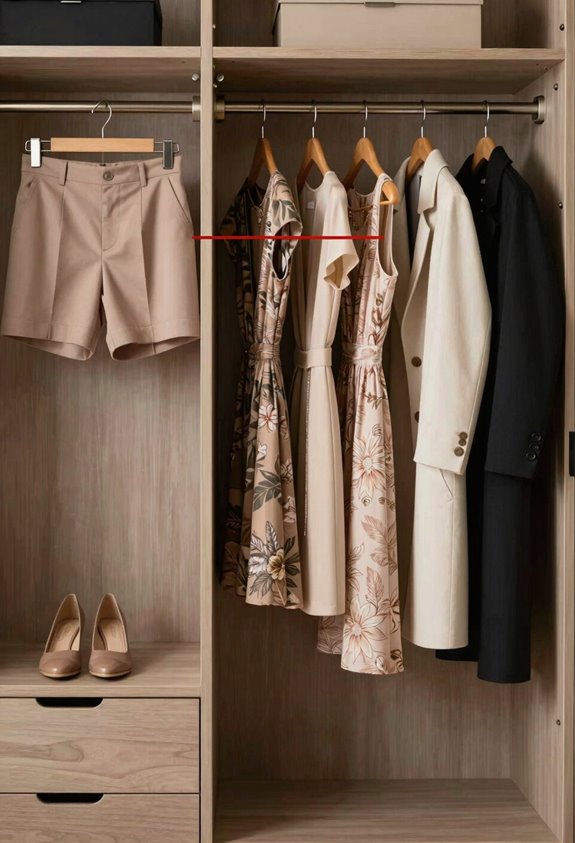
Different clothes need different heights, and this isn’t just about your own stature. If you have shorts and blouses, position the rod around 66 inches for easy access. When you add long dresses and coats to your closet, you’ll need more vertical space, ranging from 60 to 70 inches for a single rod or up to 80 inches for a double-rod configuration. Using a top rod at 80 inches for long items and a bottom rod at 40 inches for shorter pieces maximizes your storage capacity and keeps frequently worn clothes within comfortable reaching distance.

This closet rod makes full use of the unused space beneath the hangers.

ADJUSTABLE WIDTH & HEIGHT-- Our closet rod are fully adjustable to suit your needs.The width range is from 43cm/16.9in--77.6cm/30.55in, and the middle hanging bar has 9 adjustable heights, from 29cm/11.4in--93cm/36.6in, which can maximize the unused space beneath hanging clothes.(The hooks fits closet rods up to 38mm/1.5in in diameter)

💪Heavy-Duty Weight Capacity: This adjustable closet rod boasts a 1.3-inch diameter and can support up to 65 pounds, ensuring you can hang all your clothes securely without any sagging or bending.
Short Items Storage Space
How’s your closet organized right now? Your favorite shirts and blazers are likely buried somewhere. Short items need their own dedicated space.
When you’re designing your closet, consider this setup:
- Position a lower rod at 40 inches from the floor for everyday blouses, shirts, and folded pants
- Keep your reach-in closet accessible by placing frequently worn short items at eye level
- Reserve hanging space above for longer garments without crowding
This 40-inch height is optimal. You’ll grab what you wear most without stretching or digging. In double-rod configurations, that lower rod at roughly 40 inches transforms your entire closet organization. Everything you need daily is immediately accessible. Your mornings become more efficient.
Long Garments Hanging Requirements
When you’ve got a winter coat or that fancy dress you actually wear, they need serious vertical real estate. You’re looking at 60 to 70 inches from the floor, minimum. This closet rod height prevents garment wrinkling and lets everything hang properly without dragging. Long garments deserve adequate spacing, and that top rod distance is critical.
| Garment Type | Best Height | Why It Works |
|---|---|---|
| Winter coats | 65-70 inches | Prevents fabric bunching |
| Maxi dresses | 60-70 inches | Full length hangs freely |
| Long skirts | 55-65 inches | Avoids ground contact |
| Trousers (folded) | 40 inches | Easier access below |
| Blazers | 50-60 inches | Professional appearance maintained |
You’re basically creating a hang zone where nothing touches down. That clearance keeps garments free from wrinkles and creases, extending their lifespan and maintaining their appearance.
Mixed Wardrobe Double Rod Strategy
If you’ve got everything from winter coats to tank tops crammed into one closet, a single rod at 65 inches won’t provide enough hanging capacity. You need a double-rod system that actually works with strategic rod heights that separate your items logically.
Here’s the setup:
- Upper rod at 80 inches for long garments like coats and dresses that need their full length
- Lower rod at 40 inches for shirts, blouses, blazers, and shorts you grab constantly
- Maintain 1–2 inch clearance between rods to keep hangers moving smoothly
This setup maximizes your vertical space. You’ll access frequently worn shorter items easily while keeping longer pieces organized above. You won’t struggle through crowded hangers anymore. Your closet becomes functionally organized.
Single or Double Rod Systems: Building the Right Layout
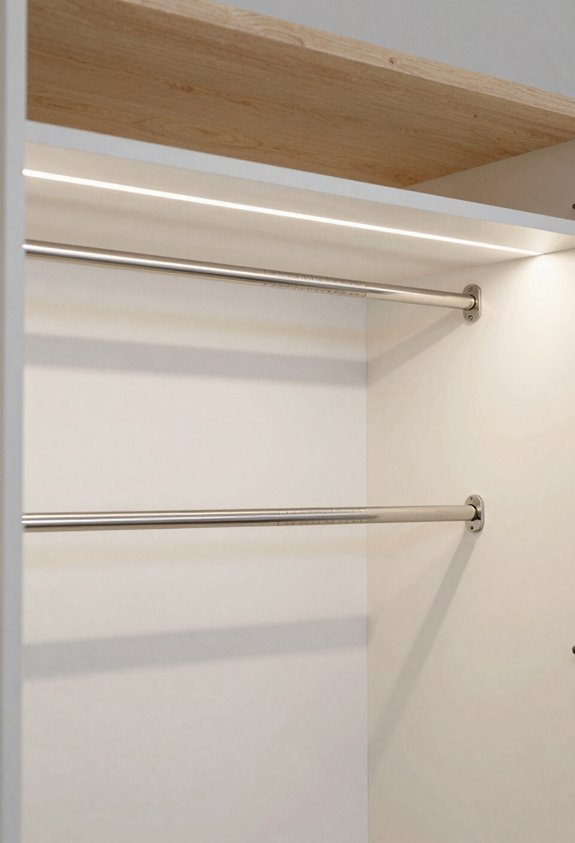
Choosing between a single rod and a double rod system can significantly improve your closet’s storage capacity. A standard single rod sits around 66 inches high and works well if you have mostly longer items like dresses and coats. A double rod setup with a top rod at 80 inches and a bottom one at 40 inches effectively doubles your hanging space. Before you install either system, consider what you’re actually storing. Are you dealing primarily with short items like shirts and pants, or do you own many long dresses. This assessment will determine which system best suits your needs.

【Upgrade Adjustable Width & Height】The width range is from 17 to 29 inches, and the height range is from 14.6 to 37.1 inches. The user-friendly design has six adjustable heights, which can maximize the unused space beneath hanging clothes. Dimensions: 37.1"H x 29"W (Fully Expand)

Instantly Double Your Storage: Transform unused vertical space into a second tier to maximize capacity in small closets, dorms, and apartments

Instantly Double Your Storage: Transform unused vertical space into a second tier to maximize capacity in small closets, dorms, and apartments
Single Rod Standard Heights
Your closet rod feels either impossibly high or weirdly low because of improper placement. Getting single rod height right matters for functional daily use. Here’s the standard closet rod placement:
- Mount the rod so its bottom sits at 66 inches from the floor. This height works for most adults hanging everyday garments.
- Leave 1–2 inches of breathing room above the rod up to your shelf, preventing snags and frustration.
- Measure from floor to the rod’s bottom for accuracy, not the top, ensuring consistent reach clearance.
The 66 inches measurement is the standard for single rod height that allows you to access your shirts and pants without overreaching. Proper closet rod placement streamlines your daily routine.
Double Rod Configuration Benefits
Why settle for one rod when you could double your hanging space. A double-rod configuration maximizes vertical space effectively. Mount your top rod around 80 inches high for long garments like dresses and coats, then position your lower rod at roughly 40 inches for shirts and folded pants. This setup provides access to different garment types without the frustration of cramped closets. Keep about 1–2 inches of clearance above and below your rods to avoid snagging and wrinkling. For a 24-inch depth, you have enough room for hangers to move freely. This layout transforms how you organize and use your closet space.
Choosing Your System Type
So, which system’s actually right for you: single or double? What to consider:
- Single rod at 66 inches works well if you have mostly long items, leaving comfortable space to the shelf above for hanger accessibility and air circulation.
- Double rods maximize your closet depth guidelines perfectly. Top rod at 80 inches for dresses, bottom at 40 inches for shirts and pants, effectively doubling your storage capacity.
- Kids’ setups start lower, around 30 inches, since children need to reach their outfits independently.
Think about what you’re actually hanging. Mount your rod about 12 inches from the back wall, allowing roughly 24 inches total closet depth for smooth hanger movement. Single versus double depends on your wardrobe composition, not arbitrary standards.
Measure Your Closet Depth: Why 12 Inches From the Wall Matters
When you’re figuring out where to mount your closet rod, the 12-inch measurement from the back wall is a practical necessity. This closet depth rule isn’t random. It refers to the space between your back wall and where your closet rod actually sits. Why does it matter so much? Those 12 inches give your hangers room to swing freely without snagging on anything. Your sleeves won’t brush the wall. Hardware won’t get cramped. It’s the sweet spot that works with typical 24-inch closet depths, maximizing your hanging space significantly. Consider it your closet’s functional space, essential for keeping everything organized and accessible. Start here and adjust if needed based on your specific storage requirements.

Maximize Vertical Space: Our expandable closet rod add an extra hanging tier under the shelf to make full use of wasted vertical space. It keeps your clothes neat and wrinkle-free, avoiding messy stacking and clutter.

Stepless Adjustment Closet Rod: The upgraded BUHAROY closet rod featuring an innovative stepless adjustment design, Lets you adjust with precision to fit your closet’s exact size, so there are no gaps in the closet hanging rod caused by improper sizing, No manual cutting is required.

Good Helper for Hanging Clothes: Are you always worried about the lack of space in your closet? Do your clothes always get wrinkled because they are folded? Here you'll find the 178cm long metal wall mounted clothes rack . You can easily hang large amounts of clothes on it, which saves space and prevents them from getting wrinkled.
Lower the Rod for Kids: Ages 3–12 Height Guide
Now that you’ve got your closet depth sorted, it’s time to think about the people actually using that closet. If you’ve got kids, their closet rod needs a different approach.
Kids thrive when they can grab their own stuff. I place the lower rod at 30 inches for younger kids, encouraging independence. As they grow taller through ages 8–12, I adjust it up to 40 inches.
- 30 inches keeps shirts, shorts accessible for ages 3–7
- 35–37 inches works for ages 7–10, balancing growth
- 40 inches accommodates pre-teens reaching toward adult heights
This adjustable rod strategy improves closet organization and ensures actual clothing accessibility. Leave 2 inches clearance above to prevent damage and allow room for hangers to move freely.

Stepless Adjustment Closet Rod: The upgraded Supforce closet rod features the stepless adjustment design, allows you to precisely adjust according to your closet's specific size; Without any size gaps, No manual cutting is required.

INDUSTRIAL PIPE CLOTHING RACK: Features an industrial style the wall mounted pipe clothes rack design with a sleek matte black finish that makes it aesthetically pleasing. Our pipe clothing rod are suitable for both modern and vintage styles
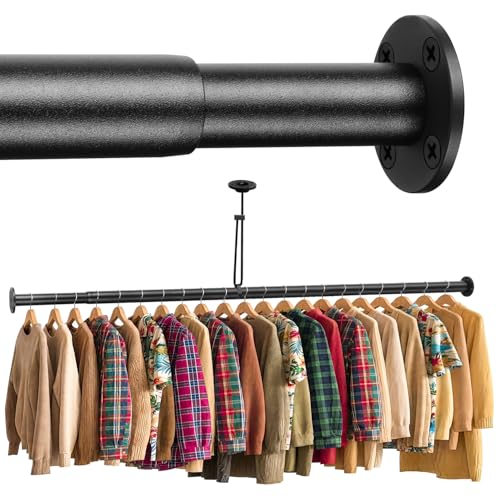
Design Concept: We abandon the original connection and adopt the latest coarse thread connection which is more stable can withstand greater weight and is not easy to bend.
Walk-In vs. Reach-In: Choosing the Right Hanging Distance
Your reach-in closet feels cramped while your friend’s walk-in seems to have endless possibilities because closet height and hanging distance aren’t one-size-fits-all. In reach-in closets, place rods around 60–66 inches high for easy access without stretching like you’re grabbing something off a top shelf. Walk-in closets offer more flexibility. You can go higher, such as 80 inches for upper rods, because you’re not reaching across your entire outfit collection. The key difference is that reach-in closets require closer, accessible positioning, while walk-in closets let you maximize vertical space. When designing your closet height strategy, consider how you’ll actually use the space. Reach-in closets demand practicality; walk-in closets reward ambitious organization.

18-Level Push-Button Adjustment: 18 preset positions with 0.6-inch increments provide precise sizing for this closet rod. The button-lock mechanism stays secure over time and provides added stability compared to traditional twist-lock closet poles

【Adjustable Tension Rod】With new splicing and telescoping design on the basis of retaining the spring tension, this tension curtain rod can extend from 32 to 66 inches. Come with 3 fixed length rods and 1 telescoping rod, you can flexibly adjust the length according to your need.

18-Level Push-Button Adjustment: 18 preset positions with 0.6-inch increments provide precise sizing for this closet rod. The button-lock mechanism stays secure over time and provides added stability compared to traditional twist-lock closet poles
Mark and Mount Your Rod: Installation in Three Steps
Ready to install your closet rod? Follow these three steps to complete the project.
- Mark your heights – Grab a pencil and mark 66 inches on the wall for a single-rod setup, or 80 inches and 40 inches for double rods.
- Measure depth and clearance – Check that your closet is about 24 inches deep, then mark 12 inches from the back wall. Ensure at least 2 inches of rod clearance above your bottom shelf.
- Mount with confidence – Drill your brackets, slide that rod in, and step back.
These steps will transform your closet from chaotic to organized. Your clothes will function properly with correct rod placement.

【Upgrade Adjustable Width Height Closet Extender Hanging Rod 】This closet rod features an adjustable width from 16 to 27.9 inches and a height range from 16.7 to 28.7 inches. With six different height settings, it maximizes the unused space beneath hanging clothes. Fully expanded, it measures 28.7 inches in height and 27.9 inches in width, making it perfect for optimizing your closet storage.

Heavy-Duty Stainless Steel Closet Rod: Built with a 1.3-inch diameter tube that supports up to 68 lbs for enhanced strength and stability. Holds coats, jackets, jeans, sweaters, and other garments
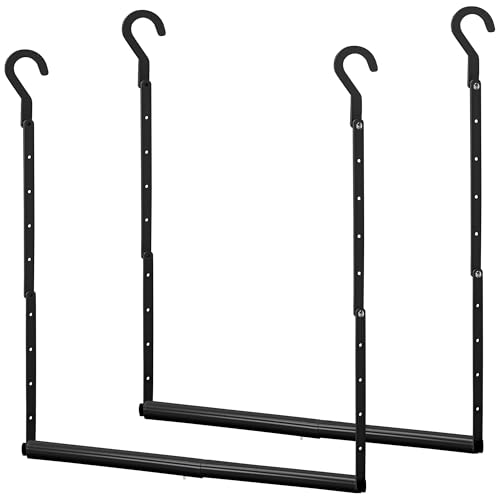
【PATENTED DESIGN: Upgraded Adjustable Width & Height】The width range is from 17.9 to 29.7 inches, and the height range is from 9 to 37.8 inches. The user-friendly design features hand-tightened screws with 9 adjustable height levels, accommodating various storage needs. Upgraded Foldable Design - the upper and lower sections fold to overlap, with holes that align perfectly, making it ideal for small closets. Dimensions: 37.8"H x 29.7"W (Fully Expand)
Avoid These Rod Mistakes: The Most Common Installation Fails
You’ve got your measurements marked and you’re ready to drill, but hold up. I’m here to save you from the installation mistakes that’ll make you want to pull your hair out. First up: forgetting clearance and depth. You need at least 2 inches between your shelf and rod top, and keep that rod 12 inches from the rear wall. Wrinkled clothes aren’t fun.
Another mistake: choosing the wrong rod height for your situation. Single vs double rod setups demand different approaches. A single rod sits around 66 inches, while double rods need 80 inches top and 40 inches bottom. Don’t just eyeball it.
Ignoring your closet’s actual depth is a critical error. Most closets are 24 inches deep, not a magical mystery zone. Measure twice, drill once.
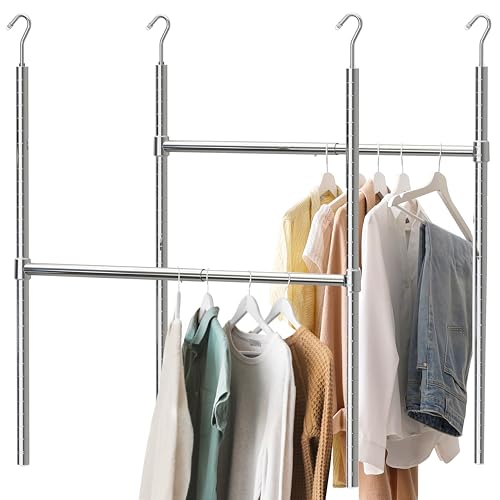
Instantly Double Your Storage: Transform unused vertical space into a second tier to maximize capacity in small closets, dorms, and apartments
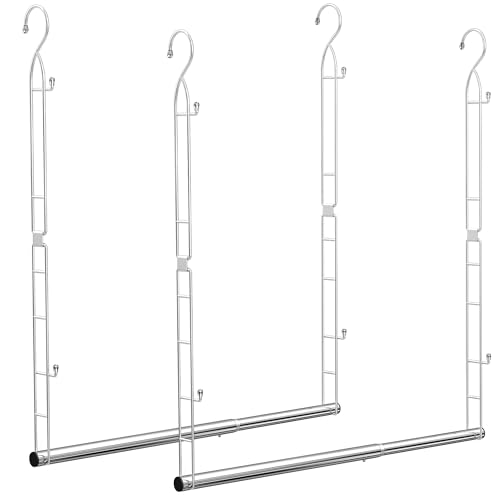
Maximize Closet Space: The hanging closet rod is an innovative solution designed specifically for individuals who love organization and struggle with limited closet space. This closet hanging rod is crafted to help users maximize their closet capacity while maintaining a neat and tidy wardrobe.

【PATENTED DESIGN: Upgraded Adjustable Width & Height】The width range is from 17.9 to 29.7 inches, and the height range is from 9 to 37.8 inches. The user-friendly design features hand-tightened screws with 9 adjustable height levels, accommodating various storage needs. Upgraded Foldable Design - the upper and lower sections fold to overlap, with holes that align perfectly, making it ideal for small closets. Dimensions: 37.8"H x 29.7"W (Fully Expand)