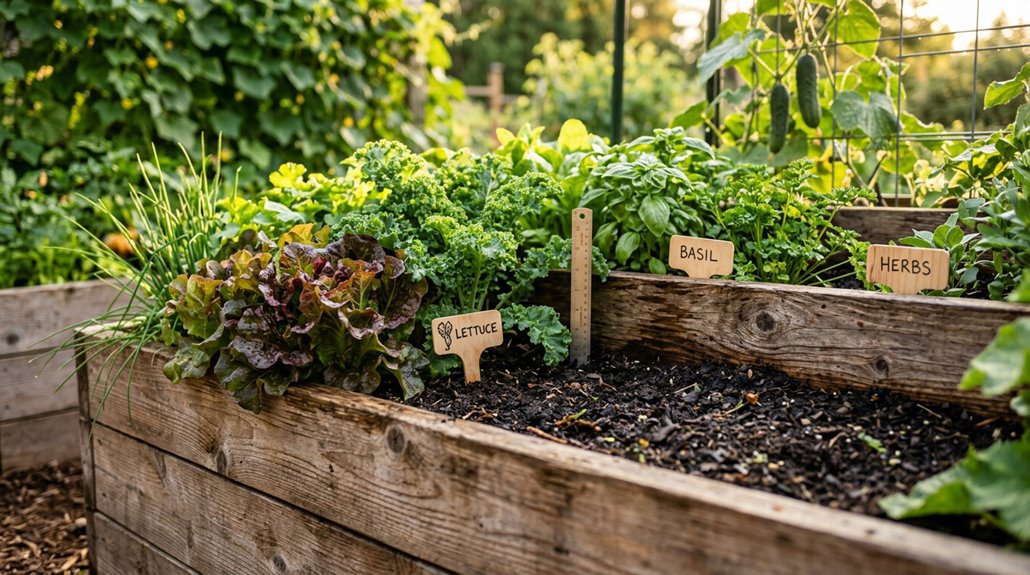
I’d say grab 17 inches. It’s the sweet spot that fits tomatoes, peppers, and most vegetables you’ll want to grow, plus your back won’t strain during weeding marathons.
If you’re growing lettuce and herbs, 11 inches saves cash on soil.
Go 32 inches for potatoes and corn; your knees will benefit from the height.
Wheelchair-friendly access requires 24-30 inches for comfortable reach.
The best results come from mixing heights across your garden, matching each bed to what you’re planting and how you like to work.
Different vegetables and accessibility needs require different depths for optimal productivity and comfort.
Understanding Raised Bed Depth: Three Options That Cover Every Goal
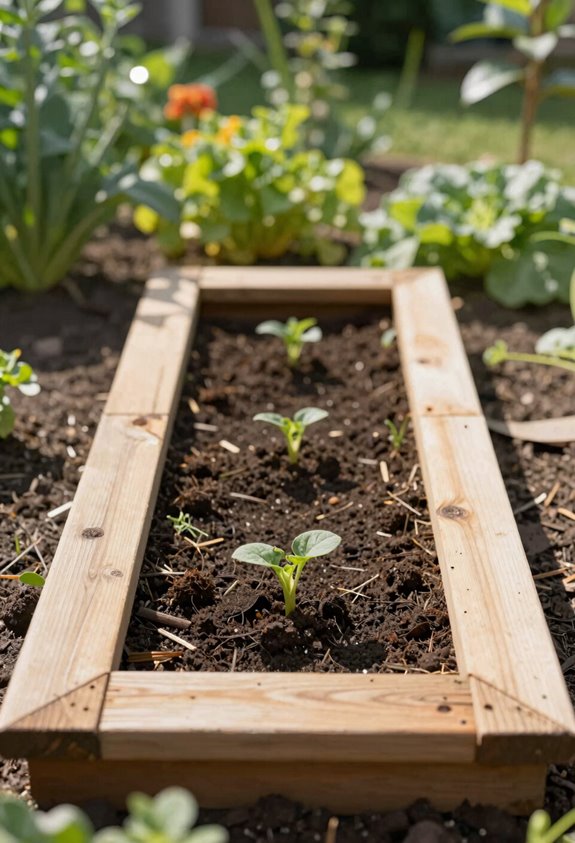
How deep does your raised bed actually need to be? Raised bed depth is one of those decisions that changes everything.
You’ve got three solid options. Eleven inches works great for shallow-rooted plants like lettuce, strawberries, and herbs. It’s budget-friendly and saves on soil. Jump to 17 inches, and you have a solid choice for most veggies like carrots, tomatoes, and kale. Better moisture retention too. Need to grow potatoes or corn. Go 32 inches deep. That’s where the real root space happens.
The secret is matching your bed depth to what you’re actually planting. Shallow roots need shallow beds, deep roots need deep beds.
11-Inch Beds: Perfect for Lettuce, Herbs, and Strawberries
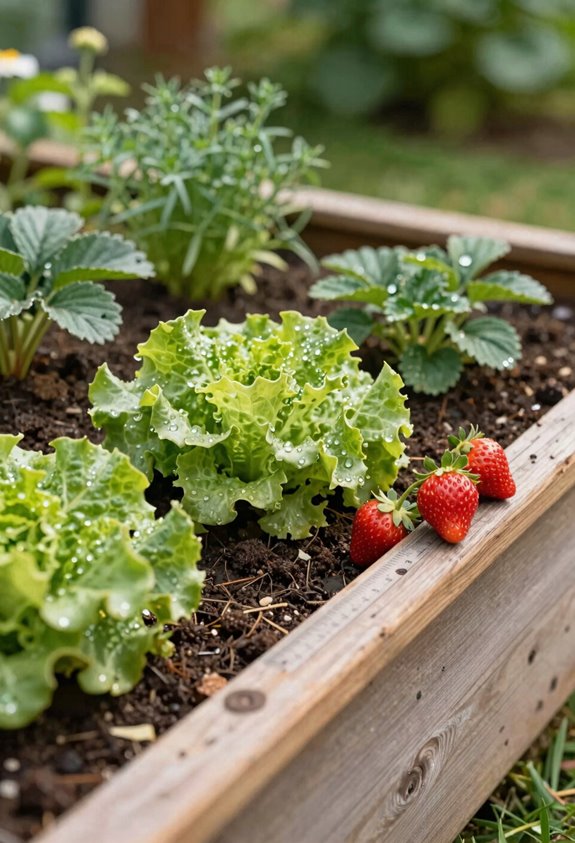
When you’re just starting out with raised beds or you’re tired of spending significant money on soil, an 11-inch depth might be exactly what you need. This depth works well for shallow-rooted plants like lettuce, strawberries, and herbs. You’ll grow them close to the soil surface without needing large amounts of fill material. The main advantage is cost savings. Less soil means lower expenses. Plus, you can place these raised beds directly on the ground, letting them interact with your native soil underneath. They’ll retain moisture effectively while improving your existing topsoil structure. This approach delivers results without significant expense.
17-Inch Beds: The Goldilocks Height for Most Vegetables
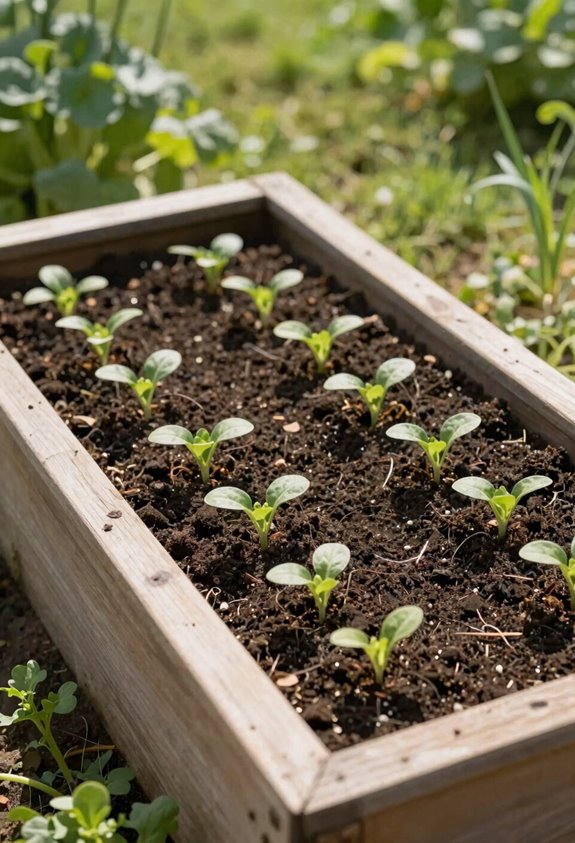
Ever notice how 11-inch beds are great for shallow stuff, but you’re wondering if you could grow other vegetables? 17-inch raised beds are your answer. They’re the sweet spot, what I call the Goldilocks height. You get enough root space for tomatoes, carrots, eggplant, and kale without excess. Your back benefits from this height. Working at this level means less painful bending during planting and maintenance, allowing for comfortable, actual enjoyment instead of discomfort during weeding.
Fill these raised beds using Hügelkultur, and you’ll achieve moisture retention while keeping drainage solid. Compared to shallower options, you’ll see noticeably stronger plant growth. They balance accessibility with material costs perfectly, making them ideal starter beds for any vegetable you want to grow.
32-Inch Beds: Waist-High Growing for Less Bending
If you’ve ever stood up from weeding a shallow bed and felt your lower back scream in protest, then 32-inch raised beds might just change your gardening life. This waist-high growing eliminates most bending. This raised bed height supports deep-rooted plants like potatoes and corn while keeping your spine happy.
| Feature | Benefit | Impact |
|---|---|---|
| 32-inch depth | Reduced bending | Less back pain |
| Deep roots | Better nutrients | Stronger plants |
| Drainage | Healthier soil | Thriving growth |
| Accessibility | Easier tending | More gardening |
| Long-term comfort | Sustained enjoyment | Year-round use |
Sure, you’ll invest more upfront in materials, but the ergonomic payoff is worth the cost. Gardeners who switch to this height report significantly reduced back strain and continue gardening comfortably throughout the year.
Match Your Crops to Your Bed Depth
6–12 inches for leafy greens, 12–18 inches for tomatoes and peppers, and anything deeper than 18 inches for root crops that require extensive soil depth.
Shallow-Rooted Plant Selection
Why does depth matter when growing lettuce and strawberries? An 11-inch raised garden bed works perfectly for shallow-rooted crops. These plants don’t dig deep; they remain near the soil surface. You’ll save money on soil and filler materials. Additionally, you can place your raised garden beds directly on the ground, allowing them to interact naturally with the native soil below. Lettuce, strawberries, and most herbs thrive at this depth. A shallow bed provides adequate growing space without unnecessary expense or materials.
Deep-Rooted Vegetable Requirements
- Potatoes and corn demand 32 inches deep. They require substantial root space for optimal growth.
- Carrots, beets, and large radishes need 12–18 inches minimum for vigorous development
- Tomatoes, peppers, and eggplants require that same 12–18 inch range with staking support
- An 18-inch raised bed depth gives you the sweet spot for most deep-rooted vegetables
Shallow beds will limit your harvest potential. Consider mixing different heights within your system. Match your crops to your bed depth, and your garden will produce stronger yields. Roots develop better with adequate soil depth.
Accessibility First: Height for Bad Backs and Limited Mobility
When’s the last time you bent over a garden bed and felt that sharp twinge in your lower back? That’s exactly why raised bed height matters so much. I’ve learned that waist-high to chest-high beds, roughly 24 to 36 inches, transform gardening from painful to actually enjoyable. Wheelchair users benefit most from 24-30 inches, giving you comfortable reach without overextending. Standing-garden folks often prefer around 36 inches to minimize bending during those long sessions. Deeper beds need more soil, but they reward you with better root space and genuine long-term accessibility. Mix different heights throughout your garden, and suddenly everyone, whether you’ve got mobility challenges or a cranky spine, can participate equally. This approach removes physical barriers to gardening for people with varying mobility needs.
How Height Stops Weeds and Deters Rabbits
I’ve learned that raising your bed higher works against weeds trying to push up from the ground below, which significantly reduces the constant battle you’d face with a shallow bed. Your taller barrier, 12 inches or more, also limits rabbits and other small critters’ access, basically saying “sorry, buddy, this garden’s too much effort for you,” though determined pests can still find ways in. The real advantage happens when you combine that height with a solid mulch layer or weed barrier, because even the best elevation can’t stop seeds that blow in on the wind and land right on top of your soil.
Weed Intrusion From Below
How much do you really need to elevate your bed to keep those sneaky weeds at bay. Weed intrusion from below is where the real battle happens.
- Shorter beds let ground soil weeds creep up easier, making your life harder
- Taller beds create a buffer zone that blocks most underground weed seeds from reaching your plants
- Even elevated beds need mulch and edge control because seeds still blow in from above
- The sweet spot? Aim high enough to deter subterranean growth, but not so high you can’t reach your veggies
Height alone won’t stop everything. You’re building a defense system, not a fortress. Combining elevation with smart mulching creates a garden with significantly reduced weed pressure.
Small Critter Deterrent Effects
Your raised bed’s height serves double duty: it fights weeds while building a barrier against small critters like rabbits. Taller beds seriously discourage smaller animals from hopping in and munching your plants. Shorter beds, by contrast, are more accessible to rabbits and similar pests. Without fencing, lower raised bed heights increase your vulnerability to intrusion.
Even a modest height increase makes animals reconsider before attempting access. It functions as an effective deterrent to unwanted visitors. When deciding on raised bed height, consider that you’re protecting your garden from becoming a rabbit’s feeding ground, not just managing weeds.
Height As Protective Barrier
So what’s really going on when you stack soil higher in your garden bed? You’re basically building a fortress against two garden enemies: weeds and hungry rabbits.
Here’s the magic happening:
- Deeper soil blocks weed seeds from germinating because they can’t reach up from native ground soil below
- Physical height deters rabbits since they struggle accessing interior plants from shorter angles
- Slower emergence rates happen because weeds must travel through more soil layers
- Ongoing management still matters. Wind-blown seeds find their way in anyway
Taller beds reduce but don’t eliminate all weeds. Combining raised bed height with mulch and timely weeding creates multiple layers of protection that work together to minimize weed and rabbit pressure in your garden.
Filling Your Bed Without Overspending
Ever noticed how garden beds can drain your wallet faster than a leaky hose? You don’t need to break the bank. Shorter 11-inch beds are your budget-friendly option, using significantly less fill material upfront. Leverage your native soil, which is literally beneath your feet and packed with nutrients your plants need. Top it off with compost annually, and your garden will thrive. Taller beds cost more initially, but deeper soil depth means stronger roots and less back pain. Pick 17-inch beds as your sweet spot for better ergonomics without excessive costs. Use affordable filler materials that settle naturally, then refresh seasonally. This approach keeps your wallet happy while you grow.
How Width and Length Affect Your Height Choice
I’ve found that your bed’s width and length actually shape how high you should build it. If you’re going 4 feet wide, I’d push toward 12–18 inches so you can reach that middle from either side without becoming a human bridge. Narrower 2–3 foot beds let you get away with less height since you’re not straining as much. Longer beds drain your energy faster, so bumping up the height to 18–24 inches reduces back strain during extended weeding sessions. A 20-foot bed demonstrates this clearly; the extra length makes the ergonomic benefit of increased height particularly noticeable.
Reach And Access Planning
- Plan your reach – Can you access the center without stretching like you’re competing in the Olympics?
- Consider width limits – Beds wider than 4 feet mean stepping inside, which becomes inefficient. Stay between 2.5–4 feet for side access.
- Think about maintenance – Shorter beds with adequate width improve airflow and let you reach everything without contorting yourself.
- Map your irrigation early – Straight layouts align perfectly with drip systems, preventing costly retrofits that complicate access.
Around 24 inches handles most situations effectively, giving you comfortable, wheelchair-accessible side tending. This dimension ensures you won’t need to stretch or strain during regular maintenance.
Length Impact On Workflow
How far are you actually willing to walk to tend your garden. Longer beds mean more distance between you and your plants, which directly affects your raised bed height choice. When you’ve got a bed stretching eight feet or more, you’ll want that raised bed height higher, perhaps 30–36 inches, so you’re not constantly bending or shuffling awkwardly along the length. Shorter beds allow you to work comfortably at 24 inches without excessive bending. Your raised bed height should match your bed’s length. Longer beds with comfortable reach reduce back strain and increase the time you spend productively gardening rather than managing physical discomfort.
Height Mistakes That Create Extra Weeding and Soil Loss
Raised bed height significantly impacts your gardening success. When you go too shallow, you invite considerable problems.
Raised bed height significantly impacts gardening success—shallow beds invite weeds, poor drainage, and stressed plants.
- Weeds creep in from ground soil below, especially with beds under 11 inches deep
- Shorter beds let rabbits and critters access your crops way too easily
- You’ll lose soil quality faster without proper depth for drainage and root space
- Shallow beds dry out quicker, stressing your plants during hot months
The mistake many gardeners make is choosing height based on budget alone. While 11-inch beds cost less, growing medium-rooted crops like tomatoes or carrots requires that 17-inch depth. Investing upfront prevents extensive weeding throughout the season.
Finalize Your Height: A Quick Decision Checklist
So you’ve narrowed down the problems. Now pick your bed’s raised bed height using this checklist: First, ask yourself what you’re actually growing. Lettuce? Go shallow at 11 inches. Beans and strawberries? Aim for waist-height around 17–24 inches. Deep-rooted crops like potatoes demand 32 inches minimum. Next, consider your body literally. Will you be bending constantly, or do you want zero back strain? Taller beds reduce physical strain. Then calculate soil costs, because filling a 36-inch bed versus an 11-inch one costs significantly different amounts. Finally, think accessibility. Are you gardening solo, or involving kids and wheelchair users? Mix heights if you can. Selecting the right height prevents physical discomfort and reduces ongoing maintenance difficulty.
Build Your First Bed With Confidence
Ready to build this? Here’s how to move from planning to action:
- Grab your materials—wood, soil, tools—and pick your spot, making sure it gets solid sunlight for your crops.
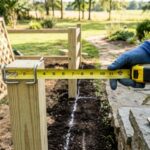
- Measure twice, cut once; decide your raised bed height based on what you’re growing, whether that’s shallow 11-inch beds for lettuce or deep 32-inch ones for potatoes.
- Assemble the frame, checking corners are square so everything sits level and doesn’t wobble like a wobbly table.
- Fill with quality soil, water it down, and let it settle for a day before planting.
You’re creating something real here, a space that’ll feed you and your family. Start with one bed, nail the raised bed height decision, then expand.