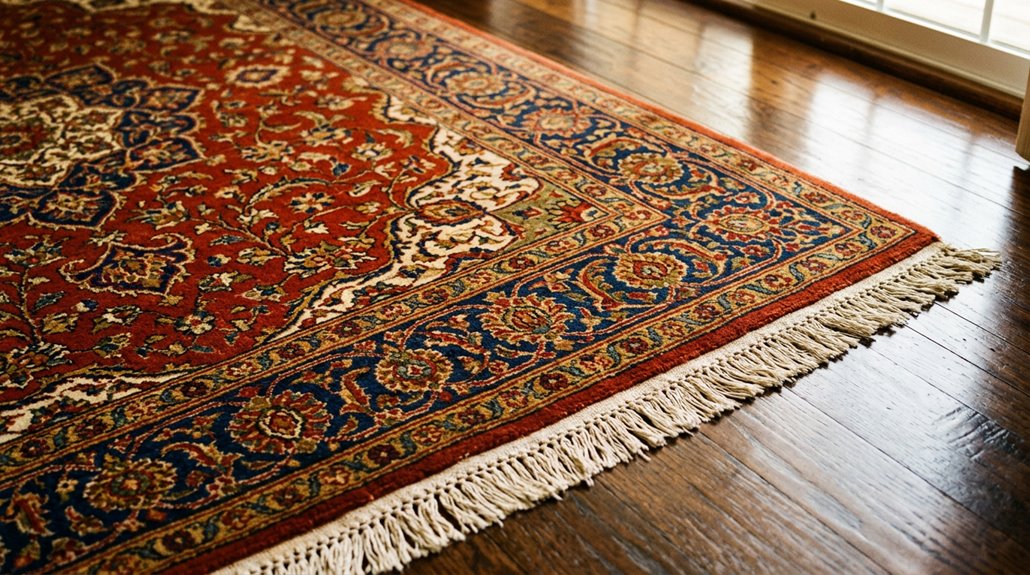
Master weavers hand-tie up to 2 million knots per rug, taking months or years to finish. They’re crafted from premium wool and silk, not cheap synthetics, using rare natural dyes that actually improve with age and develop gorgeous patina over decades. Add in authentic provenance from legendary weaving cities like Isfahan or Tabriz, plus fewer skilled artisans entering the trade, and scarcity drives prices significantly higher. Understanding what determines value requires examining additional factors beyond these core elements.
Why Hand-Knotting Takes Months to Years
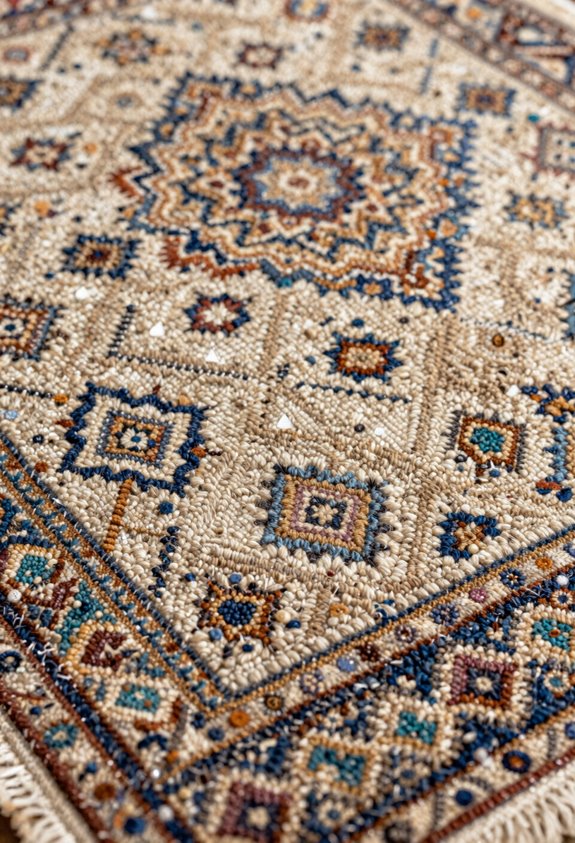
Ever wonder why a Persian rug costs more than a used car. Hand-knotting is absolutely labor-intensive. Master weavers tie thousands of individual knots per square inch, creating knot density that determines everything: detail, durability, value. A single 9×12 rug contains up to 2 million knots. Your weavers produce roughly 6,000 to 12,000 knots daily, depending on complexity. So a moderately sized rug takes years to complete. Not weeks, not months, but actual years. The intricate patterns demand shockingly focused attention and repetitive precision. You’re essentially paying for months or even years of someone’s dedicated craftsmanship. That’s why these rugs command such premium prices. The labor investment is genuinely staggering.
Natural Dyes That Age Into Patina (Why Synthetics Can’t Compare)
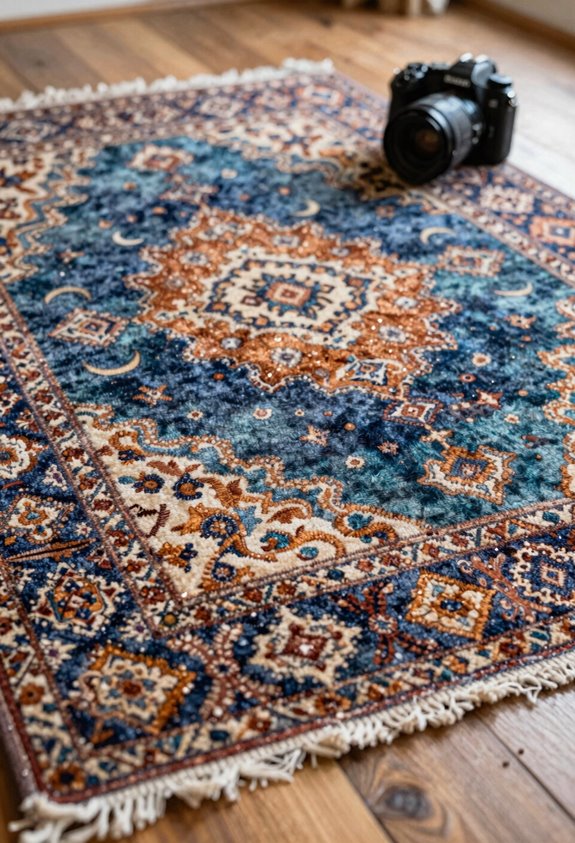
Natural dyes develop patina over decades. The wool fibers wear, colors mellow into warmer tones, and you get this velvety texture collectors absolutely love. That intentional color variation you’ll notice, called abrash, demonstrates authenticity.
When you use madder root for reds, indigo for blues, or walnut husks for browns, you’re creating something that improves with age, unlike synthetic dyes that fade flat and lifeless. Factory synthetics can’t replicate this aging process. They look tired and washed out. Natural dyes settle into sophisticated, muted tones that convey vintage character and genuine history.
The price difference reflects this fundamental distinction. Natural dyes age gracefully; synthetics do not.
Why Wool and Silk Cost More Than Synthetics
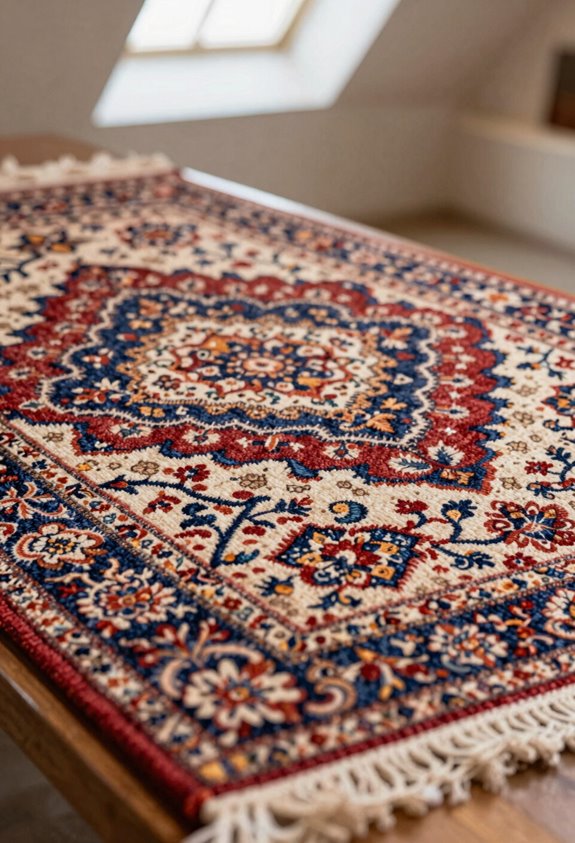
What makes a Persian rug feel like butter under your fingertips while a synthetic knockoff feels like plastic? It’s wool and silk. Premium wool from high-altitude sheep allows for high knot counts, sometimes 300+ KPSI, creating patterns so intricate they demand attention to detail. Silk offers even finer results. Hand-knotting with these natural fibers is labor-intensive work that takes months or years for one rug. Synthetics are machine-made in weeks.
Wool and silk last decades, even centuries. They take natural dyes beautifully, developing rich patinas over time. Your synthetic rug will fade, pill, and feel like cardboard in five years. You’re not just paying for material; you’re investing in durability that provides actual functional value across generations.
How Turkish vs. Persian Knots Affect Rug Price and Design
Once you understand how knots work, you’ll see why some Persian rugs cost thousands while others don’t, because the knot style (Turkish versus Persian) directly impacts both the density and the precision of your final design. KPSI numbers range from 150 to 600-plus, which means more knots packed into every square inch equals sharper, more intricate patterns and a significantly higher price tag. A Tabriz rug might use Turkish knots for that mirror-image symmetry, while a Kashan uses Persian knots for dense intricacy, and that regional choice, combined with whether you’re using wool or silk, determines the investment value and quality level of the piece.
Knot Density and Craftsmanship
The real secret behind a Persian rug’s high price tag is knot density. KPSI, or knots per square inch, represents the difference between a basic design and intricate artwork. Higher KPSI means master weavers pack more knots into tiny spaces, creating sharper designs and intricate details that require close examination to fully appreciate. A single weaver produces only 6,000–12,000 knots daily, so that 9×12 masterpiece requires months, sometimes years, of painstaking work. When silk fibers are incorporated into high-density rugs, the result is phenomenal luster and precision. That craftsmanship carries significant cost. You are literally paying for someone’s focused dedication, skill, and time. This is why your investment holds serious resale value.
Design Precision and Symmetry
- Persian knots yield intricate, tightly-packed designs
- Edge crispness improves dramatically with proper technique
- Medallion clarity directly influences buyer desirability
- Symmetry becomes nearly photographic with 600+ KPSI
- Regional patterns (Isfahan florals, Tabriz medallions) demand specific knotting styles
When precision increases, so does labor time. Higher KPSI counts require more skilled craftspeople working longer hours, which substantially increases production costs and final retail prices.
Regional Weaving Method Impact
Why do two rugs that look almost identical end up with wildly different price tags? It’s all about the knot. Persian knots, those tiny Senneh knots, pack more density into every inch, creating sharper border and medallion detail than Turkish knots. This results in higher KPSI numbers that enable finer, more intricate designs. Turkish knots are stiffer, creating crisper geometric patterns instead. Weave tightness significantly influences value. Regional weaving traditions shape everything. Persian regions like Tabriz excel at those curvilinear florals, commanding premium prices because collectors seek that precision. The weaver’s skill combined with knot density directly determines price multiplier effects. Same size, different knot type, completely different value.
Why Isfahan, Tabriz, and Kashan Command Higher Prices
Ever wonder why some Persian rugs cost thousands more than others that look pretty similar at first glance? Isfahan, Tabriz, and Kashan aren’t just fancy names. They’re the royalty of rug weaving. These three cities command premium prices because of their legendary craftsmanship and historical prestige. Generations of master weavers have perfected their craft since the Safavid courts patronized them.
What sets them apart:
- Exceptional knot density creating finer, more detailed patterns
- Silk foundations enabling ultra-precise weaving on Isfahan rugs
- Grand central medallions with intricate curvilinear motifs
- Master weaver signatures guaranteeing authenticity and rarity
- Deep jewel tones, rich reds and blues that feel luxurious
When you invest in these regional powerhouses, you’re paying for centuries of documented excellence and craftsmanship that cannot be replicated elsewhere.
How Motif Complexity Affects Price (Herati, Boteh, Tree of Life)
What’s the difference between a rug that costs $3,000 and one that runs you $8,000? Often, it’s the motifs. Complex patterns like Herati fish, Boteh paisleys, and Tree of Life designs demand serious technical skill. These intricate motifs require master weavers to memorize elaborate repeating forms, which directly boosts knot density and labor time. Higher knot density means sharper detail, superior durability, and strong resale value. Petaled florals demand finer knotting and smoother color transitions that elevate the whole piece. Rare motif variants command premium prices when authenticated by skilled dealers. You’re paying for the weaver’s mental stamina and precision. That’s where your money goes.
Antique vs. Vintage: Age and Authenticity Drive Value
You’ve seen how motif complexity increases the price, but a rug’s age can multiply that value by two, three, even ten times over. Antique rugs, those 100+ year old pieces from the 1930s or earlier, command premium prices because they carry historical significance, master weavers’ signatures, and documented provenance stories. Vintage pieces, around 30–50 years old, cost less but still matter. Age alone, however, does not determine value.
What actually counts:
- Knot density (KPSI) and weaving technique quality
- Natural dyes that have mellowed into gorgeous patina
- Provenance tied to specific regions or artisans
- Material integrity after decades of use
- Authentic craftsmanship from master weavers
That velvety sheen signals authenticity to collectors, reflecting the rug’s true market value.
Rare Rug Colors From Natural Dyes (Why Purple Costs Most)
Why does purple cost so much more than other colors in Persian rugs? Purple requires expensive natural dyes like Tyrian purple, which does not grow readily in nature. When weavers create purple, they use complex over-dyeing techniques, layering colors multiple times. This demands serious labor and skill.
| Factor | Impact | Cost Effect |
|---|---|---|
| Rare dye sources | Limited availability | Drives up prices |
| Over-dyeing process | Multiple labor steps | Increases time investment |
| Historical luxury symbolism | Collector demand | Boosts auction values |
You’re paying for rarity and history. Purple’s association with royalty means collectors actively seek it out. Fewer weavers even attempt purple pieces because the process demands expertise. This scarcity creates significant value. When you choose purple, you’re investing in something genuinely rare and historically significant.
When Extinct Tribes and Limited Production Regions Drive Scarcity
Scarcity hits differently when we’re talking about rugs from tribes that don’t exist anymore. It’s like trying to find vintage concert merchandise from a band that broke up in 1987. Once these weaving communities disappear, their iconic designs vanish with them. You can’t recreate that authentic provenance. Limited production regions mean fewer pieces survived, and extinction-driven scarcity is what makes collectors pursue these pieces intensely.
Extinct tribes mean extinct designs. Once weaving communities disappear, their authentic patterns vanish forever—making surviving pieces irreplaceable.
Consider what’s actually happening:
- Tribal rug sources are literally disappearing, making existing pieces irreplaceable
- Iconic patterns can’t be replicated by current weavers with identical authenticity
- Historical geopolitical factors reduced supply permanently over decades
- Provenance from endangered groups adds immeasurable cultural weight
- High-quality materials concentrate in vanishing regions, elevating rarity-based value significantly
When extinction meets limited production, you’re not just buying thread and wool. You’re holding cultural history that cannot be manufactured again.
Why Bidjar’s Dense Weaving Costs More and Lasts Longer
When artisans hammer those knots into Bidjar rugs, they’re creating something that weighs a ton and lasts for generations. The knot density often exceeds 200+ knots per square inch (compared to standard Persian rugs at 100-150), meaning these rugs can outlast your furniture by decades, making them a legitimate investment rather than just a decorative purchase. You’re paying extra now so your grandchildren can actually use the same rug without it falling apart.
The Hammer-Pounding Technique
Pounding knots with a mallet might sound like you’re building a house, not weaving a rug, but that’s exactly what makes Bidjar rugs so ridiculously durable. Here’s what happens during this process:
- Weavers hammer each handmade knot to compress them tighter, dramatically increasing knot density
- This hammering creates rugs so heavy and sturdy they withstand heavy foot traffic
- The technique requires serious skill. Years of apprenticeship are needed to master controlled strikes
- Higher knot density means your rug’s patterns stay crisp for decades, not months
- You’re essentially getting a rug built like a tank, which justifies the premium price
The result is a rug that will outlast your furniture. That’s what sets Bidjar rugs apart.
Heavy Weight, Superior Durability
When you pick up a Bidjar rug, you’ll immediately notice something’s different: it’s *heavy*. That serious weight is not a flaw. It’s proof of quality. The Bidjar density comes from those super-tight knots packed together like sardines in a can. We’re talking thousands of knots per square inch, which means labor-intensive production that increases cost. That knot density creates rugs that withstand foot traffic. Your family can walk across these rugs for decades, and the patterns stay crisp and vibrant. The heavy weight requires thicker cotton or silk foundations, which boosts durability and raises the price tag. Premium craftsmanship costs more upfront, but you’re investing in a rug that outlives trends.
Long-Term Value Investment
Master weavers spend years perfecting single pieces, creating heirlooms rather than mass-produced rugs.
Knot density exceeding industry standards means serious resistance to wear and tear.
Premium valuations at auctions prove collectors recognize lasting value.
Structural integrity stays intact through decades of foot traffic without deterioration.
Color retention keeps your rug looking fresh when cheaper alternatives fade.
This represents a tangible asset that appreciates over time and passes through generations.
Provenance and Authentication: Why Verification Adds Cost
When buying Persian rugs, some cost thousands more than others despite appearing nearly identical. The difference lies in provenance and authentication. When you buy a rug with documented history from Isfahan or Tabriz, you’re paying for proof. Master weavers signed their work, and regional techniques created distinct knot patterns and dyes that experts verify. Getting certified authenticity costs serious money because specialists examine everything: age, origin, weaver lineage, and historical ownership. It’s comparable to the difference between a counterfeit handbag and an authentic one. That verification protects you from accidentally buying a non-Persian rug disguised as Persian. Reputable dealers provide transparency about all these details, justifying higher prices with guarantees. You’re not just buying a beautiful floor covering. You’re investing in documented proof that what you own is genuinely valuable.
Why Serious Collectors Drive Up Prices and Demand
When serious collectors enter the Persian rug market, they search for pieces rarer than perfectly preserved artifacts from the 17th century. This obsession with rarity and historical significance drives prices substantially higher. Master weavers from legendary atoliers like Isfahan and Tabriz create work so exclusive and labor-intensive, with 200+ knots per square inch on premium pieces, that supply cannot meet collector demand. As high-quality designs become scarcer, investment value continues to appreciate. Similar to how sneaker collectors pursue limited releases, serious rug collectors invest substantial sums in authenticated pieces with documented provenance. This exclusivity explains why a single antique Persian rug can sell for millions at auction.
Rarity Drives Investment Value
Why do some Persian rugs cost more than a used car, while others sit in shops for years? The answer is simple: rarity drives serious value. When fewer authentic pieces exist because of wars, disasters, and lost tribes, collectors pursue them with greater intensity. Age matters significantly. A vintage carpet from the 1800s commands substantial premiums. Master weavers’ signatures and regional variants from specific Kurdish or Gabbeh traditions are irreplaceable and command premium prices.
Investment-grade rugs are separated by these factors:
- Provenance documentation proves authenticity and history
- Limited production runs from extinct workshops
- Rare dye colors like authentic purples and blues
- Semi-antique pieces (50-99 years old) showing strong condition
- Signature weaver collections with documented heritage
These factors compound in value. You own a piece of history that appreciates over time.
Historical Significance And Provenance
Beyond rarity alone, what truly drives collector demand is a rug’s backstory. When you trace a carpet back to Isfahan or document its Safavid patronage, prices reach millions. Those historic kilims functioned as diplomatic gifts exchanged with Venice in 1603, carrying substantial cultural significance. The patina and age visible on these pieces represent more than wear and tear. They constitute a documented timeline of authenticity that establishes legitimacy to serious buyers. A rug connected to renowned dynastic courts commands premium prices because provenance conveys a narrative unique to that specific carpet. You are acquiring history, prestige, and cultural significance as a unified object.
Exclusivity Of Artisan Craftsmanship
Every knot you see in an authentic Persian rug represents hours, sometimes weeks, of a master weaver’s life. This is where the investment value becomes apparent. When you’re looking at hand-knotted pieces with knot densities ranging from 80 to 600+ KPSI, you’re paying for decades of apprenticeship woven into one floor covering. Master weavers aren’t just making rugs; they’re signing their names in knots.
What drives serious collectors:
- Hand-knotted construction takes months or years per piece
- Knot densities of 1,000+ KPSI on silk rugs demand extreme skill
- Master weavers command premium prices through regional signatures
- Natural dyes create irreplaceable color depth and patina
- Documented provenance multiplies collector demand exponentially
The scarcity is intentional. These artisans cannot mass-produce work of this caliber.
Why Fewer Persian Rug Weavers Mean Higher Prices
How’d we get to a place where Persian rug prices keep climbing? Fewer skilled weavers mean skyrocketing labor costs and longer production timelines. Master knotting takes years of apprenticeship, requiring serious dedication. Since younger artisans aren’t picking up the craft like they used to, scarcity becomes a significant factor. Demand stays strong, but production capacity is shrinking fast. This time-intensive craftsmanship concentrates value among the remaining weavers, pushing prices up. Limited regional and tribal traditions face erosion, which means fewer uniquely skilled designers exist. When supply drops but everyone still wants these pieces, prices climb. It’s basic economics. rarity commands premium pricing. This economic principle drives those auction prices upward.
What You’ll Actually Pay: Retail Pricing Across Quality Tiers
Now that you understand why fewer weavers mean steeper prices, let’s talk about what actually comes out of your wallet when you’re shopping for these rugs. Here’s the real breakdown:
- Entry-level rugs (80–150 KPSI) run $1,500–$5,000, perfect for dipping your toes in
- Mid-range pieces (150–350 KPSI) land between $5,000–$15,000 with noticeably better craftsmanship
- High-end rugs (350–600+ KPSI) jump to $15,000–$50,000, showcasing intricate detail
- Material quality matters significantly. Premium wool, kurk wool, silk foundations, and natural vegetable dyes push prices substantially higher
- Regional origin like Tabriz or Isfahan commands premium pricing due to design complexity
Your actual cost depends on knot density, material quality, regional origin, and dye methods. You’re investing in centuries-old technique, not just aesthetics.
How to Verify You’re Buying Authentic Value, Not Marketing
So what separates a legitimately pricey Persian rug from a glorified marketing scheme designed to drain your bank account. Check for hand-knotted construction first. Machine-made fakes are basically the rug equivalent of knockoff sneakers. Look for natural dyes next; they age beautifully, developing rich patina over decades, while synthetic dyes fade quickly. Verify authentic materials. Real wool and silk foundations matter. Ask about provenance and regional centers like Tabriz or Isfahan; documented master weavers from these legendary spots command respect for good reason. Get proof in writing. A knowledgeable dealer should provide documentation without hesitation. You’re not being paranoid; you’re being smart about where your money actually goes.