
Pull-out drawers in the kitchen range from a single-tier spice rack that fits a narrow gap beside the stove to a floor-to-countertop pantry unit that holds bottles on multiple shelves.
The width you have between cabinets or appliances decides which setup fits: slim roll-outs work in gaps too tight for a full cabinet, while deeper pull-outs replace the fixed shelf inside a base cabinet you already own.
1. Wastebasket Pull-Out
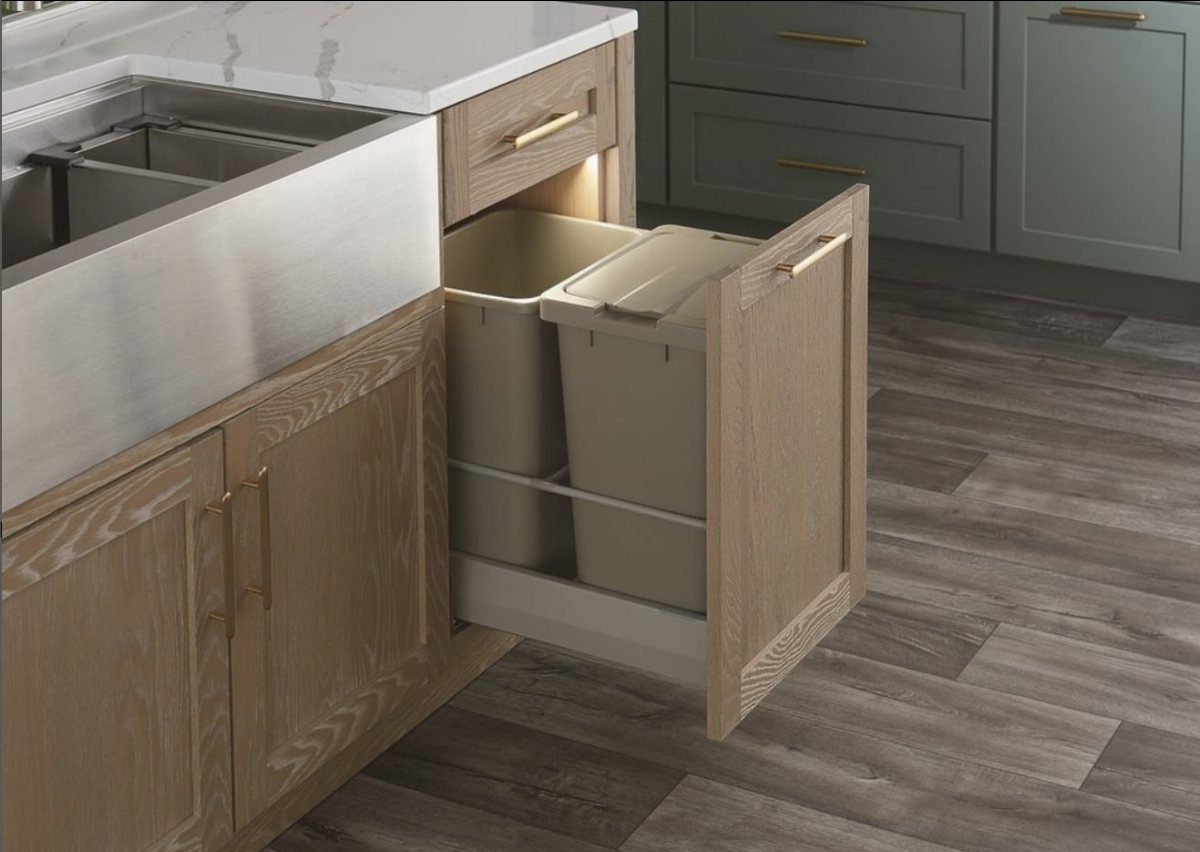
A pull-out drawer fitted with 2 bins keeps trash and recycling next to the sink and out of view when closed. Most cabinet pull-out kits include the sliding hardware and mount inside a standard base cabinet.
If you’re retrofitting an existing cabinet, measure the interior width first. The bins need clearance on both sides for the slides, so measure the interior width before you order to confirm two smaller bins or one larger one will fit.
The setup keeps the floor clear and makes it easier to pull the bins out for emptying.
2. Wall Spice Pull-Out
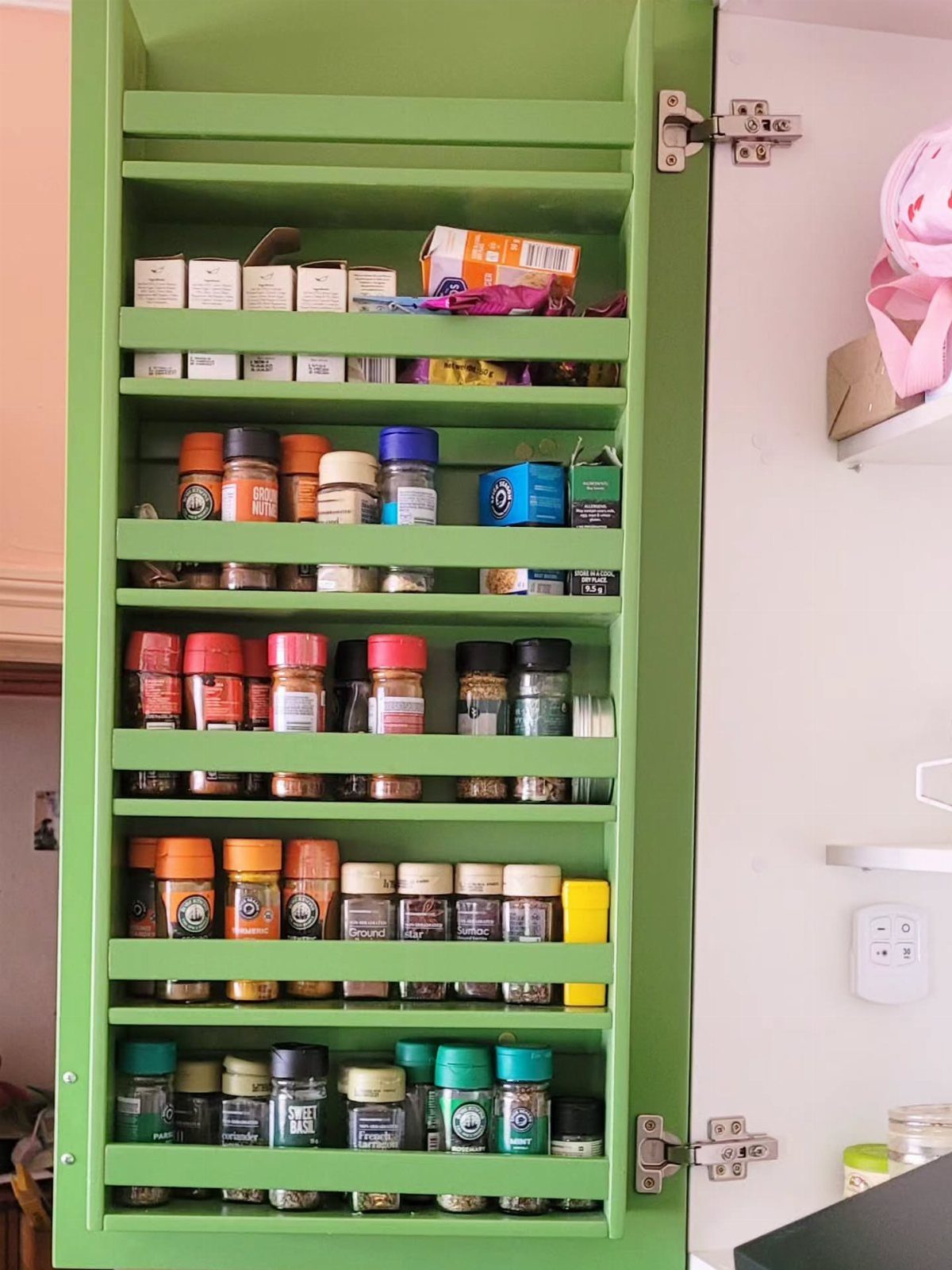
The depth stays narrow so jars and bottles sit one row deep and you can see everything at a glance.
This works well when counter space is tight or upper cabinets are already full. You can install it on an open wall or inside a cabinet door if the cabinet is deep enough to accommodate the swing.
The hinge hardware is the same type used for standard cabinet doors, and a magnetic catch keeps it closed.
3. Narrow Kitchen Space Pull-Out
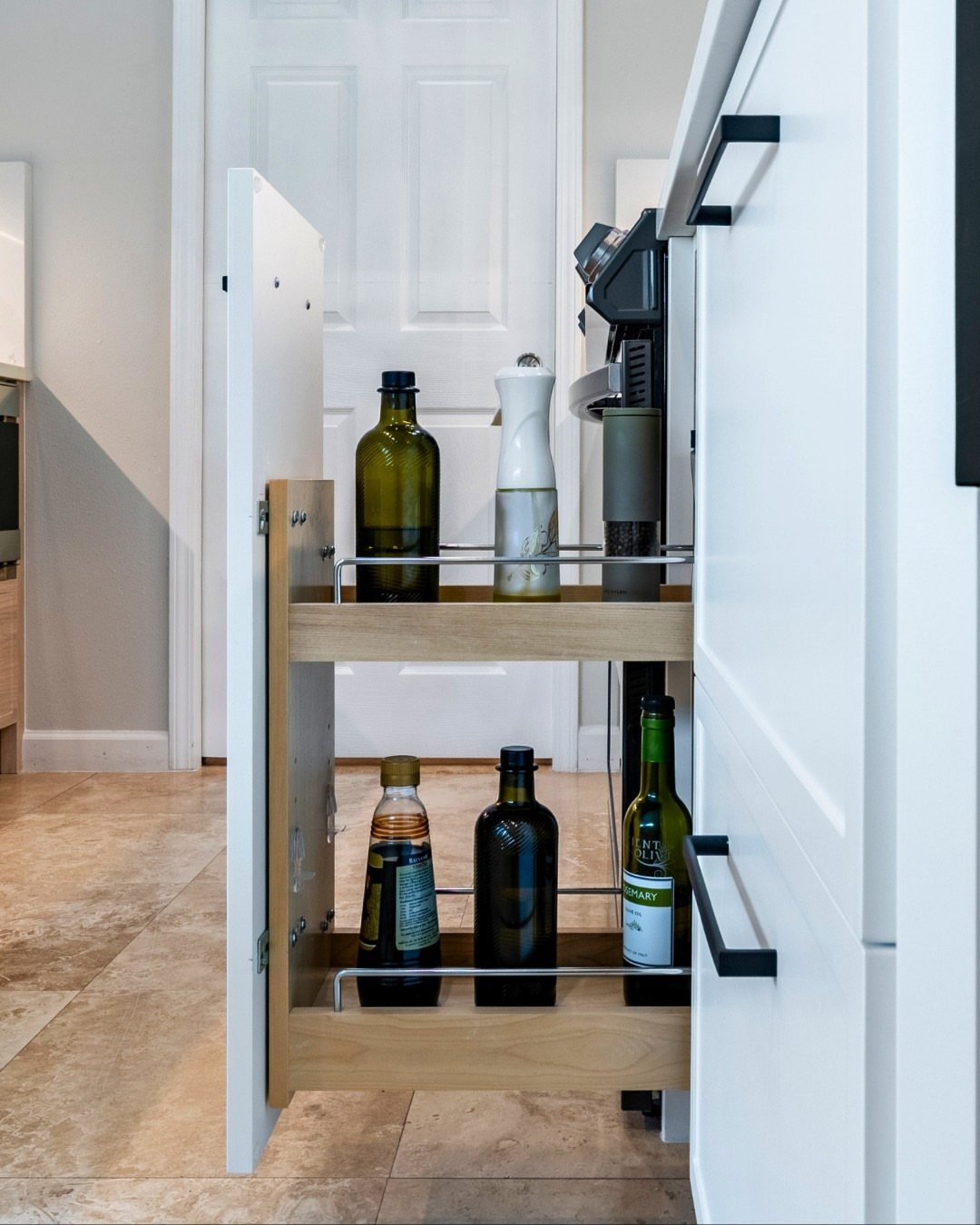
A narrow pull-out makes use of the gap between appliances or cabinets. The drawer glides out on full-extension slides and can hold tall bottles, cans, or oils that would otherwise get lost in a deeper cabinet.
The visible example is a two-tier wooden unit that fits next to a coffee station.
Most pull-out filler kits are designed for narrow spaces and include the slides and frame, which you then fit to the height of your base cabinets.
Installation usually requires mounting the frame to the cabinet box on either side.
4. Under-Cabinet Knife Storage

A pull-out drawer beneath the countertop stores knives in individual slots, keeping the blades separate and the handles easy to grab.
The slots are typically cut into a wood insert that fits inside a shallow drawer, and you can size the spacing to match the knives you use most.
This setup keeps knives off the counter and avoids the crowding that happens in a countertop block.
If you’re building the insert yourself, use hardwood and cut the slots slightly wider than the blade thickness so the knives slide in without force.
The drawer itself needs enough depth front to back to fit the knife handles.
5. Fold-Out Ironing Board

A fold-out ironing board tucks into a drawer and pulls out when needed, saving closet space and keeping the board accessible.
The board mounts on a hinge that lets it fold flat inside the drawer, and most kits include a heat-resistant cover and a leg that swings down for support when the board is extended.
Standard fold-out boards fit inside a drawer with enough width and depth for the board and hinge mechanism. You’ll need clearance in front of the drawer for the board to extend fully.
I’d put this in a utility or laundry area where the drawer can be dedicated to this function.
6. Tall Slide-Out Cabinet

A tall slide-out cabinet uses the full height of a base cabinet and pulls forward on heavy-duty slides, giving you access to the back without reaching.
The shelves are fixed or adjustable, and the narrow width keeps items from stacking too deep.
This setup works well for canned goods, boxed ingredients, or small appliances. Most tall pull-outs fit between standard cabinets or in a pantry space.
If you’re retrofitting, measure the cabinet opening and the height from the floor to the underside of the countertop to confirm the unit will clear. The slides need to be rated for the weight of the loaded shelves.
And it’s hard on your knees and back! Pull-Out and Roll-Out cabinet organizers bring these items to you.
7. Microwave Pull-Out Shelf

A pull-out shelf mounted inside a base cabinet holds the microwave at counter height and slides forward when you need access.
This keeps the microwave off the counter and puts it at a height that’s easier to reach than a wall mount. The cabinet needs enough depth to hold the microwave when the shelf is closed, plus clearance for the plug.
Most pull-out microwave shelves are sold as kits that include the slides and mounting brackets.
8. Appliance Pull-Out Shelves

Pull-out shelves inside a base cabinet bring small appliances forward without lifting or reaching. Each shelf slides independently on full-extension tracks, so you can access the air fryer on the bottom without moving what sits above it.
The visible setup uses 2 wooden shelves in a white cabinet, but metal wire shelves are another option if you want to avoid the finished look. Spacing between shelves depends on the height of what you store.
Installing pull-out shelves in an existing cabinet means mounting the slides to the cabinet sides and cutting the shelves to fit the interior width.
9. L-Shaped Corner Pull-Out
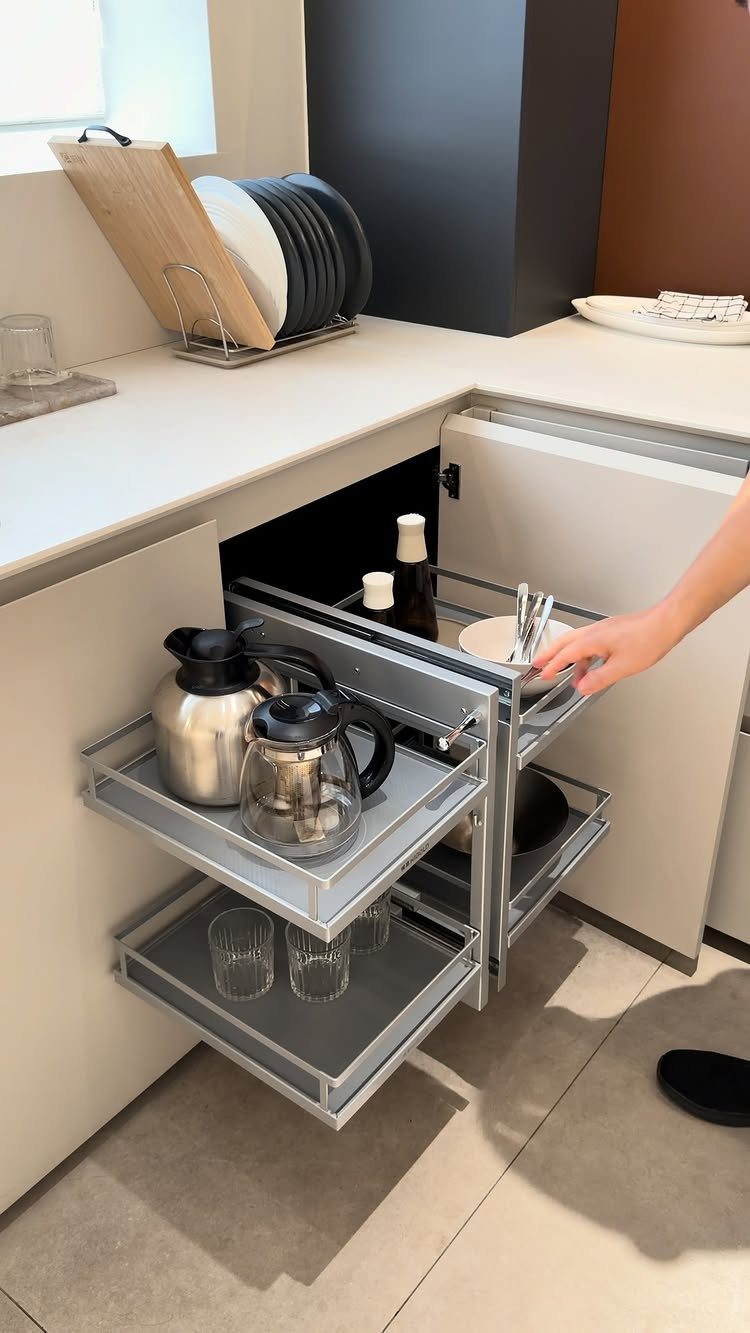
An L-shaped pull-out fits into a corner cabinet and swings the back corner forward, so glassware and dishes stored there stay within reach. The hardware includes a pivot arm that pulls the inner section out as the front section opens.
Corner cabinets usually trap space in the back, and this setup uses that depth without forcing you to crouch and dig. The metal frame holds shelves or baskets depending on the model.
10. Frying Pan Organizer

A pull-out rack holds frying pans upright and separates each one with a divider, keeping the surfaces from scratching and making it easy to pull one out.
The rack slides on drawer glides and mounts inside a base cabinet, usually under the cooktop.
Storing pans upright saves more space than stacking them flat, and you don’t have to lift the top pan to reach the one underneath.
Most pull-out pan organizers are adjustable so you can space the dividers to fit different pan sizes.
The rack needs to be deep enough to hold the largest pan handle without forcing the drawer to stick out.
11. Built-In Spice Organizer

A pull-out rack mounted inside a cabinet door or on its own slides holds spice jars in rows, with each jar visible from the front.
The rack pulls forward so you can grab a jar without moving others, and the narrow depth keeps everything one row deep.
Glass jars with labels on top let you read the name when looking straight down into the drawer.
If you’re retrofitting a cabinet, measure the interior height and width to confirm the rack will fit when the door or drawer is closed.
12. Narrow Cooking-Area Pull-Out

A narrow pull-out installed beside the stove or cooktop stores spices, oils, and utensils within arm’s reach while cooking. The cabinet pulls out on full-extension slides, with adjustable shelves or fixed tiers inside.
This works when you have a gap between the cooktop and a full-depth cabinet, or when you’re planning a new kitchen and can allocate space for a narrow unit.
Most narrow pull-outs are sold as complete units with the frame and slides included.
13. Sliding Cutting Board

A cutting board mounted on slides pulls out from a cabinet just below counter height, giving you a prep surface and leaving the counter clear.
The board sits flush when closed and extends forward on drawer glides when you need it.
Most slide-out boards mount inside a base cabinet with a cutout in the cabinet face, or they sit inside a drawer box with the board riding on its own slides.
The thickness of the board matters since it needs clearance to slide without catching on the cabinet frame.
Hardwood or bamboo boards hold up better than softer materials if you’re cutting directly on the surface.
14. Slim Spice Roll-Out
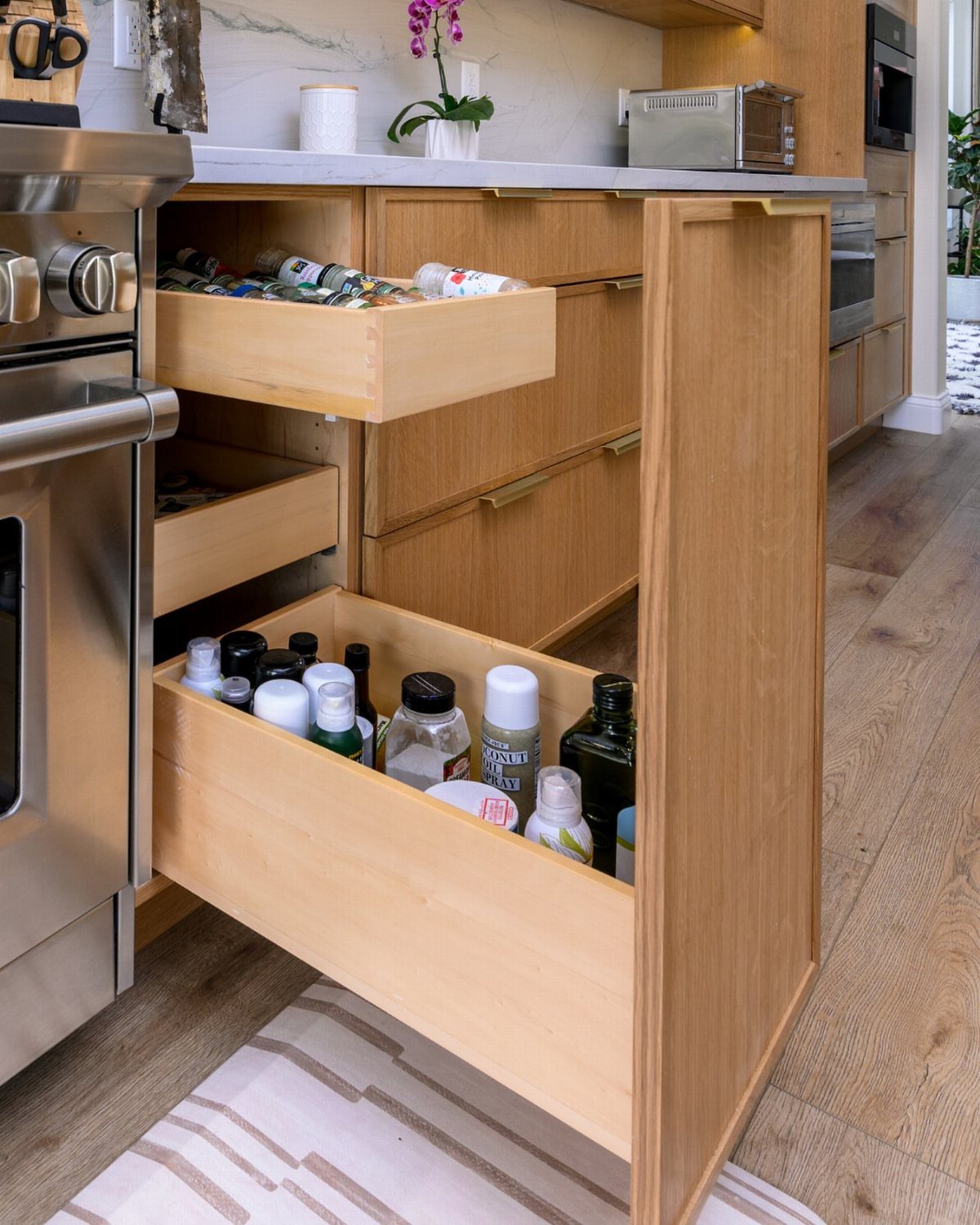
A slim drawer that rolls out beside the stove holds spice jars in a single file, with each jar visible when the drawer is open.
The narrow width keeps jars from stacking behind each other, and the roll-out mechanism puts everything within reach while cooking.
Measure the gap between your stove and the adjacent cabinet before ordering a pull-out unit, since the width determines how many jars fit per tier.
Most slim roll-outs include adjustable shelves so you can change the spacing as your collection grows.
Full-extension slides let the drawer open completely, giving you access to jars at the back.
15. Under-Sink Pull-Out Baskets
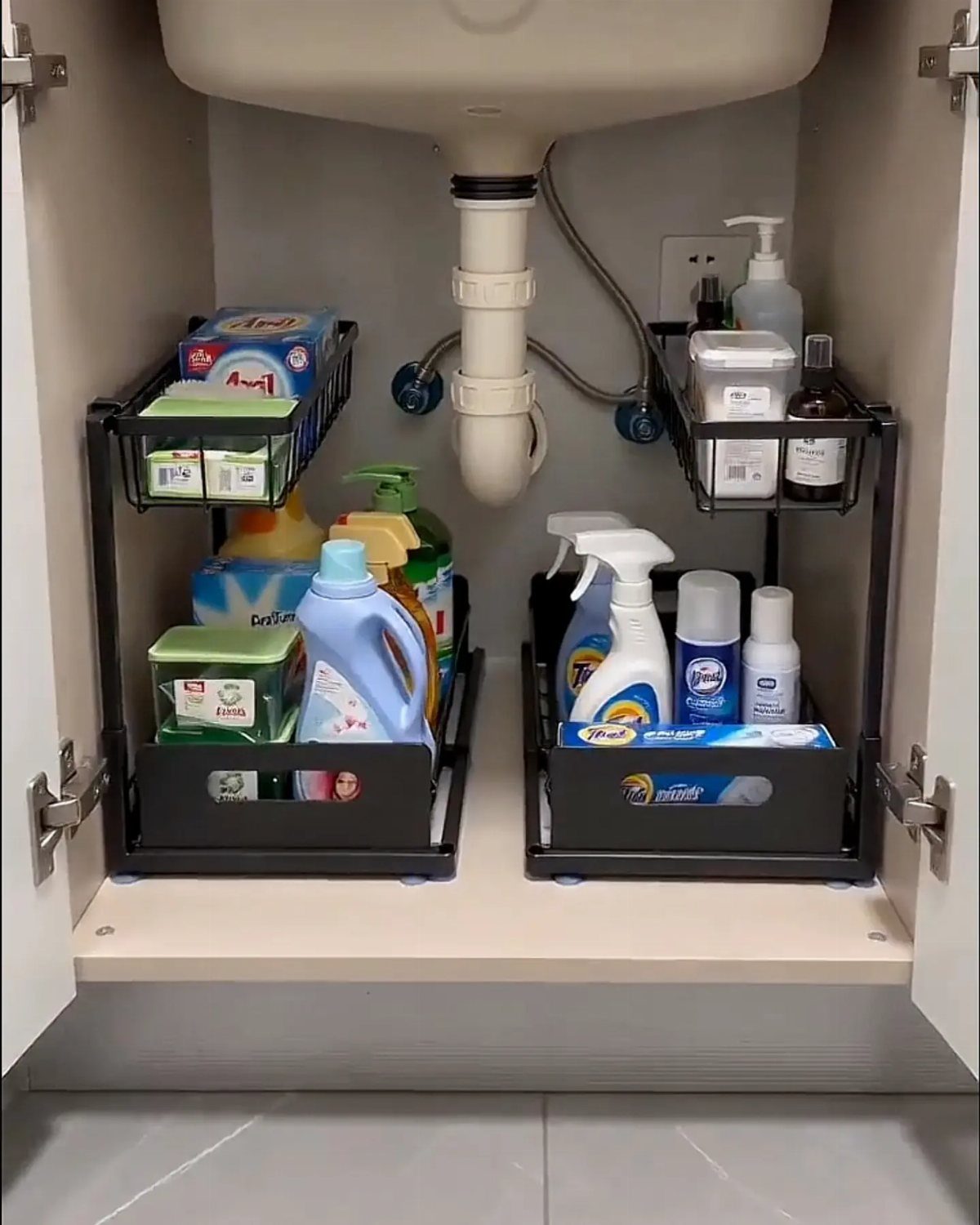
2 wire baskets slide out on tracks mounted to the cabinet walls, bringing cleaning supplies forward without displacing the plumbing.
The baskets sit one behind the other or stack vertically depending on the kit, and the open wire design lets you see what you have without pulling both baskets out.
Measure around your plumbing before buying a kit, since some configurations need more clearance than others.
Wire baskets drain if something leaks, which matters for bottles stored upright.
16. Pull-Out Dish Drawers
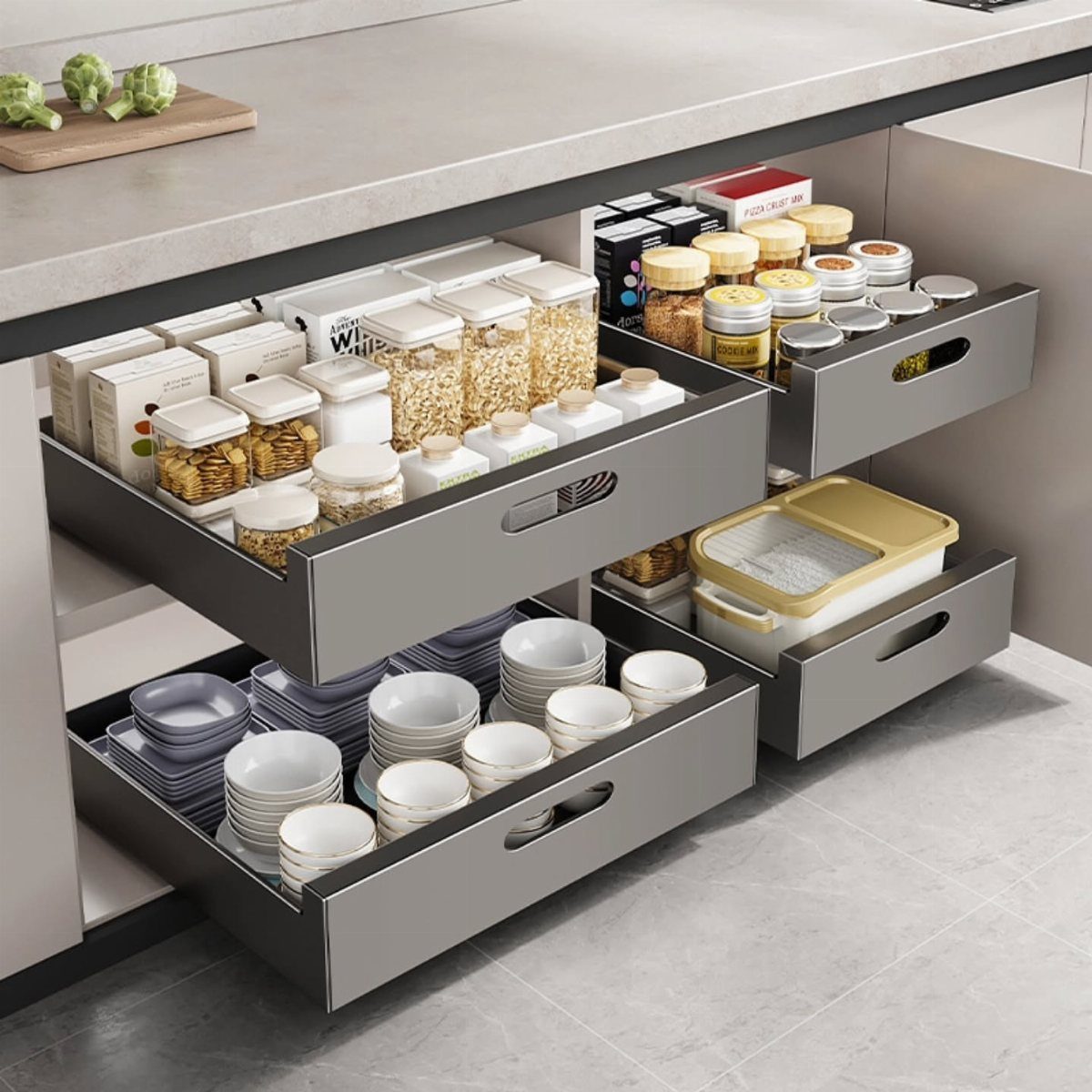
Drawers that pull out from a base cabinet hold bowls, plates, and jars in separate tiers, so you can grab a jar or a bowl directly instead of lifting the stack above it.
Each drawer glides independently, and the depth lets dishes sit flat or slightly angled depending on the insert you use.
This setup works when you want everyday dishes closer to prep areas instead of in upper cabinets. If you’re retrofitting, drawer kits are available that mount inside existing cabinet boxes, though you’ll lose some interior height to the slide hardware.
Soft-close slides keep glassware from rattling when the drawer shuts.
17. Tiered Pull-Out Drawers

A base cabinet fitted with 3 shelves that pull out as separate tiers gives you access to items stored at the back without reaching over the front row.
Each tier slides on its own set of tracks, and the shallow depth keeps cans, bottles, or containers from stacking too deep.
Tiered pull-outs use vertical space more efficiently than a single deep drawer, and you can assign each tier to a different category. Most kits let you adjust the shelf height before installation, so measure what you plan to store first.
The cabinet frame needs enough depth to accommodate the slides and the loaded shelves.
18. Pull-Out Pantry Shelves
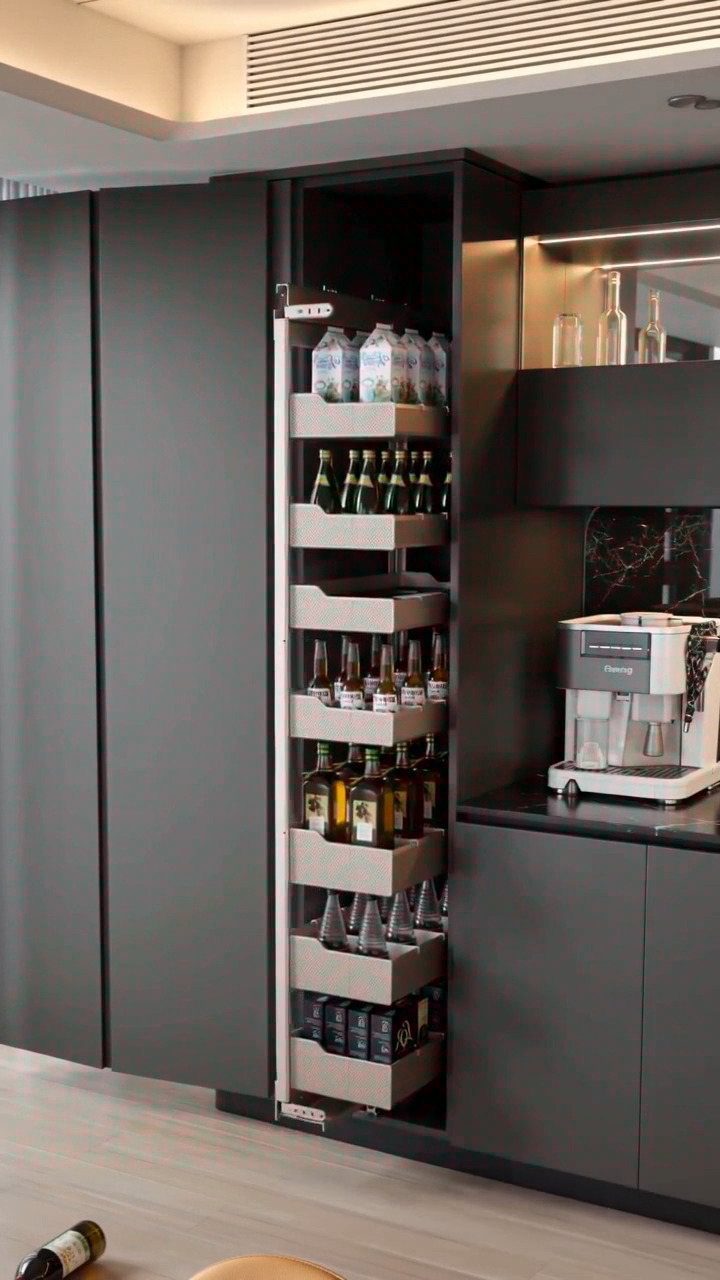
A narrow rack mounted on slides pulls out from a tall cabinet, bringing bottles and pantry items forward without rearranging the shelf.
The rack fits into a gap beside the refrigerator or between cabinets, and the height matches the cabinet interior so you can load it from top to bottom.
Bottles and cartons fit well in this setup since the narrow width keeps them from tipping when the rack moves.
Measure the floor-to-countertop height and the gap width before you buy to make sure the unit will clear the door when it swings open.
Most pantry pull-outs include fixed shelves, though some models offer adjustable spacing.
19. Pull-Out Spice Storage

Spices and oils sit on separate tiers, visible at a glance instead of buried behind each other. The shelves slide forward on full-extension tracks, and the narrow depth keeps jars and bottles from stacking more than one row deep.
This works well in the cabinet beside the stove, where you’re already reaching for spices and oils while cooking. Mount the rack to the cabinet sides or use a freestanding unit that fits the interior width.
20. Divided Cutting Board Drawer

Vertical dividers inside a pull-out drawer hold cutting boards upright, so you can lift one out without moving the rest.
The dividers are typically spaced wide enough for thick boards and narrow enough to keep thinner plastic boards from tipping, and the drawer depth matches the length of the boards you store.
This setup keeps boards from stacking flat, where the bottom one is always trapped. If you’re retrofitting, measure the drawer interior and count the boards you want to fit before cutting dividers or buying an insert.
21. Pull-Out Waste Bins

2 bins inside a single pull-out drawer separate trash and recycling at counter height, so you can toss scraps without bending or opening a door. The bins sit side by side, and the drawer front hides them when closed.
Most kits include the bins and the mounting brackets, and the drawer needs enough width to fit both bins with clearance for the slides.
If the bins sit directly in the drawer box, line the bottom with a plastic tray in case something leaks.
22. Divided Cookware Drawer
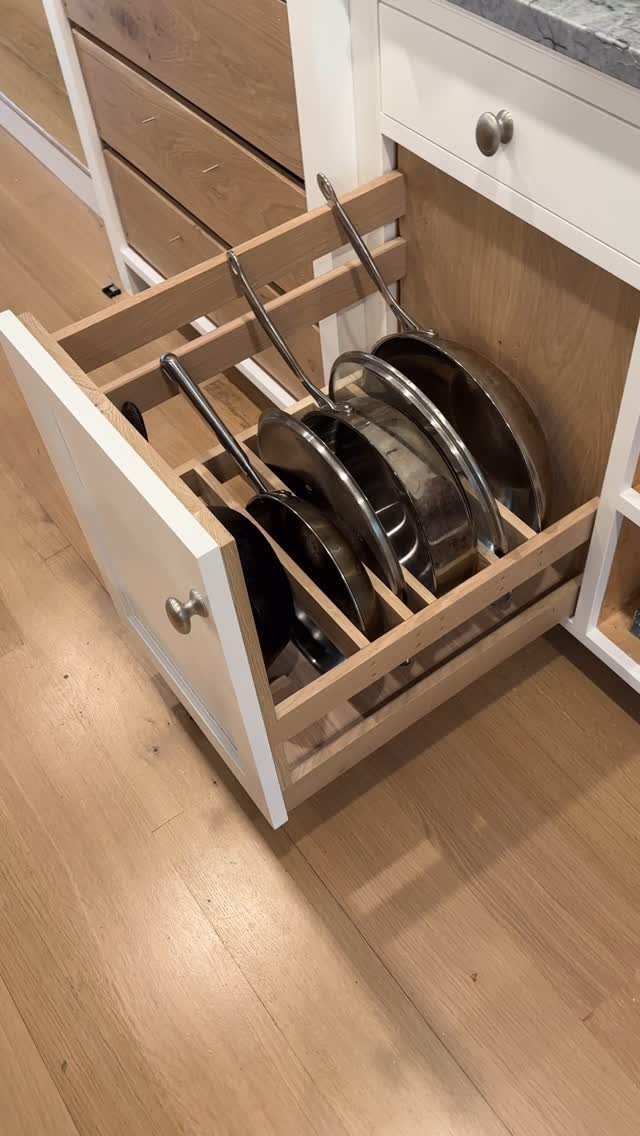
Each pan stands in its own slot, protected from the next one over. Slot width adjusts to different diameters, and the drawer needs enough depth to contain the longest handle flush with the front.
If you’re building this yourself, cut slots in a hardwood base and mount the dividers at the spacing your pans need.
23. Pull-Out Pot Shelves

Shelves inside a pull-out drawer hold pots and utensils in tiers, with each shelf accessible when the drawer is open.
The shelves are fixed or adjustable depending on the kit, and the open design lets you stack bowls or stand pots upright.
This works when you want cookware closer to the stove instead of in a cabinet across the room. Measure the drawer interior height before loading it, since tall pots need more clearance than shallow pans.
24. Under-Sink Cleaning Drawers

3 mesh drawers stacked beneath the sink slide out independently, so you can grab a sponge from the top drawer without opening the lower ones.
The mesh lets spills drain through, and the narrow depth keeps bottles and spray cans from tipping when the drawer moves.
Most under-sink pull-out kits mount to the cabinet walls around the plumbing, so measure the space you have before ordering. Wire mesh holds up better than plastic if bottles leak.
25. Pull-Out Cleaning Supply Rack
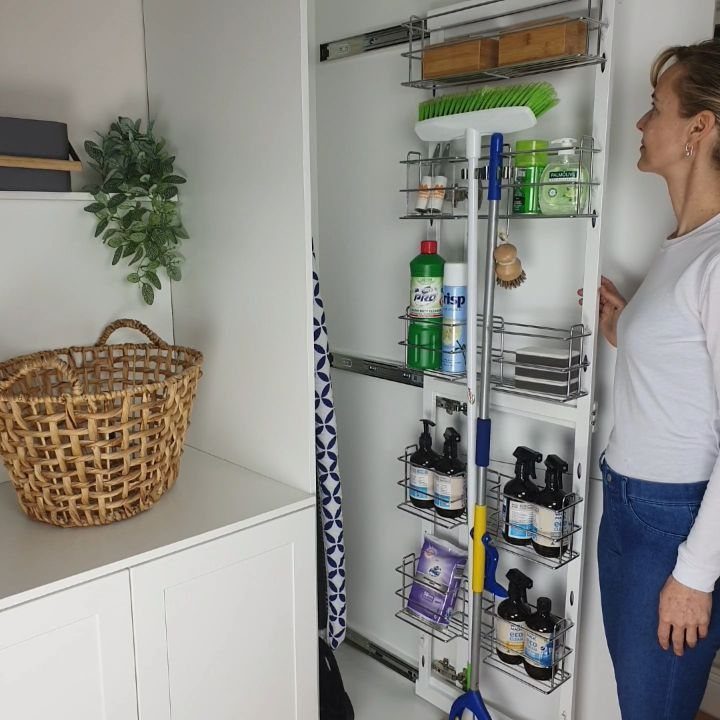
A narrow rack slides out from a cabinet beside the sink, holding bottles upright on multiple shelves with brushes and spray cans in reach.
The rack mounts to the cabinet walls or sits inside on its own slides, and the narrow width keeps bottles from tipping as the rack moves.
Fixed shelves hold a standard cleaning kit, while adjustable dividers let you swap in taller spray bottles or a mop bucket without wasting the top half.
Measure the cabinet interior width and depth before you order, since the rack needs clearance to slide past the door frame.
26. Pull-Out Bottle Rack
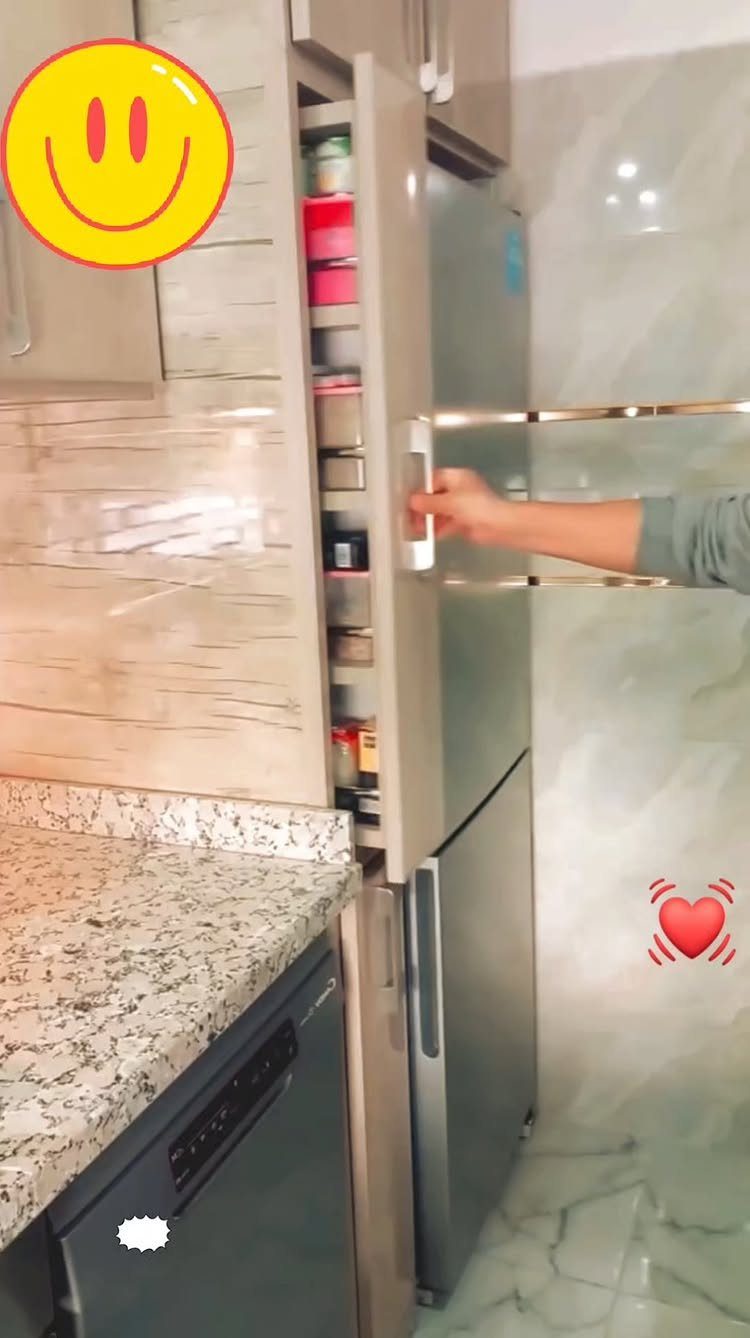
A tiered rack slides out from the gap beside the refrigerator, holding water bottles and condiments in stacked rows. The narrow design fits into tight spaces, and the tiers let you see what’s stored without reaching over the front row.
This works when you have a sliver of space that’s too narrow for a full cabinet but wide enough for a pull-out unit.
Most racks mount on full-extension slides, so the back shelf pulls forward completely. Check the height from floor to countertop before you buy, so a full top shelf clears the underside when you pull it all the way out.