The choice depends on where you lose time digging for things: pull-out shelves if you can’t see the back of base cabinets, lazy susans for corner cabinets where reaching is awkward, drawer organizers if utensils pile in a loose heap.
Most install with screws into existing cabinetry and fit standard dimensions, though pull-outs and blind-corner systems need exact measurements of cabinet width and depth before ordering.
1. Pull-out Shelves

Pull-out shelves bring the back of a cabinet forward so you can see and reach everything stored inside. They fit in existing cabinets and replace fixed shelving with sliding wire or wood trays that extend fully or partially.
Most kits install with screws into the cabinet sides and work in base cabinets, under-sink spaces, or pantries. Measure the cabinet opening width, depth, and height before ordering, since pull-outs are sized to fit specific dimensions.
Wire versions let you see through to items in back. Solid wood or plastic trays hold heavier items like small appliances or canned goods without sagging.
2. Lazy Susans

A lazy susan spins everything stored on it into reach without moving other items out of the way. The turntable sits on a shelf or cabinet floor and rotates on a central bearing.
Two-tier versions double the storage in the same footprint. The circular shape wastes some space in square cabinets but pays off in corner cabinets where reaching the back is otherwise awkward.
Plastic models cost less and wipe clean easily. Wood or metal versions hold more weight and last longer under daily use.
3. Drawer Organizers

Drawer organizers divide a drawer into sections so utensils, tools, or small items stay separated and easy to grab. Most are trays or dividers that sit inside the drawer and lift out if you need to reconfigure.
Adjustable dividers slide or snap into different positions to fit the drawer width and the items you store. Fixed inserts come sized for standard drawer dimensions and work well for utensils or cutlery that fit predictable slots.
Bamboo, wood, or plastic are the usual materials. I like bamboo for the look and plastic for easy cleaning after spills.
4. Spice Racks

Spice racks hold jars in one spot so you can grab paprika or cumin without digging through a cabinet or drawer. Tiered racks angle bottles upward so labels face out and every jar stays visible.
Counter versions keep spices next to the stove.
In-drawer inserts let you store spices flat and still see the labels when you open the drawer. Wall-mounted or cabinet-door racks free up counter and shelf space.
Choose a rack sized to the number of jars you use regularly. Overfilling defeats the purpose, since jars end up stacked or hidden again.
5. Waste Pull-outs
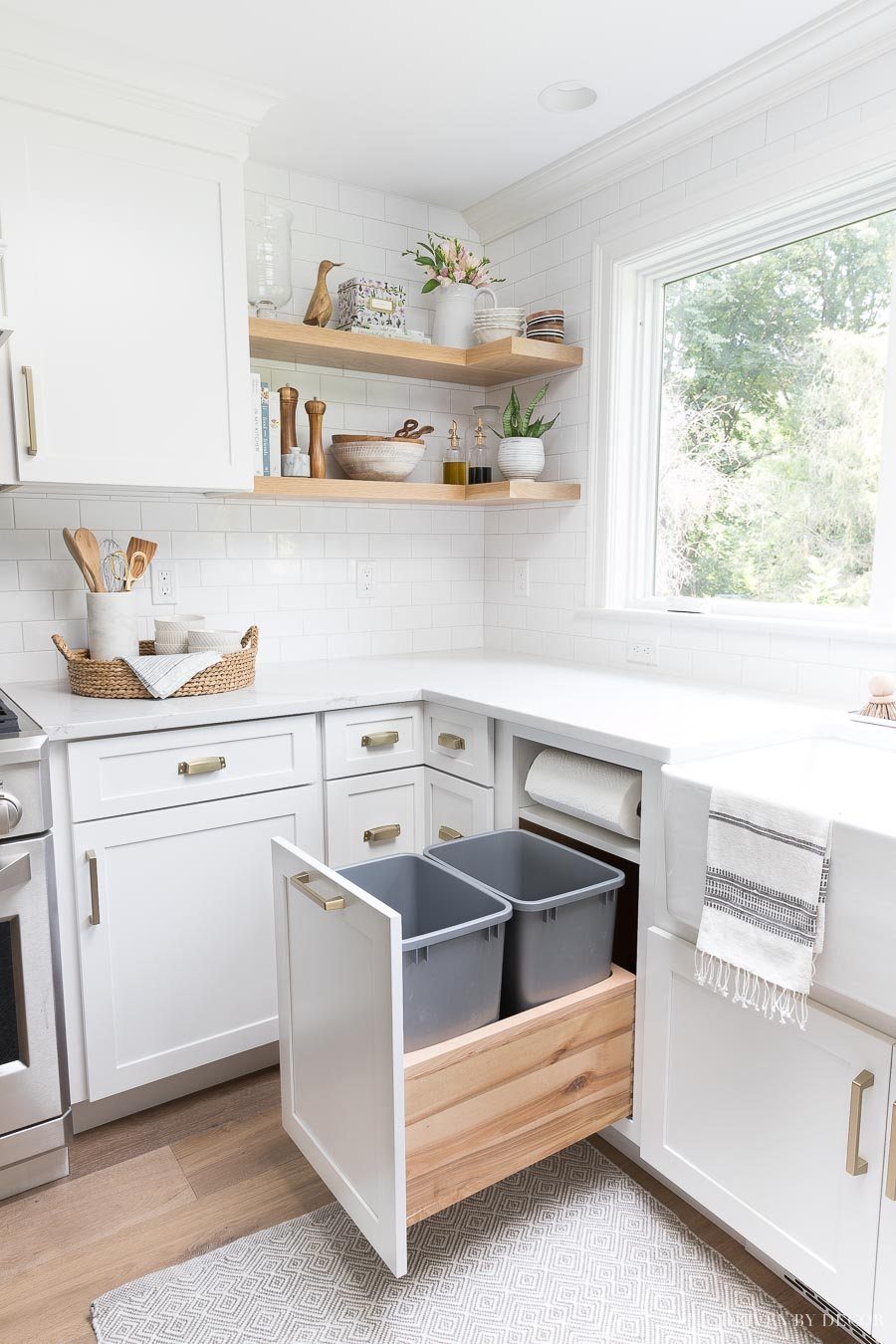
Waste pull-outs hide trash and recycling bins inside a cabinet and slide them out when you need access. The bins mount on a tray or frame that attaches to the cabinet door or sides.
Door-mounted versions open automatically when you pull the cabinet door. Side-mounted slides let you open the cabinet and then pull the bins forward separately, which gives more control and works in wider cabinets.
Measure the cabinet interior and door clearance before buying. Most kits fit standard base cabinets but need at least 12 inches of width per bin.
6. Pantry Organizers

Pantry organizers group food by type and make everything visible without digging through shelves. Bins, baskets, risers, and tiered trays keep smaller items from getting lost behind taller ones.
Clear bins let you see what is inside without opening the lid.
Wire baskets allow air circulation for produce or bread. Shelf risers create a second level on one shelf, so shorter items sit on top and taller items fit underneath.
Start by grouping what you store most often, then choose organizers that fit those categories and your shelf dimensions. Matching containers make the space look neater but are not required for the system to work.
7. Cabinet Organizers

Cabinet organizers fit inside existing cabinets to separate pots, lids, baking sheets, or cutting boards so each item has a slot instead of stacking in a pile.
Vertical dividers hold pans upright. Racks or shelves add a second level inside one cabinet.
Most install with screws or tension rods and adjust to fit different cabinet widths.
Wire or metal versions work for cookware that gets heavy. Plastic holds lighter items and costs less.
Check your cabinet dimensions first, because these organizers come sized for particular widths and depths.
8. Sink Organizers

Sink organizers hold sponges, soap, and brushes in one spot so the counter stays clear and supplies stay within reach while you wash dishes.
Trays sit beside the faucet. Caddies hang from the faucet neck or suction to the sink wall.
Stone, ceramic, or marble trays absorb water and dry quickly. Plastic or metal caddies drain through holes in the bottom.
Choose a size that fits the counter or sink space you have next to the faucet without blocking the basin.
9. Door Organizers

Door organizers mount to the inside of cabinet or pantry doors and give you storage that leaves your shelves clear. Bins, racks, or pockets hold cleaning supplies, foil, plastic wrap, or small food items.
Over-the-door versions hang from the top edge and require no installation. Mounted racks screw into the door and hold more weight.
Check door clearance before buying, since the organizer adds thickness and the door needs to close fully without hitting shelves inside.
10. Dish Racks

Dish racks hold plates, bowls, and utensils upright while they air-dry after hand washing.
Countertop models sit next to the sink. Over-the-sink racks rest on the sink edges and drain directly into the basin.
Wire or metal racks drain faster and hold more weight than plastic. A tray underneath catches drips on countertop versions.
Measure the sink width if choosing an over-the-sink rack, since it needs to span the opening and rest securely on both edges.
11. Food Storage Containers

Food storage containers keep leftovers fresh and dry goods sealed in one consistent system that stacks neatly in cabinets or the refrigerator. Glass containers last longer and do not stain.
Rectangular shapes use space more efficiently than round. Lids that snap or lock prevent leaks.
Store lids separately in a drawer organizer or clip them to the bottom of each container so they stay paired and do not clutter the drawer.
12. Kitchen Canisters
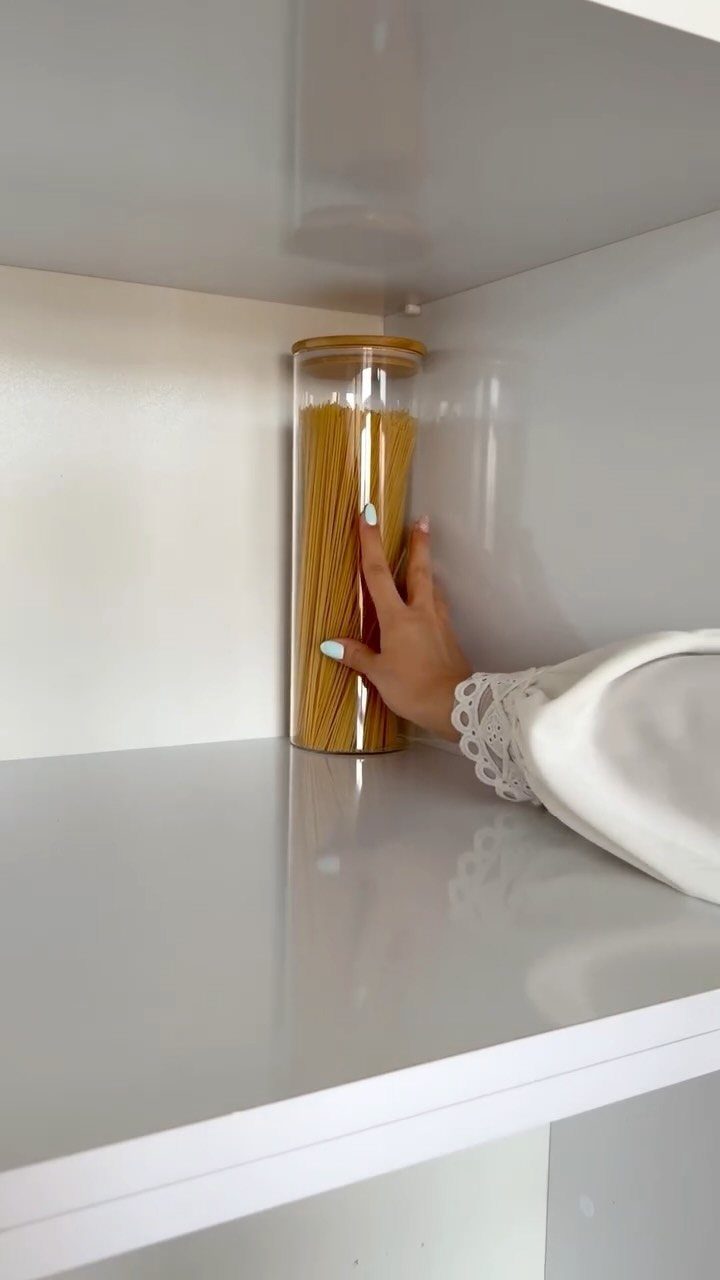
Kitchen canisters store flour, sugar, pasta, or coffee on the counter or open shelves where you can see and reach them easily.
Glass lets you see what is inside and how much is left. Ceramic or metal canisters block light, which keeps some ingredients fresher longer.
Airtight lids seal out moisture and pests.
Tall, narrow shapes fit more on a shelf or counter. Wide openings make scooping easier.
Match canister sizes to how much of each ingredient you go through in a month, so nothing sits too long.
13. Countertop Organizers

Countertop organizers hold spatulas, whisks, and other cooking tools upright next to the stove so you can grab them while cooking without opening a drawer. Most are cylinders or divided caddies that sit on the counter.
Stainless steel and ceramic wipe clean easily and do not tip when you pull a tool out. Weighted bases add stability for taller utensils.
Size the organizer to the number of tools you use daily, not every utensil you own, or it takes up more counter space than it saves.
14. Kitchen Shelves

Kitchen shelves add storage where cabinets do not reach or where you want items visible and easy to grab.
Rolling units move between rooms or tuck into a corner when not needed. Wall-mounted shelves stay fixed and hold dishes, small appliances, or pantry items.
Metal frames support heavier loads and wipe down without leaving residue. Wheels lock in place on rolling versions so the unit stays put during use.
Measure the height of what you plan to store and space shelves accordingly, since adjustable models let you move tiers after setup.
15. Under-sink Organizers

Under-sink organizers fit around plumbing to hold cleaning supplies, dish soap, and sponges in the cabinet beneath the sink.
Sliding trays pull forward so you can reach items at the back without kneeling and digging. Tiered shelves or stackable bins use the vertical space that usually goes empty.
Measure around your pipes before choosing an organizer, since trays and shelves need clearance to slide or stack without hitting the plumbing.
Plastic resists moisture better than wood or metal and lasts longer in the damp cabinet under the sink.
16. Shelf Risers
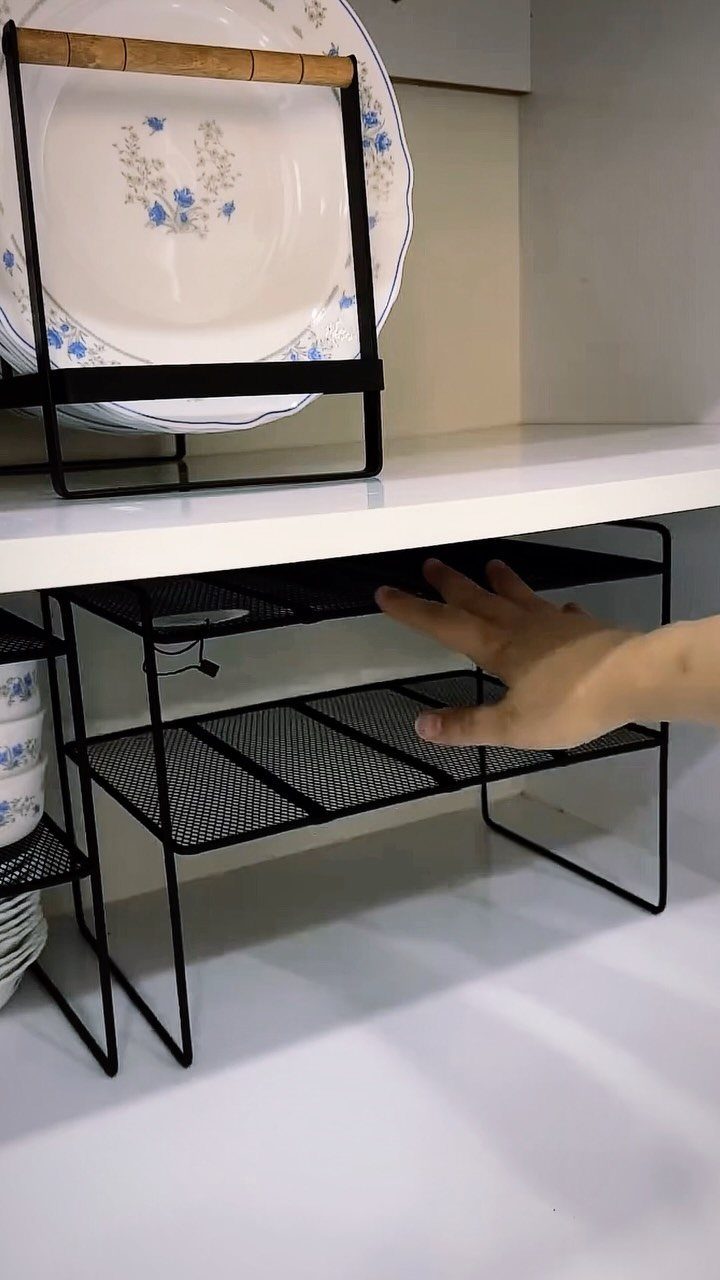
These accessories add a second tier to standard shelves, so smaller items stack above and larger ones go below. They turn one shelf into two without installing new hardware.
Metal and wire construction handles cookware and canned food without bending. Plastic versions cost less and suit snacks or boxes that weigh a few pounds at most.
17. Under-shelf Baskets
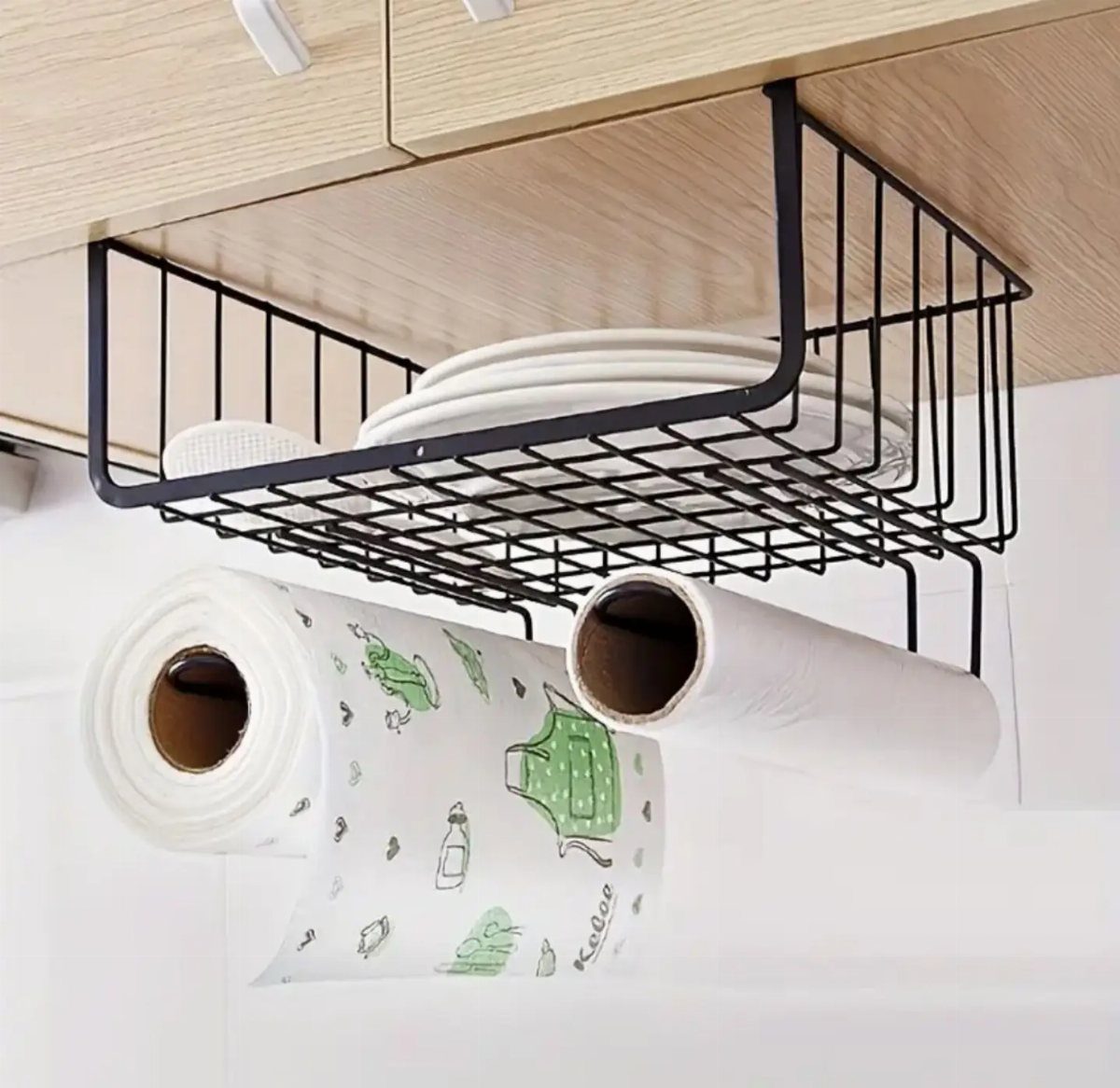
Under-shelf baskets hook over the edge of an existing shelf and hang below it to hold items that would otherwise need their own shelf space. They work in cabinets, pantries, or open shelving and require no installation.
Wire baskets drain and allow airflow, which suits dish storage or produce. Solid plastic or metal versions hold paper goods, foil, or smaller items that could fall through wire gaps.
Check your shelf thickness before buying, since the hook must clamp tight and some baskets fit only thin shelves.
18. Wall-mounted Racks
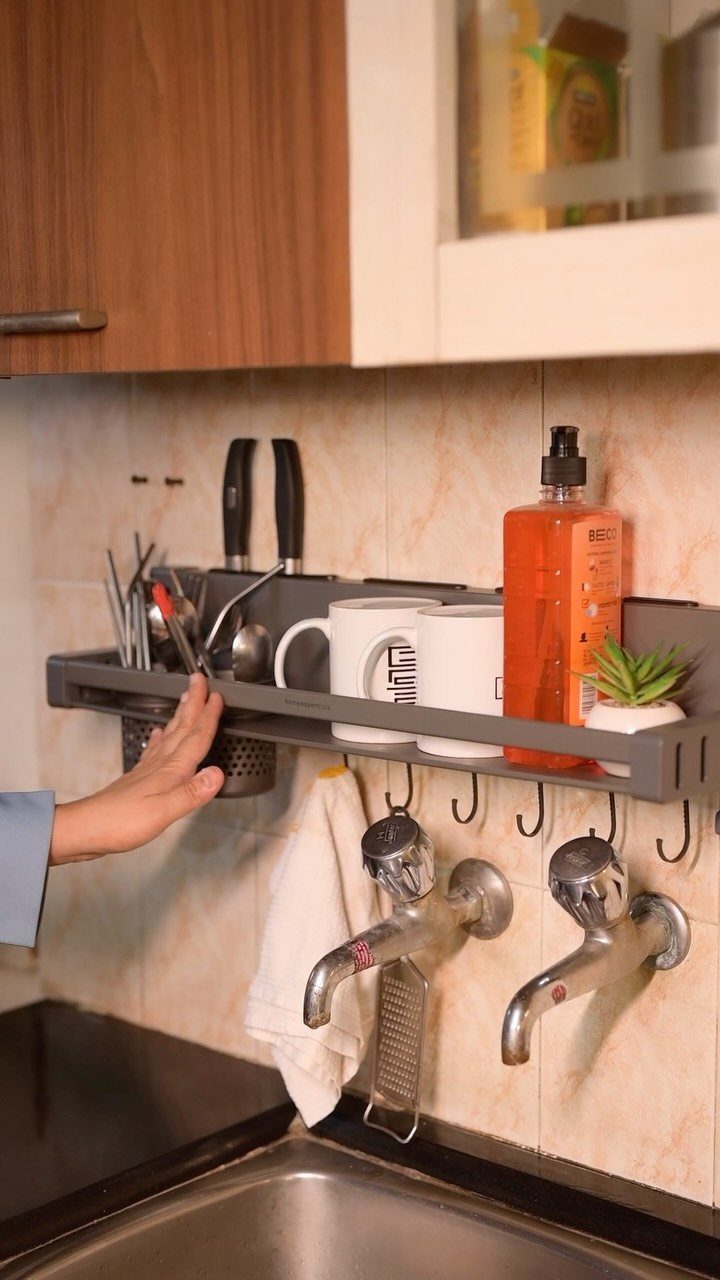
Wall-mounted racks attach to the kitchen wall and hold utensils, mugs, or knives off the counter and within reach. Hooks, bars, or slots keep items separated and visible.
Install near the stove or sink where you use tools most often. Stainless steel or powder-coated metal holds weight and wipes clean after splashes.
Mounting into studs or using anchors rated for the rack’s load prevents sagging or pulling away from the wall over time.
19. Mixer Lift Kits

Mixer lift kits mount inside a base cabinet and raise a stand mixer to counter height when you pull it forward, so the appliance stays out of sight but ready to use without lifting its full weight.
The mixer sits on a platform that glides upward on a spring-loaded or pneumatic mechanism.
Most kits fit standard base cabinets and hold stand mixers. Installation requires screwing the frame to the cabinet sides and bottom.
If you use the mixer regularly but don’t want it taking up counter space permanently, the lift brings it up when you need it and tucks it away when you don’t.
20. Blind-corner Pullouts
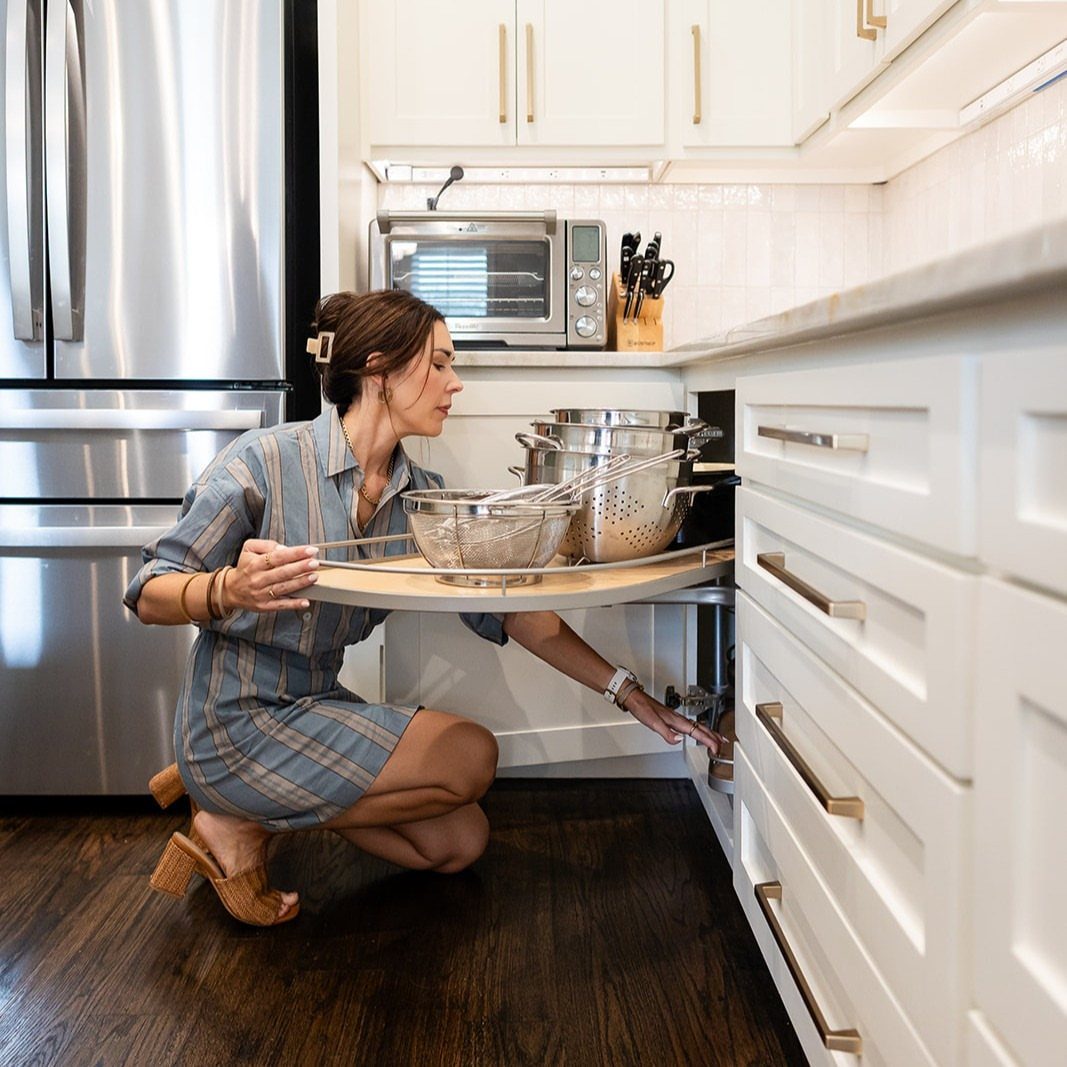
Blind-corner pullouts bring pots, pans, or dry goods out of the deep corner cabinet where they usually disappear behind the door.
The system mounts to the cabinet door or sides and swings or slides shelves forward and into the open when you pull the door.
Half-moon trays or L-shaped shelves curve to fit the corner shape and hold more than a single flat shelf. Wire or metal frames handle cookware weight without bending.
Measure the cabinet opening and the corner depth before ordering, since these organizers come sized to specific cabinet widths and need clearance to swing or slide without hitting the door frame.
21. Cutlery Trays

Cutlery trays sit inside a drawer and separate forks, knives, and spoons into individual slots so each piece stays visible and you can grab what you want without sorting through a pile.
Fixed slots work for standard flatware sizes. Expandable trays adjust to fit different drawer widths and let you add sections for serving utensils or steak knives.
Measure your drawer interior before buying, since trays come in standard sizes and one that fits too loosely will slide around when you open and close the drawer.
22. Deep Drawer Dividers

Deep drawer dividers turn one tall drawer into separate sections for pots, lids, baking sheets, or mixing bowls so items stand upright instead of stacking in a pile you have to lift through.
Vertical slats or adjustable panels slot into the drawer and hold each piece in place.
Wood or bamboo dividers suit cookware and look finished if you leave the drawer open. Plastic versions cost less and work fine when hidden.
Adjustable dividers let you change the slot width as your cookware changes. Fixed inserts come pre-sized and install faster if your drawer dimensions match a standard kit.
23. Knife Organizers
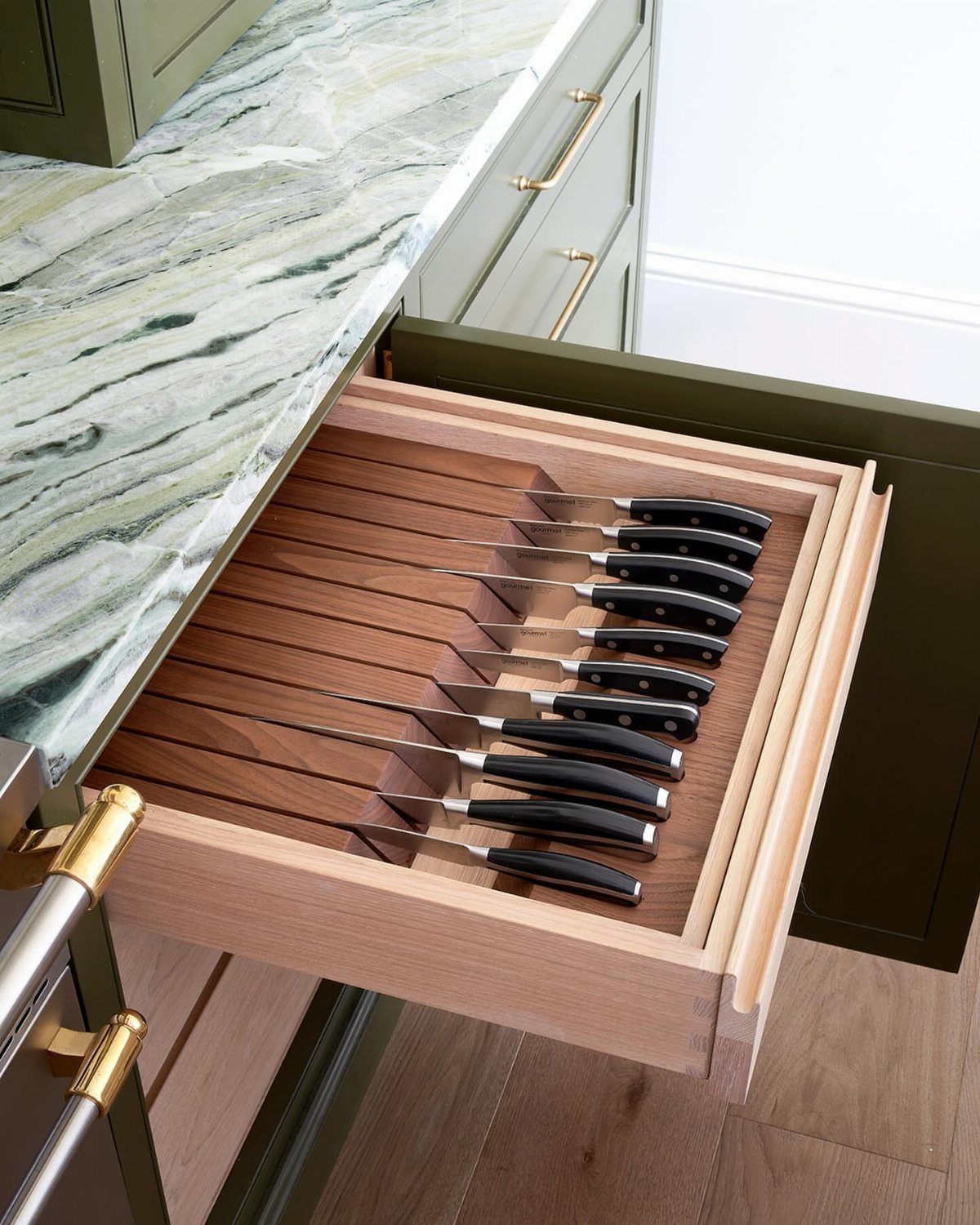
Knife organizers hold blades in separate slots inside a drawer so edges stay protected and you can see each knife without reaching into a block on the counter.
In-drawer inserts sit flat and angle blades upward or lay them horizontal with the handles facing out.
Wood protects knife edges better than plastic and lasts longer. Angled slots let you grab a handle without lifting other knives out of the way first.
Match the organizer length to your drawer depth and count the slots against the knives you use regularly, since overfilling defeats the purpose and blades end up touching.
24. Dishcloth Racks

Dishcloth racks hold damp cloths off the counter so they dry faster and do not sit in a wet pile beside the sink.
Racks with hooks or bars let you hang one or two cloths. Caddies with side clips hold a cloth and cleaning tools in one spot.
Metal racks drain and dry quickly. Suction or adhesive mounts stick to the sink or cabinet without drilling.
Choose a rack that fits the counter or sink edge you have available and holds the number of cloths you go through between laundry loads.
25. Peg Boards
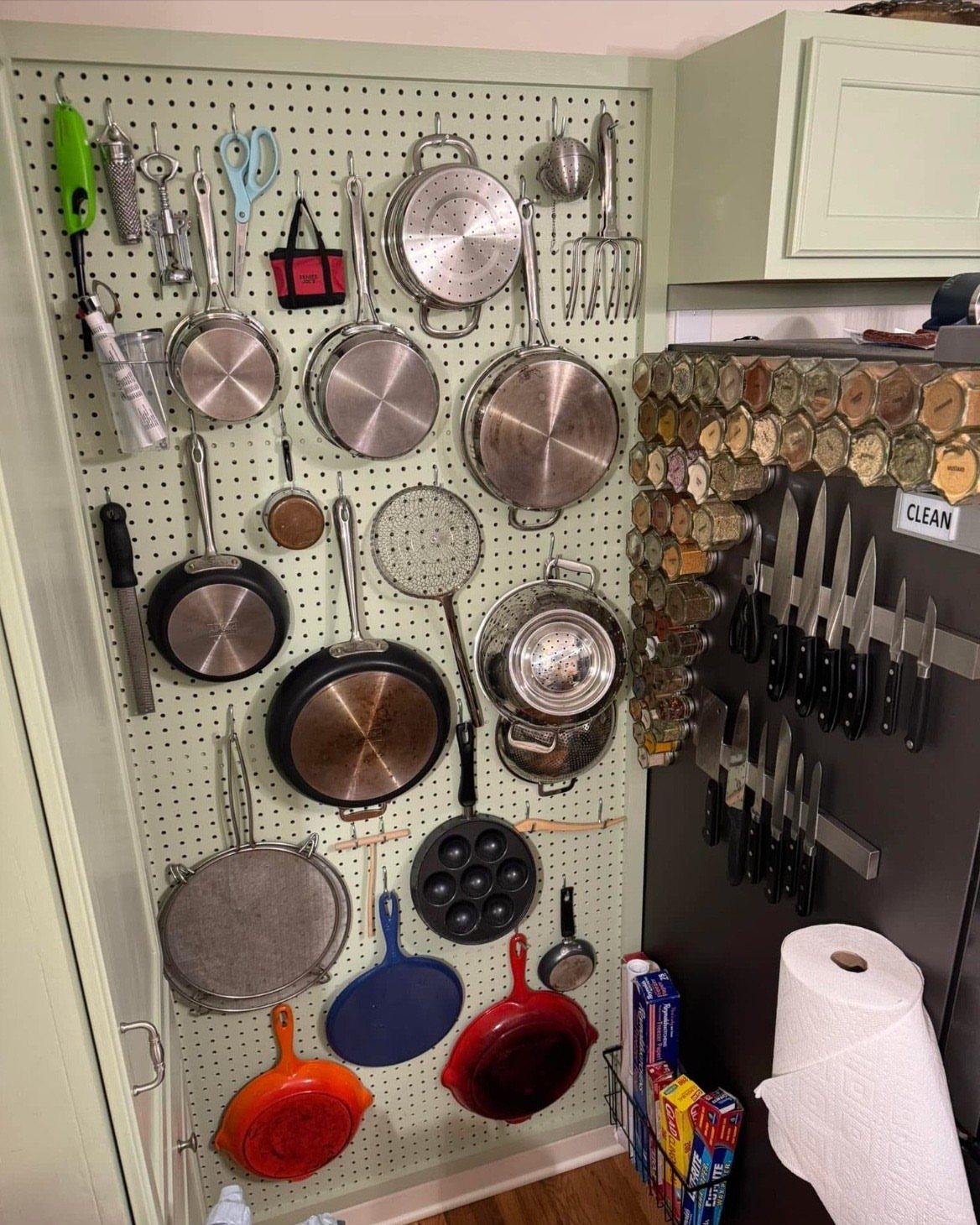
Pegboards mount to the wall and hold pots, pans, and utensils on hooks that you can move and rearrange as your tools change.
Holes spaced an inch or so apart accept metal or plastic pegs that support the weight of cast iron or stock pots.
Paint the board to match your wall or cabinet color. Hardware stores sell pegboard in sheets you can cut to fit your wall.
Mount the board an inch off the wall so hooks slide into the holes from the front without catching on the surface behind.
26. Charging Drawers

Charging drawers keep phones, tablets, and earbuds plugged in and out of sight while they charge. A power strip or outlet inside the drawer connects to a wall outlet and feeds power to several devices at once.
Run the cord through a grommet or cable management opening in the back of the drawer. Cable clips keep charging cables organized inside the drawer so they do not tangle.
Shallow drawers work better than deep ones, since devices sit flat and you can see everything when you open the drawer.
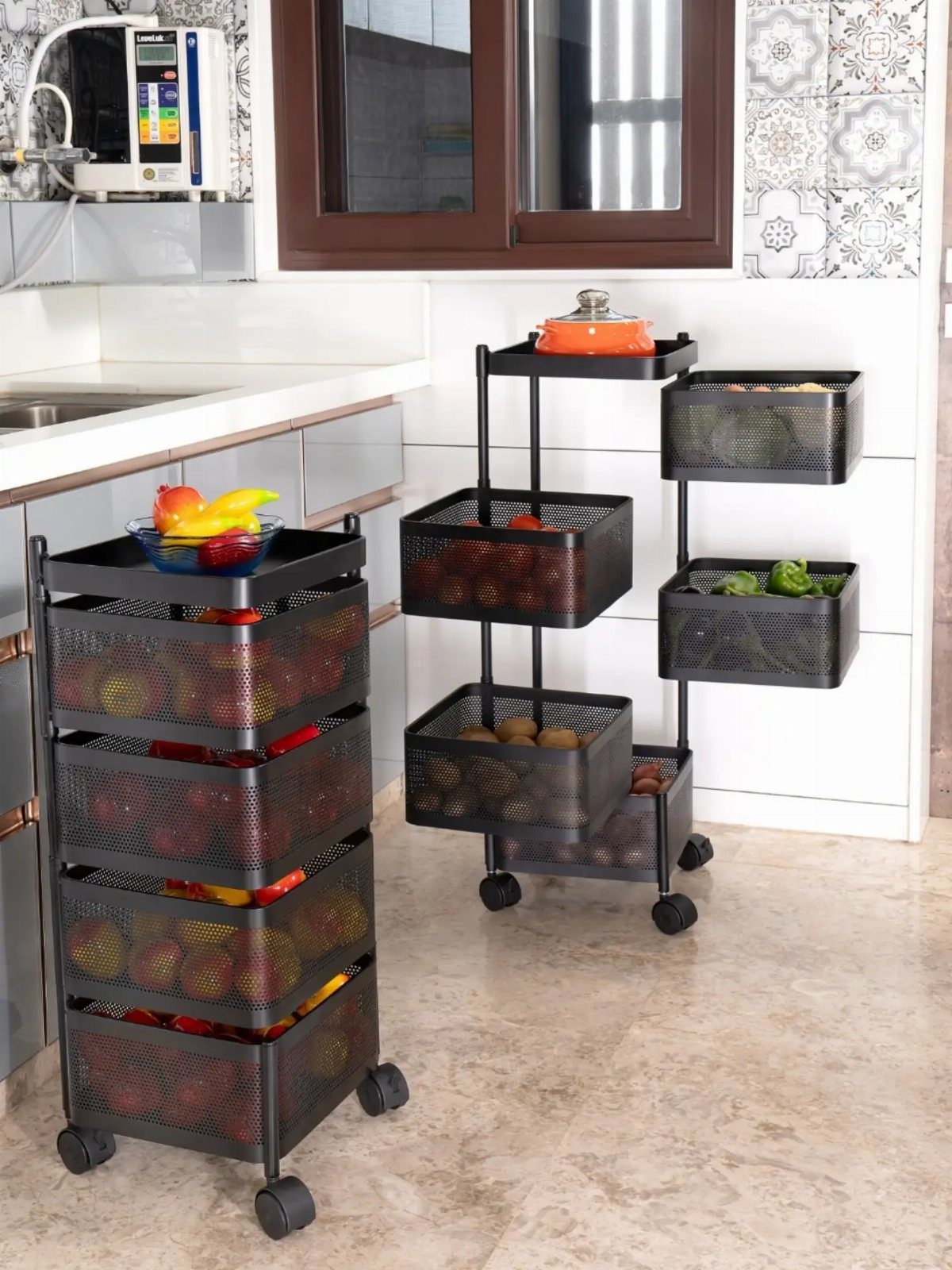
27. Rolling Produce Rack
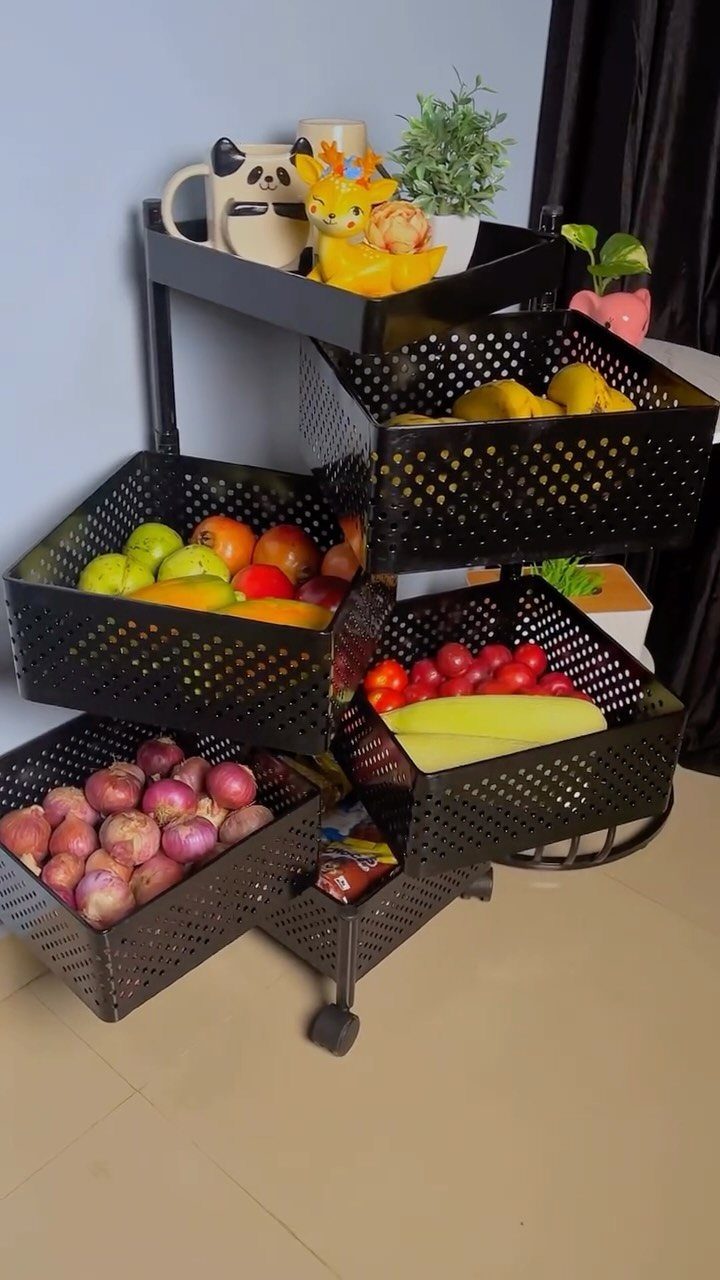
Rolling produce racks hold onions, potatoes, or fruit in stacked wire or perforated baskets that let air circulate around the produce so it lasts longer than it would in a closed drawer.
Wheels let you roll the rack to where you are cooking and back into a corner or pantry when you finish.
Most racks hold multiple tiers stacked vertically.
Size the rack to the floor space you can spare and the amount of produce you go through in a week, since anything sitting longer starts to spoil.
28. Produce Storage Crates

Plastic crates stack on pantry shelves and hold root vegetables or bulky items that would roll loose or take up too much room in a bin.
Each crate keeps one type of produce separate so you can pull the whole crate forward to grab what you need.
Bright colors make each crate easy to spot on a crowded shelf. Handles on the sides let you lift a full crate without it tipping.
Leave space above each crate so you can reach in without removing the shelf above it.
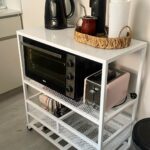
29. Rolling Slim Storage Cart

Slim rolling carts fit into the narrow gap between a counter and a wall or appliance and pull out when you need extra storage for spices, oils, or canned goods.
These narrow carts slip into tight gaps and hold several shelves.
Mesh or wire shelves let you see what is on each level without pulling the cart all the way out.
Measure the gap width and the height from floor to counter before buying, since the cart needs to slide in and out without scraping the counter edge.
30. Wall-mounted Produce Bins

Clear wall-mounted bins attach to the wall in a stacked arrangement and hold garlic, ginger, chili peppers, or other small ingredients you use often. Each bin tilts forward slightly so items stay visible and do not roll to the back.
Plastic bins wipe clean after spills. Mounting with screws holds more weight than adhesive strips.
Install the bins near your prep area so you can grab ingredients without crossing the kitchen. Size the bins to how much of each ingredient you keep on hand, not how much you could fit.
31. Hanging Food-scrap Bin

This bin hooks over the cabinet door beside your cutting board and catches peels, stems, and trimmings as you chop so you do not have to walk scraps to the trash or compost bin mid-prep.
The bin hangs at counter height and lifts off the door when full.
Plastic bins rinse clean and weigh less than metal when full of scraps. A hinged lid keeps smells contained if scraps sit for a few hours before you empty the bin.
Choose a bin sized to one meal’s worth of scraps if you compost daily, or a larger one if you make fewer trips.
Check Cabinet Fit Before Ordering
Confirm cabinet interior width and whether the cabinet is frameless or face-frame. That frame eats about 1.5 inches of the opening, and most product pages will tell you whether the organizer fits framed or frameless construction.
Frameless boxes give you the full interior width to work with, so you can fit wider trays and racks.
The frame around the opening means you need to size down, sometimes by an inch or more on each side, to get the organizer through the door.
Most accessories are sold individually. Some divider and drawer sets come as kits with multiple pieces included in one package.
Frequently Asked Questions
What are the best items to organize my kitchen?
Pull-out shelves, lazy susans, and drawer organizers handle the most common clutter for the lowest cost and effort. Pull-outs slide the back of the cabinet forward, putting every pot and pan within arm’s reach.
Lazy susans spin items into view in corner cabinets. Drawer organizers divide utensils into separate slots so each tool has its own place.
What are some cool accessories for my kitchen?
Mixer lift kits hide a stand mixer inside a base cabinet and raise it to counter height when you pull the platform forward, so the appliance stays ready to use without taking up permanent counter space.
Blind-corner pullouts swing shelves out from deep corner cabinets, ending the hunt for buried cookware. Charging drawers hold phones and tablets inside with a built-in power strip, clearing the counters while devices charge.
What are some kitchen and pantry organization tips?
Group food by type using bins, baskets, and tiered trays so smaller items stay visible instead of getting lost behind taller ones.
Shelf risers add a second tier on one shelf, fitting short items on top and tall items below. Clear bins let you see the contents at a glance, and wire baskets let air circulate around produce or bread.
What kitchen cabinet accessories should I buy first?
A pull-out shelf or waste pull-out in a base cabinet fixes daily annoyance for the lowest price, so I’d start there.
Pull-outs slide contents forward so everything becomes visible and reachable from a standing position. After that, a drawer organizer makes sense if loose utensils are the bigger mess, since it assigns each tool a fixed slot.
Can I add these accessories to cabinets I already own?
Most pull-outs, organizers, and inserts fit into cabinets already installed, provided you measure interior width, depth, and height before you order. Installation usually means driving screws into the cabinet sides or attaching hardware to the door.