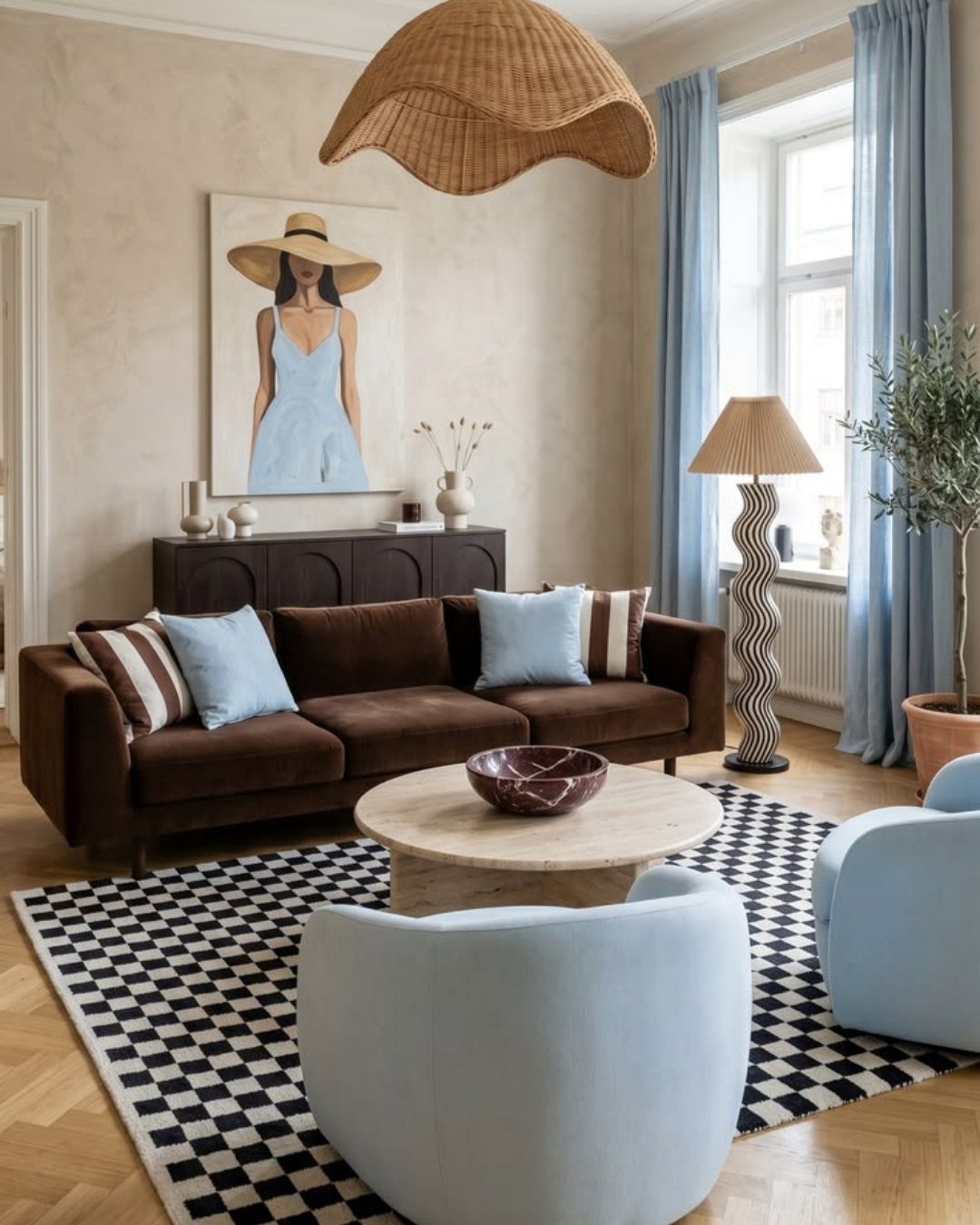
Navy walls balance a brown sofa, and light blue opens up a small room when chocolate brown anchors the floor.
Blue curtains add softness without covering much wall, and a blue accent wall changes the proportions when you can’t repaint the whole room.
1. Navy Walls and Brown Sofa
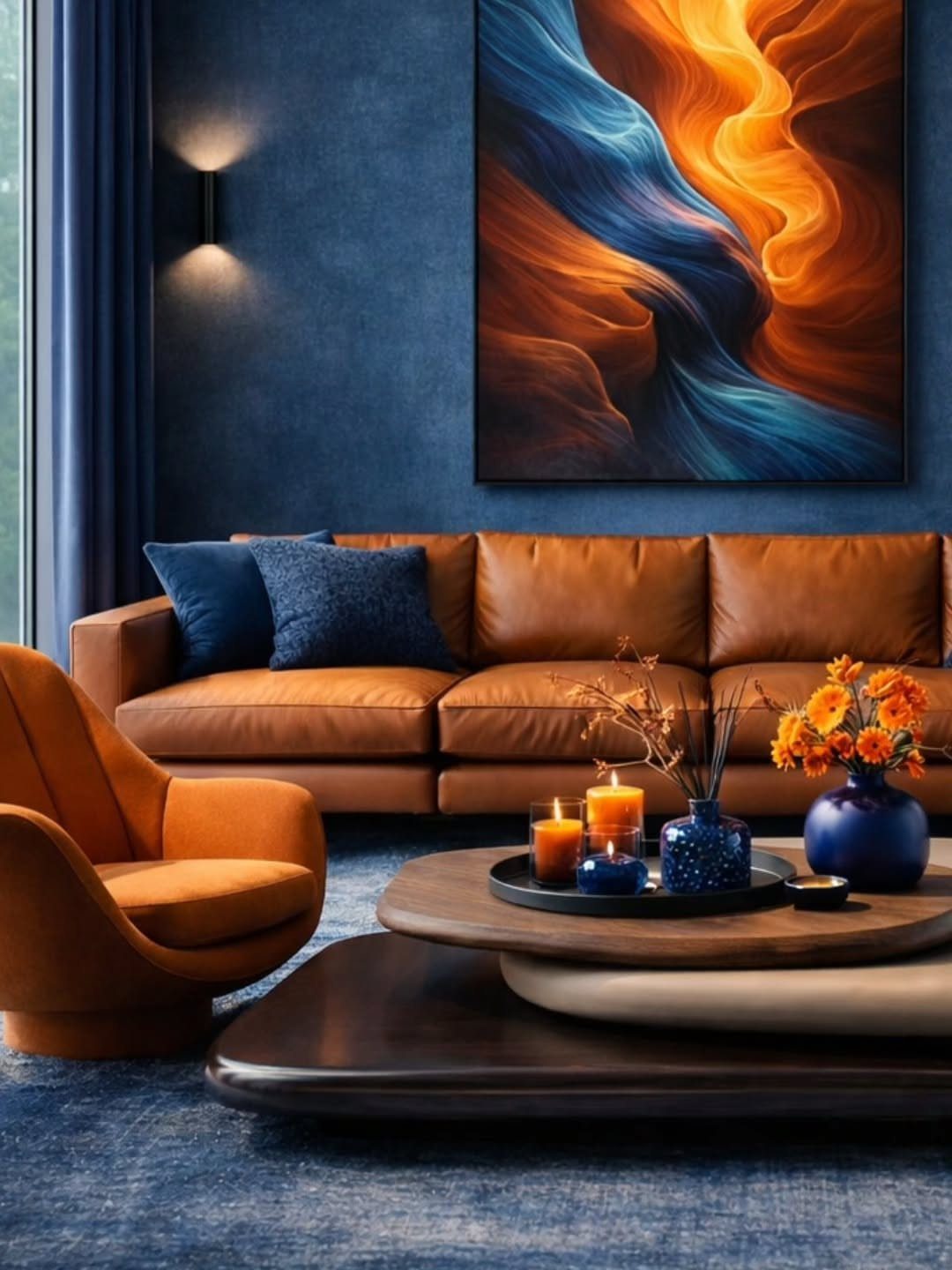
Paint the longest wall in the room navy to anchor the whole space and let a brown leather sofa read as warm, not drab. The high contrast makes each color sharper.
If the brown leans orange or cognac, the navy pulls it back toward balance. A darker chocolate brown holds its own better against deep blue and needs less help from lighter accents.
Add a few blue pillows on the sofa to tie it to the wall, then leave the rest neutral so the pairing stays clear.

Artistic Abstract Design with Dynamic Patterns: This modern 10x14 area rug combines natural marble textures and flowing wave designs in a navy blue base, accented with gray, white, gold, and brown tones. The unique asymmetrical shapes create captivating visual changes – cool tones stand out from the front, while warm metallic hints appear from the side. Transform your floor into a versatile art piece that adapts to your view, perfect for modern living rooms, bedrooms, or creative spaces
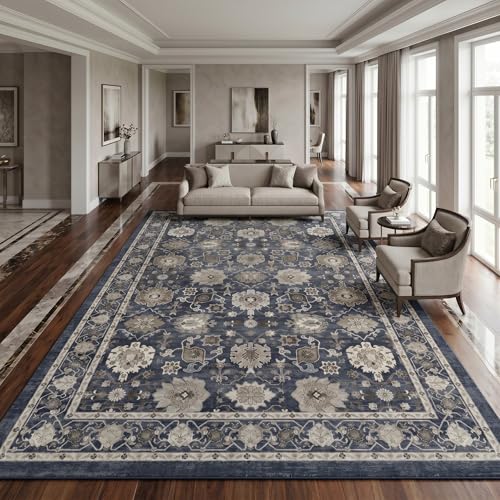
Infuse Beauty and Style: Step into a world of timeless beauty with the Vintage Luxe Rug Collection. It perfectly blends traditional and modern aesthetics — seamlessly complementing modern, vintage, or farmhouse interior styles. Each area rug in this series features vivid colors and an exquisite design. Its unique look adds flair and warmth to your home.

【Modern Abstract Design】This 8x10 area rug features an irregular, abstract pattern that blends complementary shades in a striking way to create texture & feeling. Its unique design brings personality & flair to your space, enhancing the overall aesthetic of your home.
2. Blue Sofas and Brown Wood

A blue sofa brings in color at a large scale, and brown wood furniture or exposed beams anchor it. The combination works because blue reads cool and wood reads warm.
Navy holds up best if the wood is medium to dark. Lighter blues need darker walnut or espresso tones to anchor them, or the room floats.
A sofa with wood legs or arms puts the materials right next to each other.
Separate pieces work too: a blue sectional with a brown coffee table or side tables gives you the same contrast without committing both materials to one piece.

Standard Size: 18 x 18 inches. Each set includes 2 pillow covers. Not including insert.

ORDER ONLY THROW PILLOW COVERS: Including 2 or 4 pillow covers without inserts.12"x20", 16"x16", 18"x18", 20"x20" , 22"x22", 24"x24", 26"x26" inch, Please allow 1-2cm deviation because of manual cutting and measurement. Color may be different in different light or on different screen.

Size: 20x20 inch/ 50X50 cm. Package contains 2 pillow covers/shells, NO PILLOW INCLUDED.
3. Blue Accent Wall
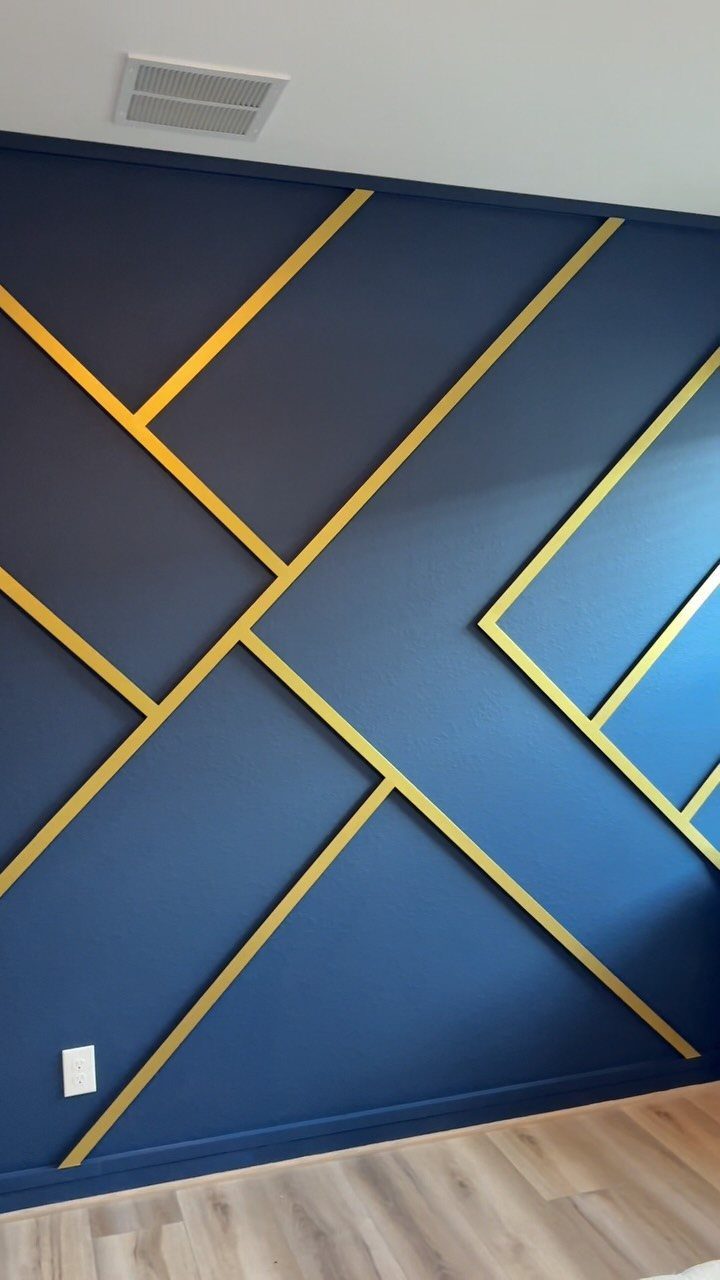
One wall in deep blue gives you the color without taking on every surface. It works best on the wall behind the sofa or the one facing the entry, where it registers first.
When the other walls are beige, tan, or another brown-based neutral, the blue wall lifts the scheme without fighting it.
Adding a gold or brass trim along the edges or in a geometric pattern sharpens the look and picks up any warm wood tones in the furniture.
The floor can stay light wood or go darker; either reads as brown against the blue.

Inclusive Decorative Package: the package includes all elements that you need to curate the nice decorative display, 3 elegant ceramic vases, a round wooden tray for presentation and organization and a rustic wooden bead garland to add a nice touch of charm
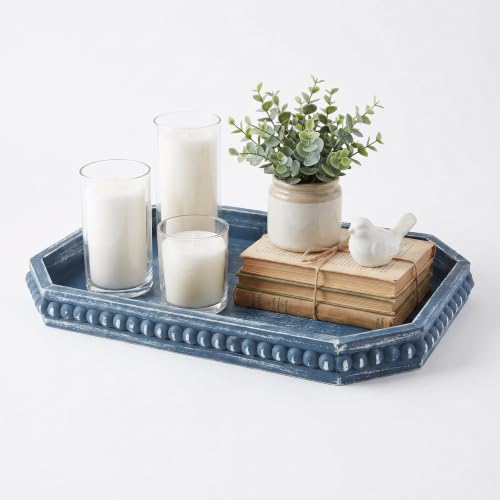
Style Choices Galore: Choose from a variety of chic designs and colors to match your aesthetic- including washed white, vintage black, burnt wood, wood color, light brown, and dark brown. With beaded detailing, these lightweight wooden trays come in various shapes - long octagonal, regular octagonal, square, rectangular, round and oval.

What Can You Get: what you will receive is a wooden chain link decor, designed with 3 links, suitable for placement in various parts of your home, adding artistic beauty and rustic ambiance to your space, which can meet your daily home decor needs
4. Blue Curtains
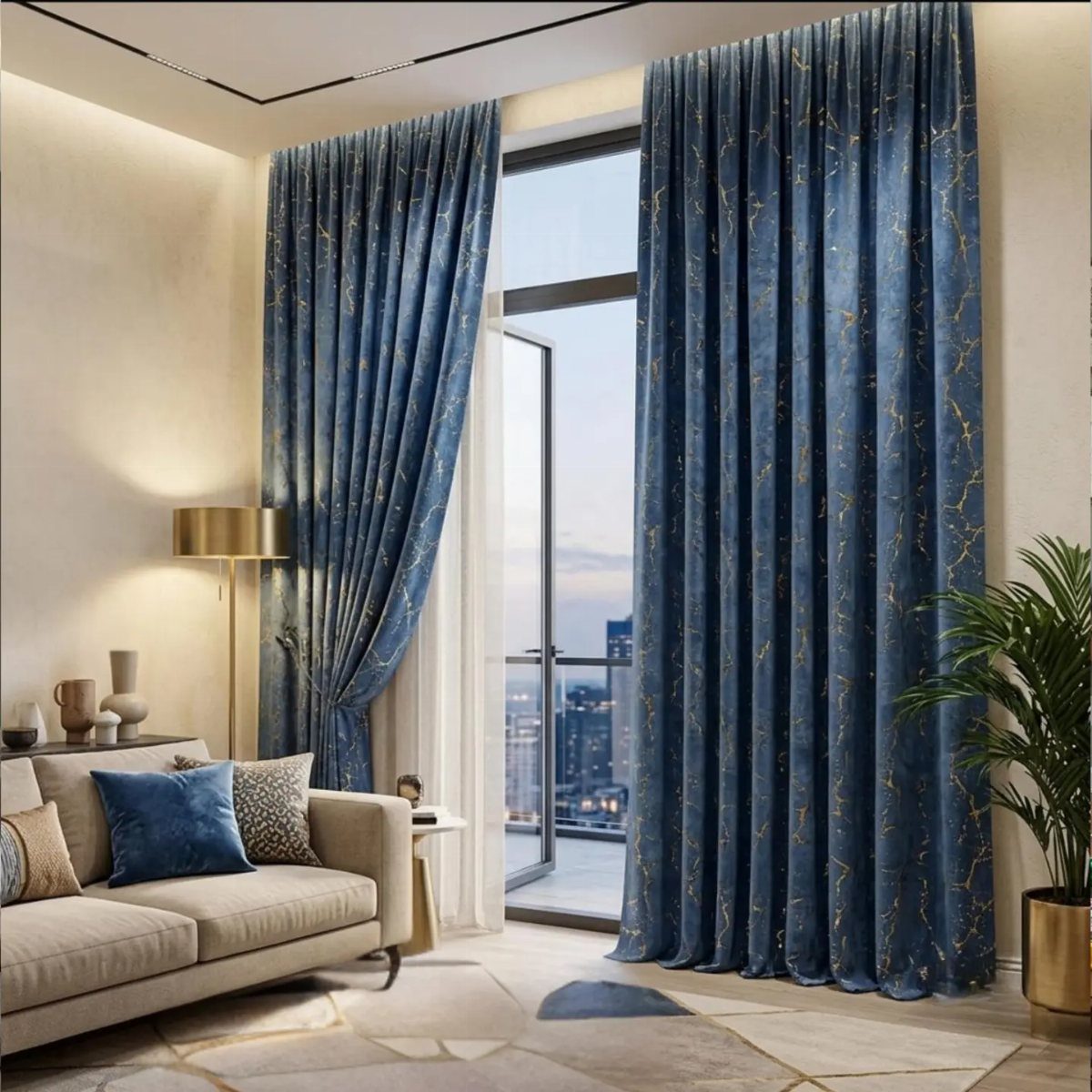
Curtains let you add blue at a height that pulls the eye up and makes the room feel taller. They also soften the pairing when you need less contrast than a painted wall gives.
A patterned fabric with both blue and brown, or blue with gold, ties the colors together without needing extra accessories. Solid blue works when the brown is already in the furniture or floor.
Hang them as close to the ceiling as the rod allows, and let them fall to the floor. Short curtains cut the room in half and make the blue feel stuck in the middle.

Cozy and Soft: The 3D jacquard fleece blankets are crafted from premium 100% microfiber polyester at 300GSM. The distinctive jacquard texture creates fluffy plushness on both sides. The raised bubble texture delivers tactile fun and reliable warmth. This balanced-weight throw keeps you cozily wrapped without overheating, a wonderful pick to bring snuggly warmth for you and your family during quiet relaxing moments

Softer and Warmer: Crafted from the latest flannel fleece material and premium polyester fibers, this blanket delivers exceptional softness and enhanced warmth. It ensures extra coziness on cold nights while providing outstanding comfort whenever needed

Cloud Light Waffle Flannel: Lightweight textured flannel delivers gentle cloud-soft touch without heavy bulk. Breathable plush fabric blocks cold AC wind indoors while staying sweat-free, suitable for summer bedroom, sofa and office naps
5. Blue and Brown Rugs
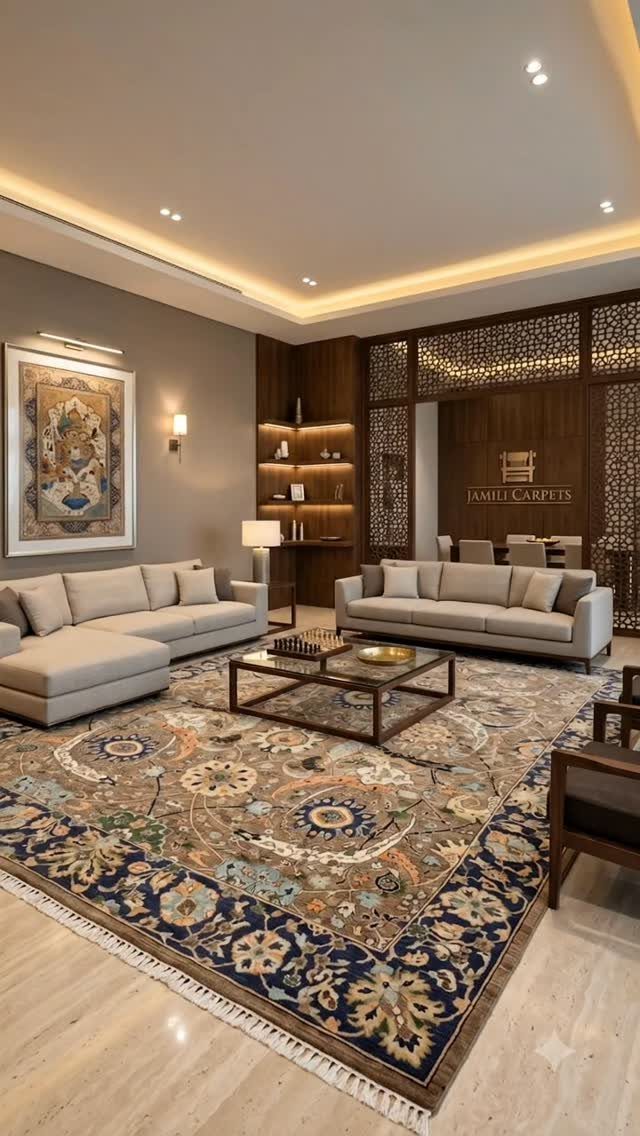
A rug with both colors in the pattern pulls the scheme across the floor and connects furniture that might otherwise sit apart.
It works in any room size, but it solves the most problems in a large space where the seating and tables are spread out.
Look for a design where one color dominates and the other accents. A mostly blue rug with brown details anchors a room with brown walls or wood trim; a mostly brown rug with blue pattern works under blue seating.
The rug should reach under the front legs of the sofa and chairs, or all the way under if the room is small.

Great For Any Plants: Ranging from small to medium sizes, this classical navy blue ceramic planter set can display your favourite succulents, flowers, cactus, orchid, and much more

Durable Ceramic Material: The ceramic pots for plants are made of high temperature firing, not easy to break and can be used for a long time. With good air permeability, it helps plant roots breathe and promotes healthy plant growth

ELEGANT DESIGN: These ceramic planters for indoor plants feature a timeless look that complements any décor, making them perfect flower pots for indoor plants.
6. Light Blue and Brown
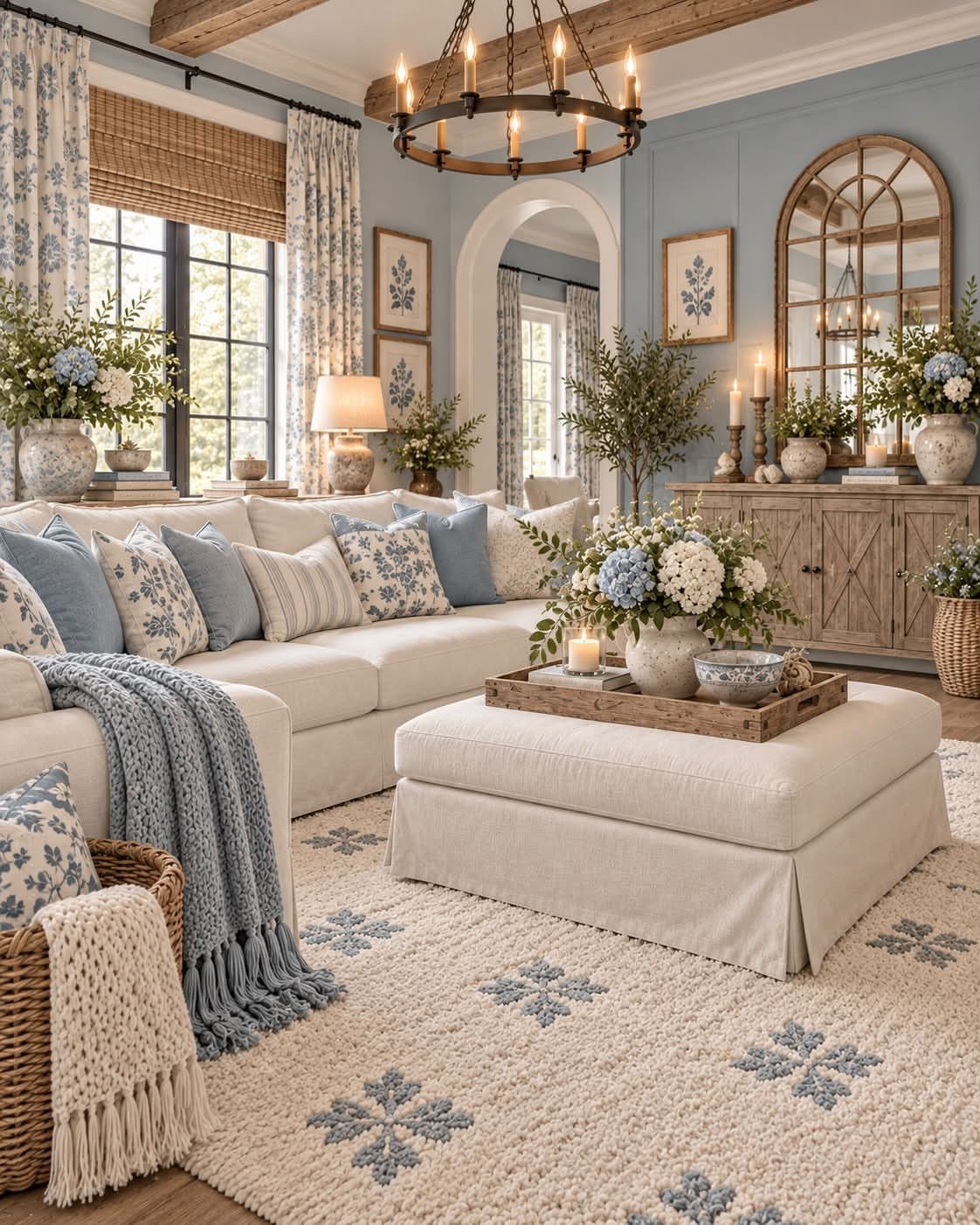
Lighter blues, closer to sky or powder than navy, pair with natural brown wood and tan upholstery for a softer look that still reads as intentional. The result feels airy instead of moody.
This version suits smaller rooms or spaces with limited natural light, where dark blue would close things in. The light blue reflects more light and makes the ceiling feel higher.
Keep the blue on the walls and bring brown in through wood beams, a jute rug, or woven baskets. If the walls stay neutral, reverse it: a light blue sofa with brown wood tables and floors.
Artistic Abstract Design with Dynamic Patterns: This modern 8x10 area rug combines natural marble textures and flowing wave designs in a navy blue base, accented with gray, white, gold, and brown tones. The unique asymmetrical shapes create captivating visual changes – cool tones stand out from the front, while warm metallic hints appear from the side. Transform your floor into a versatile art piece that adapts to your view, perfect for modern living rooms, bedrooms, or creative spaces

【Kid & Pet Friendly Washable Rug】Featuring skin-friendly fabric and tight weave, our vintage rug is long-lasting against pet scratching and daily wear from kids. The entryway rug works as a safe play surface for children and a comfy lounge area for pets, bringing warmth to your entire family

[Striking Abstract Design]: Our abstract modern rug stands out with a striking mix of bold color blocks and eye-catching organic textures. It brings a touch of cutting‑edge elegance to living rooms, bedrooms, kids’ rooms and more, and fits right in with minimalist styles without even trying.
7. Chocolate Brown and Blue
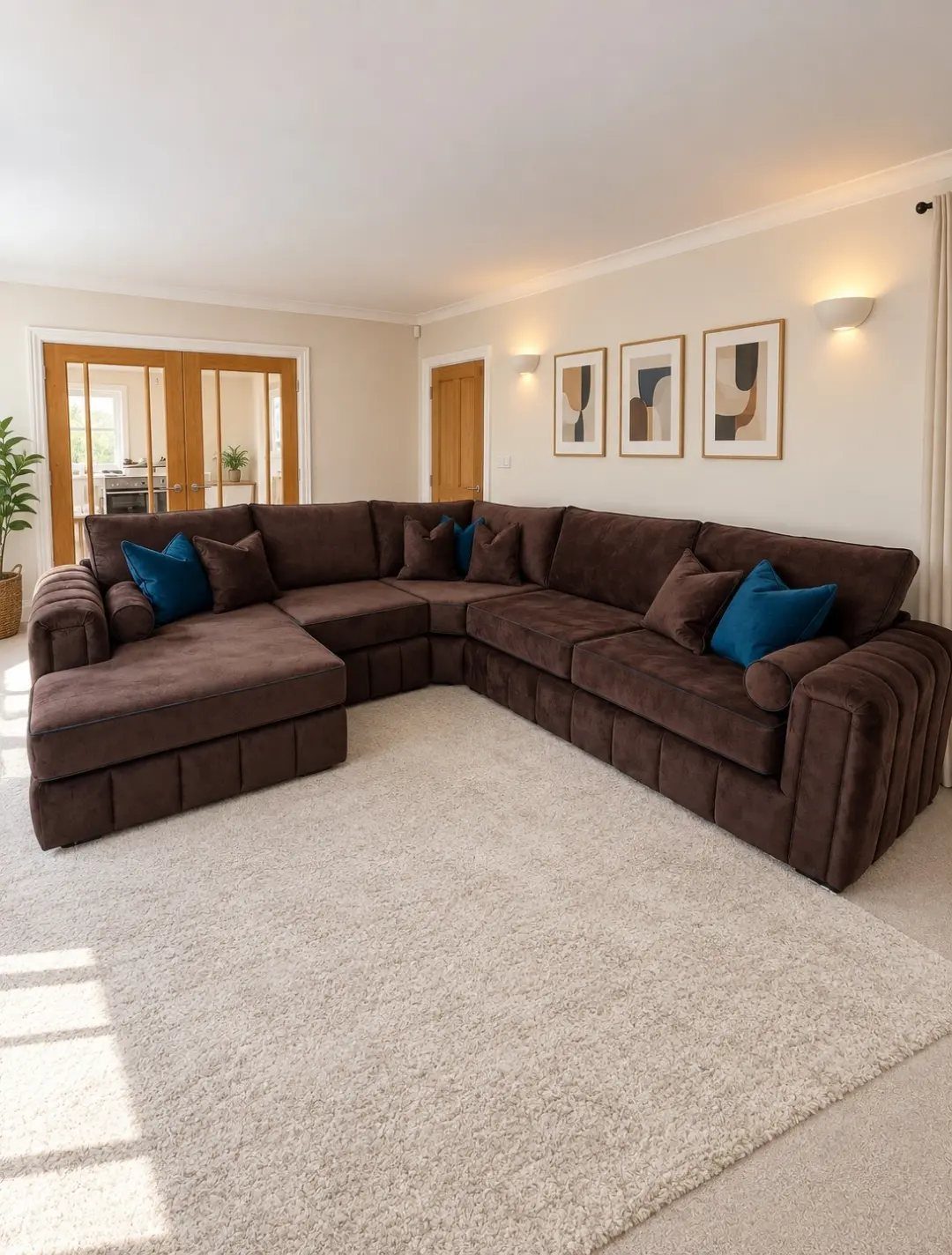
A large sectional in deep chocolate brown grounds the room and leaves the rest of the palette free to shift lighter or cooler. Bring blue in through pillows, throws, or a single accent chair.
The darker the brown, the more saturated the blue can go without the room feeling heavy. A lighter blue keeps the contrast readable; navy or cobalt adds drama.
If the sectional fills most of one wall, keep the blue accessories clustered on it rather than scattering them. That makes the pairing feel like a choice instead of leftovers.
ORDER ONLY THROW PILLOW COVERS: Including 2 or 4 pillow covers without inserts.12"x20", 16"x16", 18"x18", 20"x20" , 22"x22", 24"x24", 26"x26" inch, Please allow 1-2cm deviation because of manual cutting and measurement. Color may be different in different light or on different screen.

Size: 20x20 inch/ 50X50 cm. Package contains 2 pillow covers/shells, NO PILLOW INCLUDED.

Soft & Durable Decorative Pillows:Crafted from premium polyester blend fabric, these decorative throw pillows are soft to the touch, breathable, and built to last. The high-quality material resists fading and pilling, keeping your couch pillows looking fresh and stylish.
8. Dark Blue and Brown
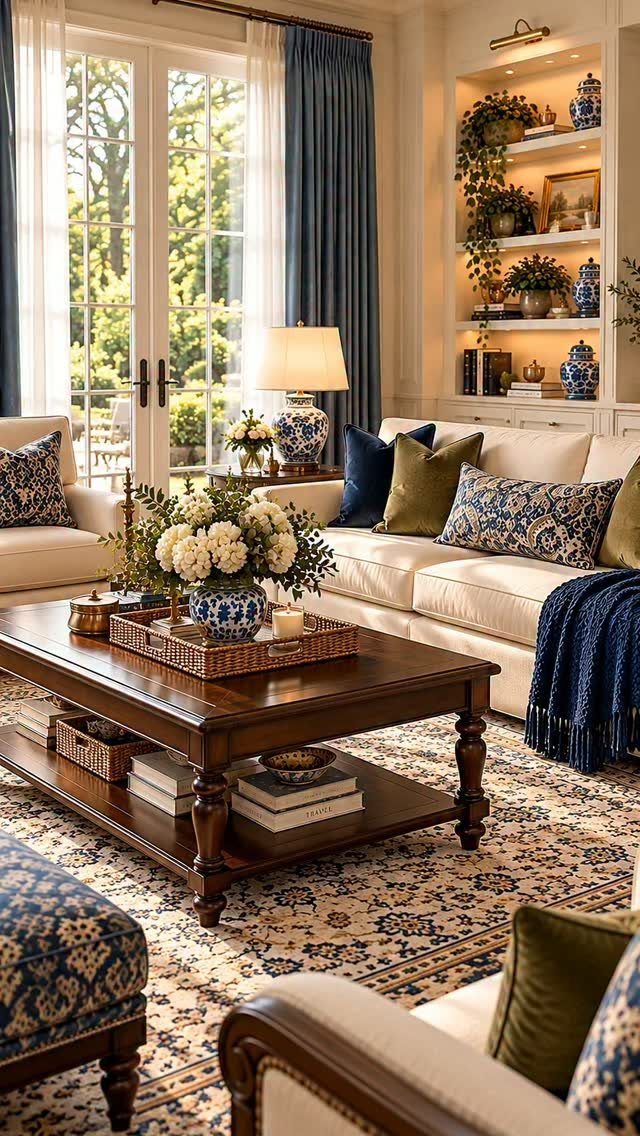
Dark blue walls or heavy curtains next to brown furniture create a room that feels enclosed in a deliberate way, not by accident. Both colors absorb light, so the space reads smaller and more intimate.
This works when you have strong natural light during the day or good task lighting at night. Without either, the room goes murky.
A light rug or pale upholstery on one piece breaks up the weight. The contrast gives the eye somewhere to land and keeps the dark tones from blurring together.

What You Will Get: Each package includes 1 pc absorbent coasters for coffee table, each ceramic coasters for crafts with a diameter of 4 inches (10 cm). The ceramic car coasters are large enough to accommodate most coffee mugs, drinkware, and glasses, suitable for both home and party use

OVERVIEW - 6-piece beautiful coaster set - 4" size, professionally printed on high-quality super absorbent ceramic stone with durable natural cork backing. Comes with a premium iron holder that can neatly stack your coasters

[A FRESH SCULPTURAL ACCENT] Give plain shelves and tabletops a playful style refresh with this 3-link wooden knot decor. Its interlocking silhouette, visible natural wood grain, and calming blue finish create an artistic focal point on small table, kitchen table, wood bookshelf, office table, mantels, and room shelves.
9. Rustic Log Walls
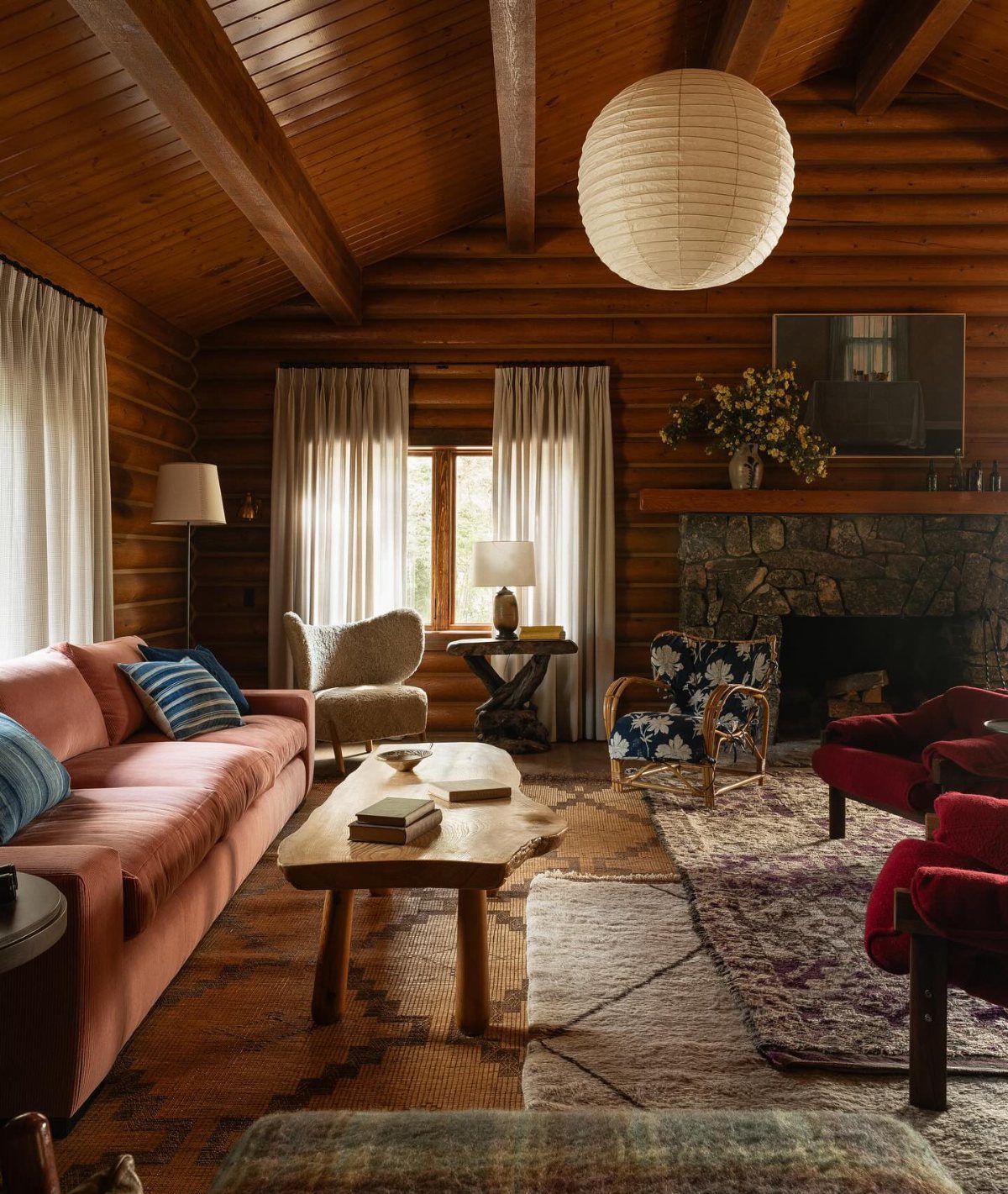
Log walls bring texture and a warm brown tone that you can’t get from stain or paint. Blue seating stands out against them without clashing because the wood grain softens the contrast.
Patterned upholstery with blue in it works better here than solid fabric. The pattern picks up the natural variation in the logs and keeps the blue from looking too flat or modern against a rustic backdrop.
If the logs go orange over time, a cooler blue helps pull the room back toward balance.

【UNIQUE DESIGN PHILOSOPHY】 Flannel bed blanket brings you more breathable and lightweight feeling than regular cotton blanket throw to keep your body warm - Neat stitches enhance strong connections at seams and better structural strength with integrated outlook - Double-side design offers you different senses of softness to improve your sleep.

【BUBBLE DESIGN】 Lotus Karen faux rabbit fur blanket is ultra-soft and cozy with super soft bubble texture, ensuring maximum comfort in your bedroom or living room. Its skin-affinity properties make it the perfect choice for snuggling up and keeping warm during chilly nights.

Softer Warmer: Flannel blanket has comfortable quality fabric, soft and skin-friendly, delicate and smooth, a blanket that makes you feel in a warm embrace. The double-sided design brings you a better touch and improves your sleep quality. The A side of the fleece is fine and soft, with a delicate and rich feel; the B side of the fleece is soft and long, helping you lock in the warmth
10. Coastal Family Room
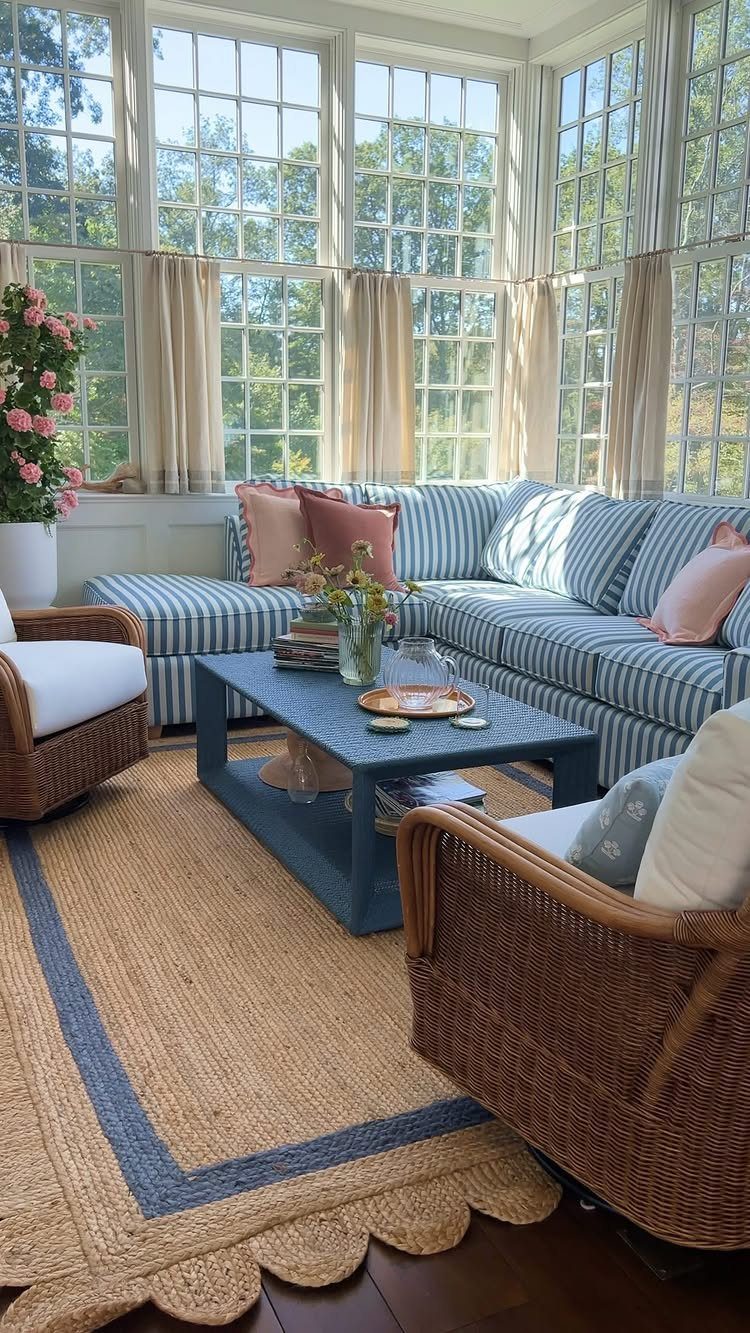
Striped blue and white fabric on the sofa gives the room a coastal feel without requiring every piece to match the theme.
Brown wicker chairs and a jute rug add warmth and keep it from reading as beachy in a forced way.
The stripes bring in pattern at a large scale, so the rest of the room can stay simple. Solid blue pillows or a solid blue coffee table echo the color without adding more lines.
This setup works in a sunroom or any room with a lot of windows. The light blue reflects daylight and makes the space feel bigger.

ECO CONSCIOUS CONSTRUCTION - A blend of premium recycled plastic and nature stone powder

Suitable for Various Plants: This set of classical navy blue ceramic planters comes in small to medium sizes and is perfect for displaying your favorite succulents, flowers, cacti, orchids, and more

🌿【Self-Watering Feature】 The Fielda 12/10/8 Inch Plastic Planter Set comes with a built-in self-watering system that uses absorbent cotton wicks to draw water from the bottom tray into the planter. This ensures your plants stay hydrated with less effort, saving you from frequent watering. Whether you're a busy gardening enthusiast or away for long periods, you can easily maintain your plants' moisture balance, ensuring they get the right amount of water and nutrients.
11. Blue and White Pottery
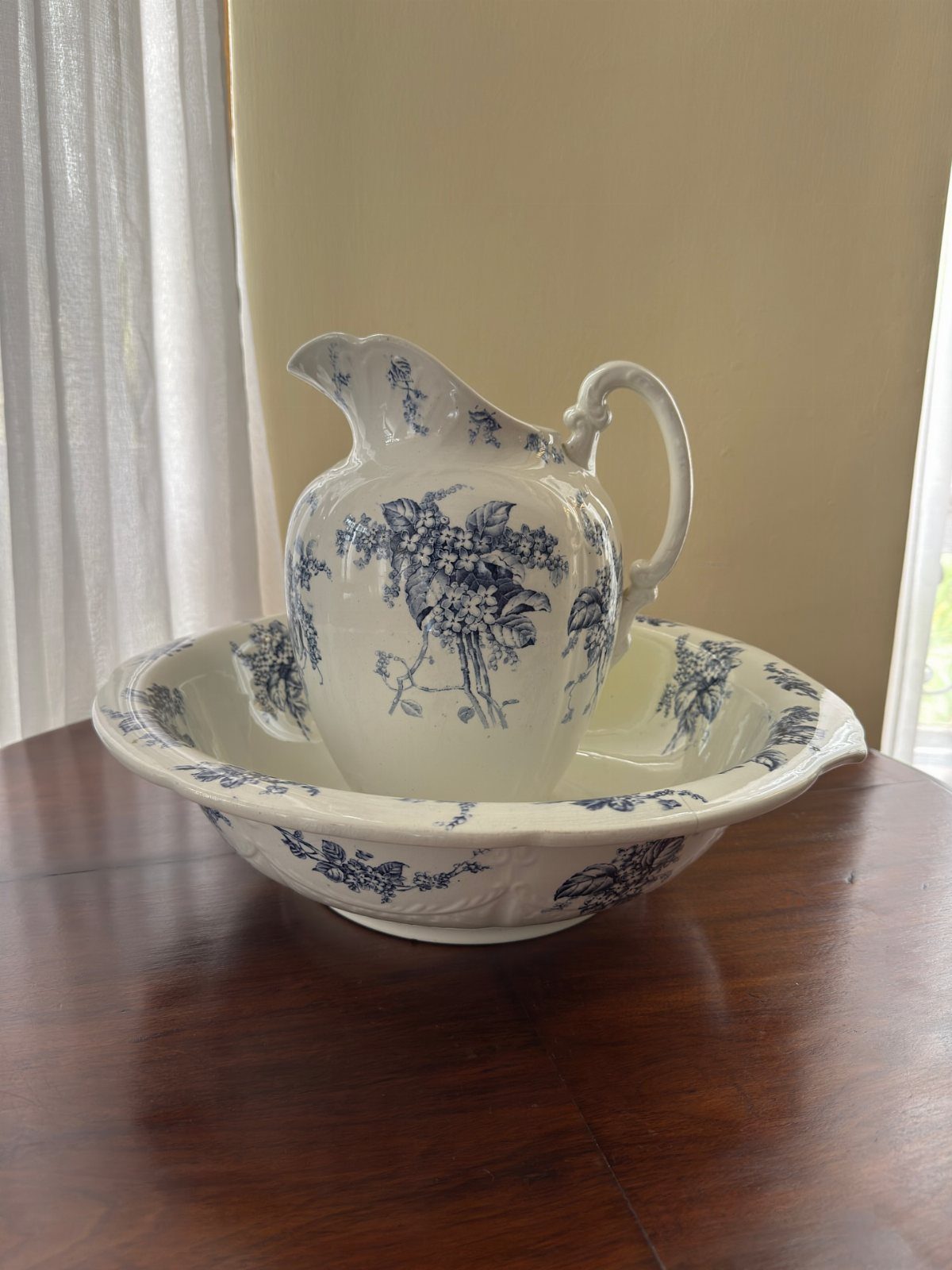
Blue and white ceramic pieces on a dark wood table or console add color at eye level without needing paint or upholstery.
The pairing works because the white breaks up the blue and the brown stays in the background as a neutral.
A pitcher, a bowl, or a vase with a traditional Chinese or European pattern brings in detail that registers from across the room. Group a few pieces together rather than spreading them out; the cluster reads as one intentional accent.
The tan wall behind keeps the focus on the pottery. A darker wall would compete with the wood and lose the contrast.
12. Small Room with Dark Paint
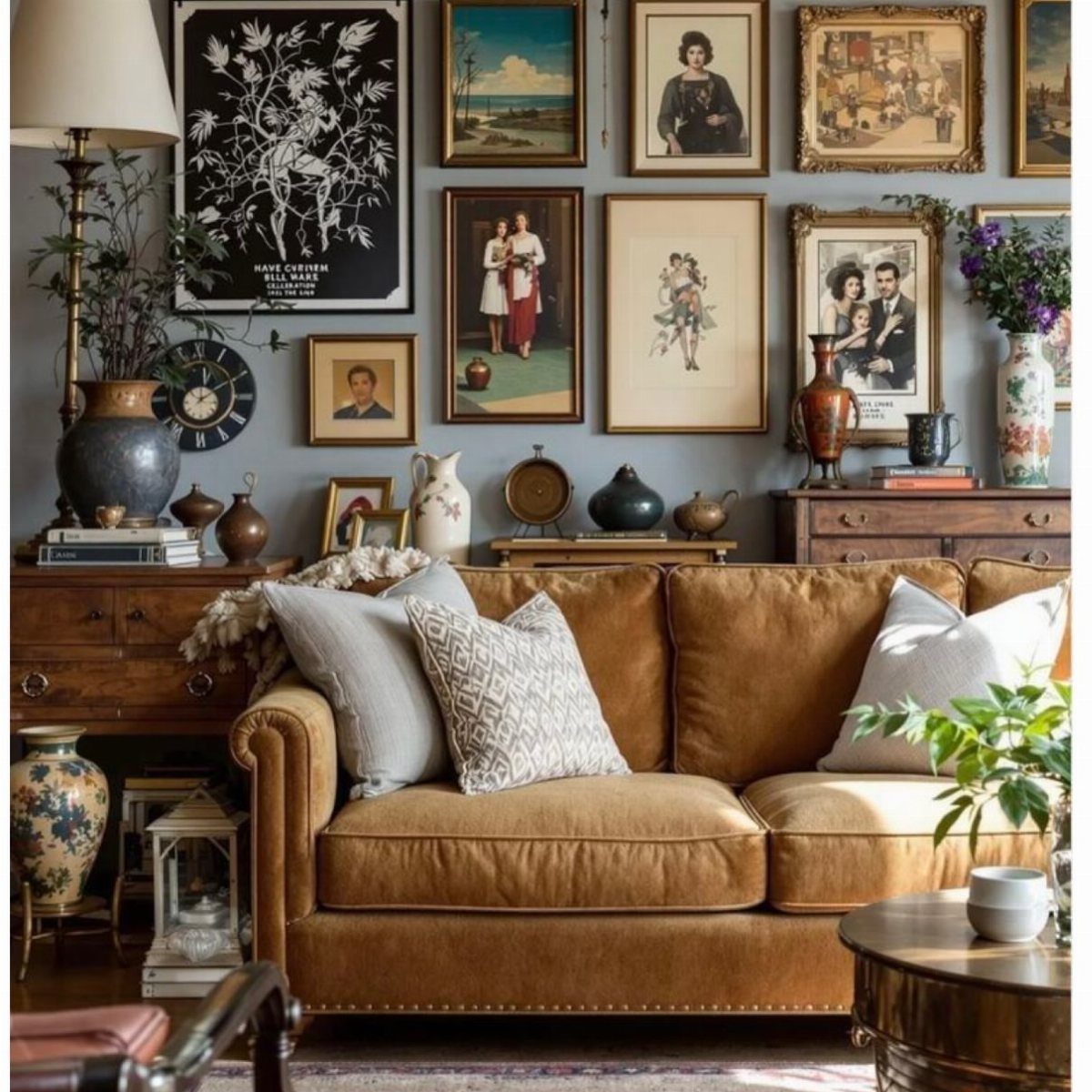
Dark blue or gray-blue paint makes a small living room feel more intentional and less like a leftover space. A brown leather sofa reads warm against it, and the combination keeps the room from feeling cold or severe.
Hang a gallery wall to fill the vertical space and give the eye something to move across. Frames in mixed finishes, some wood and some metal, tie into both the brown and the blue without matching too hard.
Add a table lamp and a floor lamp. The dark paint needs more light sources than a pale room does, or it goes flat.
13. Nature-Inspired Patterned Seating
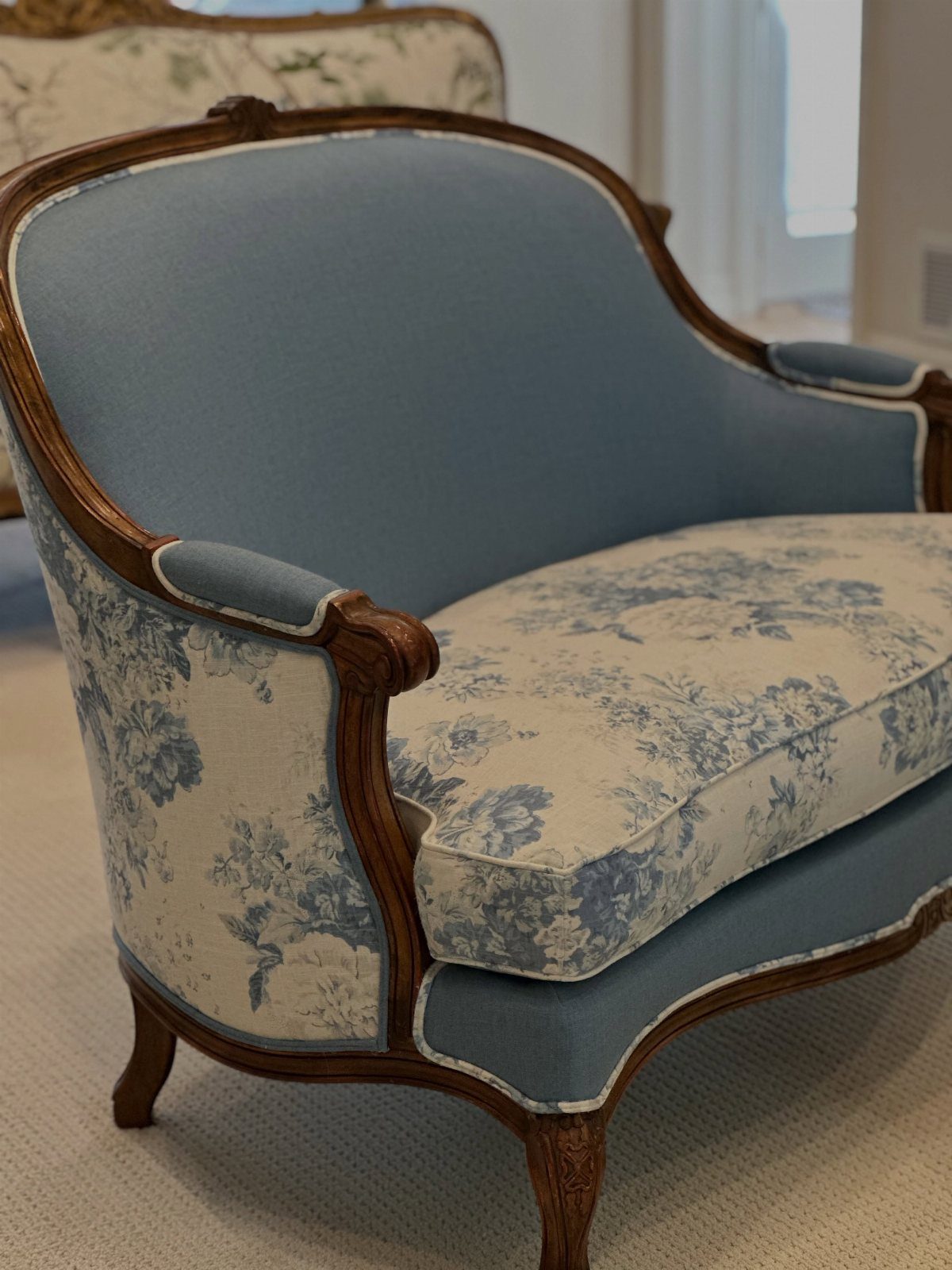
Floral or botanical fabric on a single armchair brings both colors in at once and keeps the pattern contained. The brown wood frame anchors it and prevents the print from floating.
A wingback or club chair works best because the upright shape and defined edges hold the pattern in place. A loose slipper chair or an overstuffed armchair softens the lines too much and the print loses clarity.
Keep the rest of the room simple. One patterned chair reads as a choice; three pieces in different prints compete.
14. Amber Brown and Navy
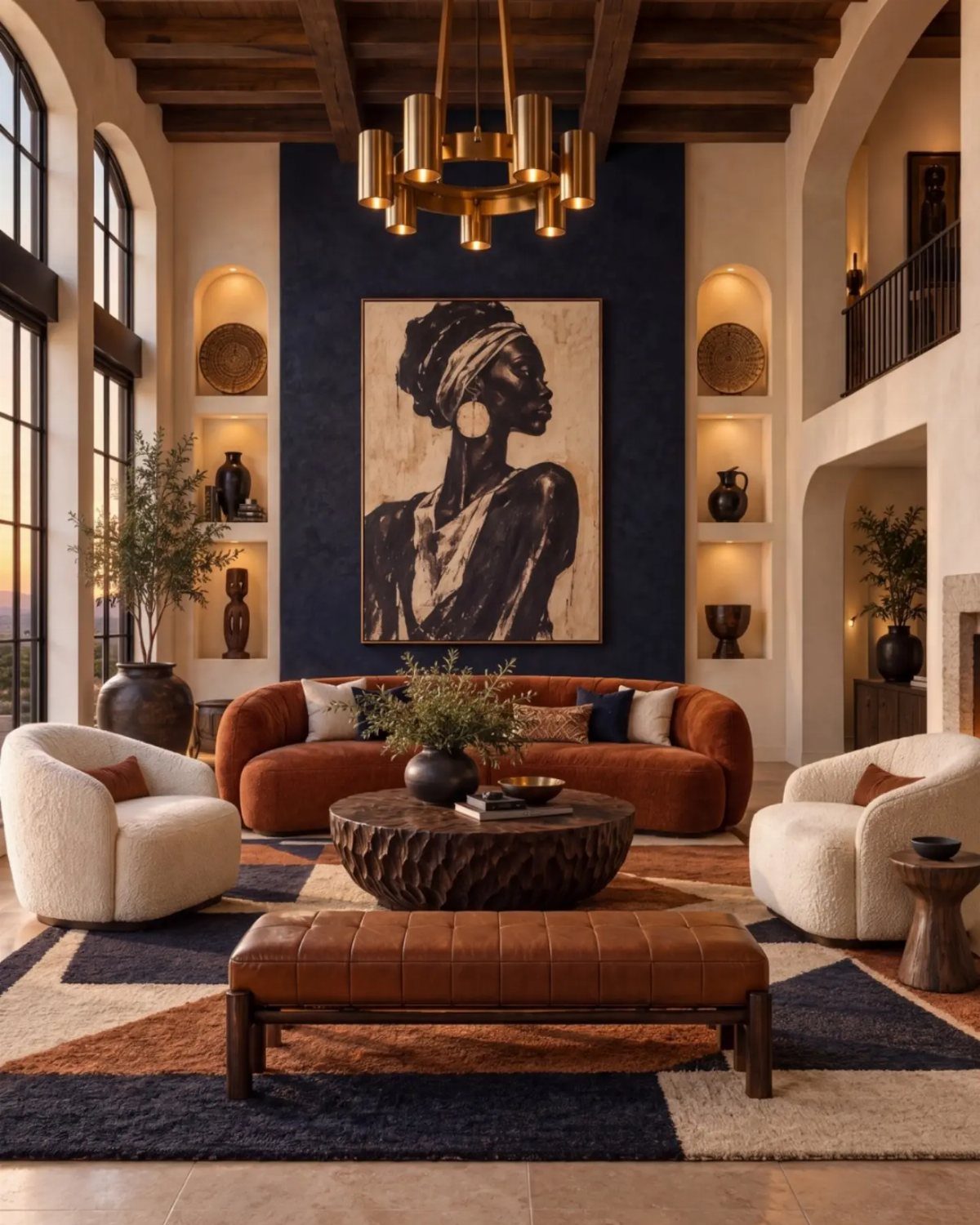
Amber leather has more yellow in it than cognac, so it reads warmer and pairs with navy in a way that feels balanced without skewing cool. The combination works in a modern farmhouse because both colors feel grounded.
A navy accent wall behind the sofa anchors the amber and keeps it from dominating. If the walls stay light, bring navy in through a rug or a pair of chairs across from the sofa.
Add gold in the lighting or hardware. It picks up the warmth in the amber and ties the 2 colors together without adding a third hue.
15. Gilded Lighting
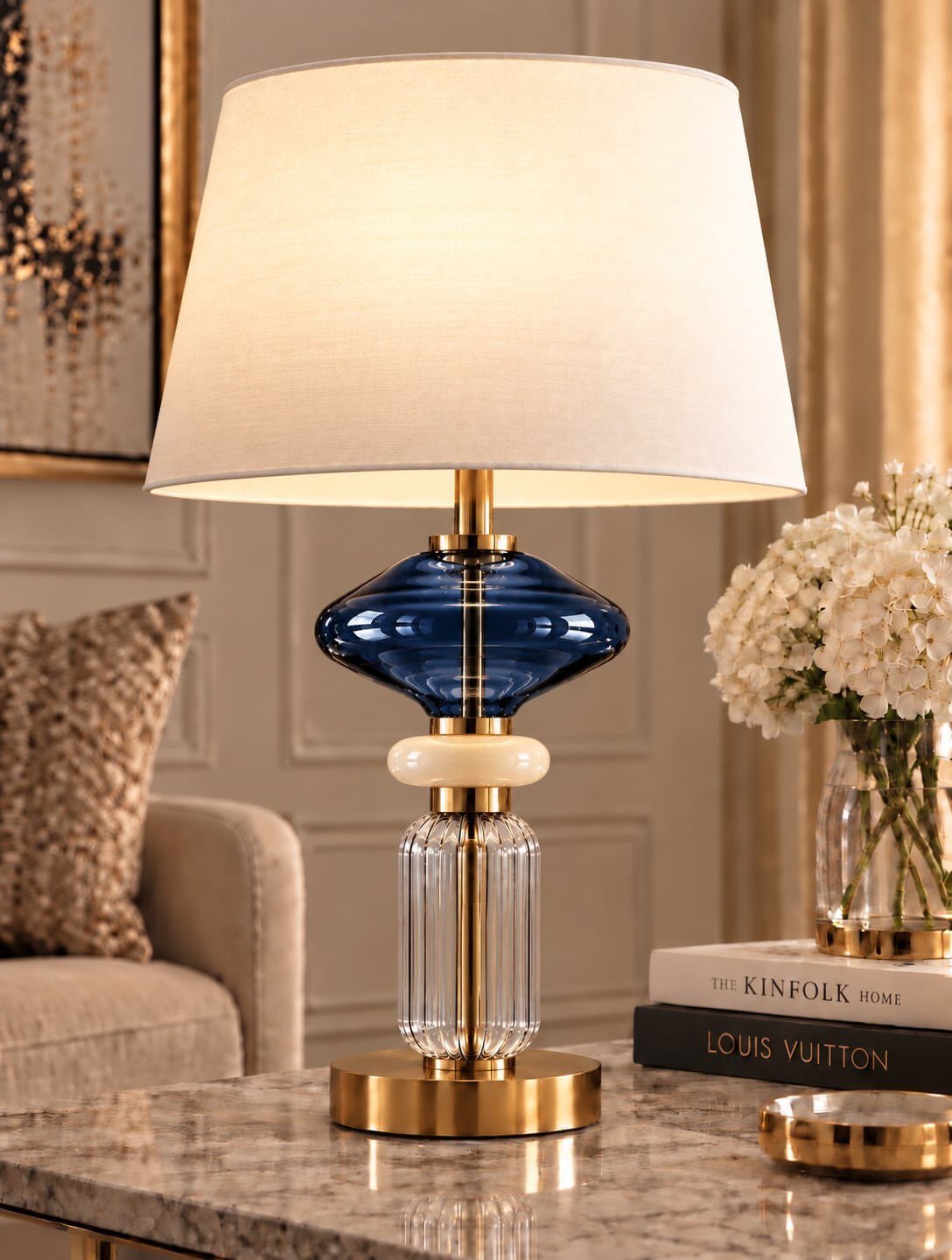
A table lamp with a gold or brass base and a blue glass detail brings both colors to the same surface without requiring a whole furniture piece.
The gilded finish reflects light and makes the room feel warmer even when the blue runs cool.
Set it on a brown wood side table or a tan upholstered ottoman. The brown grounds the lamp and keeps the gold from reading too formal.
A chandelier works the same way at a larger scale. Look for one with brass arms and blue glass accents, or a solid brass fixture hung above a blue rug.
16. Blue Walls and Brown Texture
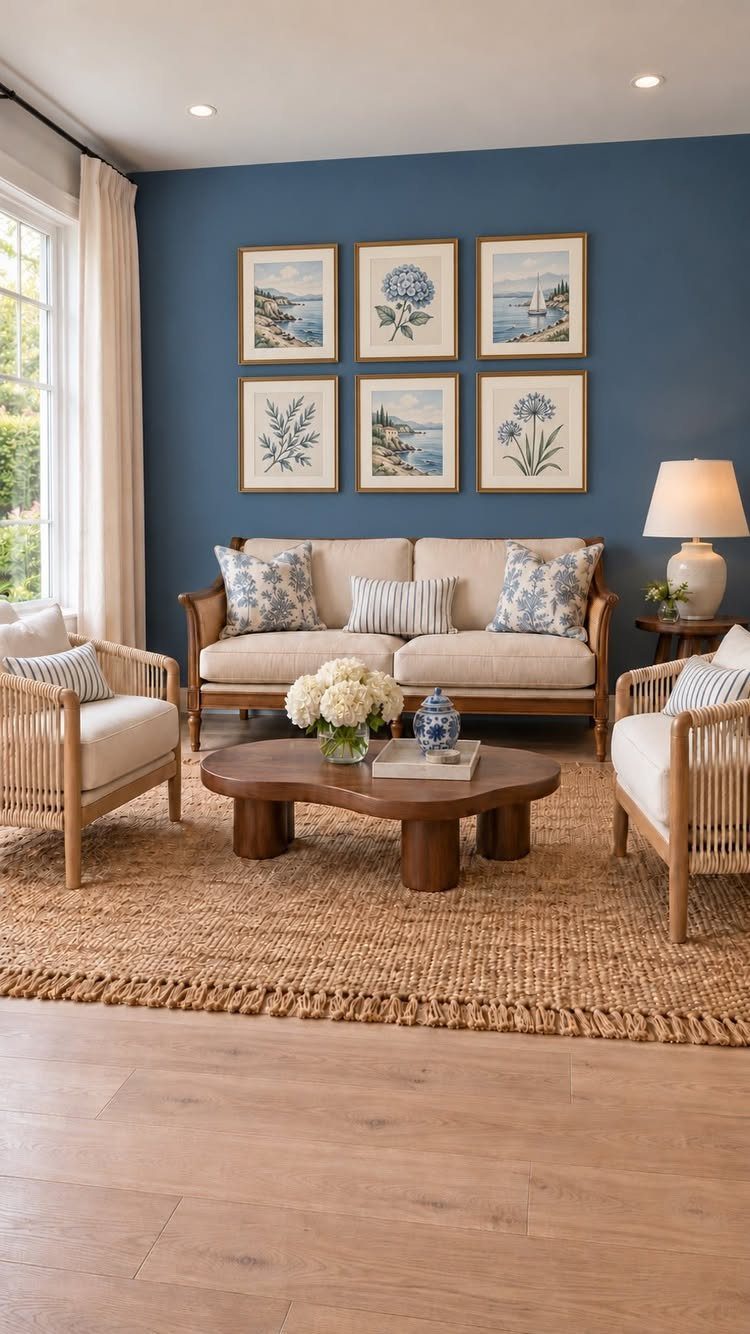
Jute, rattan, and unfinished wood bring texture to a blue room without adding more color. The brown tones in those materials read warm and natural, so they balance the blue without fighting it.
A jute rug under the seating area spreads that warmth across the floor. Brown woven baskets on a shelf or next to the sofa add it at eye level.
Beige upholstery keeps the furniture neutral so the blue walls stay the focus. A brown leather chair or a walnut coffee table brings in a darker brown if the room needs more weight.
17. Cognac and Tan Leather
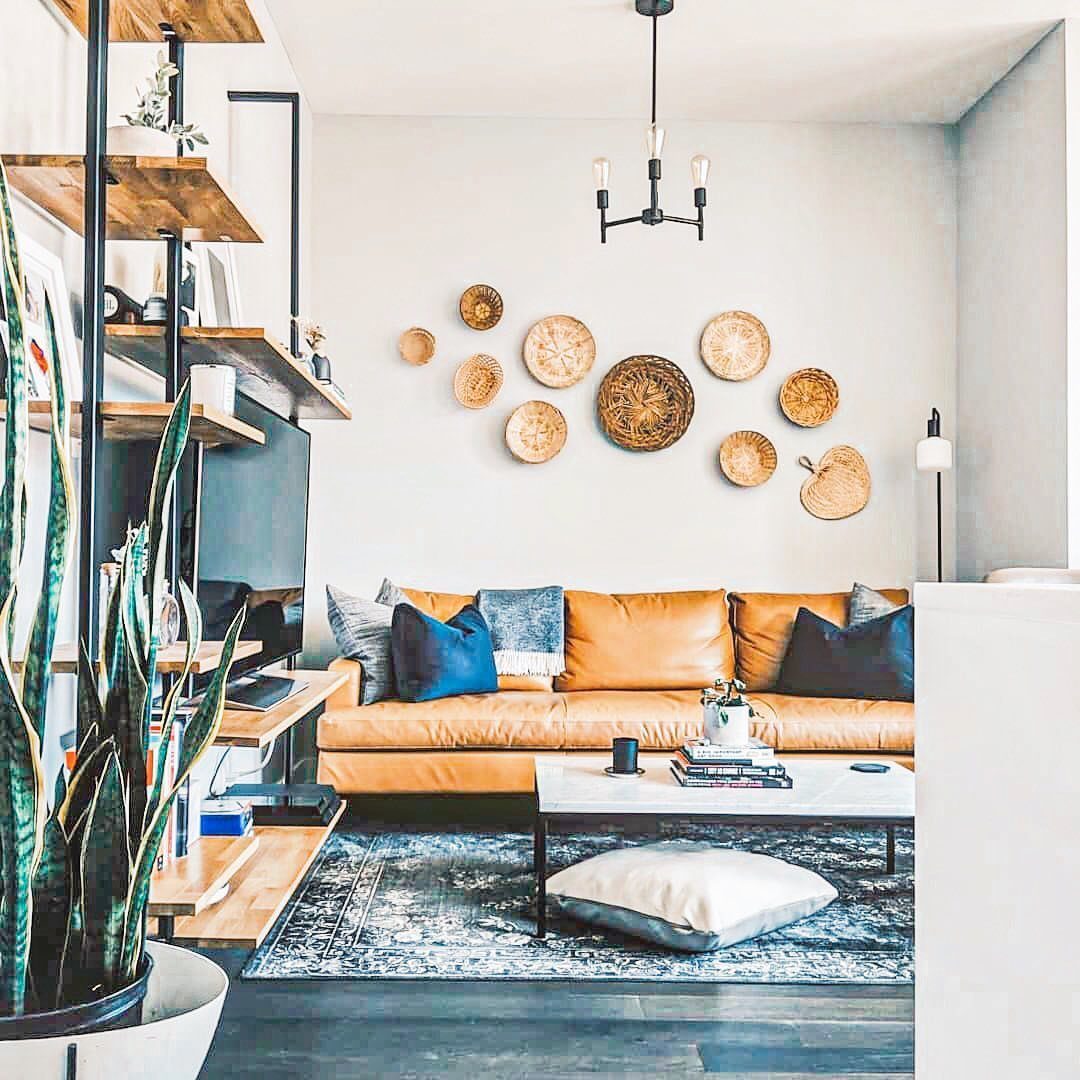
Cognac leather on a sofa or a pair of armchairs is the most reliable way to bring brown into a room where blue is the accent color.
The leather ages well and darkens over time, so it holds up better than fabric in a high-traffic space.
Blue pillows on the sofa tie it to a blue rug or blue curtains elsewhere in the room. Keep the pillow fabric simple: linen or cotton reads cleaner than velvet or patterned prints against the leather.
Tan leather works the same way but reads lighter. Choose it when the blue is dark or the room is small.
18. Blue Walls and Amber Couch
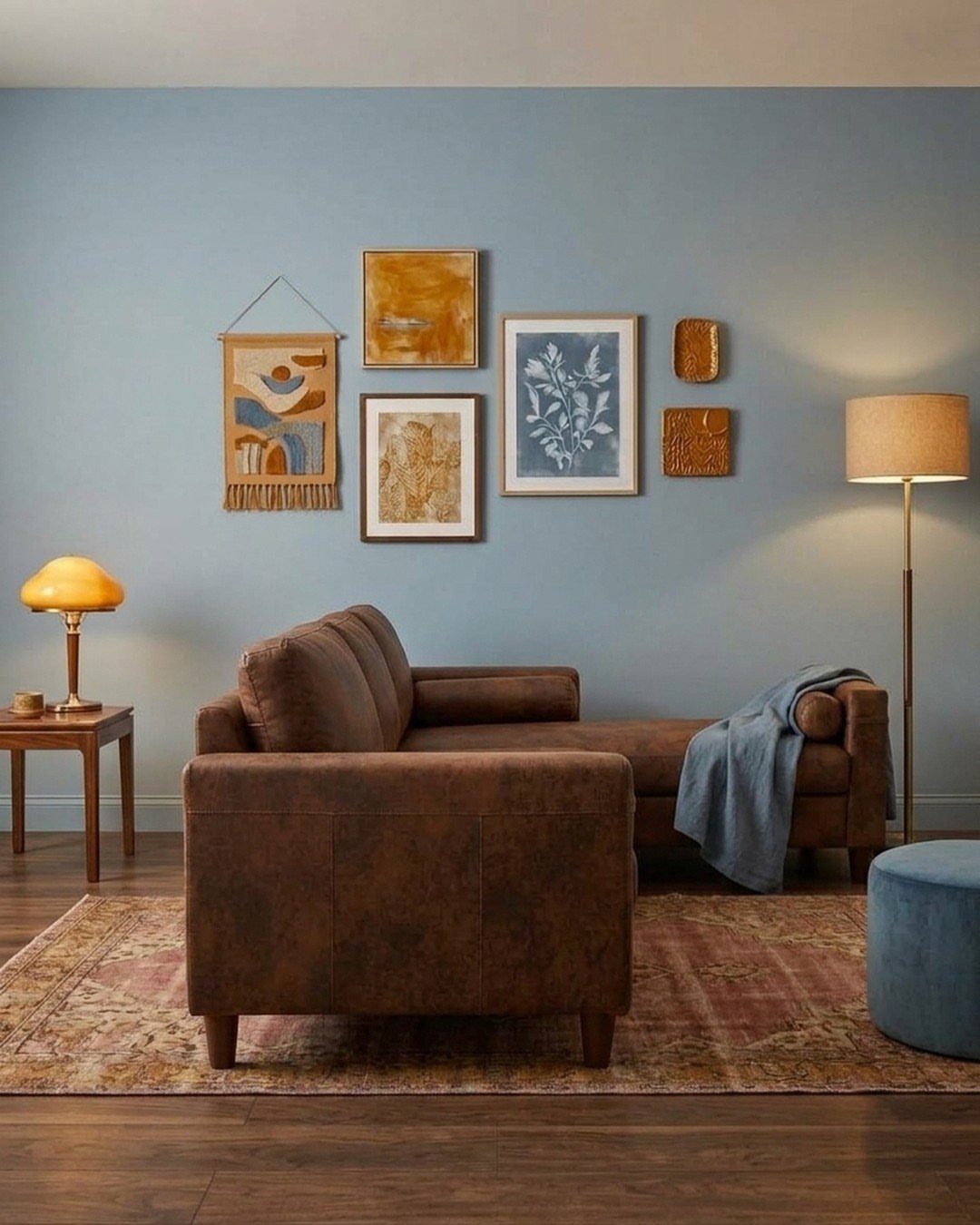
A sectional in amber leather pulls the eye first, so paint the walls a saturated blue to give it something to sit against. The blue keeps the leather from looking too warm or too orange.
An ottoman in the same blue as the walls connects the 2 and gives you a surface to prop your feet without adding brown.
If you need storage, a brown wood coffee table works but shifts the balance back toward brown.
Mix frames in wood and black to tie into both colors.
19. Deep Blue Walls and Warm Orange-Brown Accents
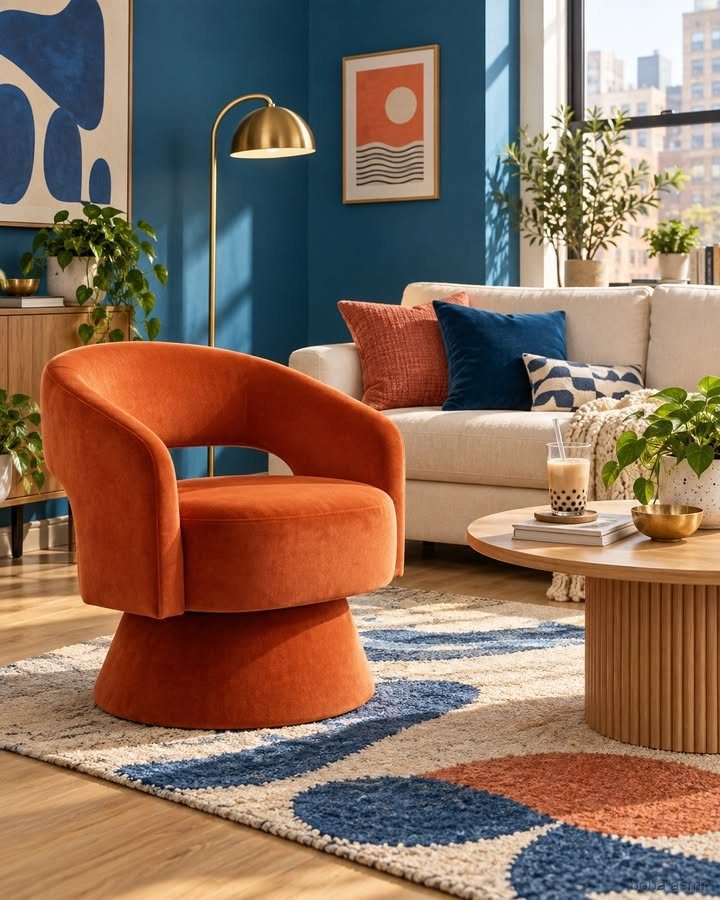
Deep blue pulls orange-brown toward rust instead of pumpkin, so a rust swivel chair or burnt orange pillows read warm without going seasonal. The white sofa keeps the darker colors from filling the room.
A patterned rug with both blue and rust or orange tones spreads the pairing across the floor. Gold or brass lighting picks up the warm side of the orange without adding a new color.
If the blue goes this saturated, the brown needs warmth. Walnut or teak works better here than espresso.
20. Blue Velvet Accent Chair on Hardwood

A single accent chair in blue velvet gives you the color without committing a whole sofa to it. The tufting adds texture that shows against the flat tone of the hardwood.
The brown floor is already there in most older homes, so this works without refinishing or painting anything structural. A light rug under the chair softens the hard surface and defines a corner for reading or sitting.
Skip it if the wood runs cool or gray.
21. Navy Sofa with Warm Tan Accents
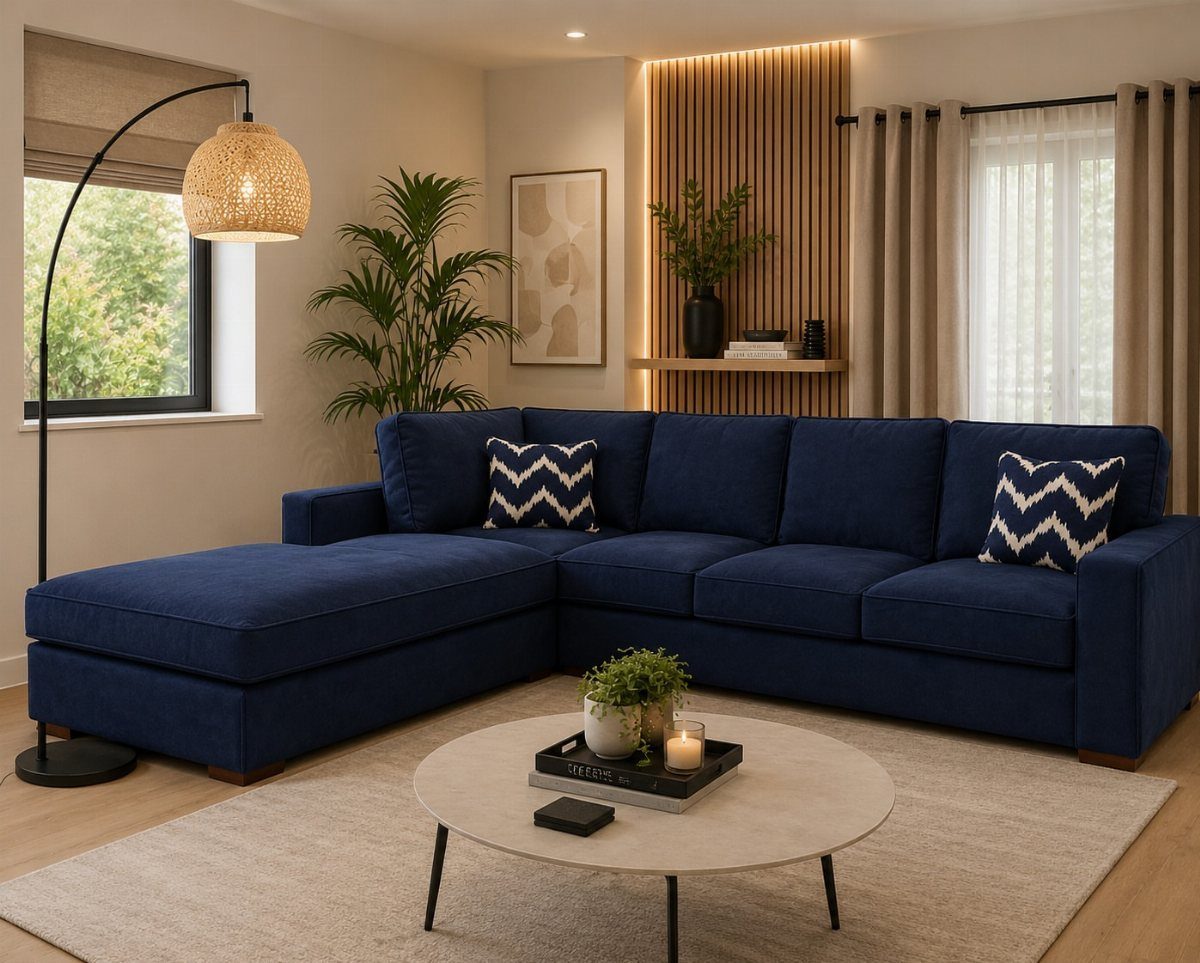
A navy sectional on a tan rug and tan walls shifts the brown from furniture to background, so the room feels calmer and the blue reads as the only strong color.
The light tan reflects more daylight than darker brown would and keeps the navy from closing in the space.
Wood slats on one wall add brown texture without needing more furniture. If you skip that, bring brown back through a coffee table or side table in walnut or oak.
This setup suits a small living room where dark walls would shrink things too much.
22. Brown Walls with Blue Ceiling
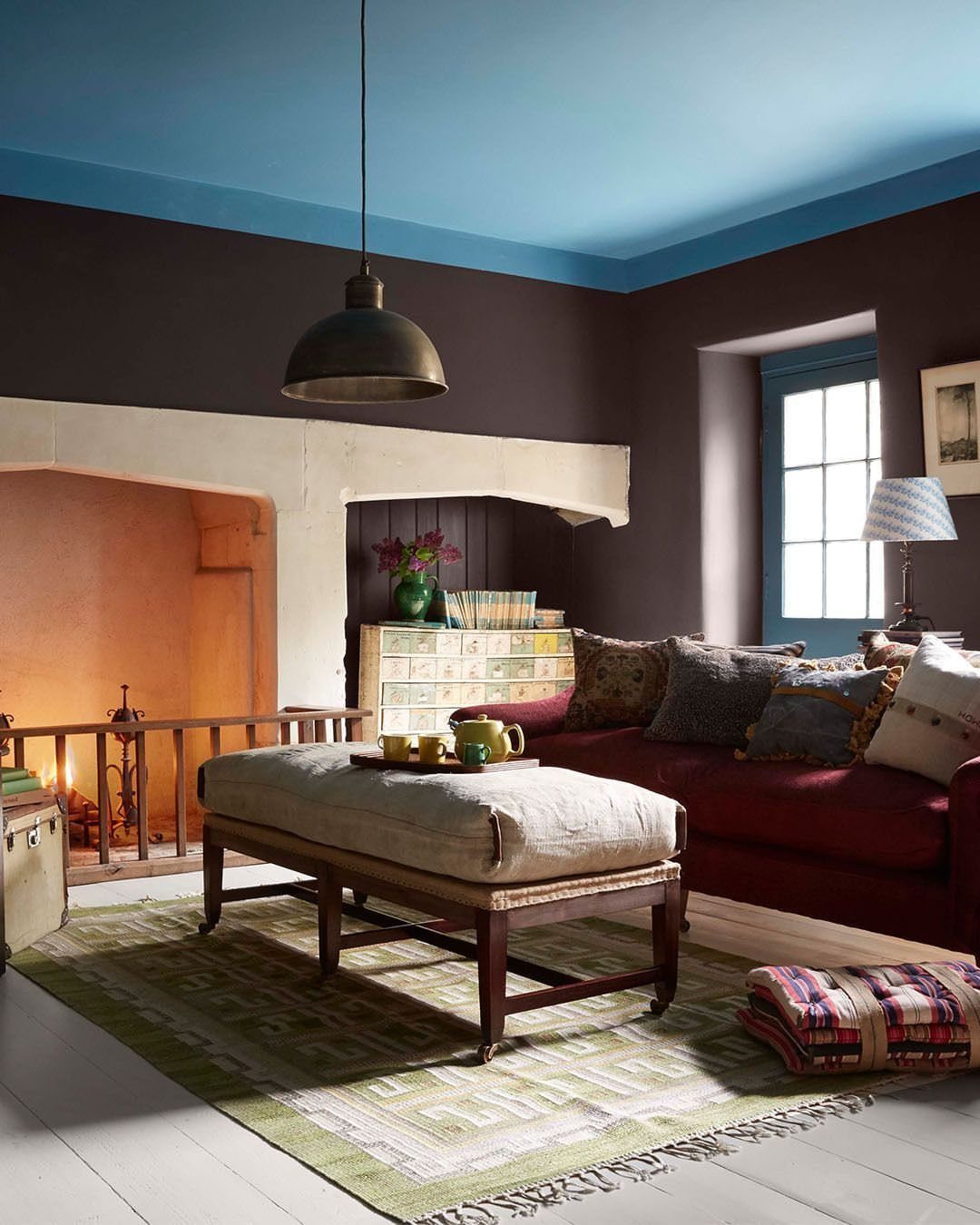
Painting the ceiling blue instead of the walls gives you the color without boxing in the furniture. A bright blue reads bold overhead and lifts the eye up, so the room feels taller even when the walls go dark.
Brown paneling or dark brown paint on the walls absorbs light, so this needs strong daylight or several lamps. A stone fireplace adds texture that breaks up the flat paint and keeps the room from feeling too enclosed.
The pairing works best in a room with high ceilings.
23. Brown Curved Sofa with Blue Armchairs
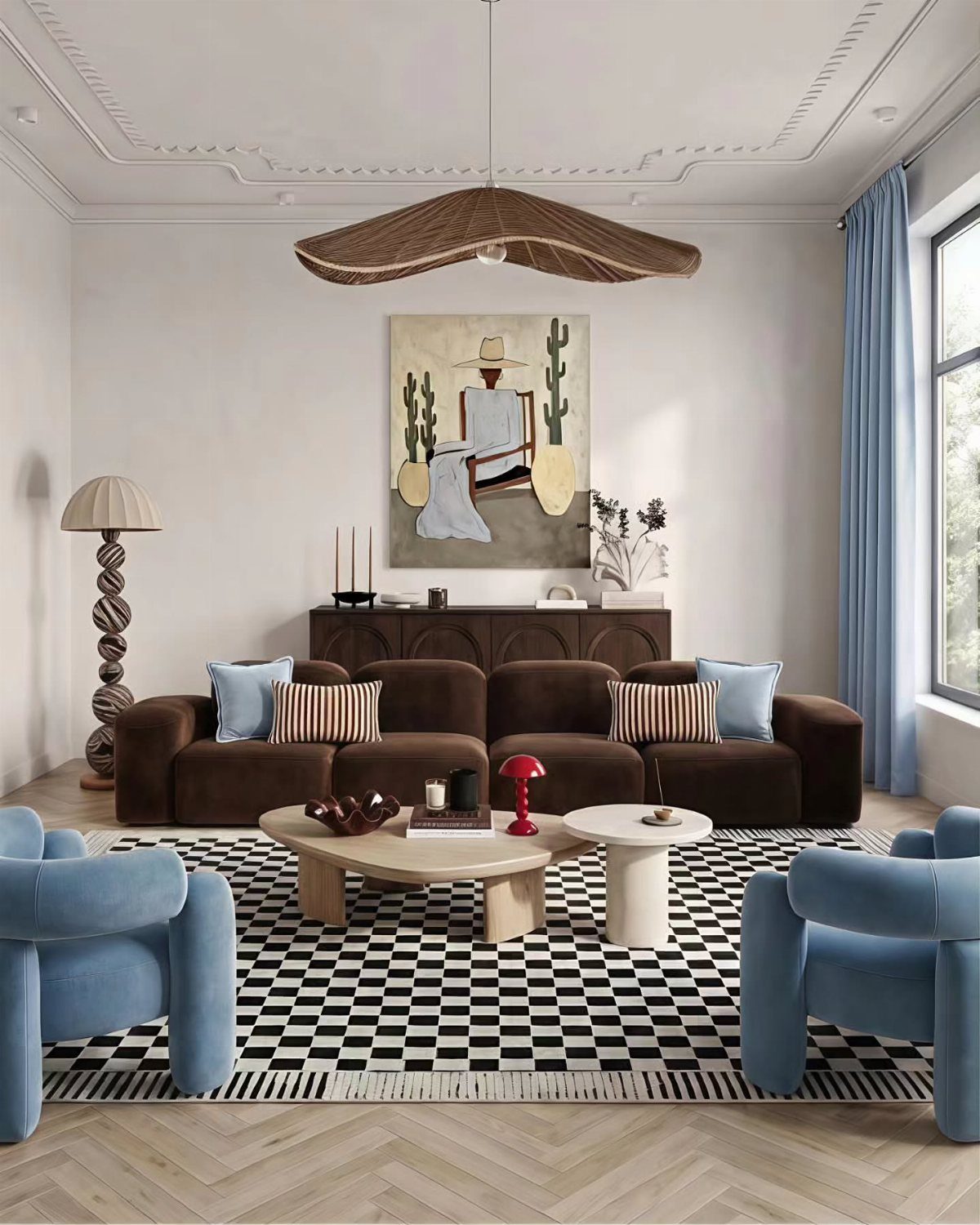
A curved sofa in brown balances 2 blue armchairs across from it without the stiffness of a matched set. The curve softens the geometry and makes the arrangement feel less formal.
Blue curtains behind the seating tie the chairs to the rest of the room and pull the color up to the ceiling line.
A graphic rug, like a checkered or striped pattern with both colors, connects the pieces across the floor.
The brown sofa can be leather or fabric. Leather ages better in a high-traffic room; fabric gives you more color options if the brown needs to read lighter or warmer.
24. Blue Sofa with Brown Table
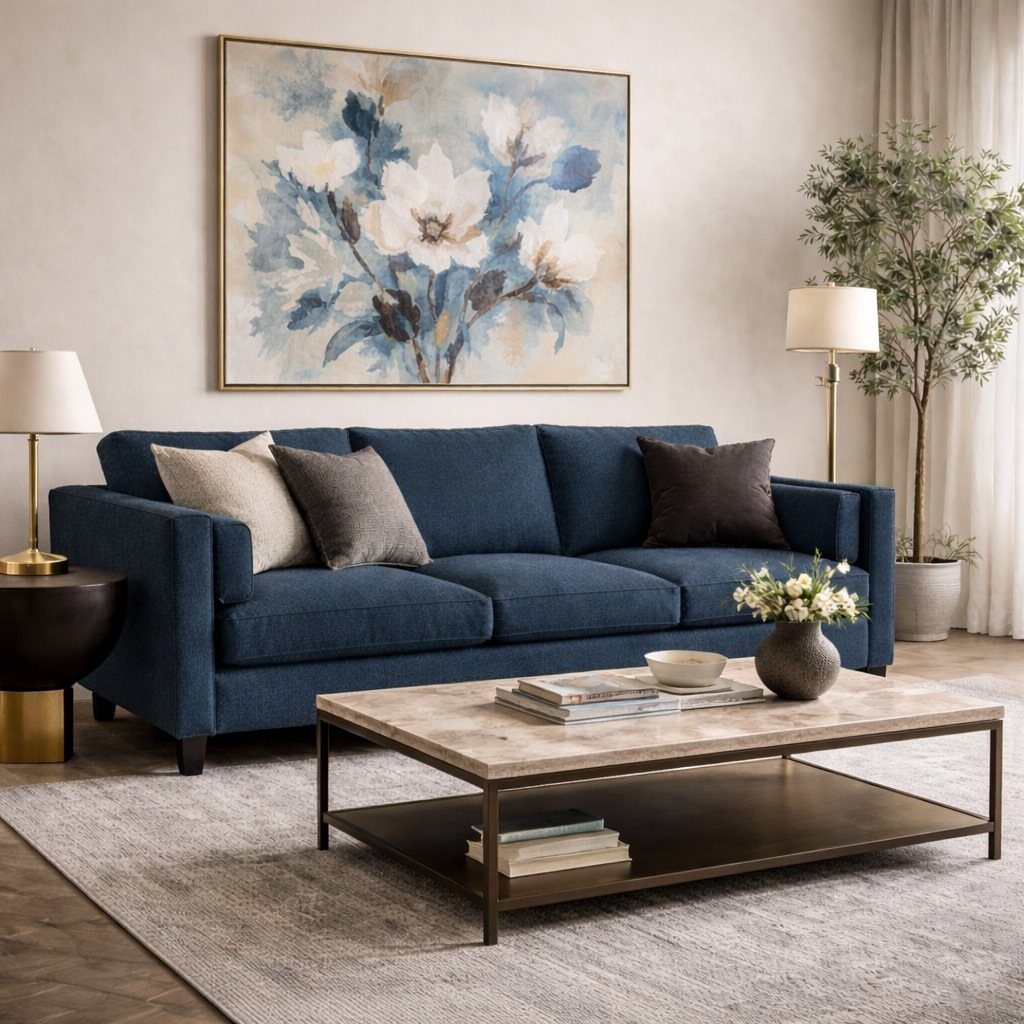
A light brown wood coffee table in front of a navy sofa gives you the pairing at a small scale, so you can add or change it without repainting or reupholstering.
The table surface picks up daylight and keeps the room from feeling too heavy when the sofa is large or dark.
Brown pillows on the navy sofa tie the 2 pieces together. A mix of solid brown and patterned pillows with both colors adds depth without clutter.
The lighter wood keeps the contrast readable and gives the navy somewhere to sit against.
25. Brown Sofa and Blue Shelving
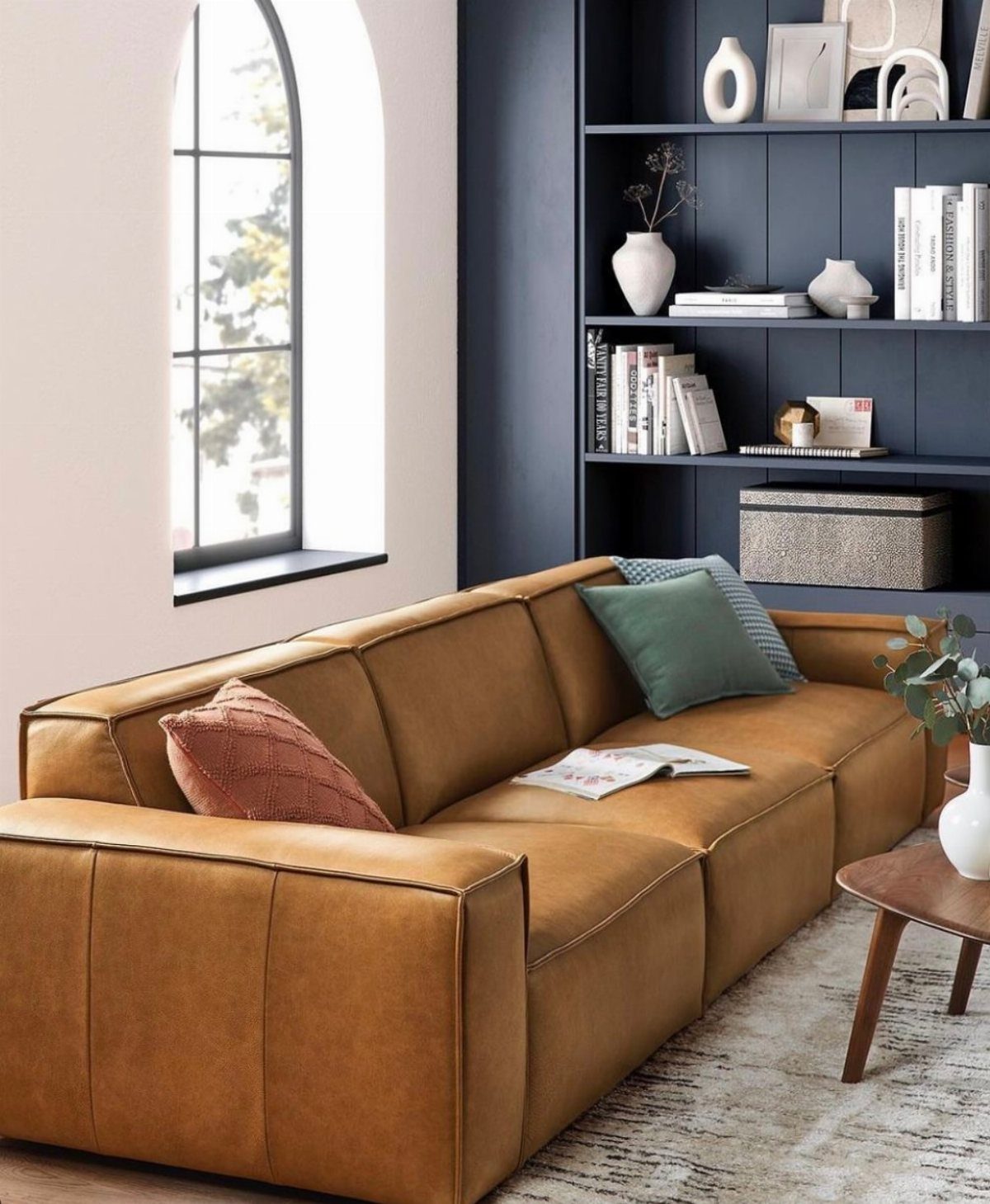
Built-in shelves painted dark blue frame a brown leather sofa and turn the wall into storage that holds the color at a fixed height.
The blue stays vertical and structural, so it anchors the room without needing a rug or curtains in the same shade.
The brown sofa sits lighter against the saturated blue than it would against white or beige. Books and objects on the shelves break up the solid color and keep it from reading flat.
This works best when the shelves flank a window. The natural light prevents the dark blue from closing in the space.
26. Brown Wicker Chairs and Blue
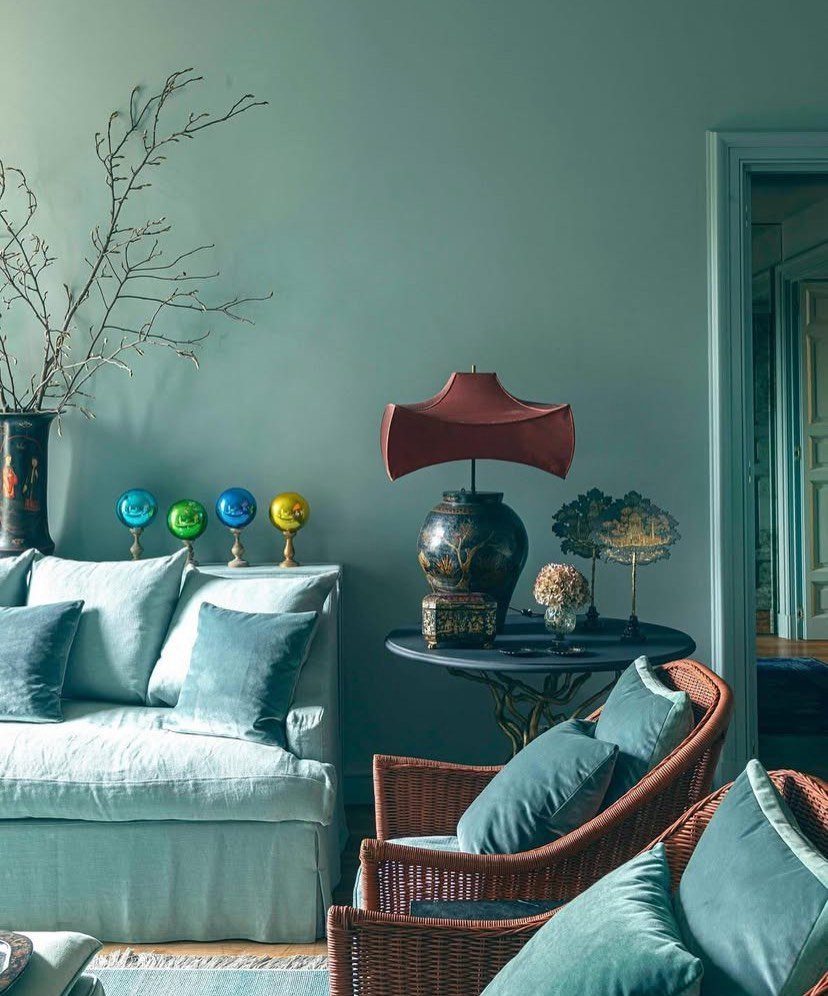
Wicker armchairs with blue cushions add brown through the frame instead of upholstery, so the texture stays visible and the blue can match the sofa across from them.
The woven material reads casual and works in a sunroom or a living room that opens to the outside.
Muted blue-green walls keep the room from leaning too cool when both the sofa and the cushions run blue. The brown in the wicker warms it without needing wood furniture.
A jute or sisal rug under the chairs ties the brown to the floor and keeps the wicker from sitting too light.
Styles for the Palette
The palette fits rooms that lean modern, rustic, boho, farmhouse, coastal, mid-century, vintage, or industrial because both colors read neutral enough to adapt.
Brown anchors the warmth, blue cools it down, and the balance holds across different styles without forcing one direction.
Chocolate brown and deeper blue land well in country houses and traditional rooms, especially when both show up on upholstery or cover the walls. Larger, well-proportioned rooms handle that weight better than small spaces.
If the contrast runs too strong, white trim or pale fabric between the 2 pulls it back without breaking up the pair.
Choose Shades and Proportions
Start with the room style before picking shades. Neutral beige works as a soothing backdrop in modern, minimalist, or beach-inspired spaces.
Navy is the most common blue because it stays dark without feeling as heavy as black.
Pale blue, dusty blue, slate, and Tiffany blue all sit on the lighter end. Brown ranges from chocolate to amber, beige, and lighter tones that transition toward tan.
Brown typically covers walls, floors, and furniture. Coastal schemes often pair strong blue with quiet brown or beige, then bring in jute rugs, wicker furniture, and navy textiles to carry the colors through.
Color Pairing Benefits
Brown brings warmth, blue brings coolness, and the pairing balances naturally because it mirrors earth and sky. The combination feels grounded without skewing too warm or too cold in either direction.
Blue is calming, brown is rich, and together they create a room that feels both settled and intentional.
The balance holds in natural designs like leaf motifs, bird prints, and large florals, where the two already sit next to each other.
Chocolate brown paired with cooler blue reads smart and well-proportioned. The richness of the brown holds its weight against the brightness of the blue, so neither color fades into the background.
Frequently Asked Questions
Do blue and brown go together in a living room?
Blue and brown pair well because blue reads cool and brown reads warm, so they balance each other without clashing. Navy is the most reliable blue for this pairing, and chocolate or amber leather works best on the brown side.
You can bring the colors in through painted walls, upholstered furniture, rugs, or curtains, depending on how much contrast you want.
What color compliments brown and blue?
Gold and brass pick up the warmth in brown tones and tie them to cooler blues without adding a third color to the scheme.
White or beige keeps the room neutral and prevents the blue and brown from feeling too heavy. Rust or burnt orange works when the blue is saturated and the brown leans amber.
What is the best color to paint a living room with brown furniture?
Navy or deep blue paint makes brown furniture read warm instead of drab by creating high contrast against the wood or leather.
Sky and powder blues add breathing room when the walls are tight or the windows face north. Tan or beige walls let the brown furniture stay neutral and work as a backdrop for blue accents in pillows, rugs, or curtains.
What styles welcome blue and brown?
The pairing fits modern farmhouse, rustic, and coastal interiors because brown brings warmth through natural materials and blue adds color without skewing too bright.
Navy and rich stain suit traditional or vintage spaces, while lighter blues with jute or wicker feel more relaxed and beachy. Because neither color tries to steal the show, the pairing adapts to nearly any style you bring it into.
What blue and brown shades to try?
Navy is the most popular blue because it contrasts sharply with brown without going as stark as black, but lighter blues like sky, powder, or slate work in smaller rooms or with darker woods.
On the brown side, chocolate and amber leather age well and hold up to saturated blues, while tan and beige soften the pairing.