These plates range from hand-painted pottery to three-dimensional ceramic strawberries and lemon slices, with prices running from a few dollars for small dishes to more for full serving platters.
The choice comes down to whether you need functional serving pieces or decorative dishes that work as catch-all trays or wall decor.
The raised relief on some designs, scalloped cabbage leaves, molded fruit borders, adds texture that affects both how the plate looks on the table and how easily it cleans after use.
1. Cabbage Green Fruit Platter
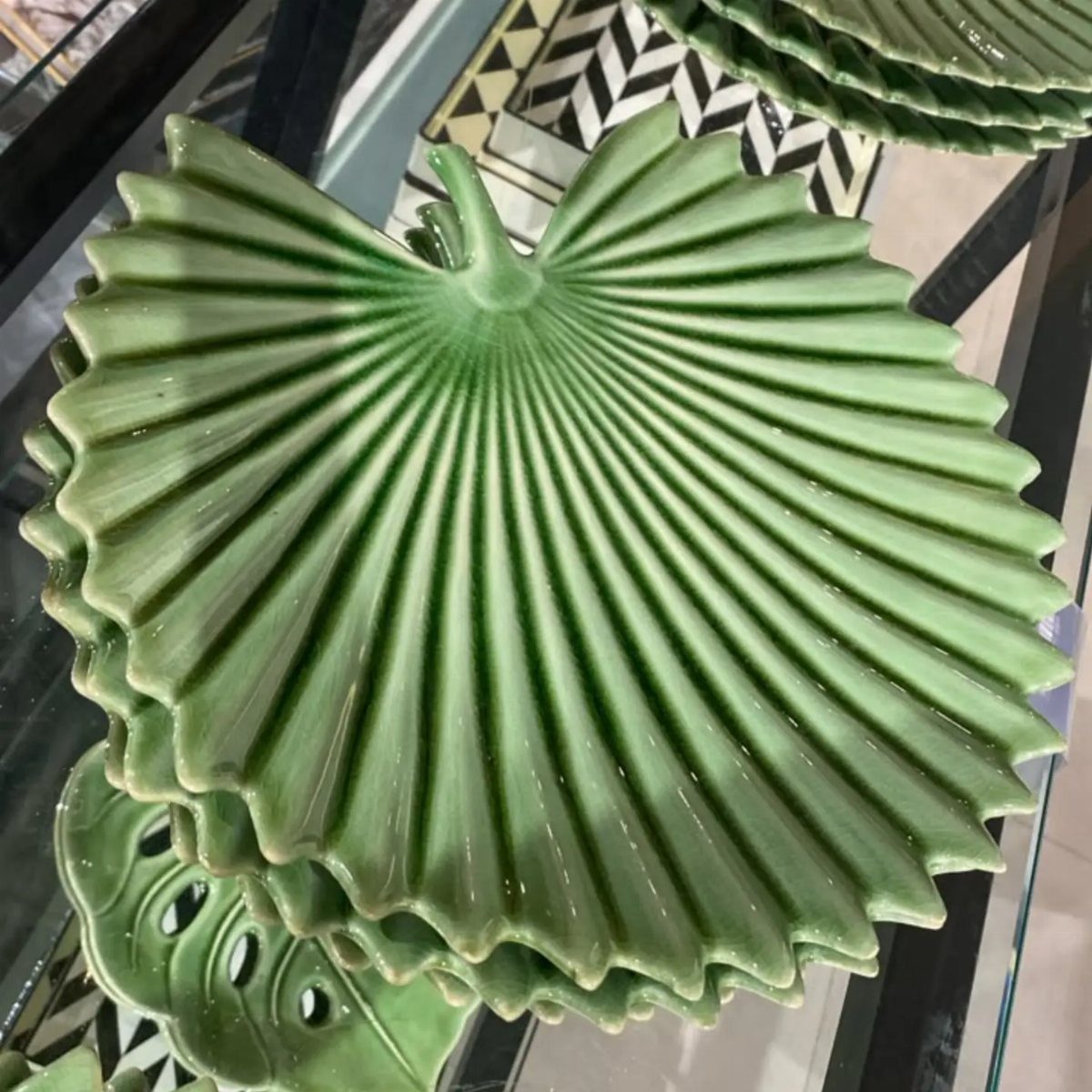
A platter shaped like a cabbage leaf brings an organic, sculptural look to the table. The ribbed texture and scalloped edges follow the natural lines of the leaf, and the green glaze keeps it grounded rather than decorative.
I like this for serving salads or arranging fruit, where the shape reads as intentional rather than novelty. Stacked, the plates take up less space than flat rounds, and the color hides stains better than white.
2. Plate Representing Fruits

Vintage ceramic plates shaped and painted like halved fruits—papayas, dragon fruit, avocados—turn the plate itself into the subject. The bright, stylized paint and molded details make each piece recognizable as a specific fruit rather than a generic shape.
I would use these as catch-all dishes on a dresser or desk, where their color and form do the work. They sit shallow, so keys or jewelry stay put without tipping, and the glazed surface wipes clean.
3. Three Dimensional Fruit Plate
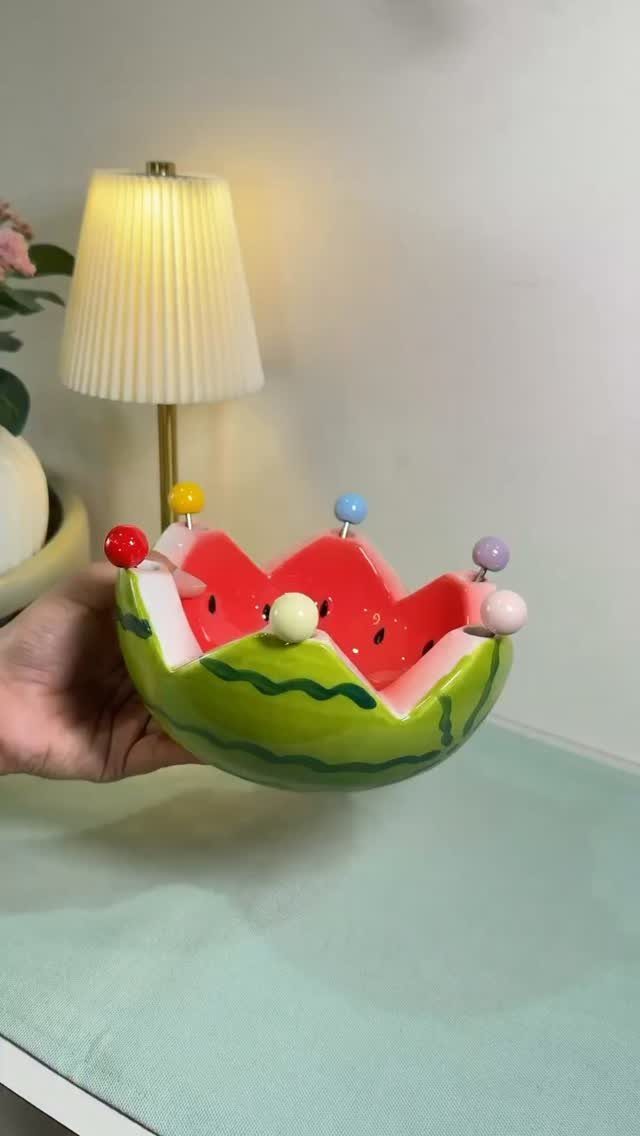
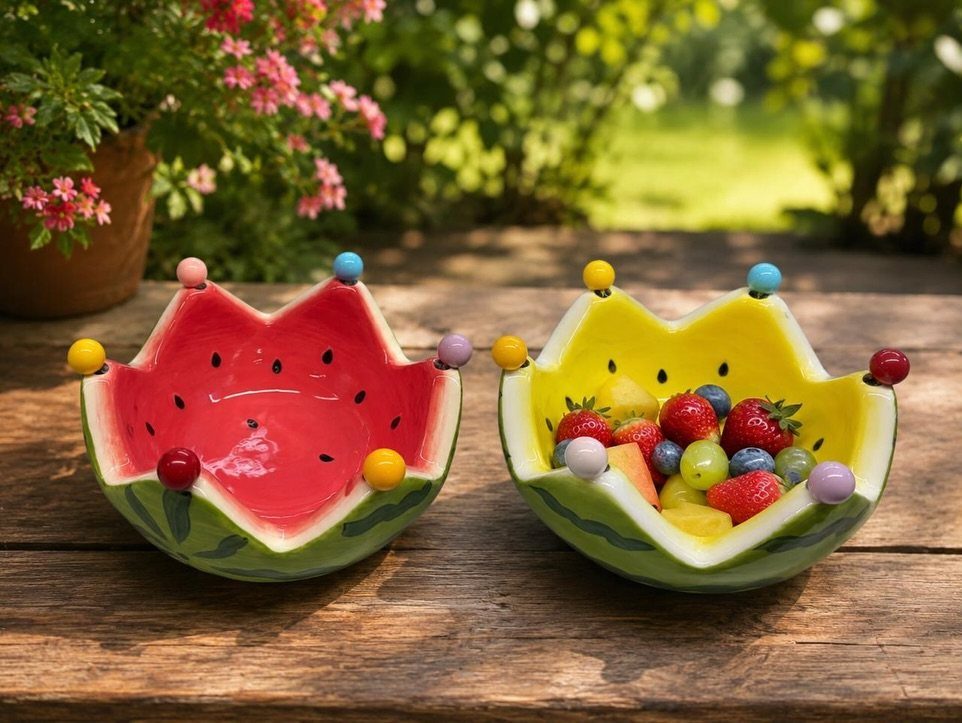
A plate shaped like a watermelon slice with raised, dimensional details brings sculptural interest to the table. The textured surface and molded seeds give it presence as a decorative object that also happens to be functional.
I see this working as a ring dish or pin tray, where the three-dimensional form keeps it interesting on a nightstand or vanity.
The ceramic handles everyday meals and washing, and the color adds a pop without needing anything in it.
4. Hand Painted Fruit Pottery
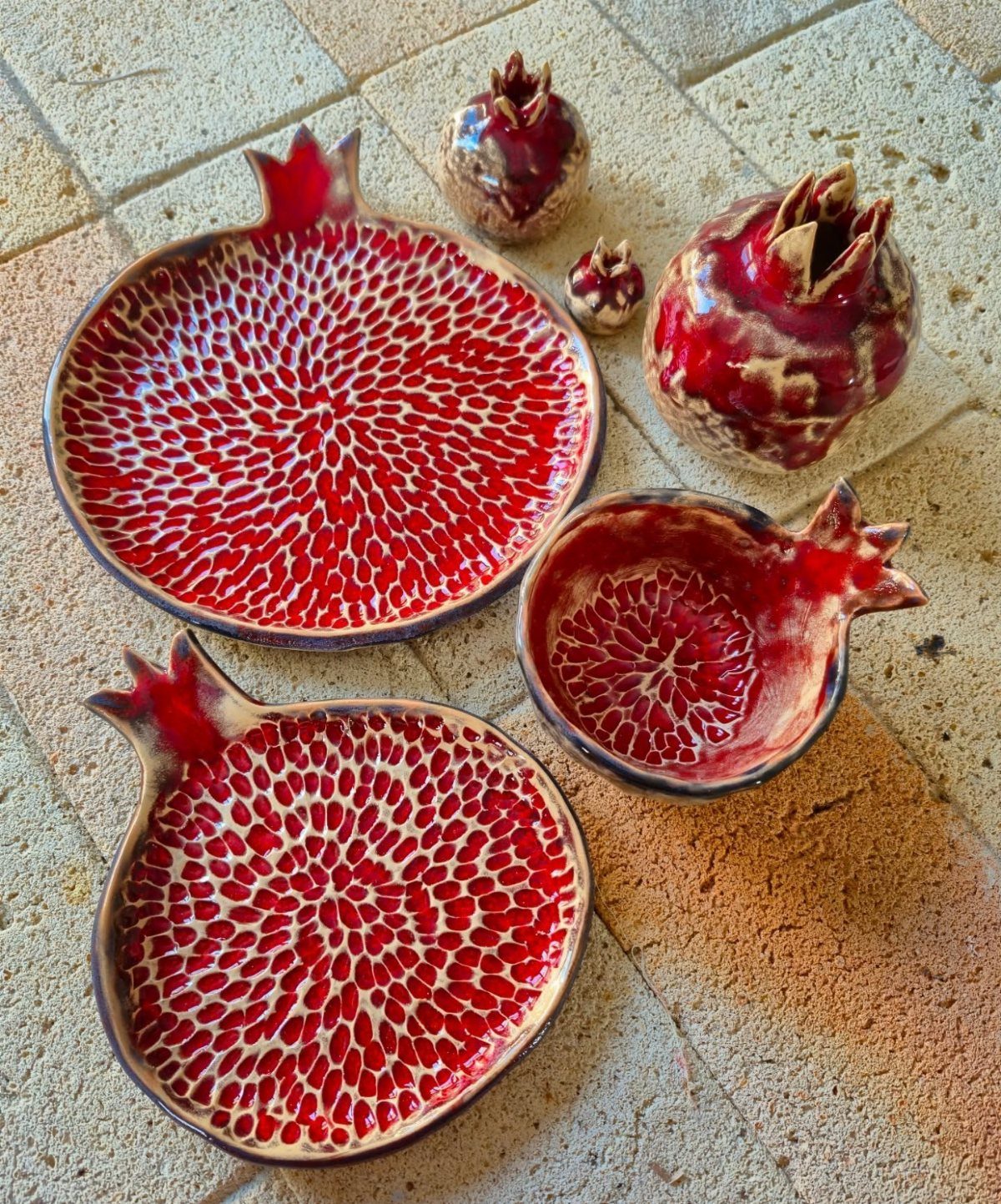
Hand-painted pomegranate pottery, often vintage, features molded fruit shapes with textured, red-glazed interiors and hand-applied details. The raised seeds and organic forms make each piece distinct, and the glaze deepens the color in the recessed areas.
These work as decorative bowls or small serving pieces, where the craftsmanship shows.
I look for consistent glaze coverage and check for crazing in older pieces, which can harbor stains. The weight and finish tell you whether it was production pottery or studio work.
5. Assorted Fruit-Shaped Plates

A set of small ceramic plates, each shaped and painted like a different fruit—strawberry, lemon, watermelon, cherries, pineapple, grapes, orange—gives you options for serving appetizers, desserts, or snacks.
The bright glazes and molded details make each one easy to identify, and the compact size fits on a crowded table.
I use these for individual servings at a casual gathering, where the variety adds interest without requiring coordination. The ceramic cleans in the dishwasher, and the size works for both kids and adults.
6. Strawberry-Shaped Plates
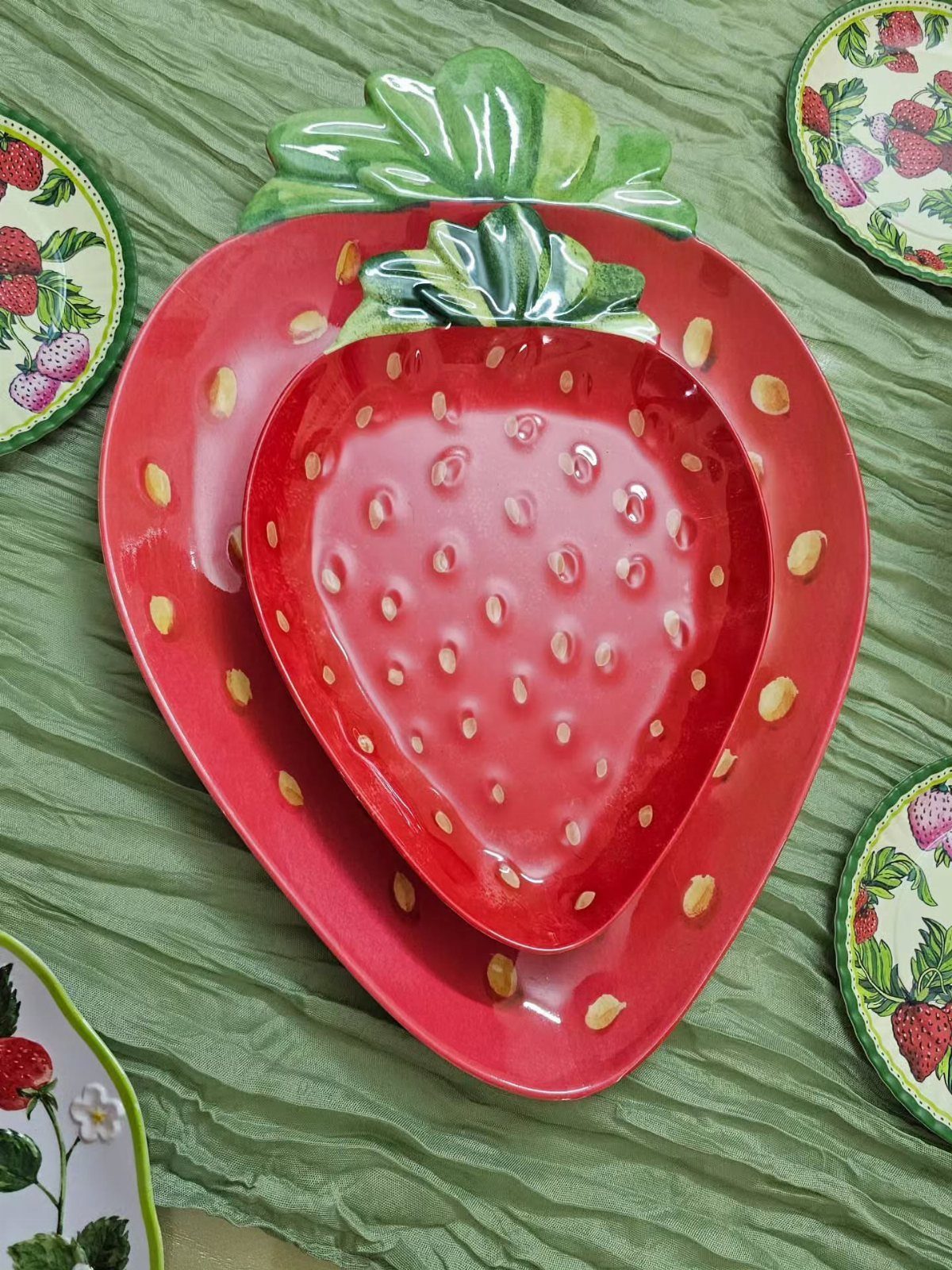
Strawberry-shaped plates feature bright red glaze, molded leafy tops, and textured surfaces that mimic the fruit’s seeds. The shape works for single servings of desserts, snacks, or breakfast items, and the color holds attention on the table.
I like these for summer meals or kids’ plates, where the shape is fun without being fragile.
Ceramic holds up to repeated washing, and the red hides berry stains better than white or cream. Look for smooth glaze coverage inside the molded details, which clean easier than matte finishes.
7. Lemon-Shaped Plates

Plates shaped and glazed like whole lemons, with molded texture and small green leaf details, work for serving individual desserts or sides.
The bright yellow reads cheerful without being loud, and the oval shape fits a slice of cake or a portion of salad better than a round plate.
I would use these for brunch or a spring table, where the citrus theme ties in naturally. The ceramic survives regular washing, and the color lasts while painted designs fade from scrubbing.
8. Fruit-Slice Plates
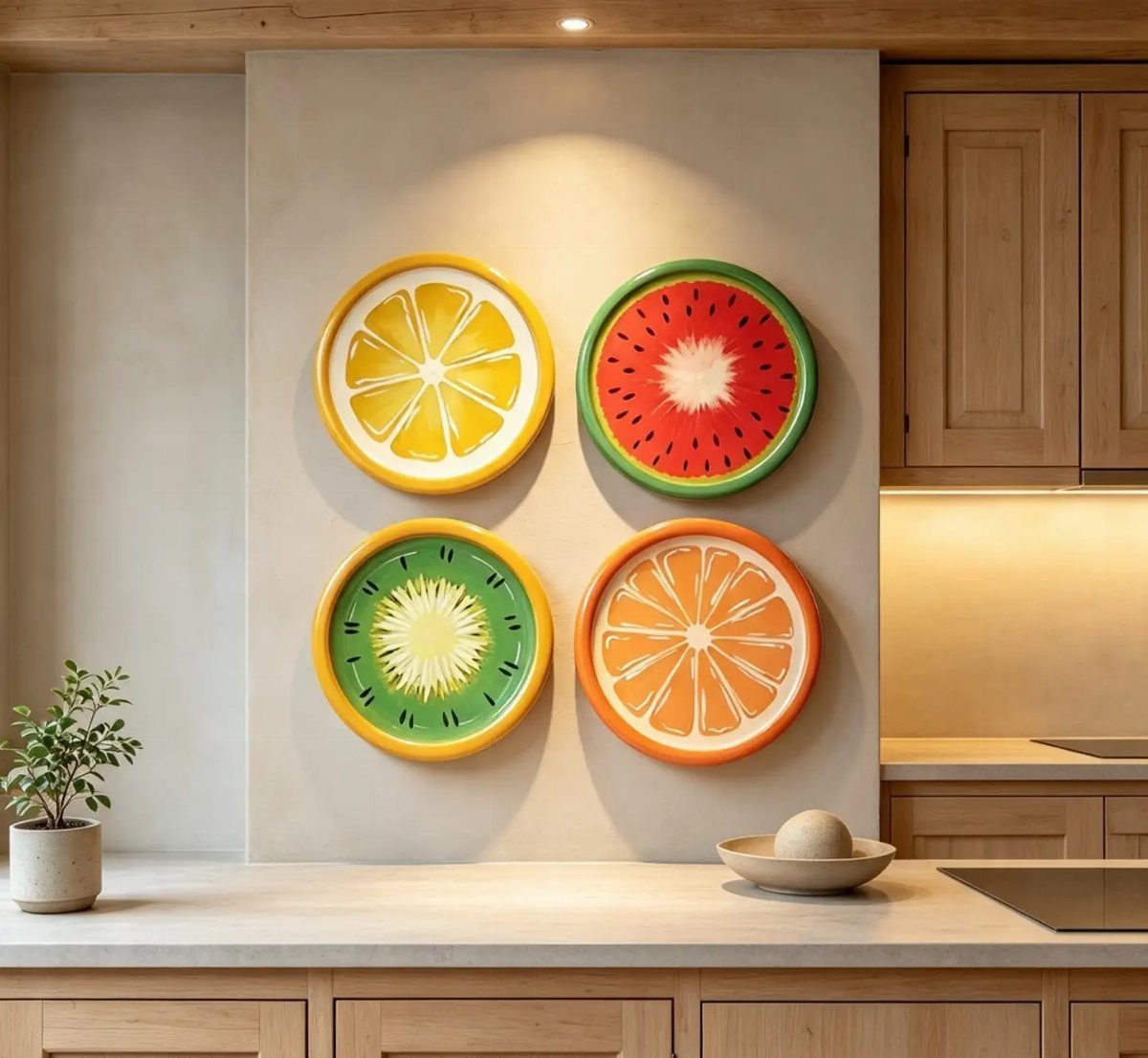
Ceramic plates painted as cross-sections of citrus, watermelon, and kiwi hang as wall decor rather than serving pieces. Each slice brings graphic color to the wall, and the mounts hold them flat with nothing showing.
I like this for filling a blank wall above a counter or breakfast nook, where the fruit motif fits the space.
The plates mount with adhesive disc hangers or plate hooks, and the ceramic wipes down if it collects kitchen grease.
9. Fruit-Shaped Tableware Sets
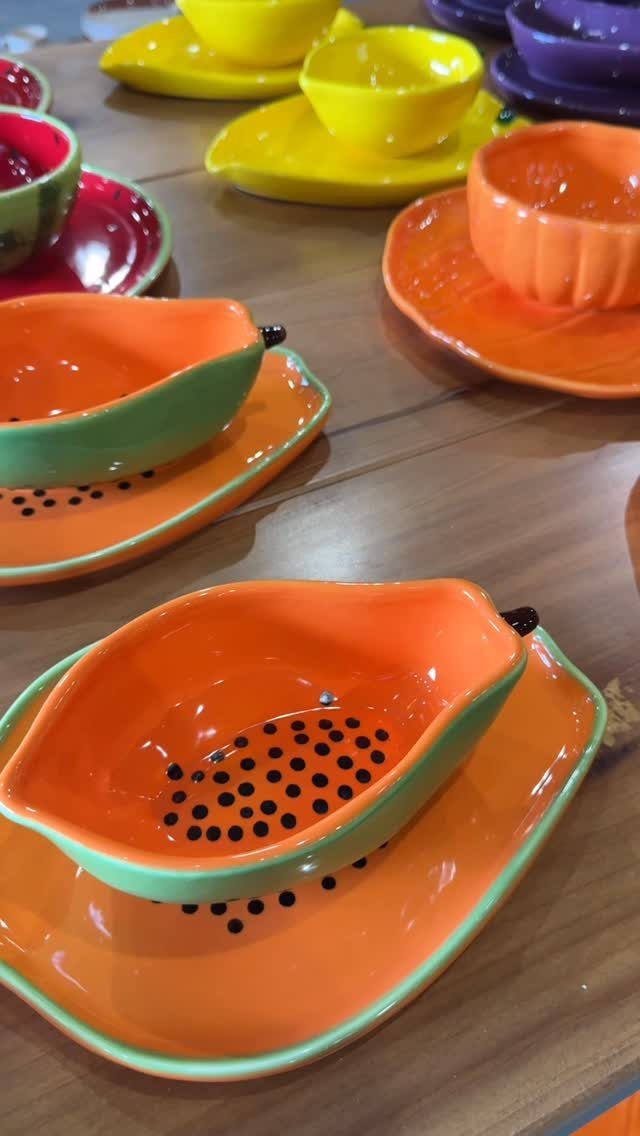
Matching sets of fruit-shaped plates and bowls, glazed in orange, green, and yellow, coordinate across serving pieces. The shared design language ties the table together without identical shapes, and the ceramic handles hot and cold foods equally well.
I would choose a set when hosting a casual meal, where the cohesive look elevates the table without formality. The different fruit forms let you assign each guest a distinct piece, which helps with identification at a buffet or potluck.
10. Fruit-Shaped Ceramic Dishes
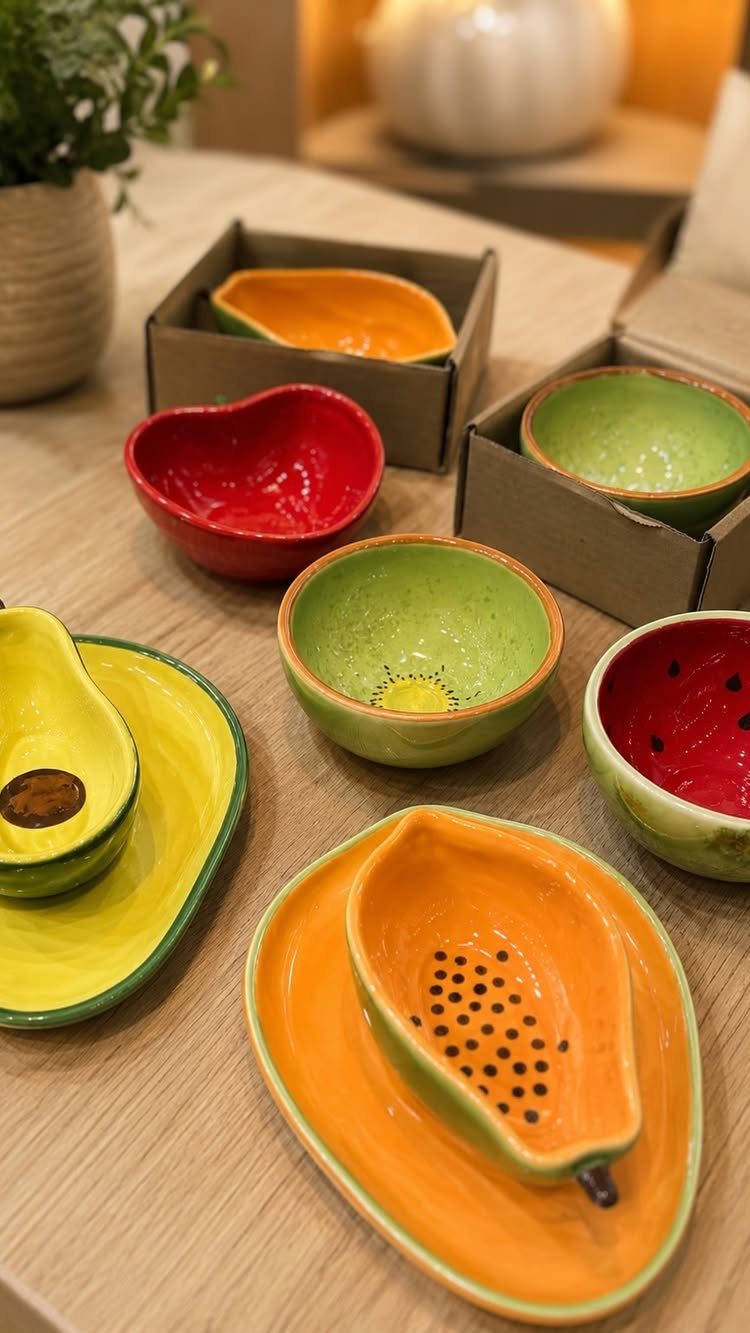
Collections of fruit-shaped plates and bowls in multiple colors and forms, displayed together, give flexibility for mix-and-match serving.
The variety means you can pull one piece or several depending on what you need, and the bright glazes add visual interest stacked on open shelving.
I see this working for someone who collects gradually rather than buying a full set at once. Each piece functions on its own, so the collection builds without needing every shape to match.
11. Apple-Shaped Plates

An apple-shaped plate in white ceramic or polished silver serves as a small dish for jewelry, keys, or a single serving. The simple, recognizable form keeps it from reading as novelty, and the smooth finish cleans with a quick wipe.
I like the white ceramic for a bedside table or entryway, where it blends with other decor.
The silver version suits a dresser or desk where the reflective surface adds a bit of polish. Both materials take regular handling without scratching easily.
12. Fruit Relief Plate
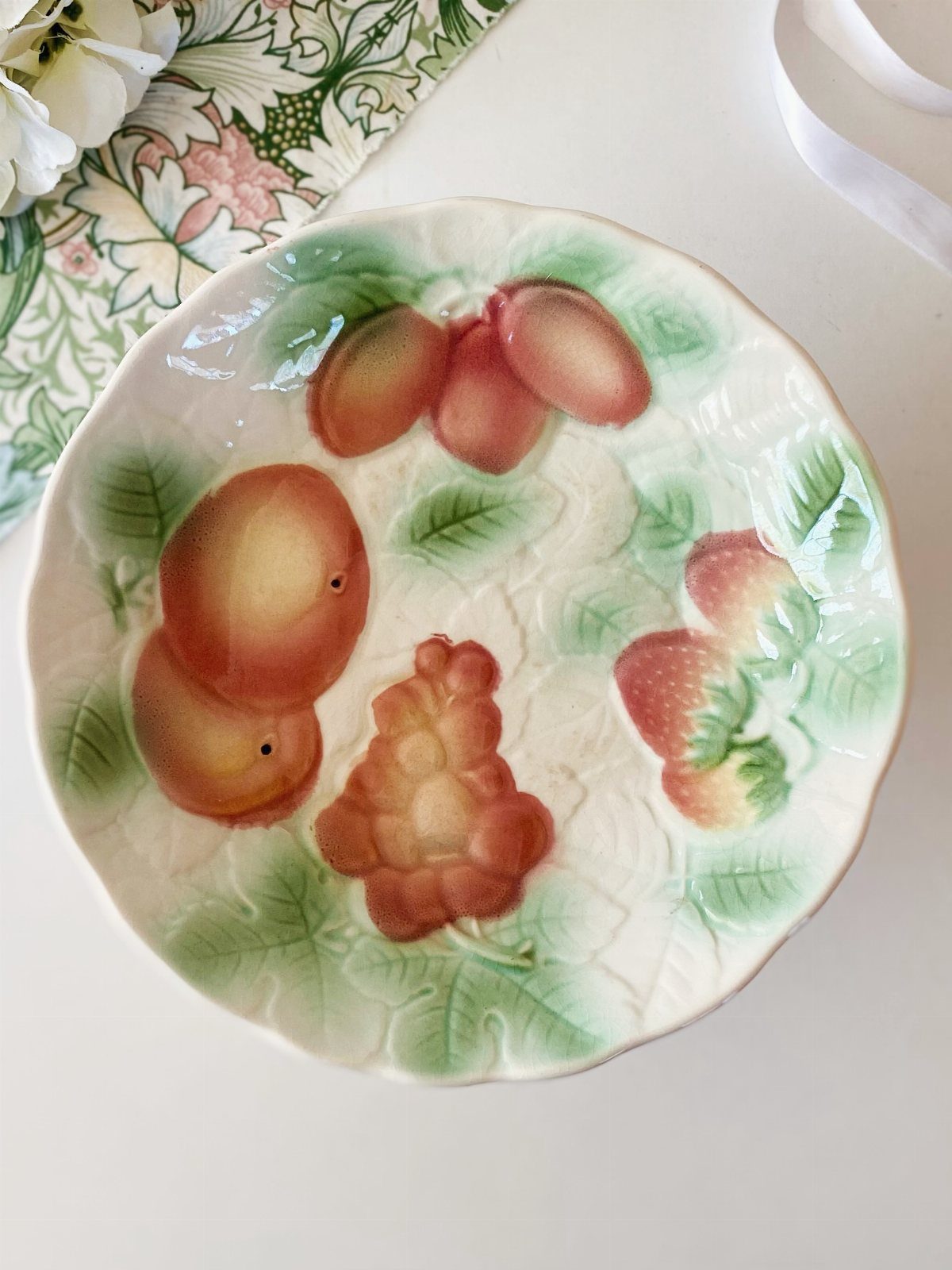
A round plate with raised, hand-carved fruit in full color and scalloped edges brings texture and detail to the table.
The relief carvings sit proud of the surface, and the colored glaze fills each fruit individually, so the design stays crisp even after washing.
I would use this as a serving platter for appetizers or bread, where the decorative border frames the food.
The raised details collect crumbs, so a quick rinse after use keeps it clean. The scalloped edge softens the round shape and adds a bit of formality without tipping into fussy.
Frequently Asked Questions
Can decorative fruit plates be used for serving other food items besides fruits?
Yes.
Fruit-shaped plates work for small appetizers, individual desserts, or sides like salad. The shallow depth and compact size suit portion servings at casual meals, and the ceramic cleans up the same as any other plate.
Are decorative fruit plates dishwasher safe?
Most ceramic and glazed fruit plates handle dishwasher cleaning without issue. Check the manufacturer’s care instructions for any piece, particularly vintage or hand-painted items, which may require gentler washing to preserve the finish.
Can decorative fruit plates be used in the microwave or oven?
Ceramic and porcelain fruit plates generally tolerate microwave and oven heat, but verify the manufacturer’s guidelines before putting them in. Glass versions may crack under high heat, so treat those with more caution.
Do decorative fruit plates come with a stand or holder?
Some come with a stand, some don’t. Some are designed to sit flat or stack, while others offer optional holders sold separately.
Can decorative fruit plates be used for outdoor dining or picnics?
Yes, but choose ceramic carefully for outdoor use. Melamine or plastic versions resist shattering during transport and handle outdoor conditions better than ceramic, which can chip if knocked against a hard surface.