Most of these ideas cost less than $50 and take under an hour to set up. The one that works best depends on how much counter space you have and which tasks happen there most often.
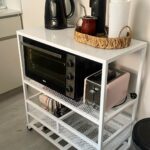
A tray near the stove corrals oils and spices you reach for several times a week, a bread box keeps baked goods fresh without taking up a cabinet shelf, and a tiered organizer layers storage upward so you fit more on the same footprint.
When similar items live together close to where the task happens, meal prep goes faster and wiping down takes seconds instead of minutes.
1. Declutter Countertops

The first move is clearing off anything that lives somewhere else. Appliances used less than weekly, stacks of mail, keys and phones all have better places to land.
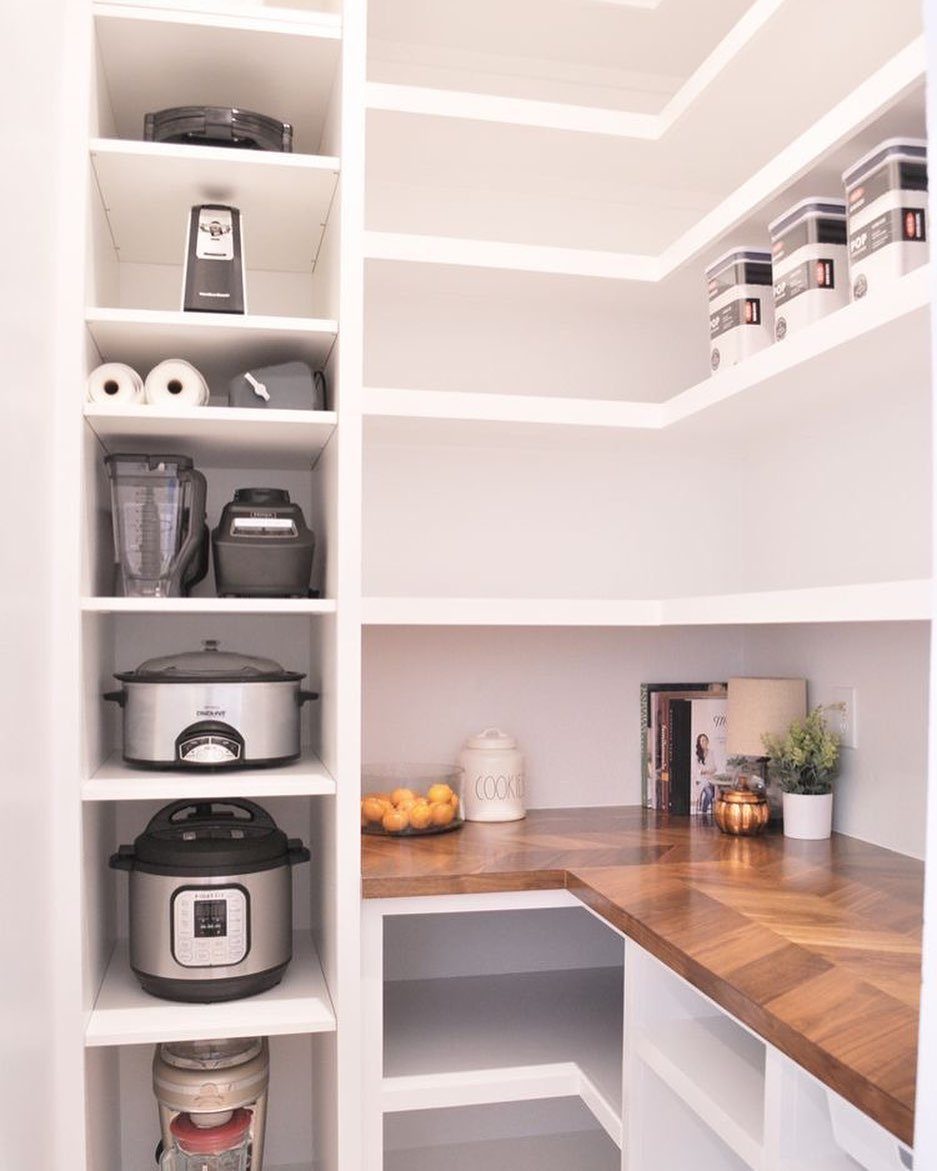
A pantry or cabinet can hold small appliances until you need them. Store appliances like blenders and slow cookers on pantry shelves instead of leaving them out, and the whole counter stays clear for chopping and mixing.
If you don’t have pantry space, a lower cabinet or even a closet shelf works the same way.
2. Use Trays to Corral Items
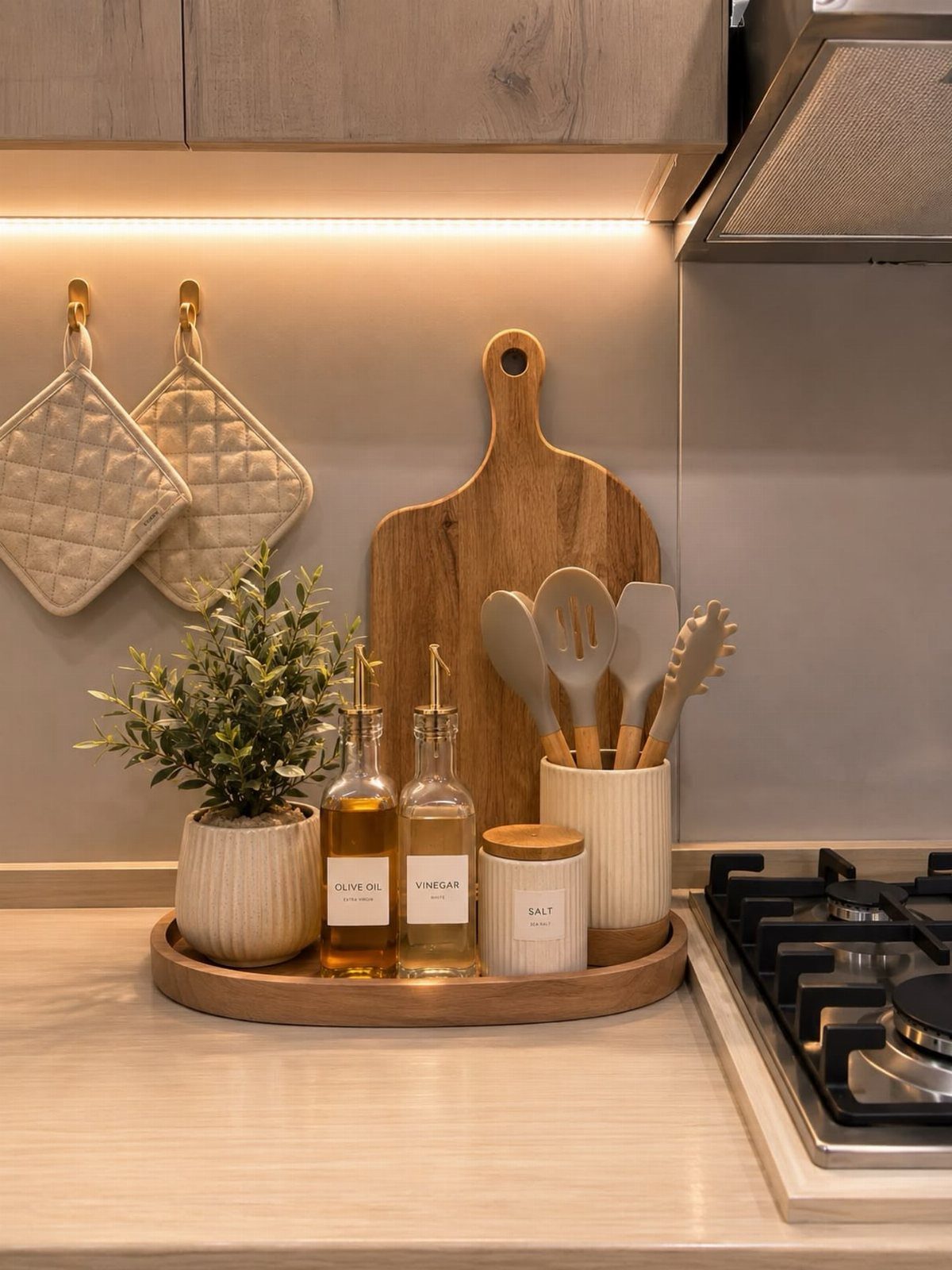
A tray turns a group of everyday items into something that looks like a choice rather than clutter. The same bottles and jars scattered across a counter read as mess; gathered on a tray, they become a cooking station.
Wood, metal or marble all work. Size the tray to what actually sits on it daily.
A wooden tray keeps everyday items like oil, vinegar and salt together so they move as a group when you need the space. Wipe the tray when you clean the counter and everything stays contained.
3. Wall Shelves and Hanging Rails

Mounting storage on the wall pulls items up and off the counter. Open shelves, rail systems or even a single floating shelf can hold spices, mugs or small jars and leave your counter free for prep.
Simple floating shelves or a rail with hooks work just as well and install with basic hardware. Place them near the stove or prep area so what you reach for most stays within arm’s reach.
4. Keep a Utensil Crock

A crock or wide jar keeps spatulas, spoons and tongs upright next to the stove. You grab what you need without opening a drawer, and wet utensils can air-dry between uses.
Ceramic holds up better than wood or plastic near heat.
A tall crock or mason jar on the counter keeps wooden spoons and spatulas upright and within reach while you cook. Keep it to tools you actually use every few days so it doesn’t turn into a catch-all.
5. Spices and Oils on a Tray

Oils, vinegar and everyday spices go on a small tray near the stove so you’re not hunting for them mid-recipe.
A tray corrals oil bottles, salt and pepper, and small tools so the whole group lifts off when you need the counter underneath.
A tray keeps drips and rings off the counter and makes wiping down faster.
Match the tray material to your countertops or go with something contrasting. Keep only what you reach for several times a week; backup bottles belong in a cabinet.
6. Use a Bread Box

A bread box gives loaves, bagels and muffins a closed spot on the counter instead of taking up a cabinet shelf.
A bread box keeps baked goods fresh and hides the clutter when you close the door, so muffins and loaves stay out of sight until breakfast.
Metal or bamboo boxes work just as well as wood.
Look for one with ventilation holes to prevent moisture buildup. If counter space is tight, a lidded basket or a dedicated drawer serves the same purpose without adding visual weight.
7. Use a Tiered Organizer

A tiered stand layers storage upward so you fit more on the same footprint. Two or three levels hold oils, spices, small jars or plates without spreading across the counter.
Wire, wood or plastic all work. Look for one that fits the depth of your counter and leaves enough clearance underneath for taller bottles.
Group items by how often you use them so the top tier holds what you grab daily and lower levels take backups or less-used tools.
8. Keep a Sinkware Caddy
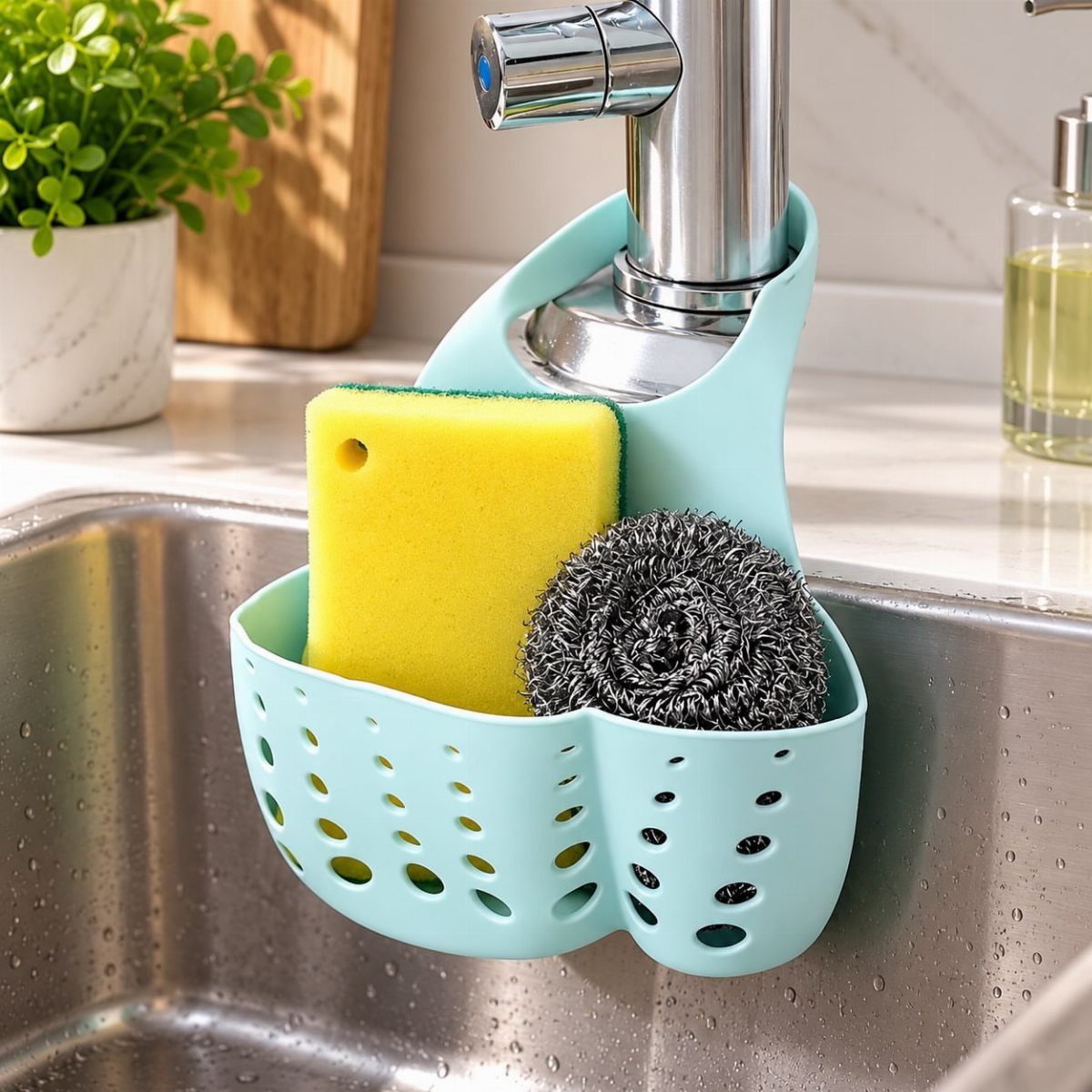
A caddy that hangs from the faucet or sits beside the sink keeps sponges, brushes and dish soap together and off the counter.
Everything you need for washing up stays in one spot and drains into the sink instead of leaving puddles on the surface.
Plastic or silicone versions hang directly on most faucets without tools. If your faucet design won’t hold one, a small tray on the counter beside the sink does the same job.
9. Use Wall-mounted Storage

Racks mounted under cabinets or on open wall space pull storage off the counter and hang it where you can see it.
Small baskets, hooks or bins can hold produce, spices or dish towels and leave the prep space below clear.
Wire or metal racks screw into the underside of cabinets or directly onto the wall.
Place them close enough to your main work area that you can grab what you need mid-task. If drilling isn’t an option, adhesive hooks hold lightweight items like towels or oven mitts.
10. Use Baskets and Caddies
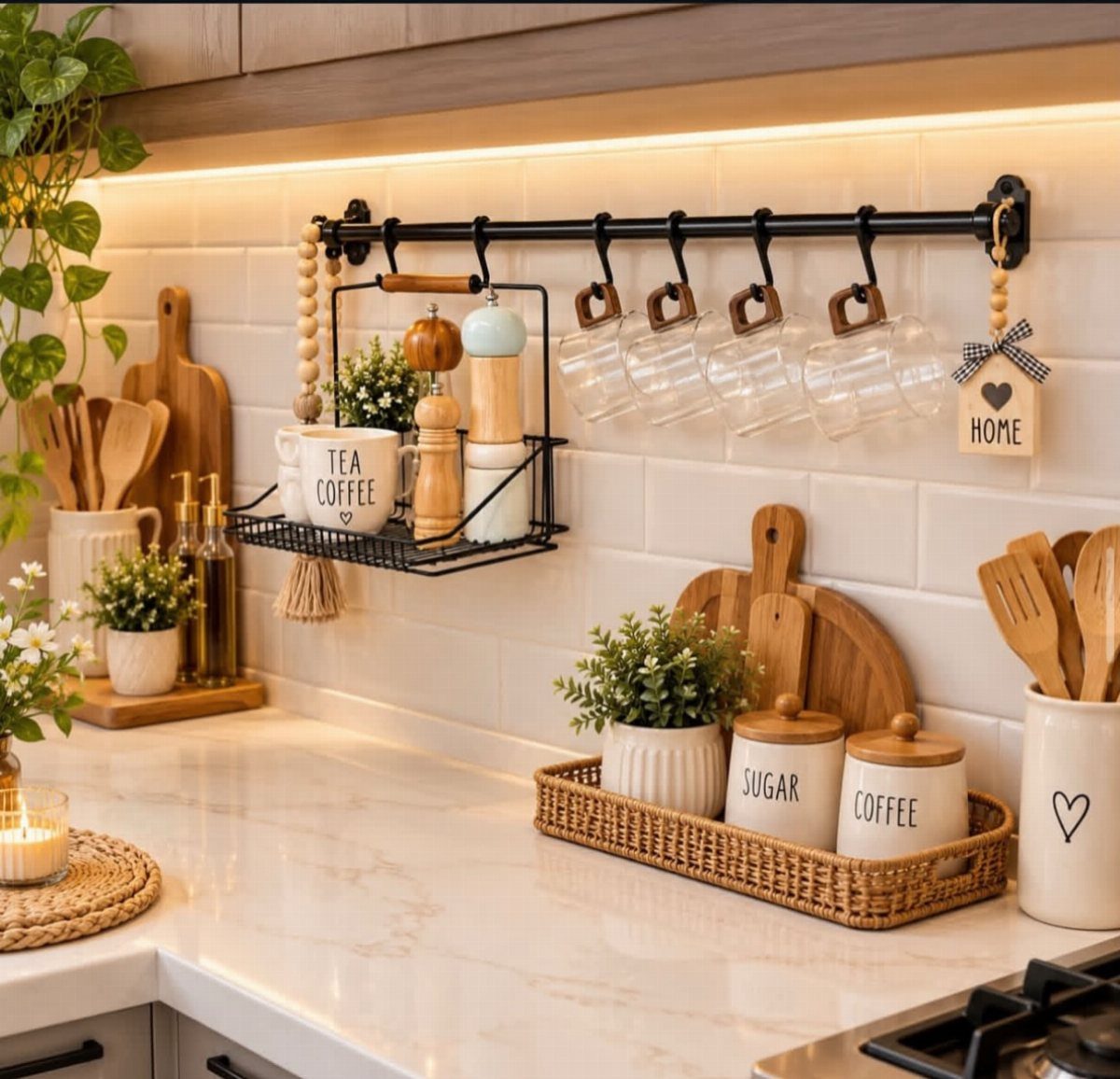
Corralling similar items in a basket or caddy stops them from migrating across the counter. Coffee canisters, tea bags and sugar all stay together, and you can move the whole basket when you need the space underneath.
Woven baskets, wire bins and handled caddies all work.
Size the container to what actually goes in it so there’s no room for random clutter to sneak in. Handles make it easy to carry the whole group to the table or back to the pantry.
11. Display Reusable Jars

Glass jars with good seals keep dry goods fresh and let you see what you have at a glance.
Rice, pasta, flour and spices all store well in jars, and a row of them on the counter or a low shelf looks intentional instead of messy.
Match jar sizes to how much you buy at once so you’re not refilling constantly.
Labels help when the contents aren’t obvious. If counter space is tight, a narrow shelf or a corner of the pantry holds jars just as well and keeps them visible.
Organize Around Daily Routines
Coffee mugs and filters go next to the machine, cutting boards and knives near the main prep zone, spices and oils within arm’s reach of the stove.
When everything sits close to where the task happens, you spend less time hunting mid-recipe and cleanup takes fewer steps. Everything sits within arm’s reach instead of 3 steps away in a drawer you have to hunt through.
Group by task instead of category. A morning coffee station holds mugs, sugar and a spoon in one spot.
A cooking zone gathers salt, pepper, oil and wooden spoons near the range. When related items live together, the whole routine runs smoother and counters stay clearer between uses.
Benefits of Clear Counters
A clear counter gives you room to chop, roll dough or unload groceries without moving things out of the way first. Meal prep goes faster when the surface is already open.
Wiping down takes seconds instead of minutes. You’re not lifting a dozen items to clean underneath or working around appliances that collect dust and grease.
Clutter also makes it harder to focus.
Research ties visible mess to difficulty concentrating, and a cluttered kitchen can leave you feeling stressed before you even start cooking. Keeping counters clear cuts down on both the visual noise and the mental load that comes with it.
For a streamlined kitchen that works well, understand first where you tend to stand when doing certain tasks, and position your countertop items accordingly.
Frequently Asked Questions
How can I effectively organize my kitchen?
Clear off anything that isn’t used at least weekly and store it in a cabinet or pantry.
Group items by task so coffee supplies stay near the machine, prep tools near the cutting board, and oils and spices close to the stove.
When everything lives where you actually use it, meal prep runs faster and counters stay clear between tasks.
How do I keep my kitchen counters clear?
Put away appliances you use less than once a week and find a better landing spot for mail, keys and phones.
Appliances you use once a month belong in the cabinet, not beside the sink. If something sits untouched for a week, it belongs somewhere else.
What should I keep on my kitchen counters?
Keep only what you grab several times a week. A utensil crock near the stove, a tray of oils and everyday spices, and a coffee station if that’s part of your morning routine all earn their space.
Anything used less often belongs in a cabinet or pantry so the counter stays open for prep work.
What should you display on countertops?
Display items you actually use daily so they read as functional rather than decorative clutter. Glass jars of rice, pasta or flour keep dry goods fresh and look intentional when lined up on a shelf or corner of the counter.
A wooden tray holding oil, vinegar and salt turns cooking staples into a station instead of scattered bottles.
How do I organize my kitchen with a small counter space?
Keep counters as clear as possible and mount storage on the wall or under cabinets instead.
Floating shelves, rail systems or even adhesive hooks pull spices, mugs and towels off the surface and leave room for prep. Store small appliances in a pantry or lower cabinet so the counter stays open when you need it.