
The open storage sits at island height where it faces traffic, or it lands in a base run between drawer banks, or it slots in as a cubby or basket insert.
Pick based on what you store and whether the cabinet faces a doorway, a prep zone, or seating.
The mesh-front island keeps linens visible but not fully exposed, the wicker basket base breathes for produce or towels, the wine cubby grid holds bottles on their sides, and the cookbook shelf parks recipes and small appliances at counter height.
1. Island End-cap Open Shelving

The end panel of the island drops its door and opens up into a set of fixed shelves.
Books stack on their sides, bowls fill the middle shelf, and the whole section reads like a piece of furniture instead of another closed cabinet face.
This works when the island sits out in the room and at least one end faces a doorway or a seating area.
The shelves stay shallow, usually 12 inches deep or less, so they hold what gets used often without eating into the island’s main storage.
Paint the interior a different color if the island finish feels too heavy all the way through.
2. Perimeter Base Run Open Shelves

A short run of open shelves sits between 2 banks of drawers along the base cabinets. The shelves hold bowls, small appliances, or baskets, and the open section breaks up a long stretch of closed storage without losing much capacity.
Frame the opening with the same face material as the drawer fronts so the whole run reads as one piece. Leave the shelves unpainted or stain them to match upper cabinetry if you want the wood to stand out.
This setup works best near a prep zone where you need quick access to mixing bowls or baking sheets.
3. Wicker Basket Base
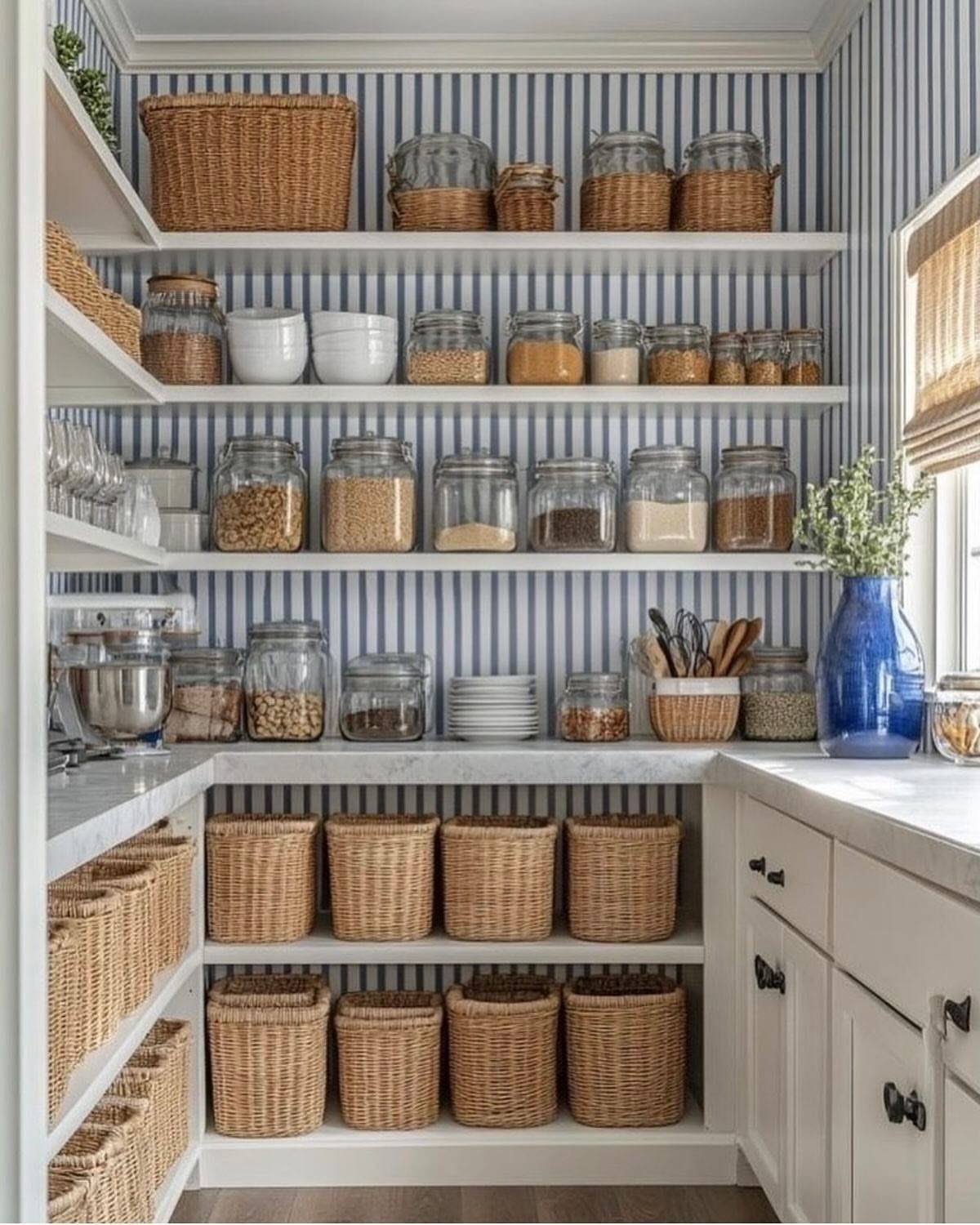
Sliding wicker baskets replace traditional drawers in the lower cabinet openings. Each basket pulls out on a simple rail or sits on a fixed shelf, and the woven texture softens the look of a pantry or utility zone.
The baskets work for produce, linens, or anything that does not need a sealed drawer. Measure the cabinet opening first; most baskets come in standard sizes, but a custom opening may need trim added to hold the hardware.
Wicker breathes, so this is not the place for anything that needs to stay completely dry or pest-free.
4. Integrated Wine Cubby Base

A base cabinet section holds wine bottles on their sides in a grid of angled wooden dividers. Each bottle slots into its own diamond-shaped cubby, and the whole section integrates into a bar or beverage station.
The grid usually sits alongside a wine fridge or under a countertop that holds glassware.
5. Mesh-front Island Cabinets

Three open compartments run across the island base, each one fronted with mesh wire instead of a solid panel. The mesh keeps the storage visible without leaving it completely exposed, and the light wood frame stays minimal.
Mesh fronts suit a kitchen where you want to store linens, small baskets, or items that look fine on display. The wire comes in different gauges; a tighter weave hides more, a wider one shows the contents clearly.
Skip this if the storage holds anything you would rather keep out of sight.
6. Cookbook and Appliance Shelving

The island base holds open shelves instead of closed cabinets, and the shelves carry cookbooks, mixing bowls, and a stand mixer.
The mixer stays on the lowest shelf where it can slide out without lifting, and the books fill the upper section.
This works when the island faces the cooking zone and you reach for the same tools daily. The open shelves make everything visible, which keeps the counter clear but also means the storage is always on display.
If the mixer is heavy, check that the shelf is thick enough to carry the weight without sagging over time.
7. Book and Bowl Island Shelves

The light wood frame keeps the storage visible from all sides, and the white countertop sits directly on top of the open structure.
This suits a kitchen where the island stands in the center of the room and you want the storage to feel less like cabinetry.
The open shelves work best for items that look fine on display and get used often enough that dust does not settle.
Build the frame from 3/4-inch plywood or solid wood, and space the shelves to match the height of what you plan to store.
Frequently Asked Questions
Are open shelves still in style in 2026?
Open shelves remain in use where function matters more than trend.
They work when you reach for the stored items daily and prefer fast access over hidden storage. Style follows what works for the space, not a calendar.
What are the disadvantages of open shelving?
Open shelves collect dust and grease faster than closed cabinets because air moves freely across the stored items.
Anything on display stays visible all the time, so the storage needs to look deliberate or it reads as cluttered. Items stored near the floor also pick up pet hair in homes with shedding animals.
How do you keep open kitchen base shelves clean?
Wipe the shelves weekly with warm water and a drop of dish soap to cut through airborne cooking grease. Store items you use often so they get washed before dust settles, and the shelves stay cleaner between wipe-downs.
Can pet hair be a problem with open base cabinets?
Pet hair settles near the floor and lands on anything stored in open base cabinets if you have shedding cats or dogs.
Keep open shelves out of main walkways or use removable baskets to cover the stored items if pet hair is an issue in your home.