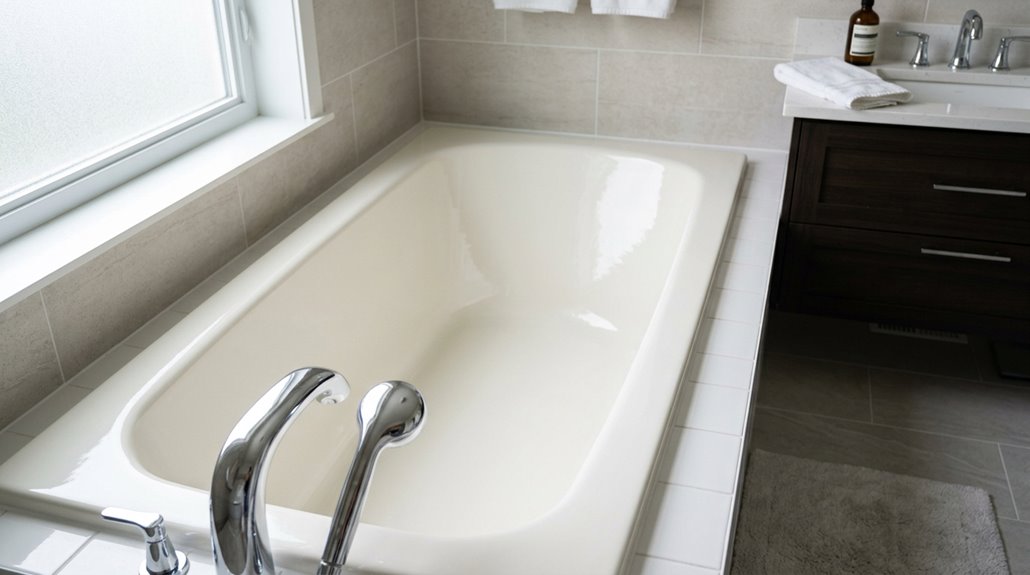
Look, bathtub resurfacing runs you about $335–$630 nationally in 2026. That’s a solid 75% savings compared to dropping $3,000–$8,000+ on a full replacement. Your actual cost depends on your tub’s material (fiberglass, porcelain, cast iron) and current condition. A professional job lasts 10–15 years, takes just 3–5 hours, and you’re back in business after 24–48 hours of curing. Want to know what actually drives up those costs and how to score the best deal?
Bathtub Resurfacing Costs at a Glance
So, how much are we actually talking about here? The national average for tub resurfacing hovers around $480, though your actual refinishing costs depend on what you’re working with. Fiberglass tubs run $250–$600, porcelain hits $350–$600, and cast iron climbs to $350–$650. Got a fancy clawfoot situation? That’ll be $500–$1,400. Combo tub-shower units? Expect $520–$1,200. Refinishing costs about 75% less than replacement, which costs $3,000–$8,000 or more. This represents a significant difference. The whole project wraps up in 3–5 hours, and you’re soaking in your refreshed tub within 24–48 hours.
How Material Type Impacts Resurfacing Costs
Not all tubs are created equal, and neither are their resurfacing bills. Your tub’s material type directly determines what you’ll pay.
- Fiberglass tubs cost $250–$600. They need lighter prep work, so you save money fast.
- Porcelain tubs cost $350–$650 because rust treatment and heavy prep are required.
- Clawfoot cast iron tubs cost $500–$1,400 due to ornate features and interior/exterior work.
Porcelain and cast iron require extensive preparation that increases labor costs. Fiberglass and acrylic involve simpler processes with lower overhead. Material type directly influences longevity. Heavier materials demand more upfront work but deliver greater durability. Knowing your tub’s composition allows you to budget accurately and understand the long-term value of your investment.
What Your Tub’s Current Condition Means for Price
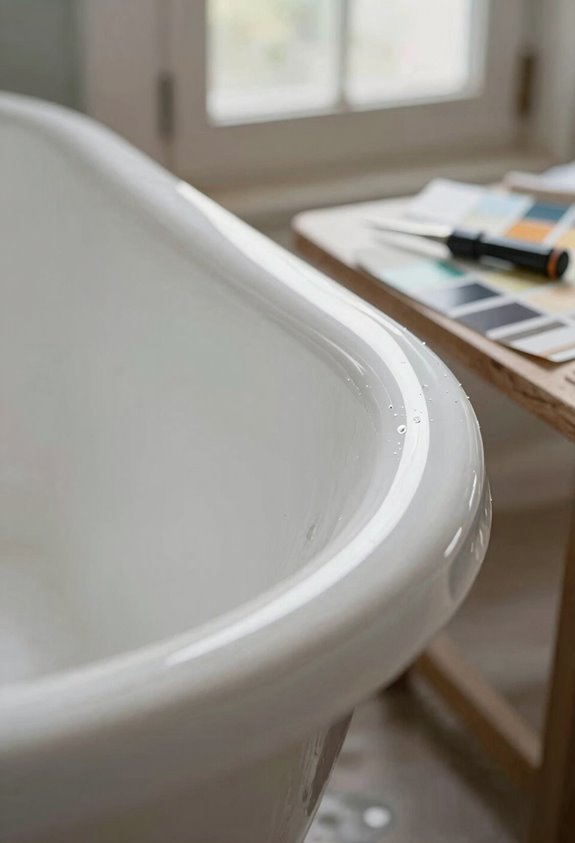
Your tub’s current condition is basically the price tag’s starting point. Good condition runs about $275, fair jumps to $450, and poor condition climbs toward $900 because rust repair, crack filling, and extra prep work are required. Different materials need different maintenance levels, so cast iron and clawfoot tubs demand more intensive prep than fiberglass, which increases the overall cost.
Condition Assessment Impact
- Good condition runs ~$275—minimal work needed
- Fair condition hits ~$450—moderate patching required
- Poor condition climbs to ~$900—serious prep work ahead
Previous DIY attempts add a 50% cost bump. Rust, extensive cracks, and chips all demand extra stripping and remediation. Your contractor flags these issues to prevent shortcuts that fail within months. Condition assessment functions as your financial roadmap.
Repair Costs By Damage
How much damage are we really talking about here? Well, surface rust might only set you back $50 to $200, depending on severity. If you’ve got deeper corrosion eating through your tub, that refinishing cost jumps dramatically. Prior DIY attempts will tack on an extra $100 to $300 because stripping old coatings takes serious labor. Major cracks or rust-through situations push costs even higher, sometimes requiring replacement instead of refinishing. Catching rust early prevents extensive damage, just as fixing a small leak prevents basement flooding. The damage assessment determines everything about your final bill. Don’t ignore what you’re seeing.
Material-Specific Prep Requirements
What separates a $250 refinish job from a $1,400 one? Your tub’s material and current condition.
Here’s what I’ve learned about prep work:
- Fiberglass tubs need minimal prep. Just light cleaning keeps costs around $250–$600
- Cast iron tubs demand serious work: rust treatment, sandblasting, sometimes even removing botched DIY attempts
- Clawfoot cast iron tubs cost $500–$1,400 because refinishers tackle both interior and exterior surfaces plus ornate feet
That prior DIY project someone’s uncle did? Expect an extra $100–$300 to strip it off. Rust repairs tack on another $50–$200. Your tub’s condition directly determines the final cost. Minor wear keeps things affordable. Significant damage results in higher costs. It comes down to what your specific tub needs.
Resurfacing Methods and Costs Compared
When you’re staring at that dingy bathtub and wondering if you’re about to drop serious cash on your bathroom, refinishing costs roughly $480 on average, while replacement runs $3,000 to $8,000. Refinishing is about 75% cheaper.
| Method | Cost Range | Best For |
|---|---|---|
| Refinishing | $335–$630 | Budget-conscious folks |
| Tub-Shower Combo | $520–$1,200 | Combo bathrooms |
| Full Liner | $1,700–$2,500 | Major damage |
Your refinishing cost depends on tub materials. Fiberglass runs $250–$600, while cast iron clawfoot tubs jump to $500–$1,400. Acrylic and porcelain fall somewhere in between. The whole process takes 24–48 hours curing time, after which you have a practically new tub without significant expense.
Standard Tubs vs. Specialty Shapes: The Price Difference
Ever notice how your neighbor’s clawfoot tub looks like it belongs in a Victorian mansion while yours is just a tub. Specialty shapes command higher refinishing costs due to increased complexity.
- Standard tubs run you $335–$630, averaging around $480
- Clawfoot and specialty shapes jump to $500–$1,400 because they need serious prep work
- Tub-shower combos land at $520–$1,200 due to extra surface area
Specialty shapes demand more labor, contour work, and coating layers. Cast iron clawfoot tubs are heavy and complicated. Your basic 5-foot fiberglass tub is straightforward and budget-friendly. The difference between refinishing a standard tub and a specialty shape is comparable to the difference between a simple haircut and an intricate design; one requires considerably more skilled work.
Professional Resurfacing vs. DIY Kits: Cost and Quality Trade-Offs
Should you grab a DIY kit for under $100 and save some cash, or invest in professional work? DIY kits seem tempting, but budget refinishing products often peel or yellow within 6–18 months. You save money upfront, but you’ll need to start over. Professional resurfacing runs $335–$630 average and includes multiple coats, proper surface prep, and a solid 10-year warranty. DIY kits provide temporary results; professional work delivers lasting durability. Professional resurfacing costs 75% less than full replacement while offering a decade of protection. You’re investing in long-term durability rather than a quick fix.
Refinishing or Replacing? Which Option Saves Money
When you’re staring at that dingy tub, the big question hits: shell out $335–$630 for refinishing or bite the bullet with $3,000–$8,000+ for replacement. Refinishing appears to be the cheaper option at roughly 75% less cost and takes just 3–5 hours, though you’ll need to wait 24–48 hours before using the tub.
The key consideration is longevity. A refinished tub typically lasts 10–15 years with good care, whereas a replacement could go 20+ years. If you’re planning to stay in your home for 5–15 years, refinishing wins the money game. However, if you’re thinking long-term and your tub’s basically falling apart, replacement might actually be the smarter financial move.
Cost Comparison Analysis
How much could you actually save by refinishing instead of replacing? You’re looking at roughly 75% in savings.
Let me break down what you’re dealing with:
- Refinishing cost: $335–$630 nationally (Chicago runs about $340–$600)
- Replacement costs: $3,000–$8,000+ for a standard tub
- Material variations: Fiberglass ($250–$600), porcelain ($350–$600), cast iron ($350–$650)
That difference amounts to around $2,500–$7,500 staying in your pocket. The timeline’s faster too. You’re back to normal in 24–48 hours versus weeks of replacement chaos.
Refinishing wins for stays under 15 years. If your tub’s damaged beyond repair or you’re settling long-term, replacement makes financial sense. Know your situation and choose accordingly.
Longevity And Break-Even
The real question isn’t just what you’ll pay today, but whether that money stays smart five, ten, or fifteen years down the road. A refinishing cost of around $480 makes sense if you’re staying put for 5–15 years. You get solid longevity too; professionally done work lasts 10–15 years, sometimes stretching to 20. But if you’re planning to stick around for 20+ years or your tub’s seriously damaged, replacement ($3,000–$8,000+) actually wins financially long-term. Think of it like choosing between patching jeans versus buying new ones. DIY kits are budget-friendly upfront but won’t last as long. Your timeline determines the most cost-effective choice. Calculate your expected stay before deciding.
Condition-Based Decision Framework
Your tub’s condition is the deciding factor that separates the smart money move from the money pit.
- Good to fair condition: Refinishing costs $335–$630 and extends your tub’s life 10–15 years.
- Poor condition with rust-through or structural damage: Replacement ($3,000–$8,000+) becomes necessary. Refinishing won’t cut it.
- Planning to stay 20+ years: A replacement investment pays off better than refinishing twice.
The decision hinges on one question: can a professional refinish salvage it, or is the damage too far gone? Inspect honestly. If your tub’s basically sound, just ugly, refinishing cost beats replacement by about 75%. That difference is substantial.
Regional Pricing: What Homeowners Actually Pay
Where you live makes a significant difference in what you’ll pay for bathtub refinishing. Regional pricing variations can substantially affect your overall costs. The national refinishing cost averages around $480. Chicago homeowners typically pay $340 to $600, which is slightly below that national average. Other regions charge closer to $630, making your location genuinely important. Before you budget for refinishing, check what contractors near you actually charge. You may find lower rates simply based on your geographic location.
Unexpected Costs and Scope Creep Warnings
Hidden damage like rust-through or structural cracks can completely derail your project and force you into a full replacement instead of a simple refinish, which significantly increases your budget. Material hiccups include existing refinishing that needs stripping ($100–$300), surprise rust repair ($50–$200), or color changes mid-project ($25–$75 each). These costs emerge unexpectedly and can quickly exceed your original estimate. Scope creep presents another major risk. When you casually mention adding a tile surround or switching to a tub-shower combo, you’ve committed to expenses that weren’t in your initial quote without realizing the financial impact.
Hidden Damage and Repairs
Ever opened up a project thinking it’d be a quick fix, only to discover your bathtub’s got problems lurking beneath the surface? Hidden damage can wreck your budget fast.
The most costly issues include:
- Rust-through on cast iron requires full replacement, not just resurfacing
- Extensive chips, cracks, or botched DIY work can spike costs by 50% or more
- Veneered coatings from previous attempts demand extra labor to remove properly
That extra prep work adds up quickly. Structural cracks especially mean ditching refinishing altogether for a complete replacement. Get an in-person assessment or detailed photos before committing to the project. Catching these issues early prevents serious scope creep and keeps your project on track.
Material-Specific Complications
Why does your bathtub’s material matter so much regarding resurfacing costs? Different tubs present different challenges that directly impact your budget. Cast iron requires rust treatment before refinishing, adding $50 to $300 to your costs. Fiberglass ranges from $250 to $1,000, but prior DIY damage or severe chips creates significant material-specific expenses. Clawfoot tubs cost $500 to $1,400 because their ornate exteriors require intensive preparation work. Tub-shower combos range from $520 to $1,200 due to increased complexity. Identifying your tub’s material before starting the project prevents unexpected expenses and allows you to budget accurately.
How Long a Resurfaced Tub Actually Lasts
Most folks don’t realize that when you get a professional refinish job done, you’re not just getting a pretty tub; you’re getting something that’ll stick around for a solid decade or more.
- Professional bathtub refinishing lasts 10–15 years with proper care, and some finishes push toward 20 years
- DIY kits? They’re budget-friendly but risky. Expect peeling or yellowing within 6–18 months
- Material matters. Porcelain and cast iron need more prep work but deliver similar durability when maintained right
The moisture barrier and high-gloss surface professionals apply genuinely resists wear much better than untreated tubs. Skip the bleach, use non-abrasive cleaners, and wait 24–48 hours before hopping in. This investment in longevity delivers measurable results that justify the cost.
How to Request and Compare Contractor Quotes
Getting quotes from multiple contractors isn’t just smart; it’s the difference between overpaying and getting a fair deal. Grab refinishing quotes from at least three companies. Each quote should spell out repairs, prep work, warranty terms, and curing time so there are no surprise costs. Ask about their credentials: licenses, insurance, and references. Request photos or examples of previous work. Then compare materials: porcelain, fiberglass, enamel, or epoxy systems. Each impacts your final price and durability differently. Check timelines too. Before signing anything, understand post-work care instructions and how long you need to wait before using the tub again.
How Long Will Your Tub Be Out of Commission?
How long you’ll actually be without your bathtub:
- Work day: Your refinishing project takes just 3 to 5 hours of actual labor
- Downtime window: You’re looking at 24 to 48 hours before you can use it again
- Complex setups: Tub-shower combos might need extra time, pushing that window longer
That refinishing cost of $335–$630 offers significant savings compared to replacement, which runs $3,000–$8,000 or more. You’ll be back in business within days instead of weeks. Larger or premium jobs may extend your water-free window slightly, but you’re still looking at a couple days maximum. Plan your shower schedule accordingly. This is the quickest bathroom upgrade available.
Next Steps: Finding and Hiring a Resurfacing Contractor
Now that you know your tub will be back in action within a couple days, it’s time to find the right person to actually make it happen. Get written estimates from at least three contractors. Don’t skip this step. You’ll want to verify they’re licensed, insured, and can show you past work. Ask about their products, methods, and whether they’re using urethane or epoxy finishes. In-person assessments provide more accurate information than phone quotes.
Clarify what’s included in the refinishing cost: repairs, prep work, warranty coverage, and everything else. Confirm your timeline from start date to when you can actually use your tub. Request references or project photos. This research requires effort, but selecting the right contractor saves you headaches and money down the road.