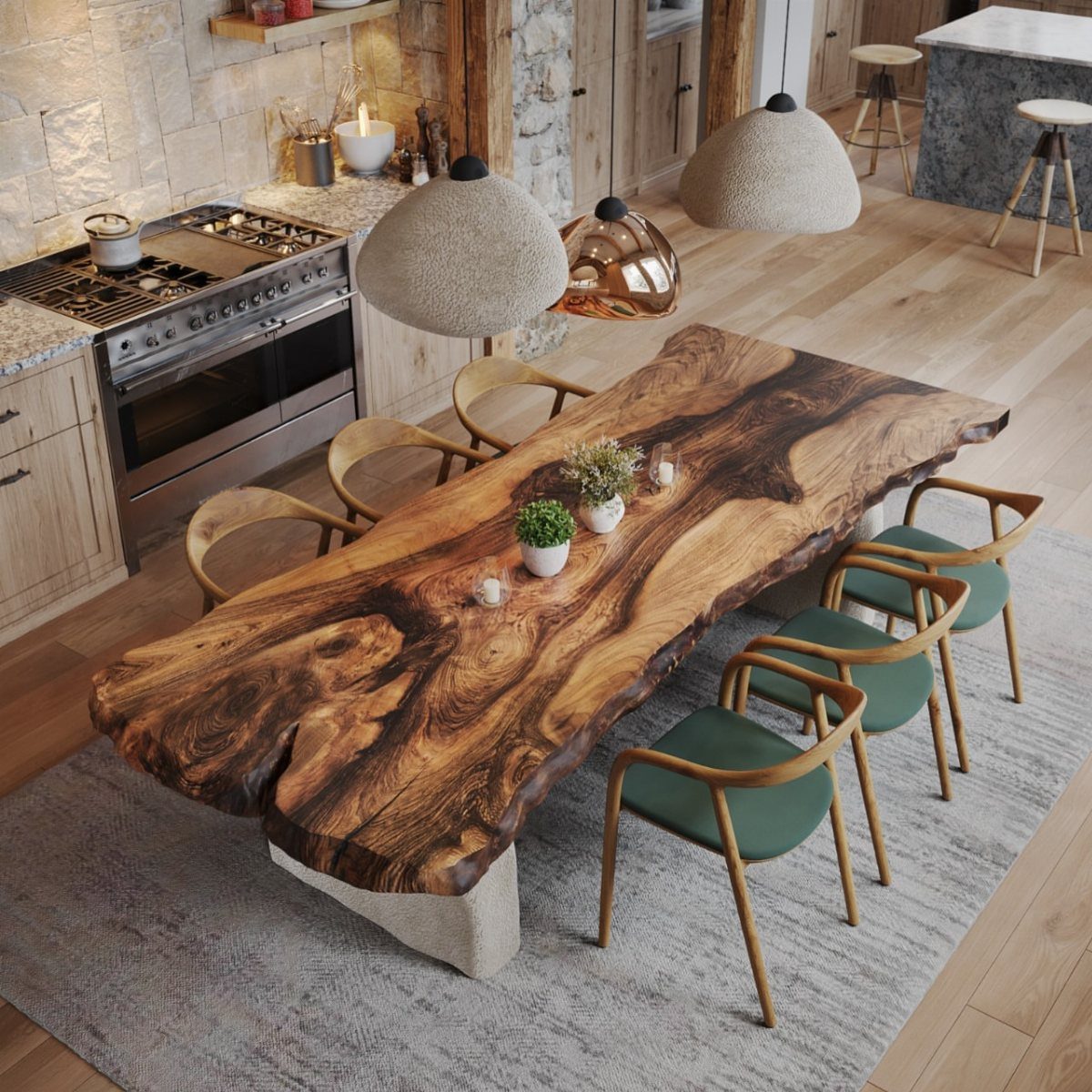
Live-edge furniture runs from a $200 side table on hairpin legs to a thousand-dollar dining slab that seats six, and the choice comes down to how much wood mass the room can handle without the piece dominating every other object in it.
Slabs need 18 months of air-drying before three months in a kiln drops the moisture content low enough to stay stable indoors.
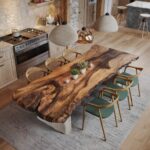
1. Live Edge Dining Table

The slab determines the outline, and the grain pattern runs uninterrupted from one edge to the other.
A dining table built around a single piece of live-edge lumber keeps the tree’s original contour and exposes growth rings, sapwood transitions, and knots the planer would normally remove.
Pair the slab with metal or wood legs that let the top sit as the focal point.
Most slabs seat several people, though narrower cuts suit smaller spaces. Finish with hardwax oil or polyurethane to seal the wood and bring out the grain.
2. Live Edge Coffee Table
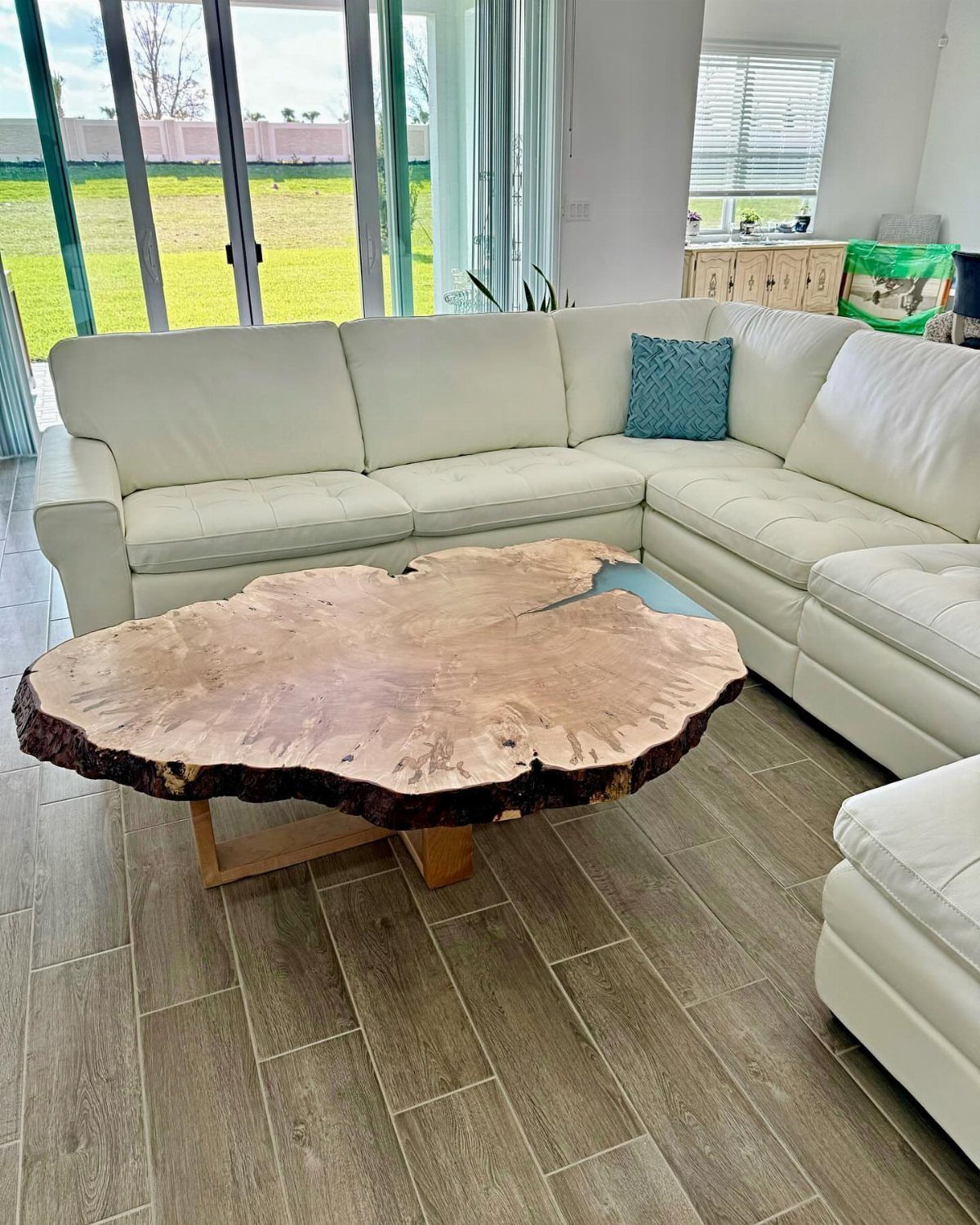
A coffee table cut from a smaller slab or an offcut keeps the organic edge on a footprint that fits between seating. Resin fills voids and cracks, turning splits and bark pockets into color detail instead of weak points.
The slab itself can be any species, though walnut, maple, and redwood show up often for their grain and color range.
Most slabs this size sit on hairpin legs, steel frames, or a second piece of wood as a pedestal base.
3. Live Edge Console Table
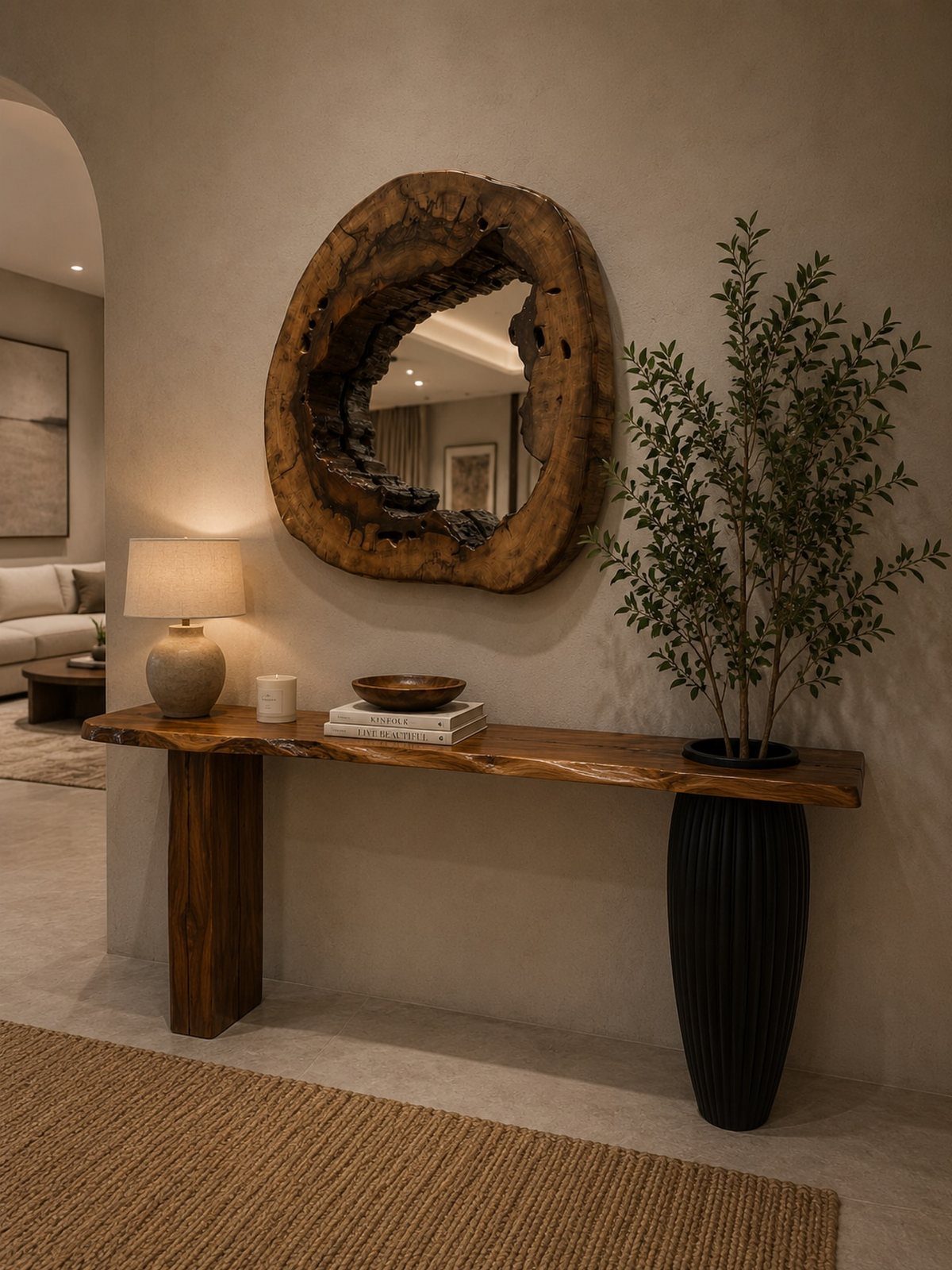
A console built from a live-edge slab and a contrasting structure gives an entry or hallway an organic focal point in a narrow footprint.
The slab sits horizontally as the top, and the base can be a single turned leg, a metal frame, or a vertical wood form that mirrors the slab’s contour.
Match the finish on the slab to the rest of the room’s wood tones, or go darker to set it apart. Most console slabs are narrow enough to clear doorways and wall clearances.
4. Black Walnut Table
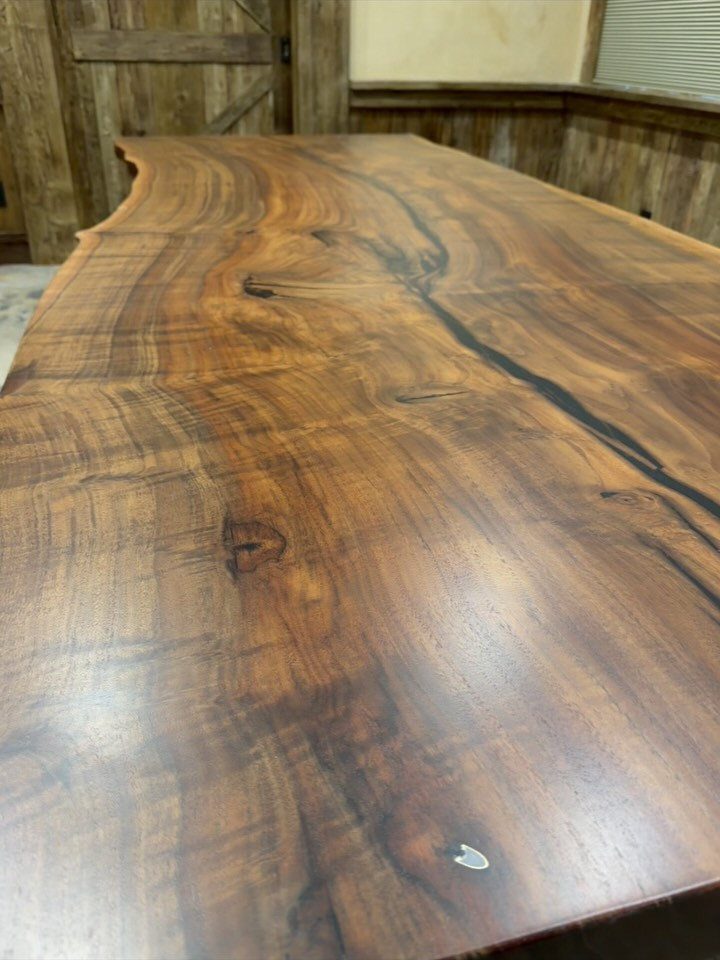
Black walnut shows chocolate to deep brown heartwood with occasional purple undertones, and the grain alternates between straight runs and burled swirls. A table cut from black walnut holds up to daily use and takes a smooth finish.
The live edge on walnut keeps the sapwood band visible, a cream or tan strip that contrasts with the darker heartwood.
Finish with oil to keep the matte surface or polyurethane for a glossy, sealed top. Walnut slabs run heavier and costlier than softer species, but the density means fewer dings over time.
5. Live Edge Bed

A bed frame built around a solid-slab headboard turns the tree’s natural contour into the room’s central object.
The slab runs vertically behind the mattress, and the width can match the bed size or extend past it on both sides for a more sculptural silhouette.
Secure the slab to the wall or to a freestanding frame that ties into the bed base.
Thicker slabs stand on their own; thinner cuts need backing. Finish the wood to match the room’s palette, or leave it raw with a clear coat to show every ring and knot.
6. River Style Table
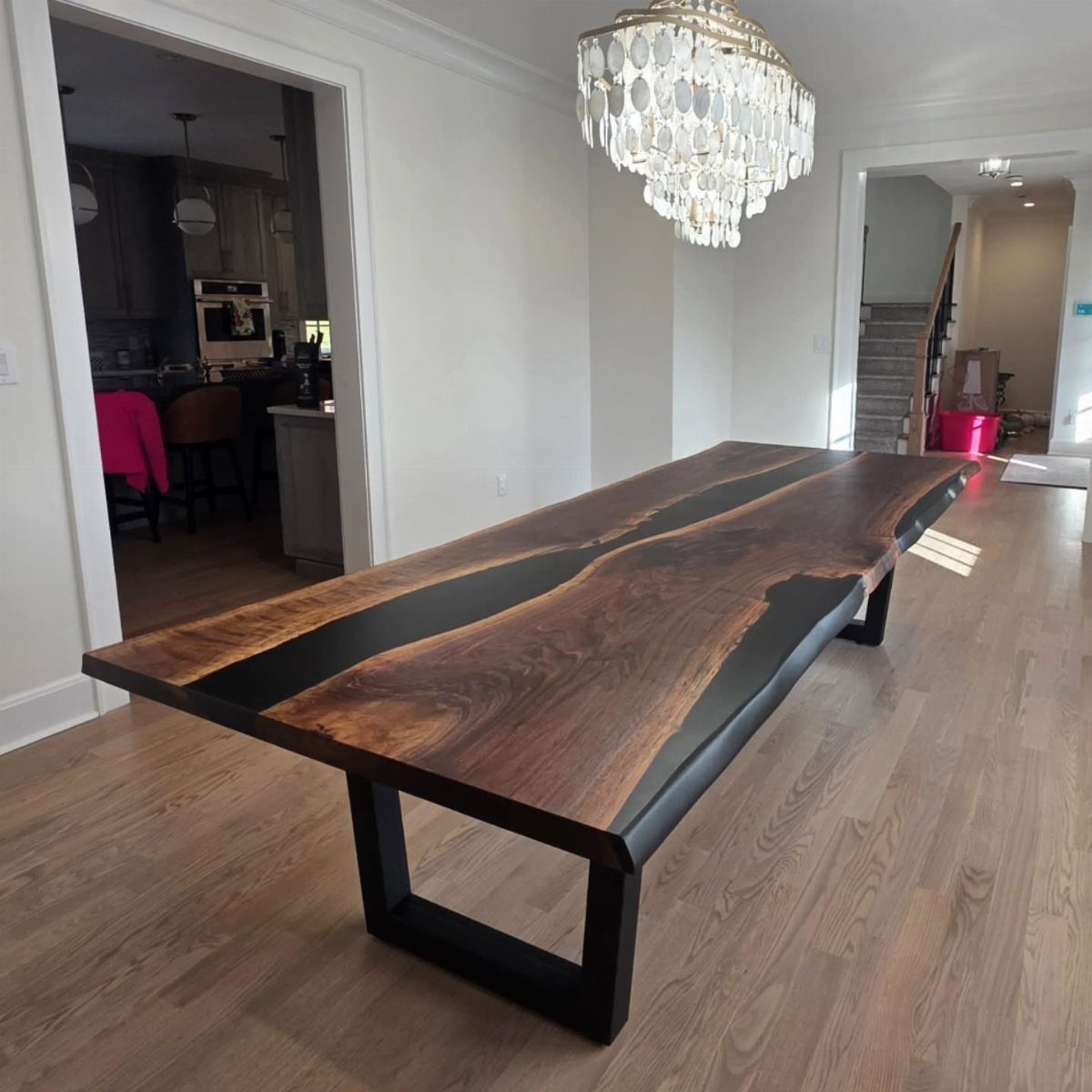
A river table splits a single slab down the middle and fills the gap with colored resin, creating a stripe that runs the full length of the table.
The resin can be black, blue, clear, or any color that contrasts with the wood tone.
The slab edges face inward toward the resin, so the live edge runs along the inner channel where wood meets epoxy. Most river tables use epoxy resin, which cures hard and polishes smooth.
Metal legs keep the focus on the top. The resin stripe adds color and fills voids that would otherwise weaken the slab, so it works well with slabs that have cracks or irregular edges.
7. Arcady Waterfall Desk

A desk built from a single slab with one end turned vertical as the support leg, so the grain flows from horizontal surface down to the floor in one unbroken run.
The waterfall edge replaces one pair of legs and gives the desk a continuous silhouette.
Matching floating shelves above the desk extend the live-edge theme without adding floor bulk. The setup works in home offices where the desk backs a wall and the vertical grain becomes a visual anchor.
8. Sylvan Coffee Table

A coffee table cut from an exceptionally thick slab, substantial enough to hold its proportions in a large room with deep seating. The mass of the slab grounds the space and balances tall ceilings or oversized furniture.
Thickness alone does the work here. A slab this heavy needs a sturdy base, usually steel or stacked wood, and the grain pattern stays bold even from across the room.
9. Zora Coffee Table

A single slab cut on a bias and set upright as both top and base, so the table tilts slightly and the grain runs diagonally through the whole piece.
The angled stance gives the table a sculptural profile and removes the need for separate legs.
The cut has to come from a thick, stable piece of wood to support the weight without tipping.
This setup suits small spaces where a standard four-leg table would look cluttered, and the slant keeps the table from reading as static.
10. Live Edge Pub Table

A pub-height table built around a live-edge slab and paired with metal legs that raise the top to bar height. The elevated surface suits kitchens, breakfast nooks, or open living areas where the table doubles as a divider between zones.
Match the slab width to the number of stools.
Narrower slabs seat two; wider cuts fit four or more. Black metal legs keep the focus on the wood, and the height makes the live edge more visible when approaching the table.
11. Claro Walnut Slab Table
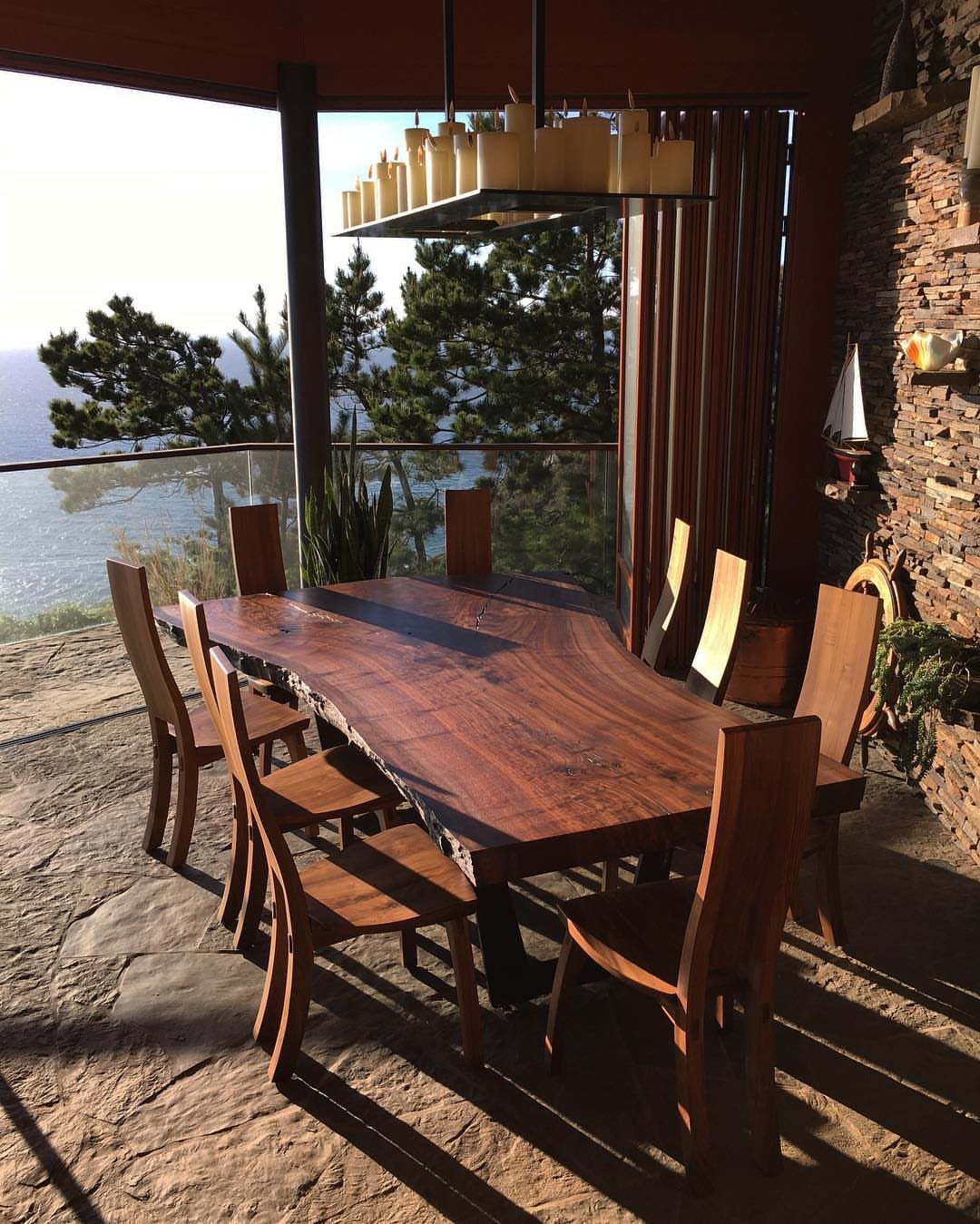
A dining table cut from a single massive Claro walnut slab, wide and long enough to anchor an outdoor dining area or a large indoor room.
Claro walnut grows in California and shows dramatic grain with dark streaks through tan and chocolate heartwood.
The size and figure of the slab make it a statement piece.
Slabs this large need a steel or heavy wood base that can support the weight without flexing. Outdoor placement requires a finish that handles moisture and UV exposure.
12. Redwood Slab Table

A table and matching bench milled from salvaged old-growth redwood, showing the dense, fine grain and deep red color that only comes from slow-grown heartwood. Redwood resists rot and weathers well, so it holds up outdoors or in damp spaces.
Old-growth slabs run wide and stable, with fewer checks than younger timber.
The natural oils in redwood let you finish with less sealer, though a topcoat brings out the red tones and protects the surface. Pair the table with a bench cut from the same log to match grain and color.
13. Live Edge Countertop

A kitchen counter cut from a live-edge slab replaces the straight factory edge with the tree’s original contour.
Seal the wood with a food-safe finish that handles moisture and daily cleaning.
Walnut, maple, and oak slabs hold up to kitchen use when properly finished. The irregular edge means custom fitting against walls and appliances, so most installations leave a small gap that gets caulked or trimmed.
14. Custom Bar Top
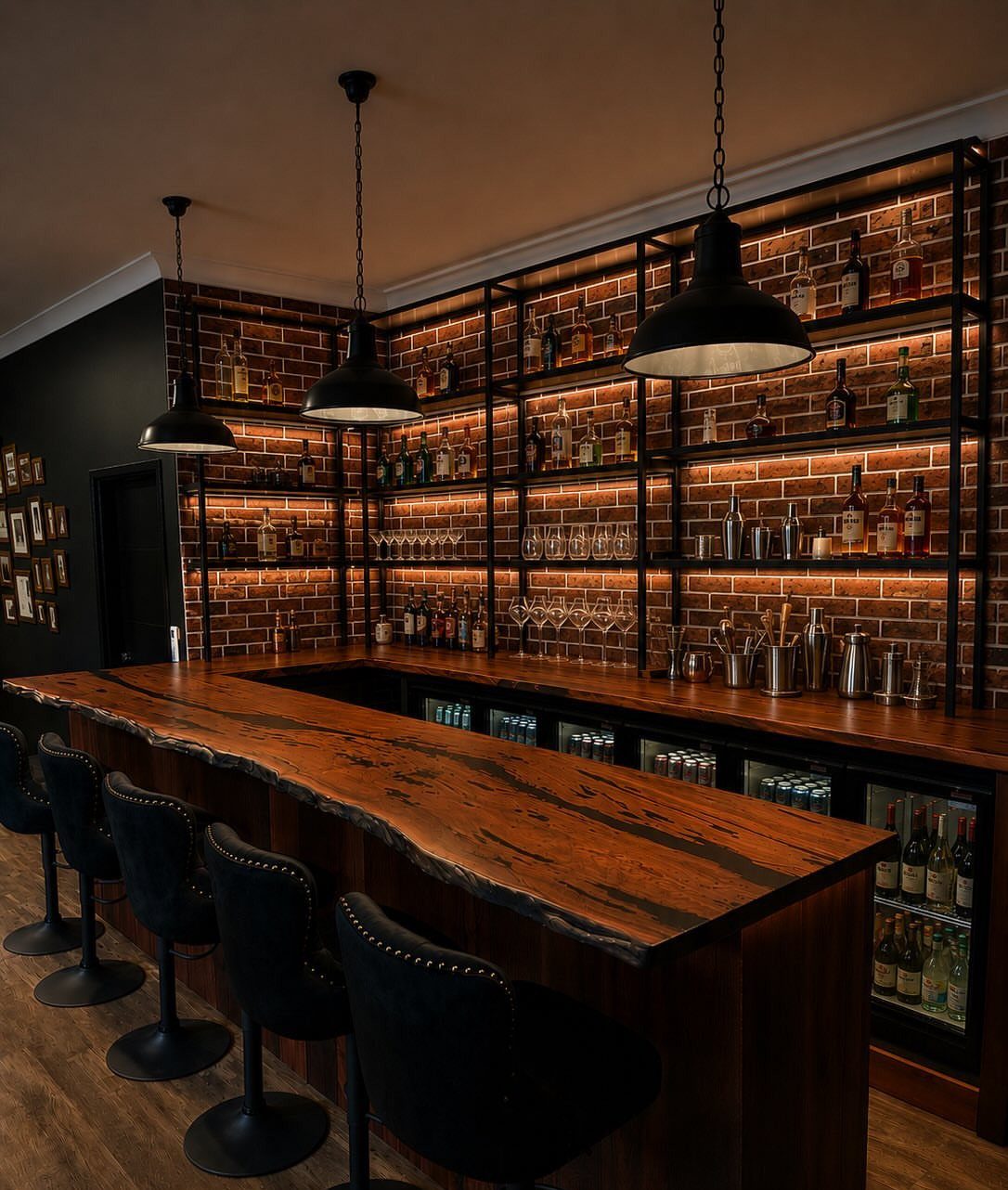
A bar top milled from a single black walnut slab gives a home bar the same weight and grain detail as a commercial install.
The slab sits on a base at bar height, and the live edge faces the seating side where it stays in view.
Black walnut darkens with a clear finish and shows chocolate to purple heartwood.
The density handles spills and glass marks better than softer species. Most bar tops this size need a steel frame or stacked wood supports to carry the slab’s weight without sagging.
15. Custom Wine Shelf

Backlighting from behind the slab outlines the contour and highlights the wood grain through any thin sections or translucent sapwood.
Drill holes sized to bottle necks, spaced to fit the number of bottles the slab can support.
Mount the slab with hidden brackets that carry the weight without showing hardware. Thicker slabs handle more bottles; thinner cuts suit a single row.
16. Custom Office Desk

A floating desk built from a small live-edge slab and mounted to the wall with concealed brackets keeps the floor clear and the grain pattern in full view. The slab sits at desk height, and the natural edge faces out.
Size the slab to fit the workspace without overhanging walkways.
A clear acrylic chair or minimal metal frame keeps the focus on the wood. Finish the slab to match the wall color or go darker for contrast.
17. Live Edge Wood Slab

Mount a short slab to the wall as a bedside shelf, and the live edge becomes a horizontal accent line next to the bed. The shelf holds a lamp, a phone, or a small vase and keeps the floor clear.
Secure the slab with brackets rated for the slab’s weight plus anything placed on top.
Position the shelf at arm’s reach from the mattress. Sand and seal the wood to prevent snags on fabric or skin.
18. Live Edge Bookshelf
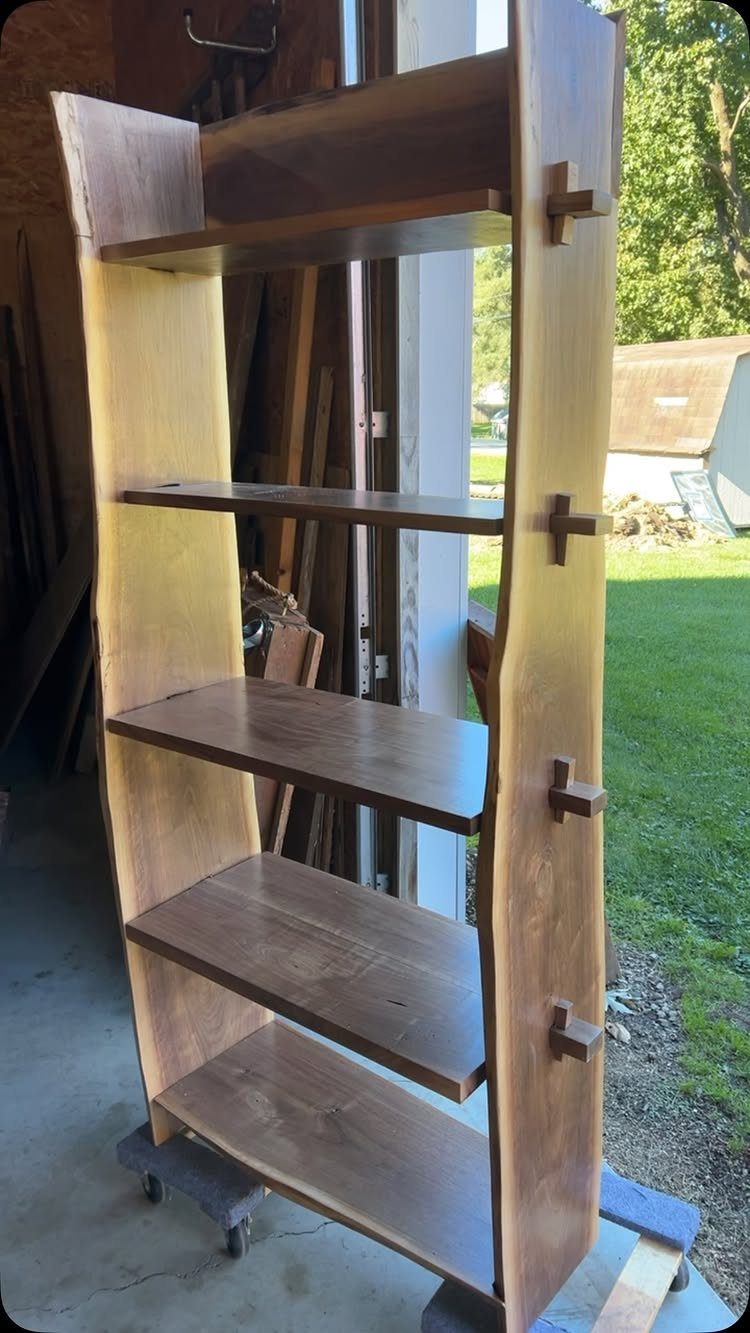
A tall bookshelf built with live-edge slabs as shelves and vertical supports turns a functional storage piece into a focal point. The natural edges face forward on each shelf, so the irregular contour stays visible when the shelves are loaded.
Set the shelves on a rolling base if the unit needs to move for cleaning or rearranging. Thicker slabs hold more weight without bowing, and spacing the shelves closer together fits most book sizes.
19. Live Edge Credenza
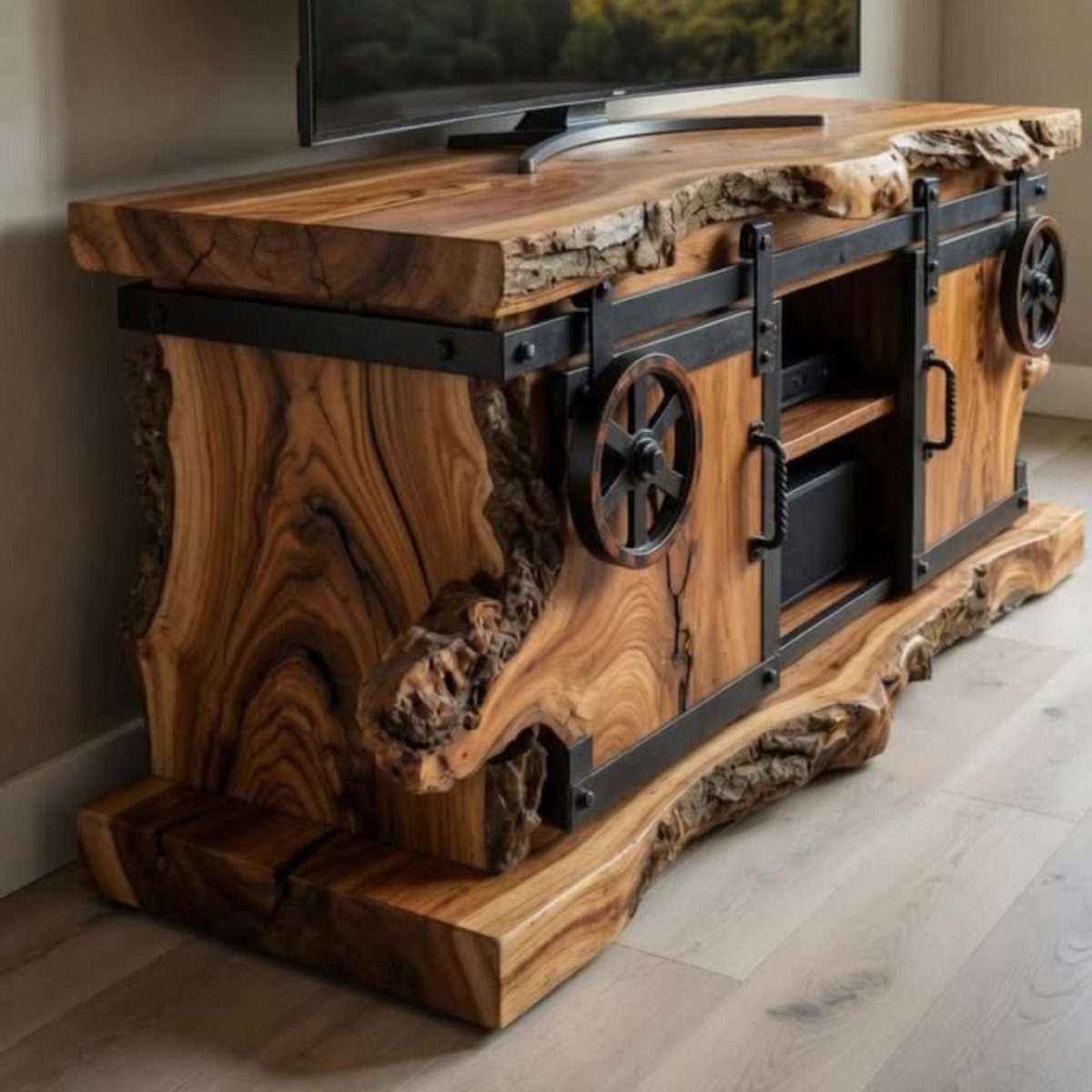
A credenza built from thick slabs and a steel frame keeps low-profile storage under a mounted screen or along a wall. The natural edge runs across the front, and industrial hardware adds contrast against the wood grain.
Black metal legs and wheel details suit a room where other furniture already leans rustic or industrial. The slab top handles daily use, and enclosed storage behind the doors hides cables and remotes.
20. Live Edge Furniture Mix

Combining slab tables, root-based stools, and hairpin-leg side tables in one space lets each piece show its own grain and form without competing.
The natural edges and raw wood tie the group together, while varied leg styles and heights keep the arrangement from reading as a matched set.
Hairpin legs work well on smaller pieces where the wood itself is light enough to stay stable.
Root bases ground heavier slabs and add sculptural weight. Group pieces by finish or species to unify the look.
21. Burl Wood Table

A table cut from burl wood shows swirling, densely figured grain that forms from irregular growth around a tree injury. Burl slabs are rare, smaller than standard cuts, and the grain pattern is unpredictable.
Thick legs cut from the same burl keep the table proportional and let the grain wrap around all sides.
Burl is harder to source and costs more than straight-grain slabs, but the visual density suits small accent tables where the grain stays in full view.
22. Burl Wood End Table

An end table cut from a single burl slab gives a side table or nightstand organic grain detail in a compact footprint.
The thick top and solid sides handle daily use, and the burl figure adds texture without requiring a large piece of wood.
Leave the natural color for lighter rooms, or finish with oil to deepen the grain contrast.
The open shelf below takes woven storage or a stack of books. Burl slabs this size are easier to find than dining-table lengths, and the swirling grain works well next to upholstered furniture where the pattern contrasts with solid fabric.
23. Live Edge Bed Frame

A bed frame built entirely from live-edge slabs turns the wood into structure and headboard in one piece. Thick slabs form the frame rails and support the mattress, while a vertical slab behind the bed anchors the design.
The weight of solid wood keeps the frame stable without additional hardware.
Match the slabs by species and finish for a cohesive look, or mix widths and thicknesses for a more sculptural frame. This setup works in modern bedrooms where the bed sits as the central object and other furniture stays minimal.
24. Live Edge Mirror

A mirror framed with a single piece of natural-edge wood keeps the irregular contour visible around the glass.
The frame can be light or dark depending on the slab species, and the wood grain adds organic texture to a full-length or smaller mirror.
Lean the mirror against a wall for a relaxed setup, or mount it with hidden brackets for a permanent install.
Match the wood tone to other furniture in the room, or choose a contrasting species to set the mirror apart. The irregular edge works well in bedrooms or entryways where straight lines dominate the rest of the space.
25. Live Edge Dresser

A dresser with a live-edge top and black drawer fronts fitted with shaped wood inlays that follow the grain.
The natural contour runs across the top, and the inlaid panels bring organic detail to the drawer faces without overwhelming the clean lines.
The black finish on the drawers grounds the piece and lets the wood grain read clearly. This setup suits a bedroom where other furniture stays minimal and the dresser can hold its own as a statement piece.
26. Glass Table Root Base
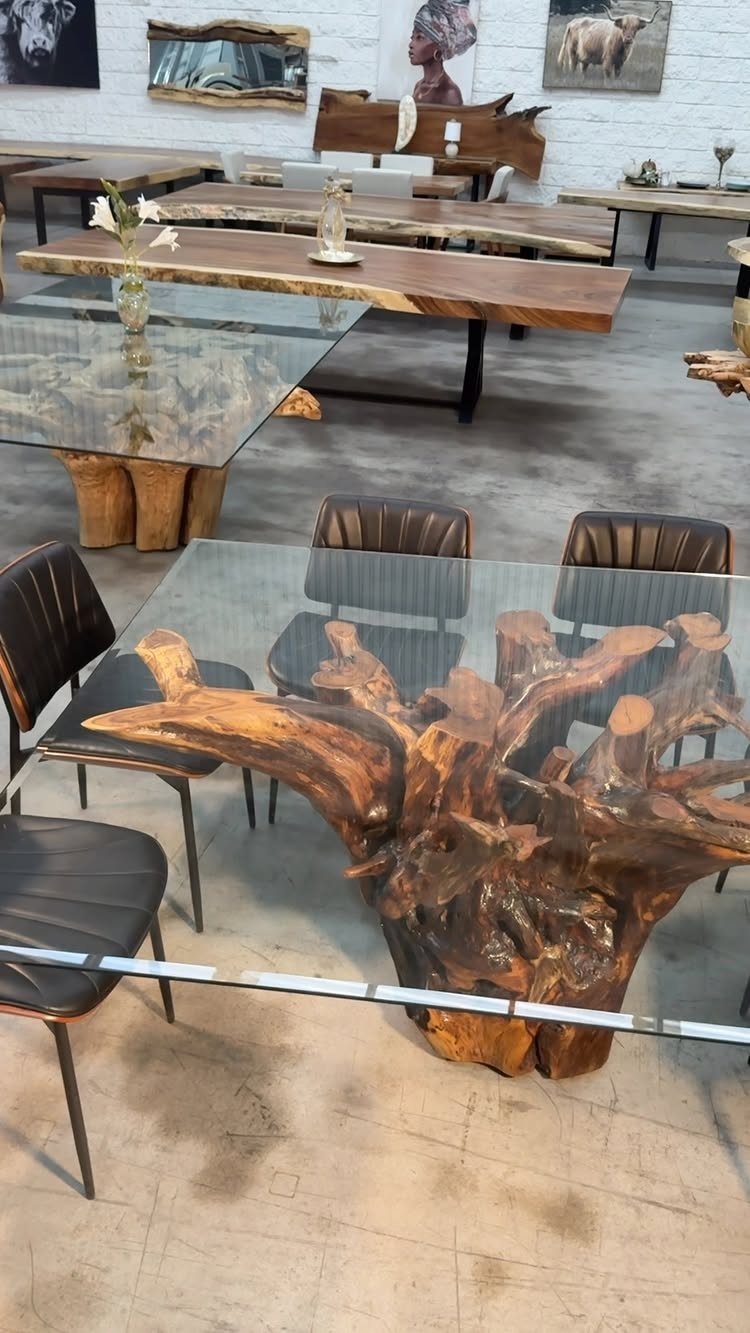
A glass top rests on a root system pulled from the ground and cleaned, so the branching structure becomes the base and the clear surface shows the wood underneath.
The glass keeps the tabletop functional while the root stays fully visible.
Roots this large come from mature trees and need preparation to remove soil and stabilize loose bark. Pair with simple chairs that keep attention on the base.
27. Live Edge Resin Table

A slab sits partially embedded in poured resin, so the live edge and wood grain show through a smooth, glossy surface. The resin fills voids and cracks in the wood and extends beyond the slab to form a flat tabletop.
Darker resin colors bring out the wood’s natural tones and hide imperfections.
This treatment protects the slab from moisture and daily wear while keeping the grain visible. The combined surface holds up to spills and cleaning without warping.
28. Live-Edge Shelving

Floating shelves cut from live-edge slabs and mounted with LED strips underneath outline the wood’s contour and cast a warm glow on the wall. The light highlights the grain and makes the irregular edge more visible at night.
Mount the LEDs behind the slab so the bulbs stay hidden and only the light shows.
Space the shelves to fit the items on display without crowding. The warm light softens the wood tones and suits rooms where overhead lighting stays bright or cool.
29. Live-Edge Side Tables

Small side tables and stools cut from narrow slabs and paired with black hairpin legs give occasional seating or surface space without the weight of larger pieces.
The slim metal legs lift the wood off the floor and keep the profile light.
Size the slabs to fit next to a chair or at the end of a sofa.
Hairpin legs attach with screws and come in various heights, so match the leg length to the intended use. These tables work well in multiples where a matched set would feel too uniform.
30. Glass-Top Root Table

An oval glass top sits on a root base, and the clear surface lets the twisted wood and exposed knots stay in view from above.
The glass protects the root from damage and gives a smooth working surface for drinks or books.
The root needs to be dried and stabilized before it can support weight.
Attach the glass with rubber pads or brackets that hold it securely without drilling into the wood. This setup suits living rooms where the table anchors a seating area and the root becomes the focal point.
31. Sculptural Lounge Chair

Curved wooden slats bent and stacked in a circular form create a lounge chair that doubles as sculpture. The opening near the base lightens the visual weight and lets the curve read from all sides.
This setup takes steam-bent wood or laminated veneers glued in layers to hold the curve without springing back.
The slats need consistent thickness to stack evenly, and the joinery has to handle stress where the curve is tightest. Suited to rooms where the chair sits as an art piece and seating is secondary.
Slab Sourcing and Drying
The slabs air-dry for up to 18 months, then move into a kiln for three months to bring the moisture content down to a stable level.
Thicker slabs take longer to dry, and air-drying a 3-foot cut means waiting while the moisture works its way out. Thicker wood holds more moisture and releases it slowly, so the timeline stretches with the dimensions of the cut.
Most suppliers sell kiln-dried slabs ready to work, though some offer green wood at a lower price if you have the space and time to dry it yourself.
Kiln drying speeds the process and reduces the risk of checking, but air-drying first helps the wood release internal stress before it goes into controlled heat.
Custom Ordering and Making
Wood Touch customers select raw slabs, discuss designs over Zoom, receive progress photos during the build, and arrange delivery once the piece is finished.
The process starts with choosing the wood and ends with the completed furniture arriving at the door.
Littlebranch Farm walks through sourcing the slab, hand-shaping and sanding the edges, deciding whether to fill cracks and voids or leave them open, applying hardwax oil, mounting the base, and inspecting the finished table before it ships.
Most custom orders follow a similar sequence.
You pick the slab or approve one the maker sources, settle on dimensions and leg style, and the maker sends updates as the piece moves through finishing and assembly. Lead times vary by shop and project complexity.
Frequently Asked Questions
What is a live edge table?
A live edge table leaves the tree’s natural outer edge intact rather than cutting all sides straight.
The slab runs from bark edge to bark edge with the original growth pattern intact, so you see sapwood transitions, knots, and the irregular line the tree grew in.
Are live edge tables still in style?
Yes, and the demand keeps growing.
People want the connection to natural materials, and each slab brings one-of-a-kind grain and contour that mass production can’t replicate. The look fits modern farmhouses, cabins, and contemporary spaces without feeling dated.
Why are live edge tables so popular?
They bring organic texture into a space and each one is different.
No 2 slabs match, so the table becomes a focal point rather than a standard furniture piece. The natural edge also fits the shift toward materials that look and feel less processed.
Why are live edge tables so expensive?
Wide, defect-free slabs are rare, and milling them takes specialized equipment and time. A slab thick enough for a dining table has to dry for months or years, and handling pieces that heavy adds cost at every step.
Add the finish work and custom base fabrication, and the price reflects the material and labor involved.
What’s the best wood for a live edge table?
Black walnut shows dramatic grain and holds up to daily use, making it the most common choice.
Claro walnut adds bolder figure and color variation. Maple, redwood, and oak each bring different tones and density, so the best species depends on the room’s palette and how hard the table will work.
What hardwood is good for furniture?
Black walnut, maple, and oak handle daily use without denting easily and take a smooth finish.
Walnut brings dark tones and rich grain, maple stays lighter and shows subtle figure, and oak offers strong grain lines and durability. Each one holds up over years of use when properly sealed.