
French farmhouse dining tables range from a 2–3 person marble bistro table to an 8.8-foot oak trestle that seats eight, and the gap between those two endpoints is mostly about the room and the household, not taste.
Size and shape narrow it down first: a round pedestal suits a small or oddly shaped room, a large turned-leg or trestle piece fits a longer wall, and a monastery table brings the scale for a serious dinner party.
Pine and fruitwood show age faster than oak or walnut, which matters more on a table that gets daily use than on one pulled out for company.
1. Marble Bistro Table
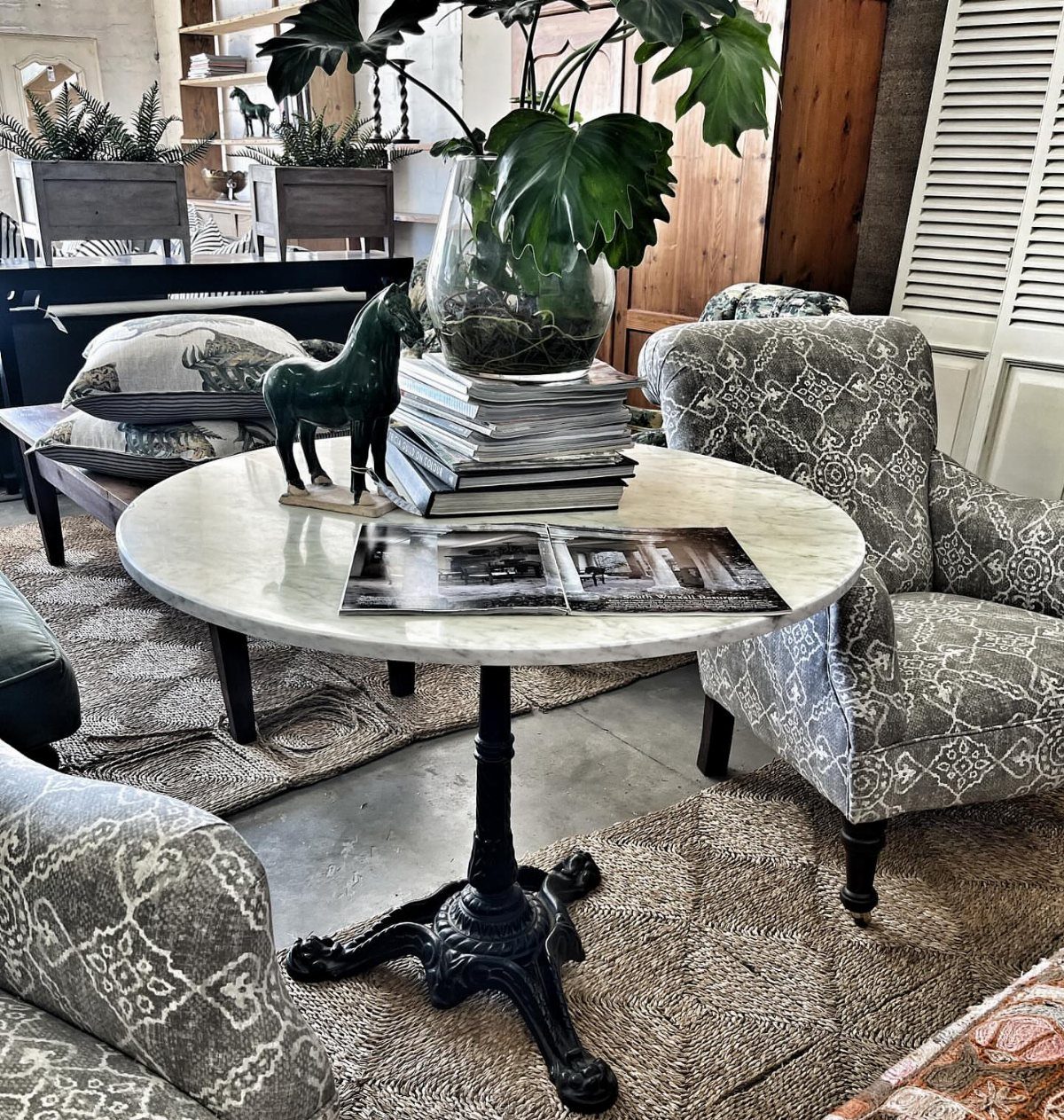
A marble-top bistro table sized for two or three gives a French café feel without the space or cost of a full farmhouse table.
The round top and metal base keep the footprint tight enough for a breakfast nook or apartment dining corner.
Real marble weighs enough that moving it is a two-person job, and the stone stains if wine or citrus sits too long. Sealed marble or a marble-look porcelain top solves both problems and costs less.
2. Large Turned-Leg Table
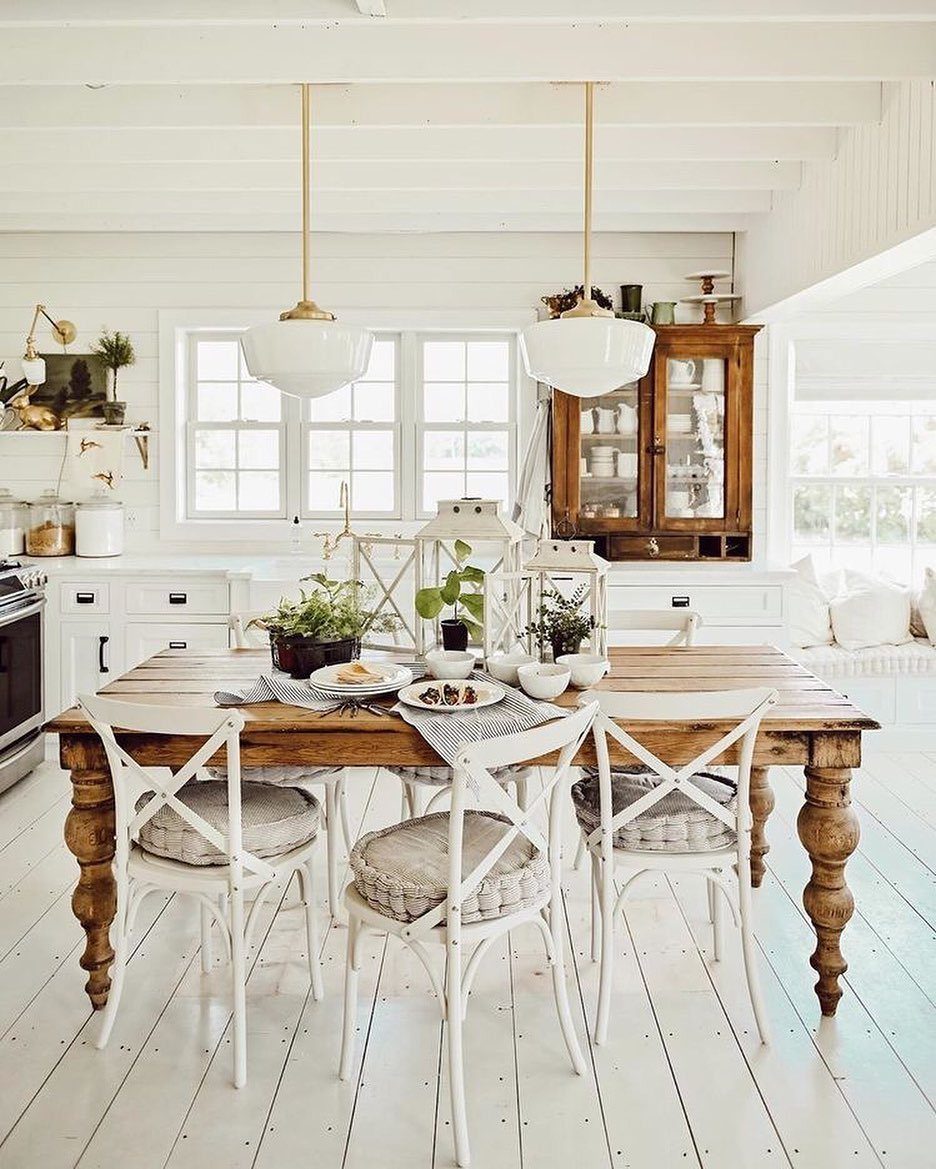
Turned legs on a long farmhouse table give the piece more visual weight than straight legs without losing the clean, functional shape that defines a French country dining table.
The style works for larger households that need seating for six to eight.
Look for a table with a solid wood top rather than veneer if the budget allows it.
Solid wood can be sanded and refinished decades later; veneer can be, too, though only with more care and only if the veneer is thick enough to survive it.
Pair it with simple chairs so the turned legs stay the focus.
3. Reclaimed Pine Table
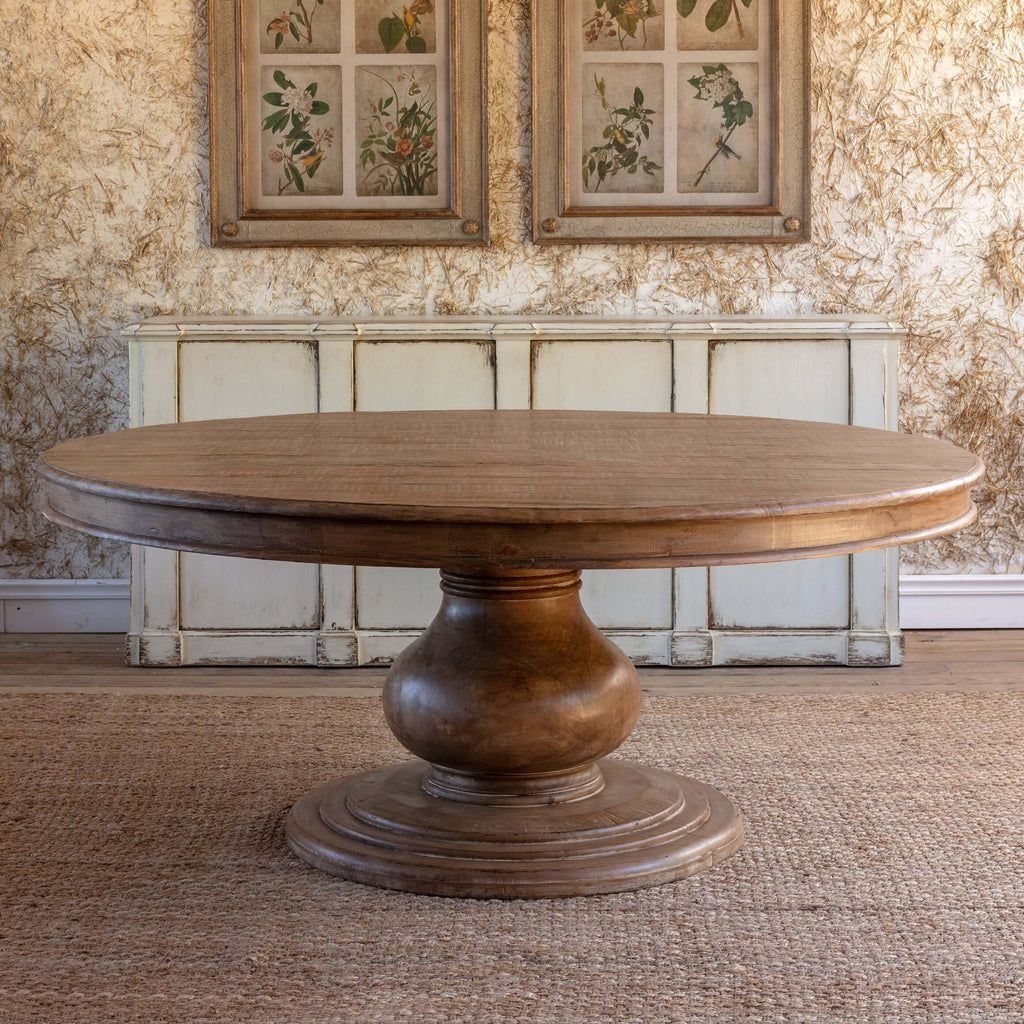
A round pedestal table in reclaimed pine takes up less floor space than a rectangular one.
The carved base is the signature detail in French Provincial furniture, and reclaimed pine brings the worn texture that makes the style read as authentic rather than new.
Round tables suit small or awkwardly shaped dining rooms because they have no corners to navigate around. Round tables cannot push against a wall when you need the room back.
Check that the base is wide enough to be stable with weight on one side.
4. Fruitwood Provincial Table

Fruitwood tables from 19th-century French Provincial workshops have the patina and joinery that antique collectors look for, and a small drawer in the apron is a functional detail that shows up often in tables made for working farmhouses.
This style holds value if kept in good condition, but fruitwood is softer than oak and dents more easily.
Prices for authenticated pieces run high; reproductions and secondhand finds that mimic the look cost far less and wear just as well in a working household.
5. Bleached Pine Monastery Table
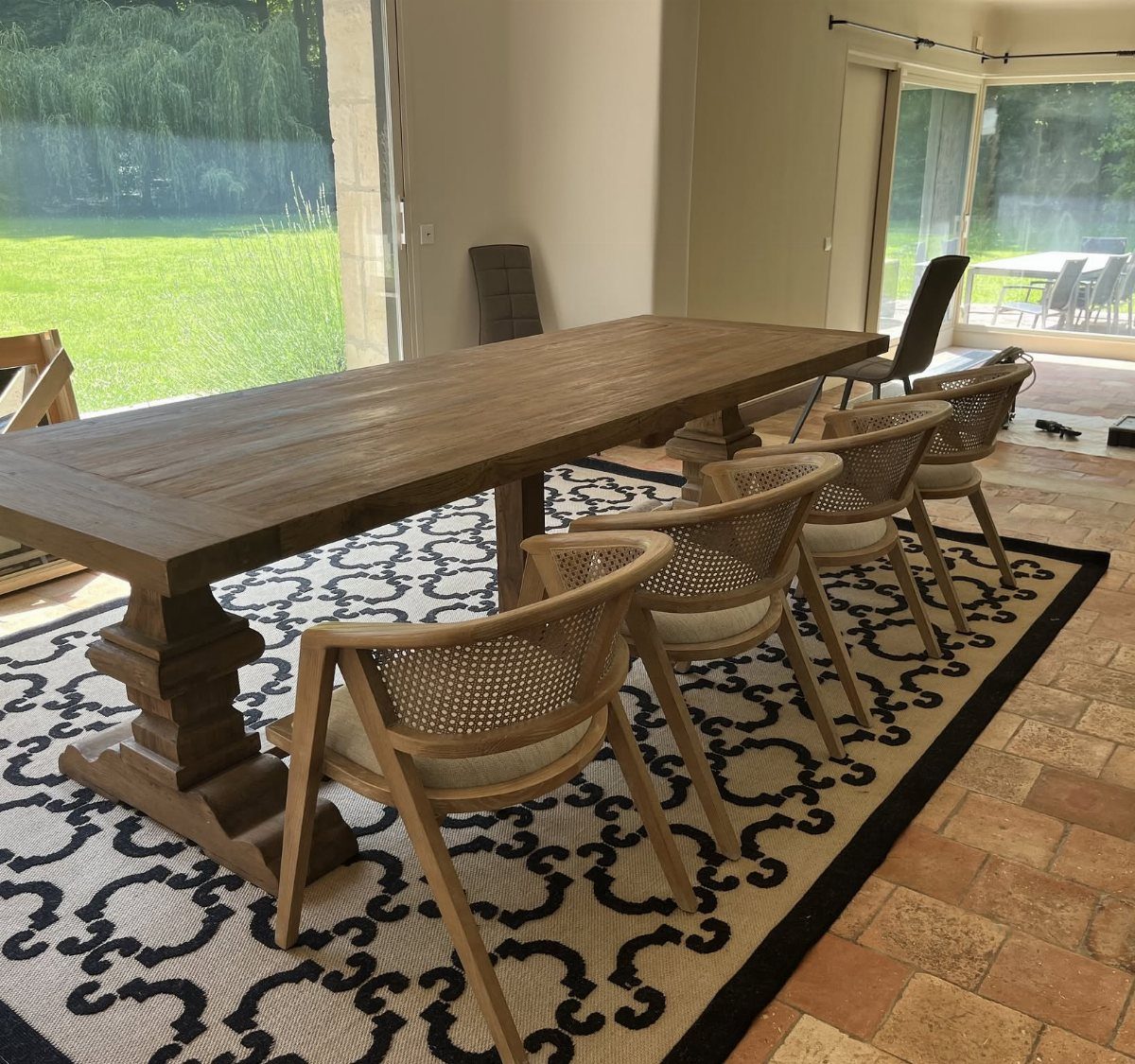
Bleached pine gives a monastery table the light, neutral tone that works in modern French country interiors without the dark, heavy look of walnut or unstained oak.
The style comes from late-19th-century French Provincial refectory tables, and the carved legs and stretcher base are structural details that double as decoration.
Pine is softer than hardwoods and shows scratches and dents over time, which suits the lived-in aesthetic but requires refinishing if the damage bothers the household.
Bleaching or whitewashing pine is a DIY-friendly finish that can be reapplied when the color fades.
Cane-back chairs keep the palette light and add texture without competing with the table.
6. Walnut Harvest Table
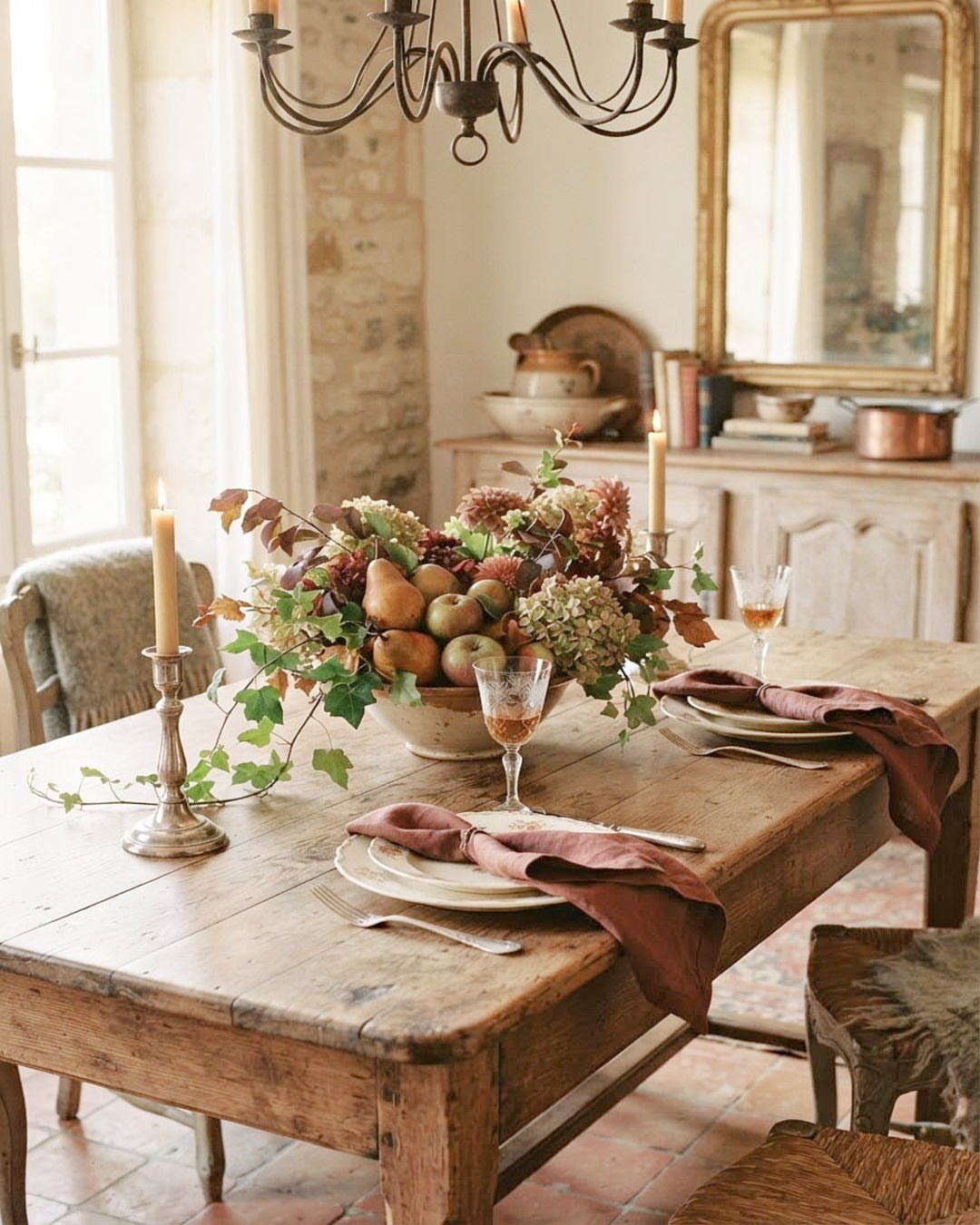
A walnut harvest table from the mid-19th century has the dark, rich grain and solid construction that French Provincial farmhouse furniture is known for.
The wide plank top and simple trestle or apron base were built for large family meals, and walnut ages into a deeper brown that brings warmth to a dining room with high ceilings or pale walls.
Walnut is dense and resists dents better than pine or fruitwood, but antique walnut tables command high prices and are harder to find in good condition.
A reproduction in solid walnut or a secondhand table refinished in dark stain gives the same look at a fraction of the cost.
7. French Oak Dining Table
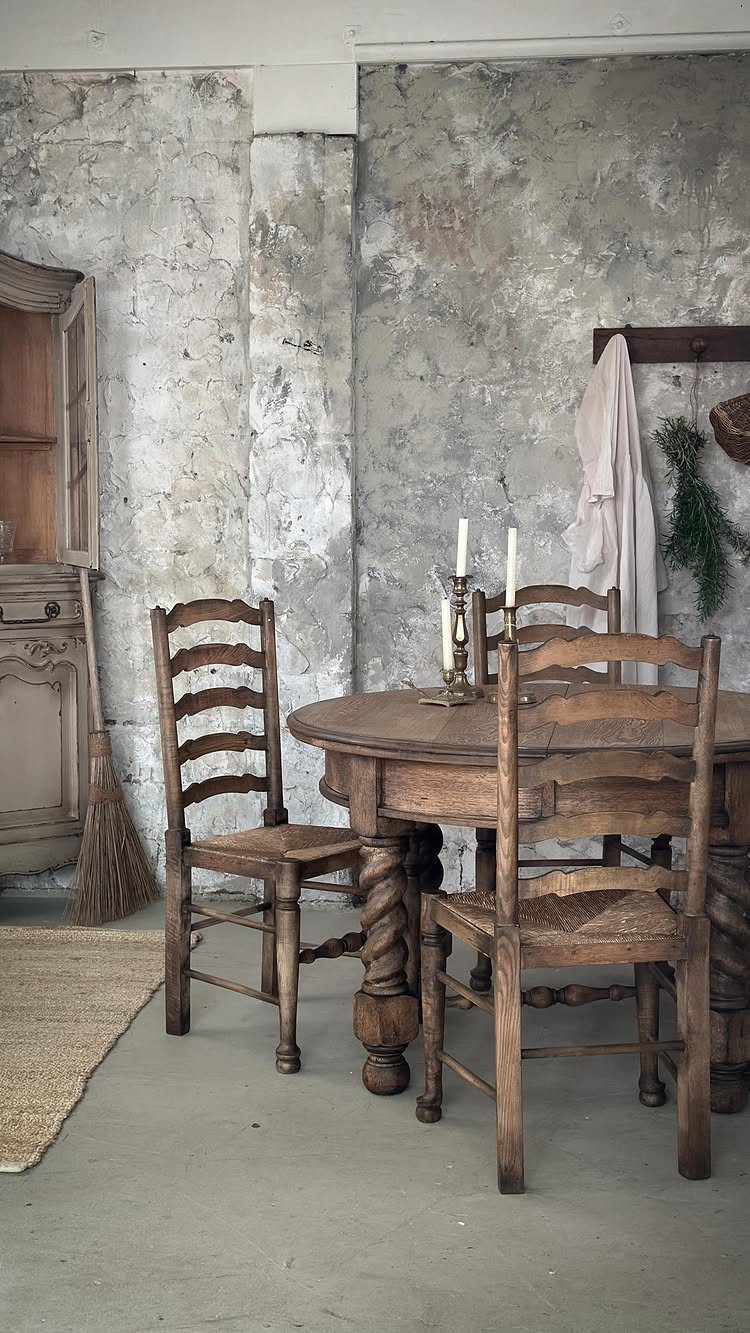
Oak was the working-horse wood in French Provincial furniture, dense enough to survive decades of family dinners and heavy enough that a table this size stays put without anchors.
The spiral legs give the table a sculptural quality that makes it feel as suited to a dinner party as to a Tuesday night.
Solid oak takes stains and scratches better than softer woods, and the grain shows through even under decades of wax or oil.
Match the chairs to the wood tone or mix in rush seats to keep the palette warm.
8. Patinated Painted Farm Table

A painted farm table with a worn, patinated finish gives the aged look of an antique without the price or the search.
The distressed white paint over wood shows through at the edges and high-wear spots, and the turned legs keep the silhouette classic.
Painted finishes hide dings and variations in the wood underneath, which makes them a good choice for secondhand tables or budget pine.
9. Italian Tile Top Table

A tile-top table brings color and pattern into a neutral dining room and cleans with a wipe, no refinishing or sealing required.
The ceramic tile resists heat and moisture better than wood, and the painted designs common in Italian and French Provincial tile work add detail without upholstery or carving.
Grout lines collect crumbs and need scrubbing, and a tile that cracks cannot be patched invisibly. Handmade tile costs more than machine-made and shows variation in color and glaze that reads as character or inconsistency depending on taste.
10. Fruitwood Trestle Table

Fruitwood trestle tables from French Provincial workshops have the warm, reddish-brown tone and simple joinery that define country furniture from that era.
The drawer in the apron adds storage for linens or flatware, and the trestle base keeps the legroom open for benches or chairs.
Trestle bases are stable on uneven floors, which makes them practical for older homes or outdoor dining setups.
Fruitwood dents more easily than oak or walnut, so the table shows age faster and needs more maintenance if a pristine surface matters.
11. Oak Trestle Table
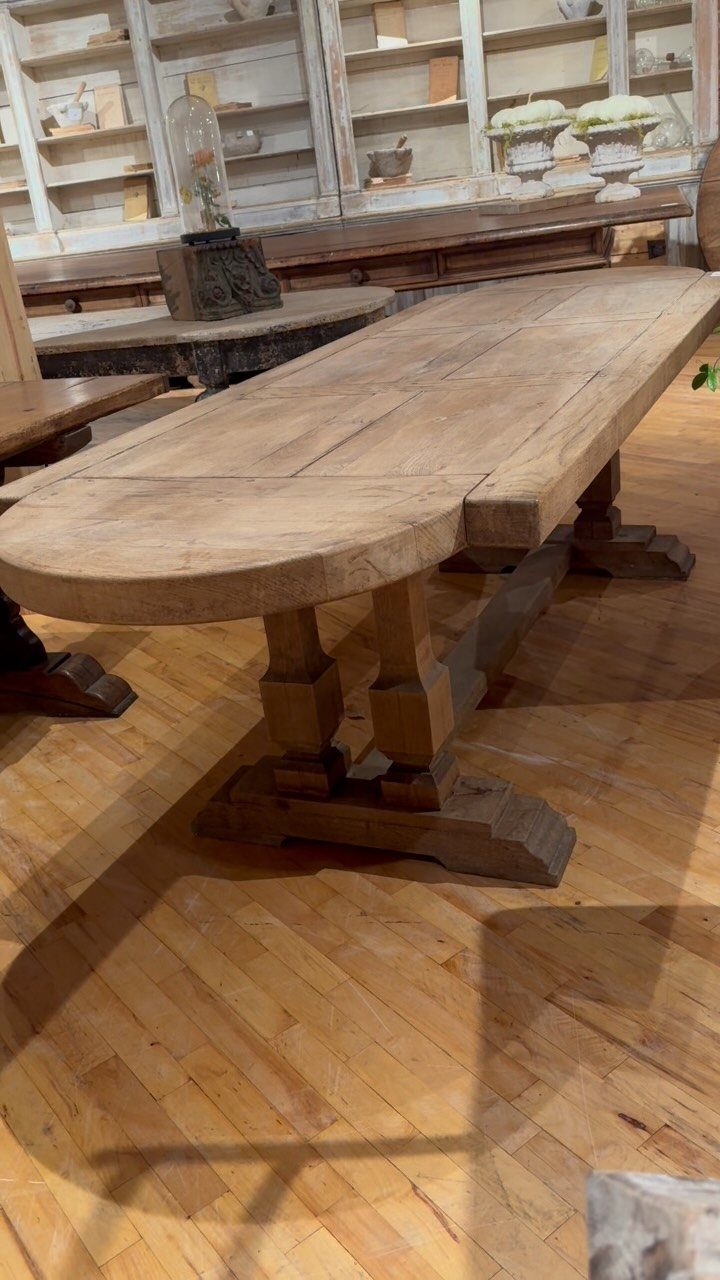
At 8.8 feet long and 35.5 inches deep, the table seats eight comfortably and fits dining rooms with the ceiling height and floor space to match the scale.
Oak trestle tables last for generations if the joinery stays tight, and the wood can be refinished if the surface wears thin. A table this size needs help moving and does not fit through narrow doorways without disassembly.
12. French Wooden Dining Table

Wood tables take scratches and water rings over time, which suits the lived-in look or requires coasters and placemats depending on the household. A table with a natural or oiled finish can be sanded and refinished.
13. Catalan Trestle Table
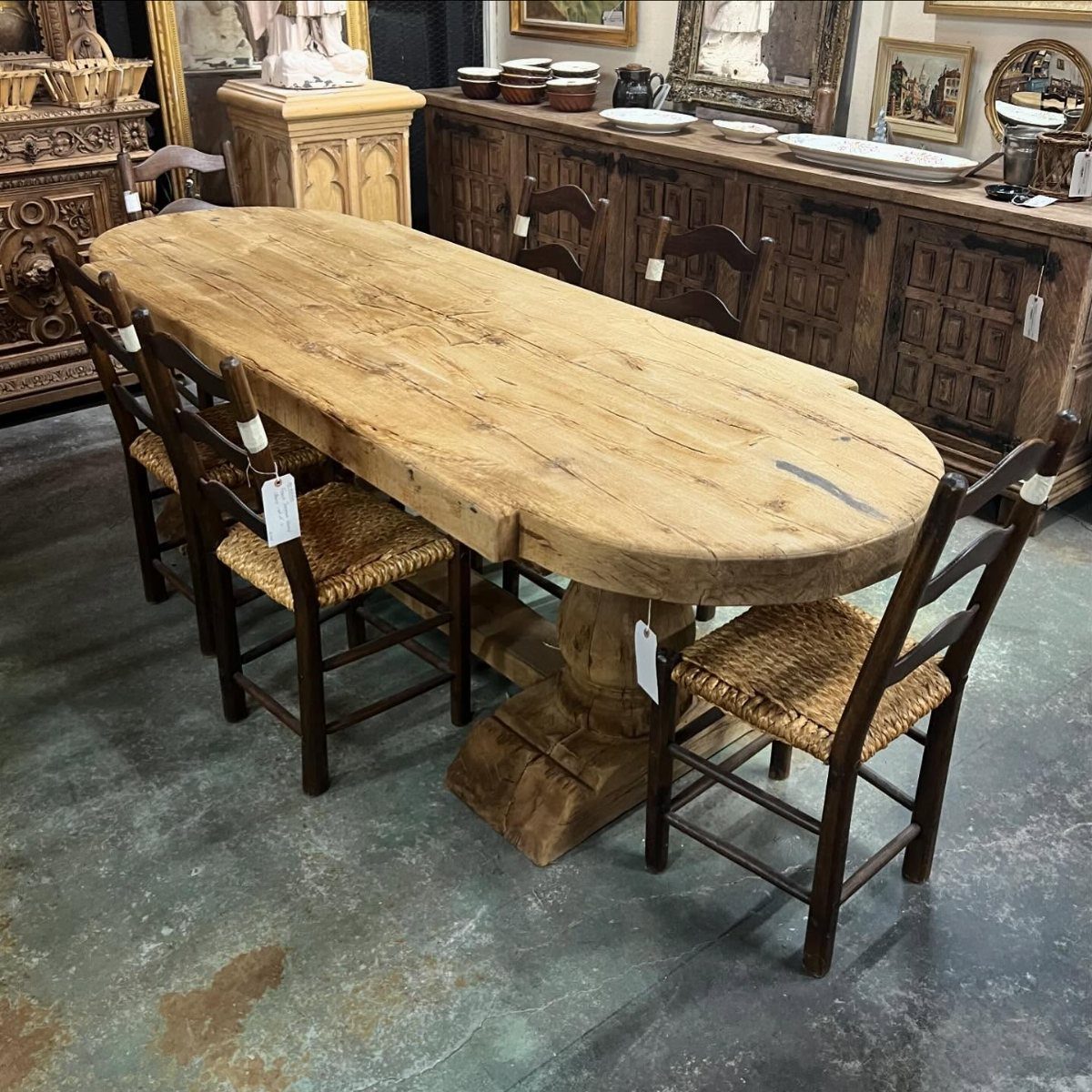
Trestle bases show up across French Provincial furniture, but the wide plank top and open stretcher construction on an antique oak piece like this one reads as working farmhouse rather than decorative country.
Rush-seat chairs are the natural match and keep the cost down relative to upholstered seating.
Oak holds up to the daily use a dining table takes, and the grain takes on a warmer tone over time rather than looking worn out.
Antique shops are the right place to search; pieces like this rarely surface in retail furniture stores.
14. French Country Pine Table

Pine farmhouse tables from the 1860s were made for use, not display, and the turned legs and apron drawer on this one show that plainly.
Pine is soft enough that a working table picks up dents and scratches over the years, which suits the French country aesthetic.
If the surface wears past what you can live with, pine sands down and takes a fresh oil or wax finish without much effort.
The drawer is a small practical detail worth looking for when shopping secondhand: flatware or linens close at hand without extra furniture.
15. Stone Top Iron Table

A stone top paired with a wrought-iron base brings the weight and cool surface of outdoor French garden furniture indoors.
The iron legs stay narrow enough to keep the table from reading as heavy, and stone wipes clean without sealing or refinishing.
Stone is cold to the touch, which matters in winter or for households that prefer a warm dining surface.
The top is also heavy enough that moving the table takes two people, and chipped edges on stone do not sand smooth the way wood does.
16. Weathered Oak Monastery Table
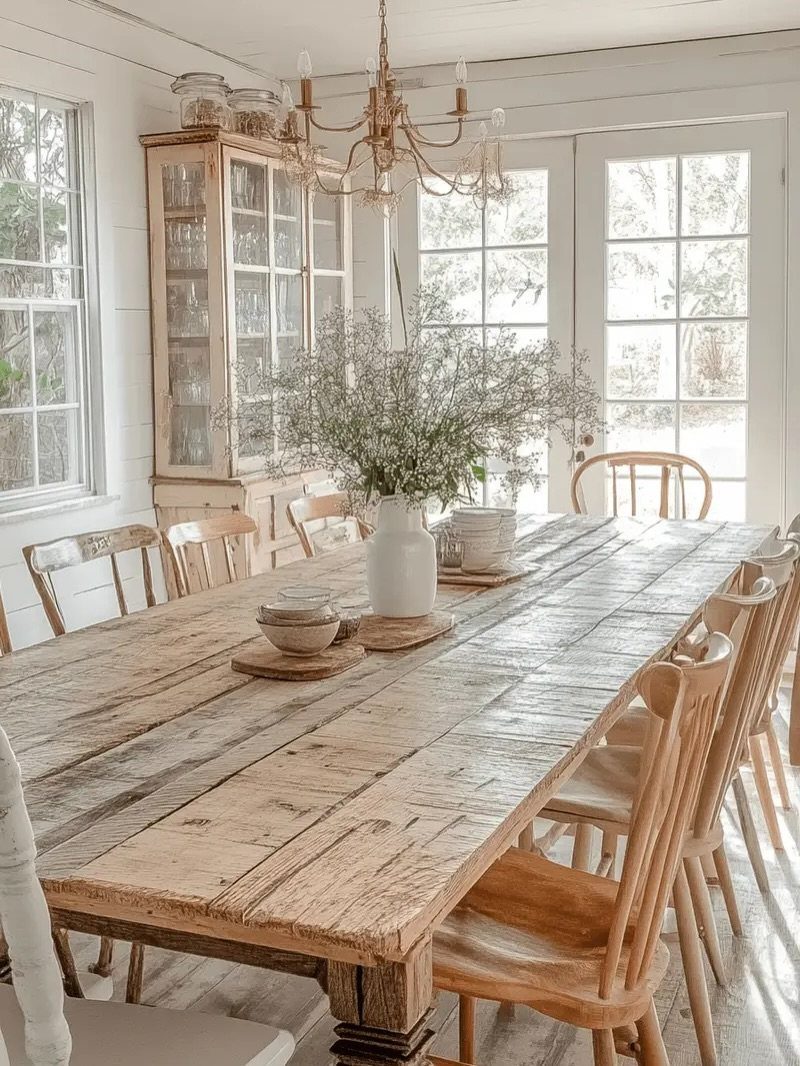
Solid plank oak takes on a silvery, bleached surface over decades of use, and that weathered tone is exactly what makes a monastery table read as the real thing rather than a reproduction.
Oak this dense resists dents and wear far better than pine or fruitwood, so the patina builds without the surface breaking down.
A table like this works best in a room with enough floor space to let it breathe: monastery proportions run long and wide, and crowding one against a wall loses the point.
17. Stripped Fruitwood Table

Stripping the old finish off an antique fruitwood table brings out the natural grain and lightens the tone without bleaching or painting. The result is a neutral surface that ages visibly but stays warmer than pine or oak.
Fruitwood is soft and dents easily, so a stripped table shows its history faster than a harder wood would.
If the worn look suits the room, no maintenance is needed beyond an occasional coat of wax or oil. If it does not, refinishing starts from scratch.
Rush-seat chairs in white or natural tones keep the palette cohesive without matching exactly.
18. Round Pedestal Table
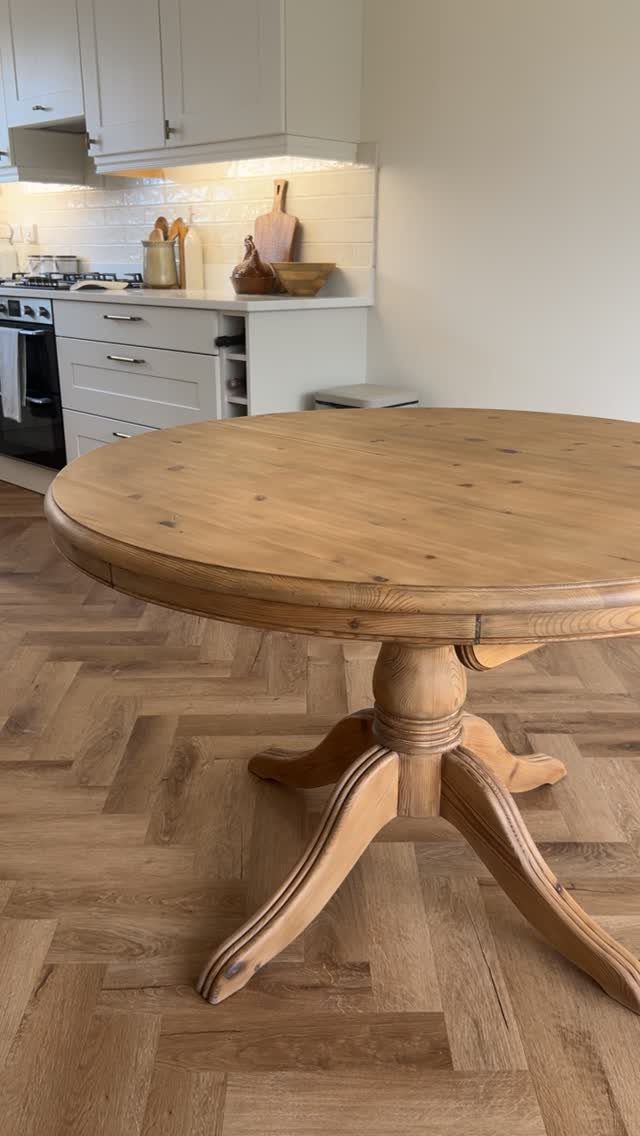
A round pedestal table in light wood keeps a kitchen or small dining area from feeling crowded, since the single base leaves legroom on all sides and there are no corners to squeeze past.
Light-toned wood reads well against white cabinets and pale floors without competing with them. The pedestal base also means you can seat one more person at a round table than the leg placement would normally allow.
For smaller spaces, this is the format I’d choose first.
19. Farmhouse Table and Bench

Mixing seating types at a long farmhouse table keeps the look relaxed and solves a practical problem: benches seat more people than chairs and tuck fully under the table when not in use.
Wicker chairs add texture without weight, and a striped bench pulls in a second pattern without competing with the room’s neutral palette. Both are lightweight enough to move around easily.
This combination works especially well in rooms that double as a playroom or gathering space, where flexible seating matters more than a matched set.
20. Round Bistro Table
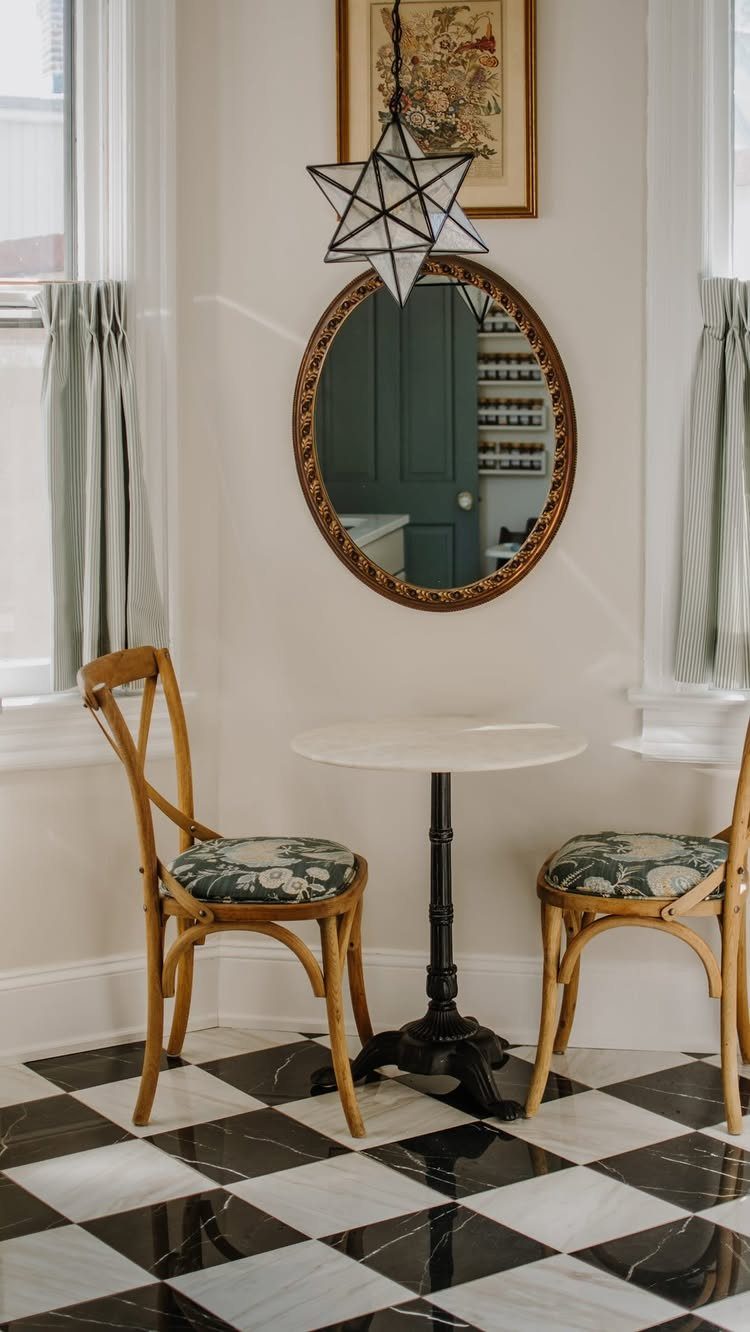
Bistro tables this size seat 2 people and fit spaces that a standard dining table cannot: a kitchen corner, a small apartment, a breakfast area off the main room.
The black pedestal base grounds the white top without adding visual bulk, and cross-back chairs keep the silhouette light. A checkered floor underneath reads as intentional pattern-mixing rather than clutter.
Frequently Asked Questions
Where can I find French country furniture?
Antique shops are the most reliable source for authentic pieces, and secondhand listings on Facebook Marketplace, OfferUp, and Craigslist turn up solid finds at a fraction of retail prices.
Estate sales and Habitat for Humanity ReStore locations are worth checking regularly.
If you live somewhere without strong antique shop access, keeping an open mind about refinishing or painting a secondhand table lets you get the look without hunting down an import.
What should I look for when buying a dining table to refinish?
Solid wood is the right choice if you want a table that lasts through multiple refinishes.
For a short-term project where you just want the French farmhouse look without a long commitment, any structurally sound table in good shape works fine.
Check that the legs are level and free of cracks before buying, and decide upfront whether you want to strip back to bare wood or paint over an existing finish, since those require different amounts of time and skill.
Where can I find secondhand French farmhouse dining tables?
Facebook Marketplace, OfferUp, Craigslist, estate sales, thrift stores, and Habitat for Humanity ReStore are all worth searching.
Authentic antique French pieces are rare outside of specialized antique shops, so staying open to tables that have the right bones for a DIY paint or refinish job widens the options considerably and usually saves a significant amount of money.