Round tables, rectangular tables, live-edge wood, marble tops, counter-height sets, and mid-century designs each change how the room works.
Pick based on your room’s shape and how many you seat: a round pedestal base clears leg space, a bench fits more people than separate chairs, and counter-height sets match an open kitchen.
Live-edge tops and marble surfaces need more care than sealed wood, and mid-century rope seating holds up if the cord is tight and evenly tensioned.
1. Round Dining Tables

A round table drops into small spaces more easily than a rectangle does. You can tuck it into a corner or float it in a nook, and guests do not fight sharp edges when they stand to leave.
Conversation flows better when every seat faces the center. Servers do not have to squeeze between chair backs and the wall, and you never strand someone at one end while the other half talks over them.
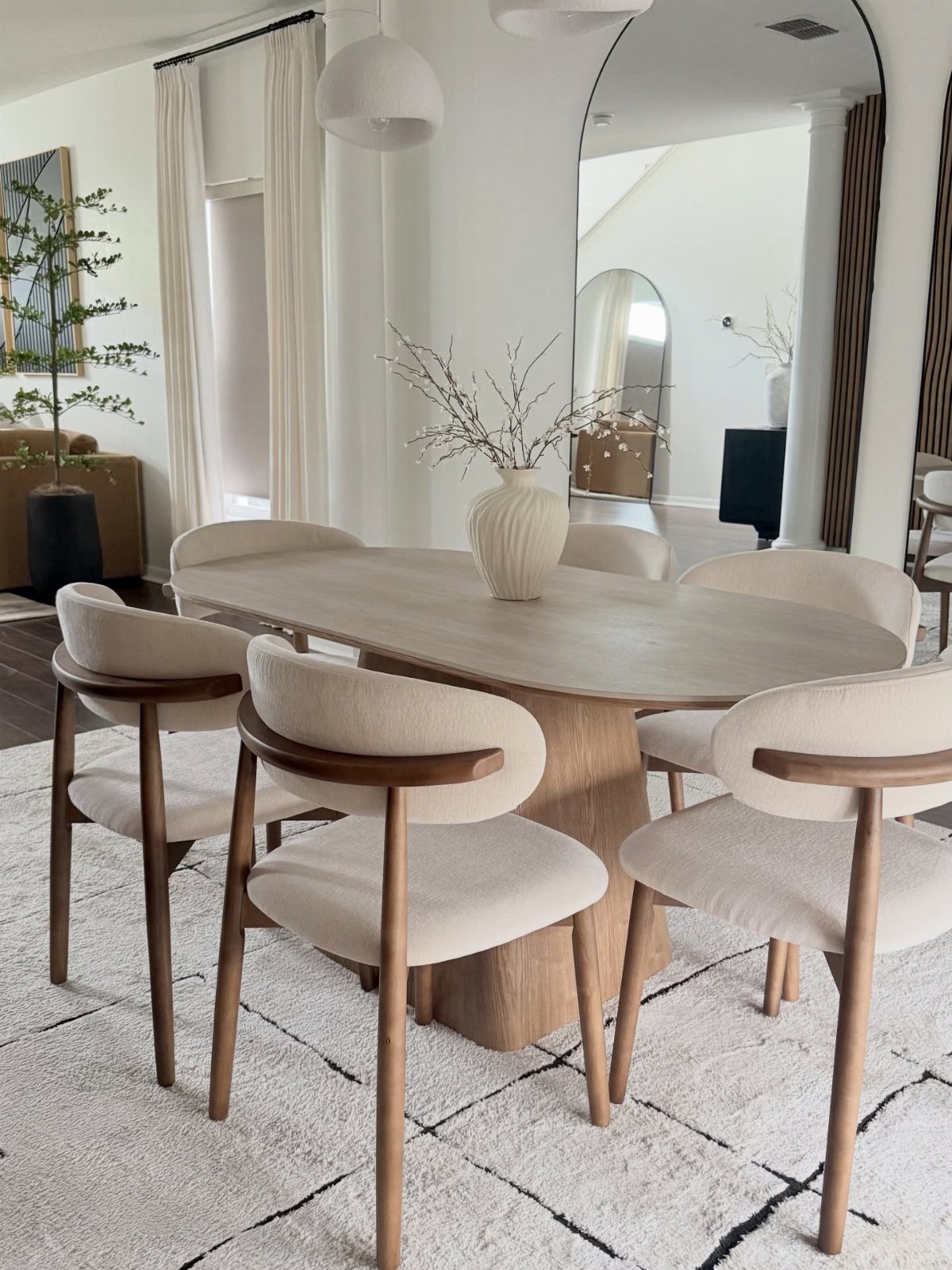
The table visible here is light wood with a center pedestal.
When your space runs tight, look for a pedestal rather than legs; chairs slide in without hitting table supports, and you can squeeze in one more person when you need to.
2. Rectangular Dining Tables
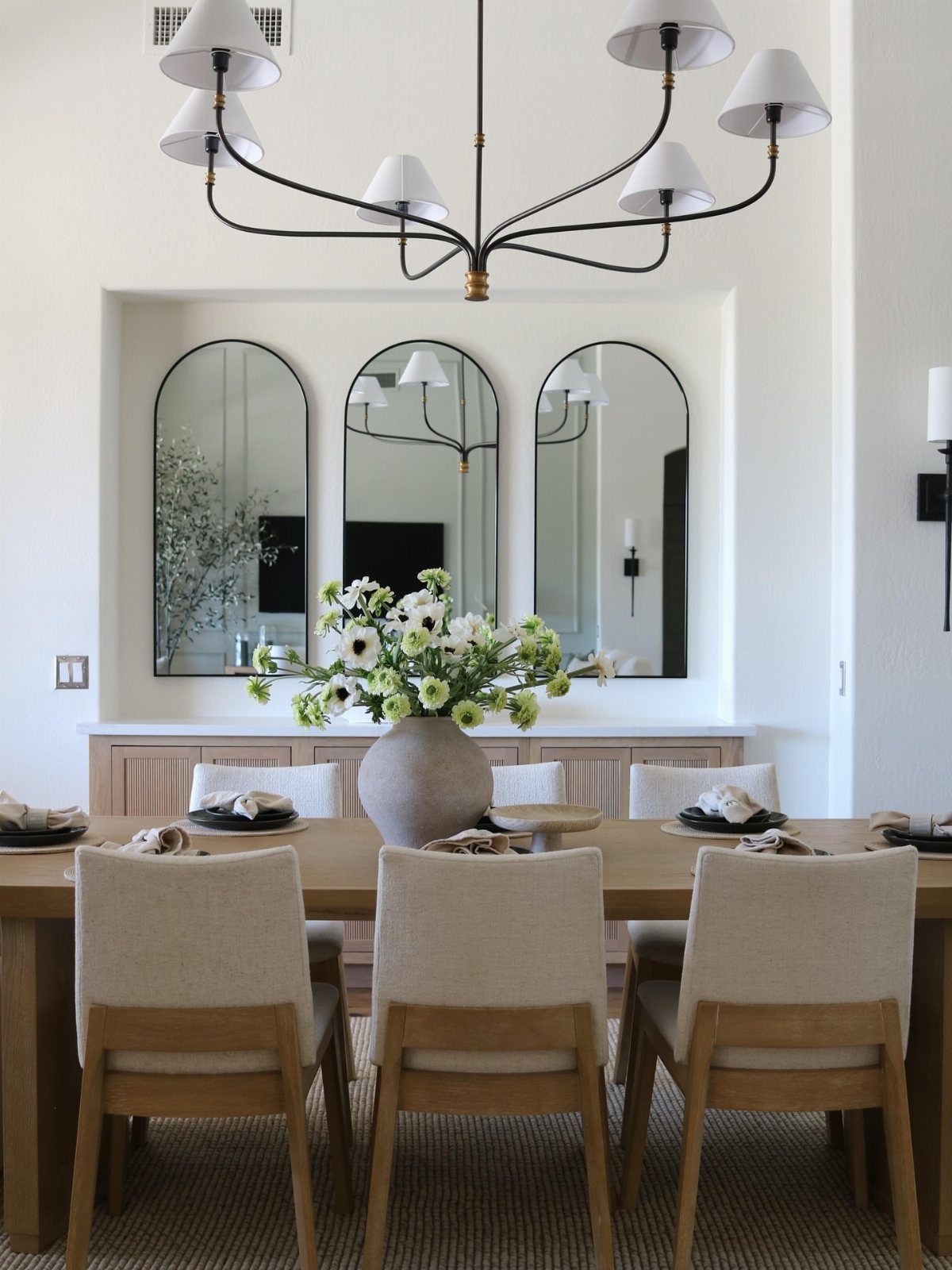
Rectangular tables fit rooms that run long and narrow. The shape follows the walls, leaves walking space on the sides, and seats more people than a round top of the same width.
Most rectangular sets seat 6 to 8 without extensions. If you host larger groups regularly, check whether the table accepts a leaf; some designs include storage for it underneath or inside the apron.
The upholstered chairs here soften the look and make longer dinners more comfortable.
Fabric seats collect crumbs faster than wood or metal, so if you have young kids or eat messy meals often, choose a performance fabric or plan to vacuum the seats between uses.
3. Coordinated Dining Table and Seating Set
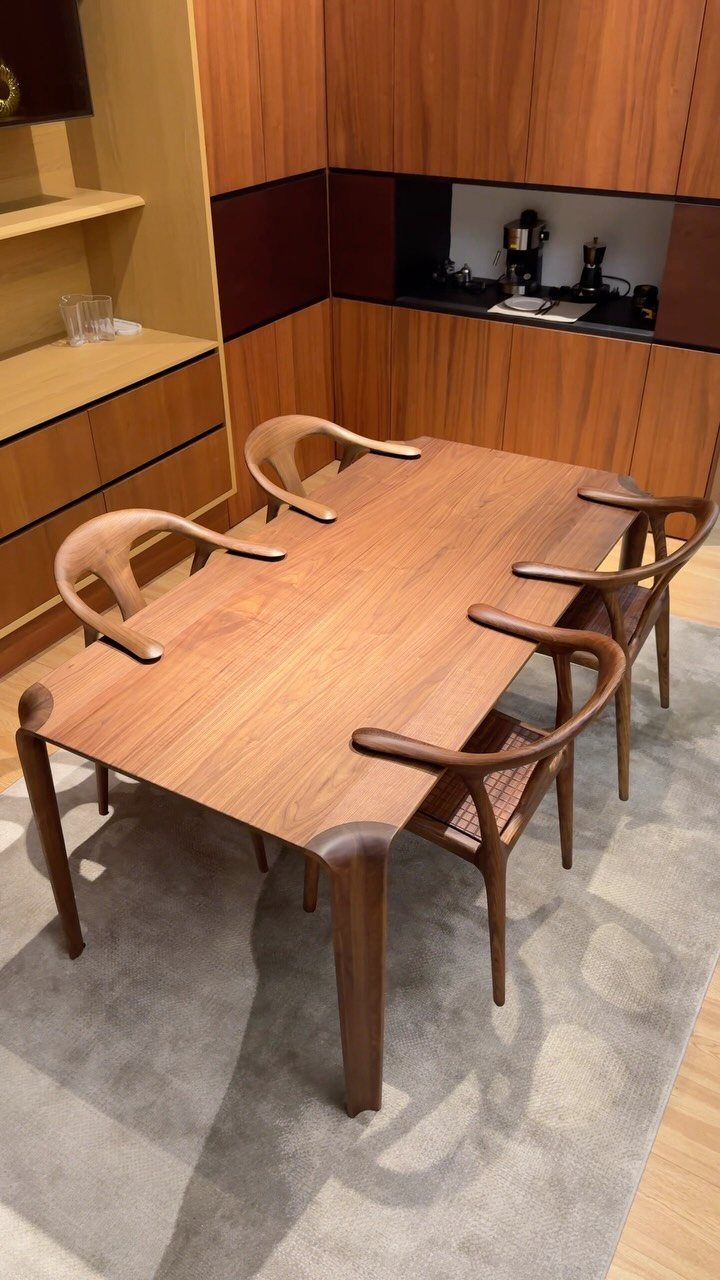
Buying a coordinated set solves the matching problem in one order. The table and chairs are designed together, so proportions work, finishes align, and you do not spend weekends testing chairs from different sellers to see what looks right.
If storage matters, measure the chairs with arms pushed in; armchairs take up more depth than armless versions, and you need that clearance to pull them out.
Sets often cost less than buying pieces separately, especially when the manufacturer sells them as a package. Compare the bundle price against individual items before you commit.
4. Solid Wood Dining Set
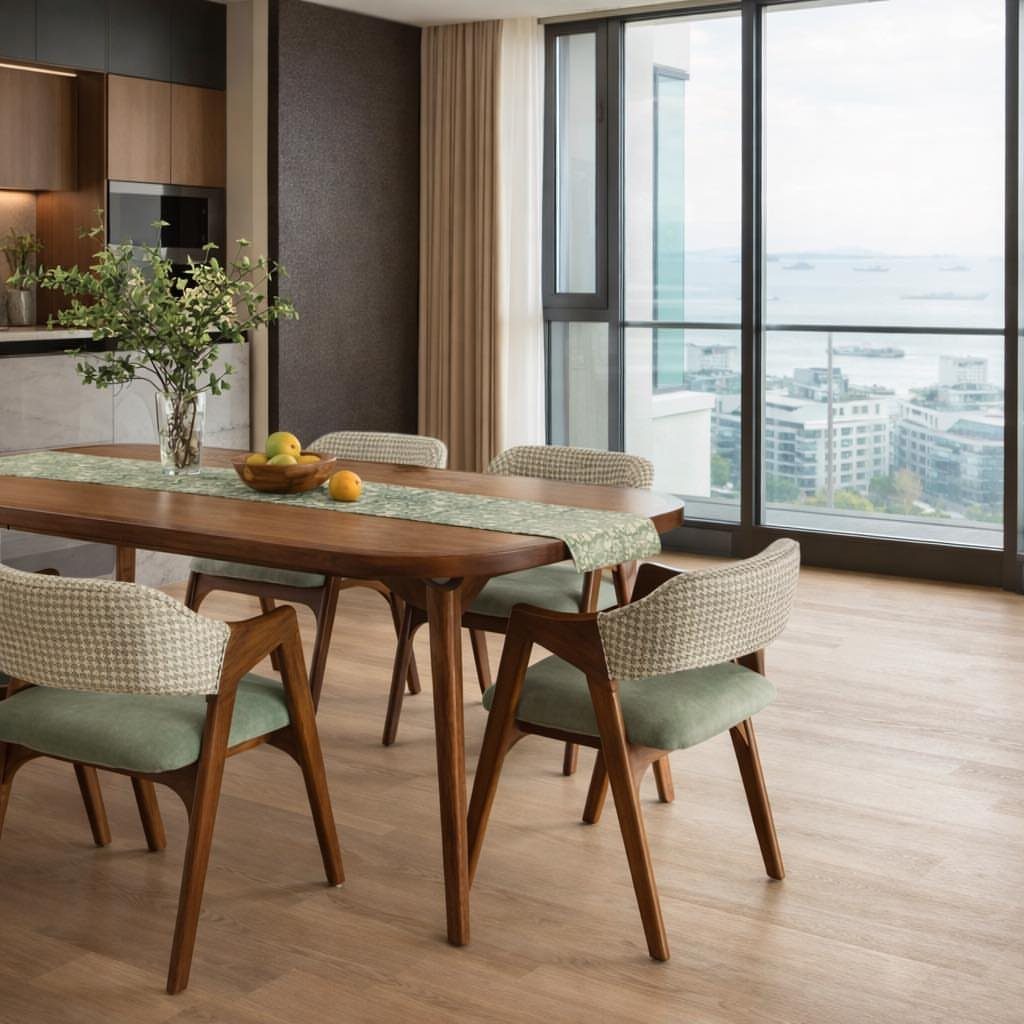
Solid wood carries weight and stays stable under years of use. Veneered or composite tops can warp or peel at the edges after repeated spills; solid construction does not separate.
Oval tops soften the look of a rectangular footprint and still seat as many people, with no sharp corners to catch hips when you walk past.
Solid wood shows scratches and dents more plainly than darker finishes or textured surfaces. If that bothers you, choose walnut or a stained finish over light oak or maple; wear blends in better on darker tones.
5. Dining Table with Bench
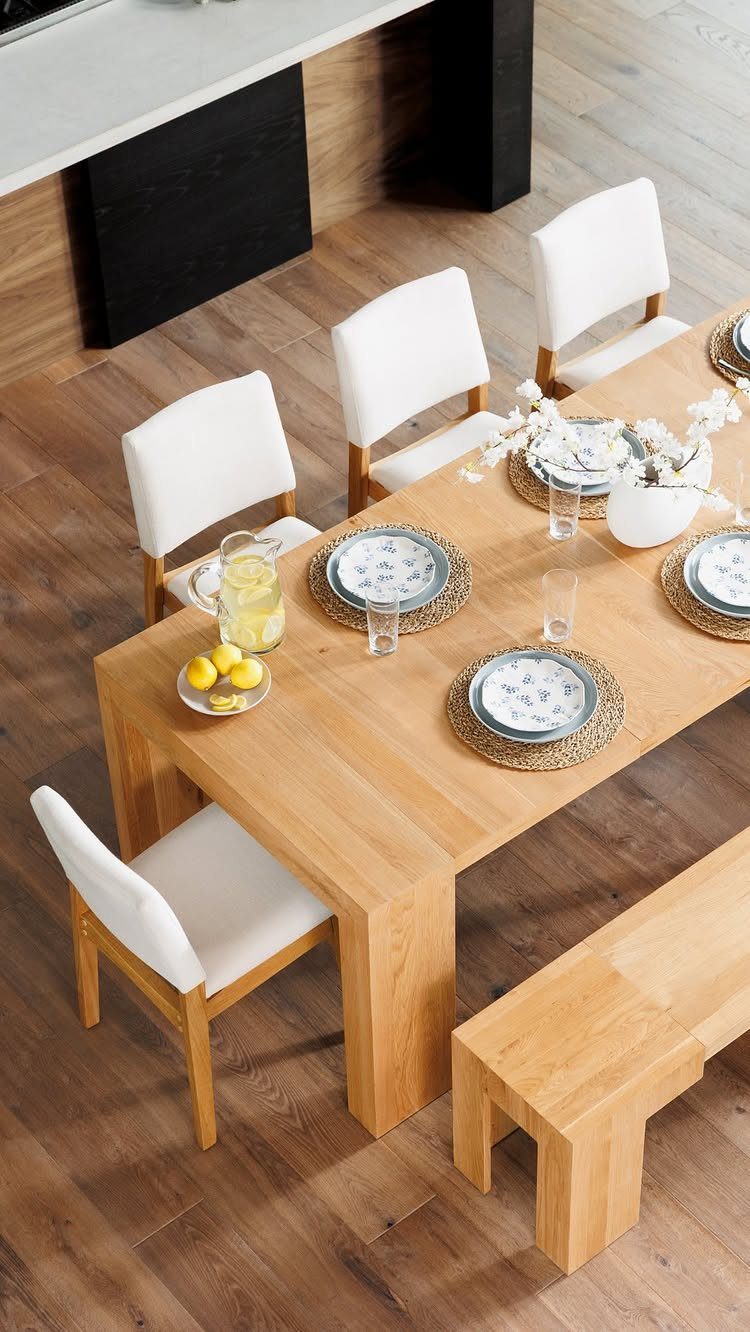
A bench seats several people in the same footprint as 2 chairs, and kids slide in from either end without pulling the bench out.
That setup works well when space runs tight or you need flexible seating for different group sizes.
The bench here matches the table wood and sits across from 4 individual chairs. Benches without backs take up less visual space than a row of chairs, so the room feels more open even when every seat is filled.
Benches are harder to get out of than chairs, especially from the middle seat. Put the bench on the side against the wall if you have one, and save the chair spots for older guests or anyone with mobility limits.
6. Mid-century Modern Sets

Mid-century sets lean on tapered legs, low-slung profiles, and chair backs that curve or angle without extra ornament. The style reads clean but not cold, and the shapes hold up across decades without looking dated.
The dark wood table here anchors olive green chairs and a brass-toned chandelier. When your space leans small, choose lighter wood tones; walnut and teak both fit mid-century design, but lighter finishes make a tight room feel less crowded.
Chair comfort varies widely in mid-century designs.
Some vintage-inspired seats prioritize form over padding, so test before you buy if you plan long dinners. Modern reproductions often add cushioning while keeping the original silhouette.
7. Modern Minimalist Sets
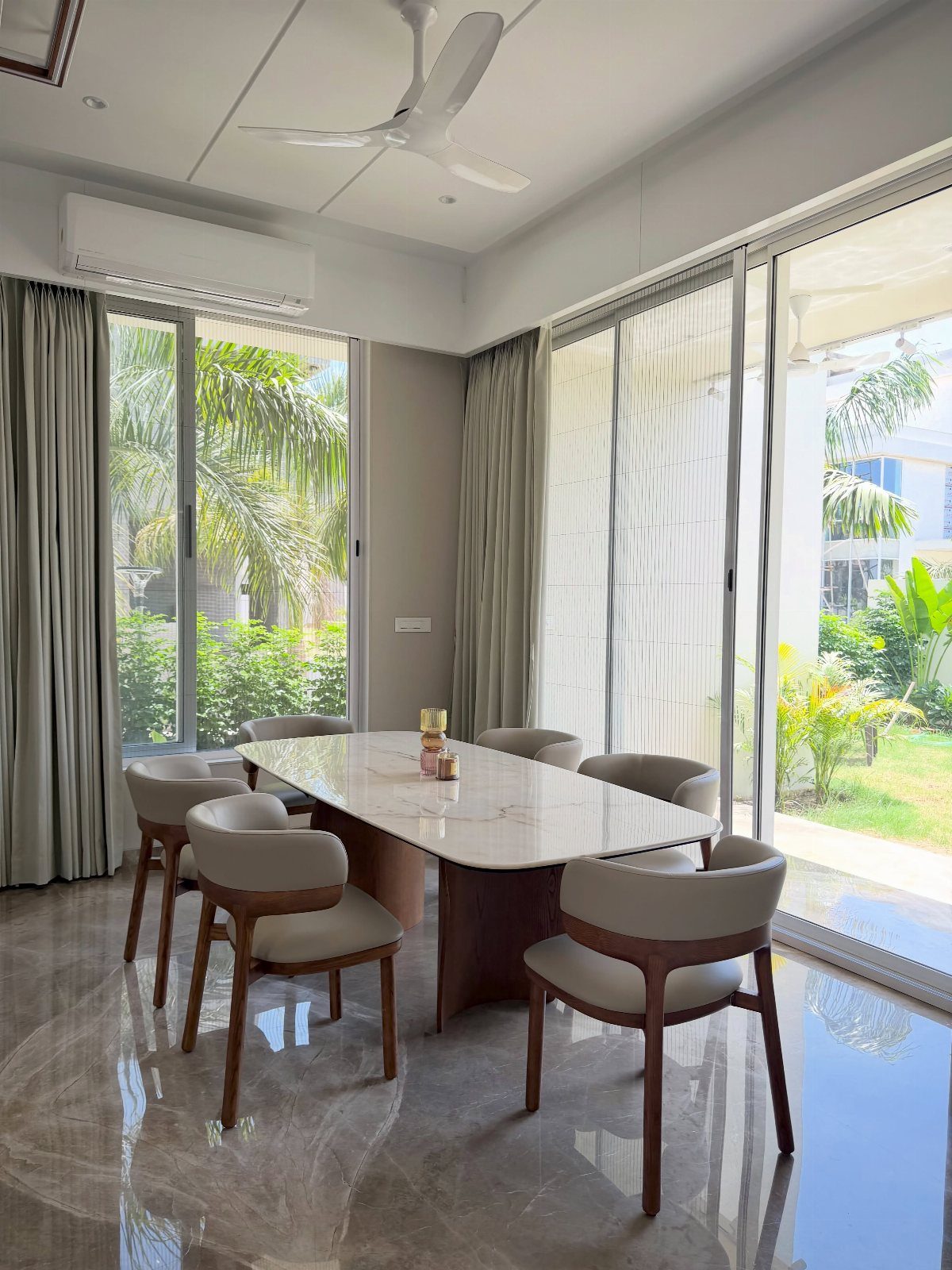
Neutral tones and simple shapes strip away ornament and let the materials stand alone. A white or light-stone top paired with solid-colored seating keeps the look calm and open.
The white marble table here sits with beige curved chairs under natural light.
When your dining room gets strong daylight, light finishes reflect it and make the space feel larger; darker rooms often need the same light palette to avoid feeling closed in.
Minimalist sets show dust and smudges more clearly than patterned or textured surfaces. Plan to wipe the table daily if you choose white or light stone.
8. Live-edge Dining Table
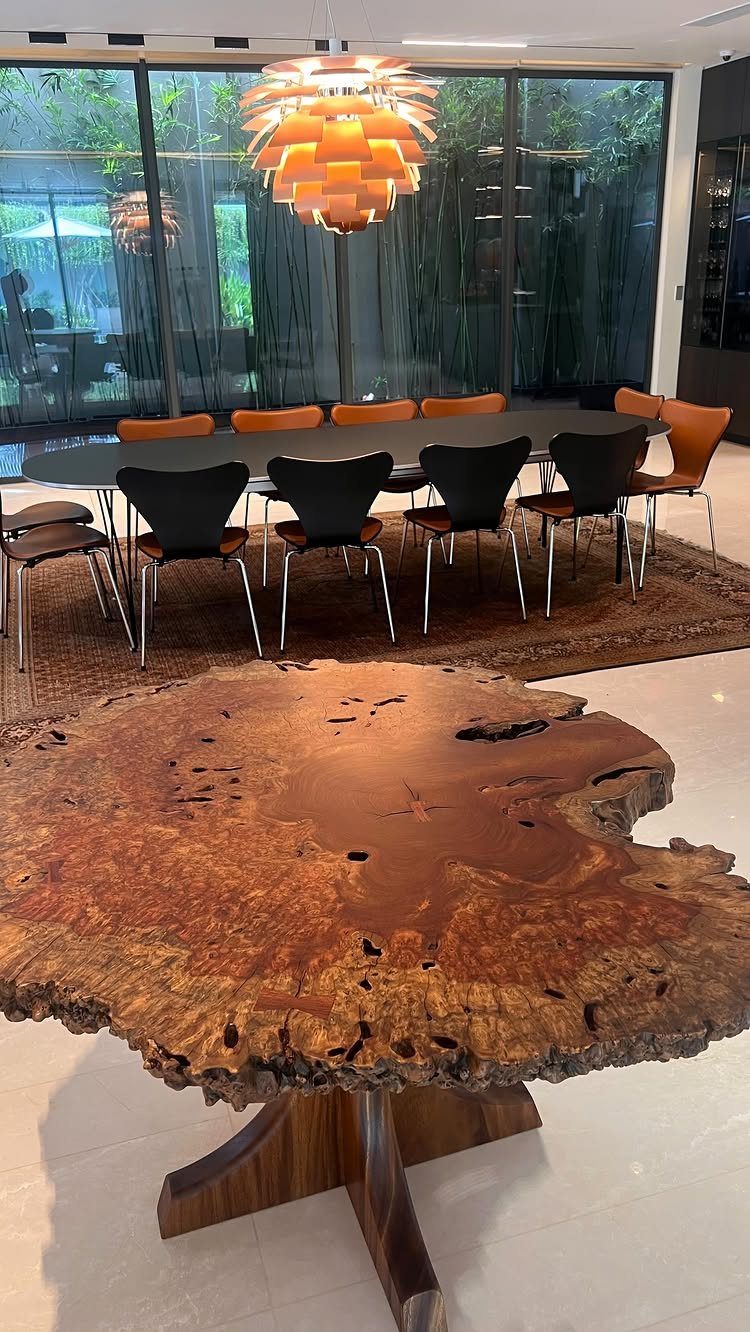
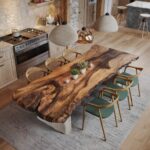
A live edge keeps one side of the tabletop rough and irregular, following the tree’s original shape instead of cutting it square. The natural edge contrasts with straight chair lines and brings organic texture into a modern room.
A glossy finish seals the wood and makes spills easier to wipe. Live-edge tops cost more than uniform cuts because each slab is unique and requires custom work to flatten and stabilize the surface.
Width varies along the edge, so measure the narrowest point when you check whether chairs fit underneath. Some live-edge tables taper enough that end seats feel cramped.
9. Marble Dining Table
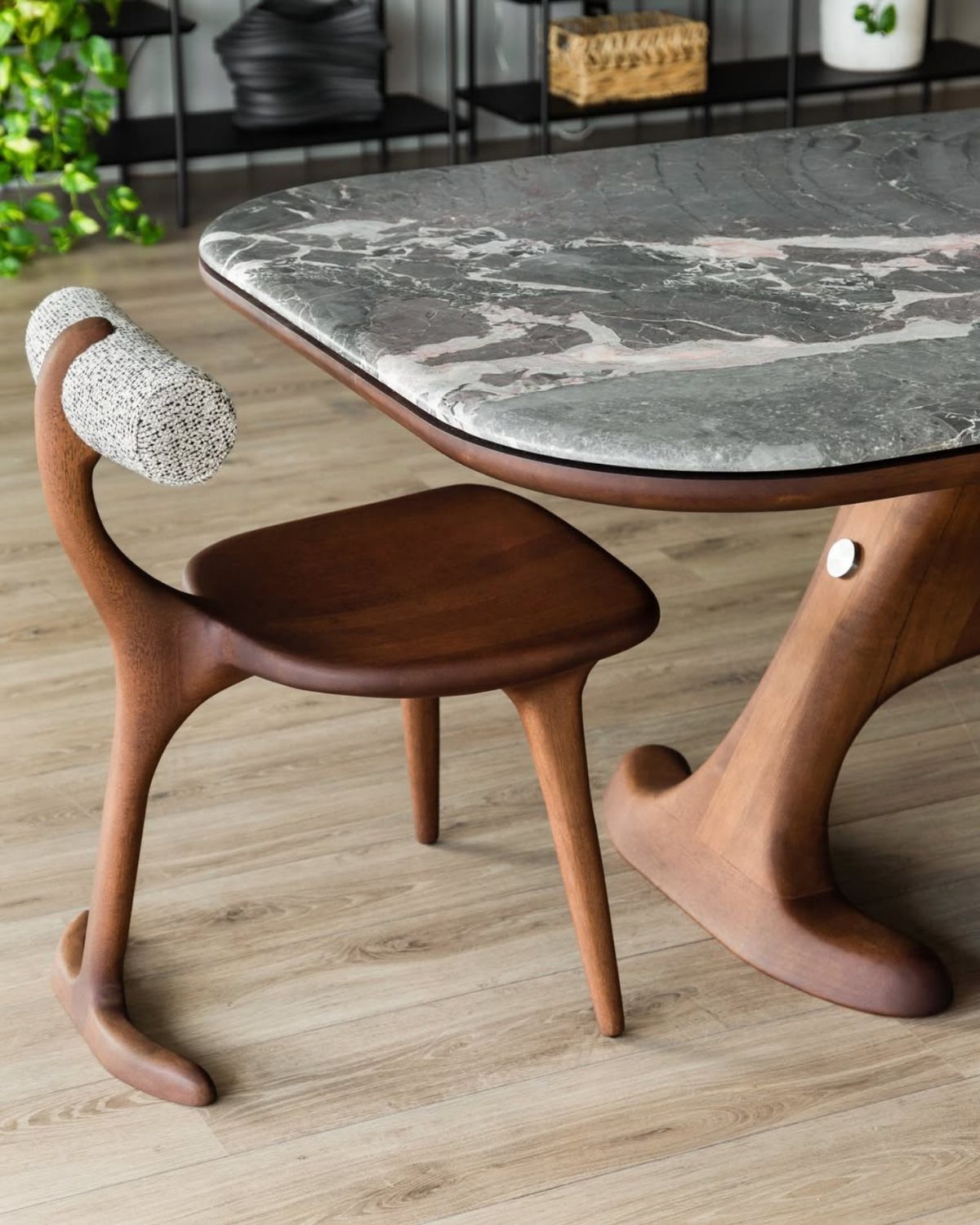
Marble gives you a cool, smooth surface that resists heat better than most woods. Stone resists everyday heat better than veneer, but I still use a trivet under anything straight from the stove.
Grey marble pairs well with a sculptural wooden base that softens the stone’s formality.
Marble scratches and stains more easily than sealed wood, so use placemats under plates and wipe acidic spills immediately; lemon juice and wine etch the surface if they sit.
Marble tops weigh more than wood or glass. Check your floor’s load capacity if you live in an older building or plan to place the table on a second story.
10. Counter-height Dining Table
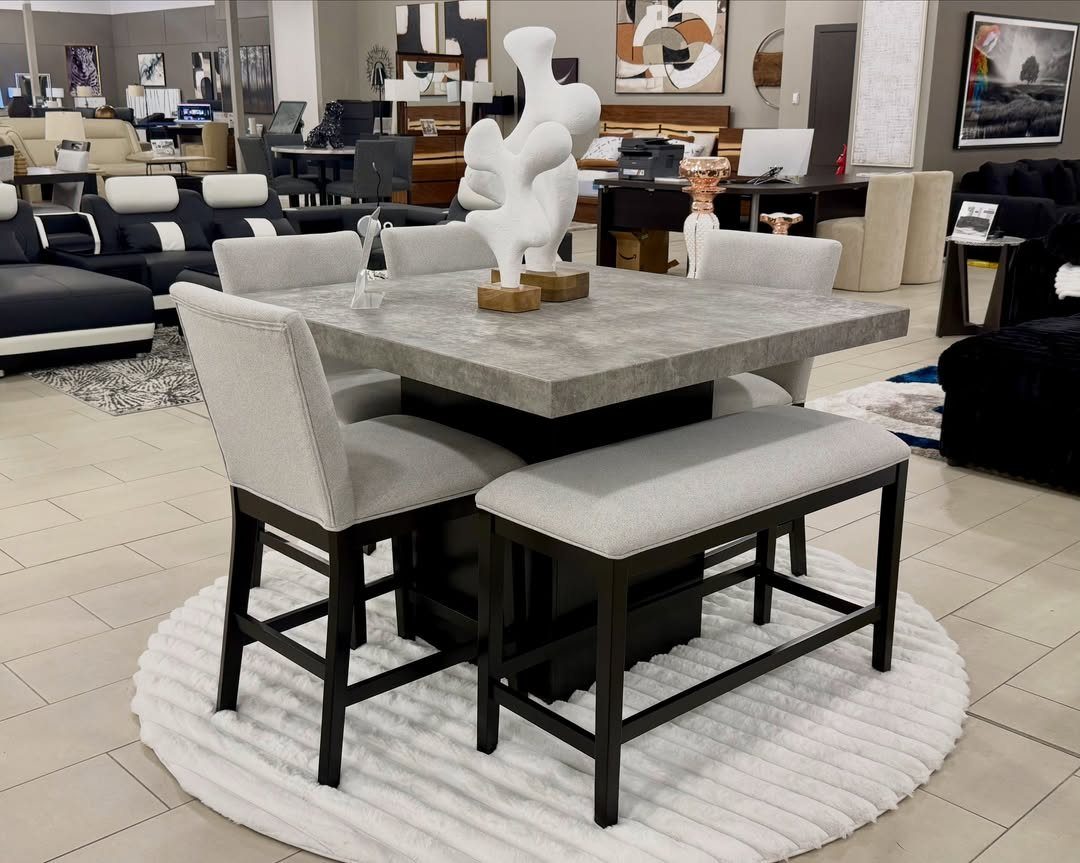
Counter height puts the tabletop at 36 inches instead of the standard 30, matching kitchen island height. The taller setup works well in open-plan spaces where the dining table sits near the kitchen; the heights align and the transition feels intentional.
Counter-height seating usually includes a footrest bar; without it, shorter guests dangle their feet and longer meals turn uncomfortable.
Measure your ceiling height before you commit. Standard 8-foot ceilings can feel tight when you add 36 inches of table plus chair backs and a pendant fixture above.
11. Mid-century Dining Set with Rope Seating
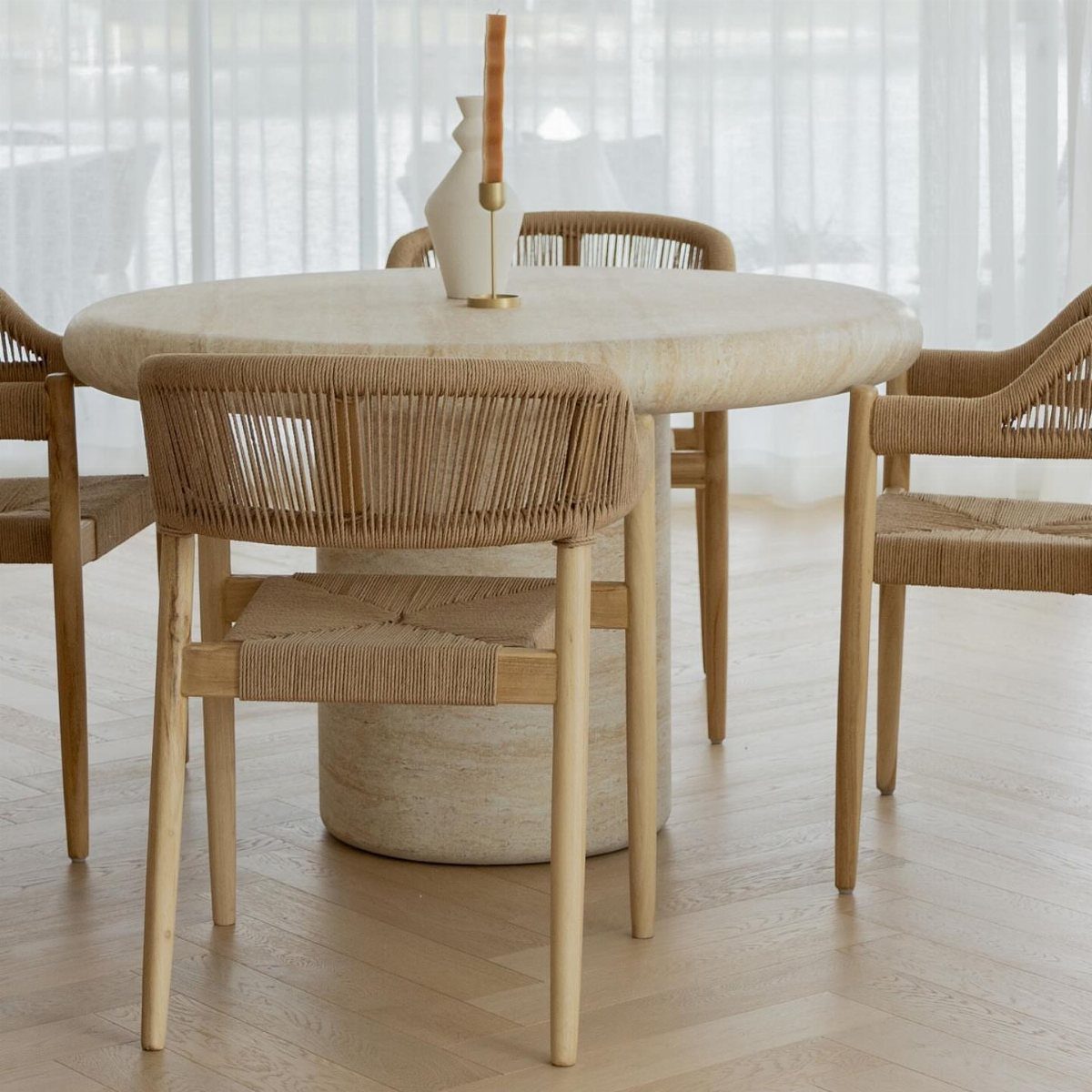
Woven rope seats bring texture without upholstery weight. The material breathes better than foam cushions, stays cooler in warm rooms, and gives slightly under weight without collapsing the way unsupported fabric does.
The round stone table here keeps the look grounded while the rope adds softness.
Rope seats last years under normal use, but the weave loosens faster if you have pets with claws or toddlers who kick the chair backs while they eat.
Crumbs fall through the weave and collect underneath. Flip the chair over every few weeks and brush out the gaps, or plan to take the chairs outside and shake them.
12. Contemporary Luxe Set

Black marble paired with gold accents and dark upholstery reads formal without requiring a large room. The contrast between glossy stone and matte velvet holds attention, and metallic trim catches light without covering large surfaces.
A black table sits well on a white rug that defines the dining zone and softens the floor.
Gold or brass legs and chair frames add warmth to an otherwise cool palette; if your room already leans warm, choose chrome or brushed nickel instead.
Velvet shows wear along the seat edge and arms faster than leather or performance fabric. Budget for occasional professional cleaning or choose a fabric with higher abrasion resistance if the set will see daily use.
Frequently Asked Questions
How many people can a dining table fit?
Rectangular tables seat 4 to 6 people at 48 to 60 inches long and 6 to 8 at 72 inches.
A 36- to 42-inch round fits 2 to 4 people; at 48 inches you can seat 4 to 6, and a 60-inch round holds 6 to 8. Measure the table length or diameter before you buy to match your usual group size.
Can I pick both chairs and benches for my dining set or only one?
You can pair chairs and benches together if the manufacturer offers both pieces in the same collection.
You can mix them: a bench along one side fits more people in less floor space than two chairs would, and chairs go everywhere else. Match the wood tone and finish so the pieces look intentional rather than collected.
Which style of dining set suits a modern home best?
Clean lines and neutral tones fit modern minimalist spaces, while tapered legs and walnut or teak finishes suit mid-century rooms.
Marble tops paired with upholstered chairs in dark tones work for contemporary luxe interiors. Choose the style that matches your existing furniture and the formality level you want for the room.