
A coffee station fits on a sideboard, a floating shelf, a rolling cart, or one foot of counter with a tray.
If your kitchen counter is already packed, a cart on wheels moves wherever you need it and rolls back against the wall when you are done.
If your setup will stay in one spot, pick based on how much you want visible: open shelves keep mugs and canisters in reach, a cabinet hides the machine and cords behind doors, and a tray slides the whole setup into storage between uses.
A mug tree holds 3 mugs upright in barely more space than a single mug laid flat, and a riser lifts syrups and sweeteners to eye level without claiming more counter width.
1. Rolling Coffee Cart
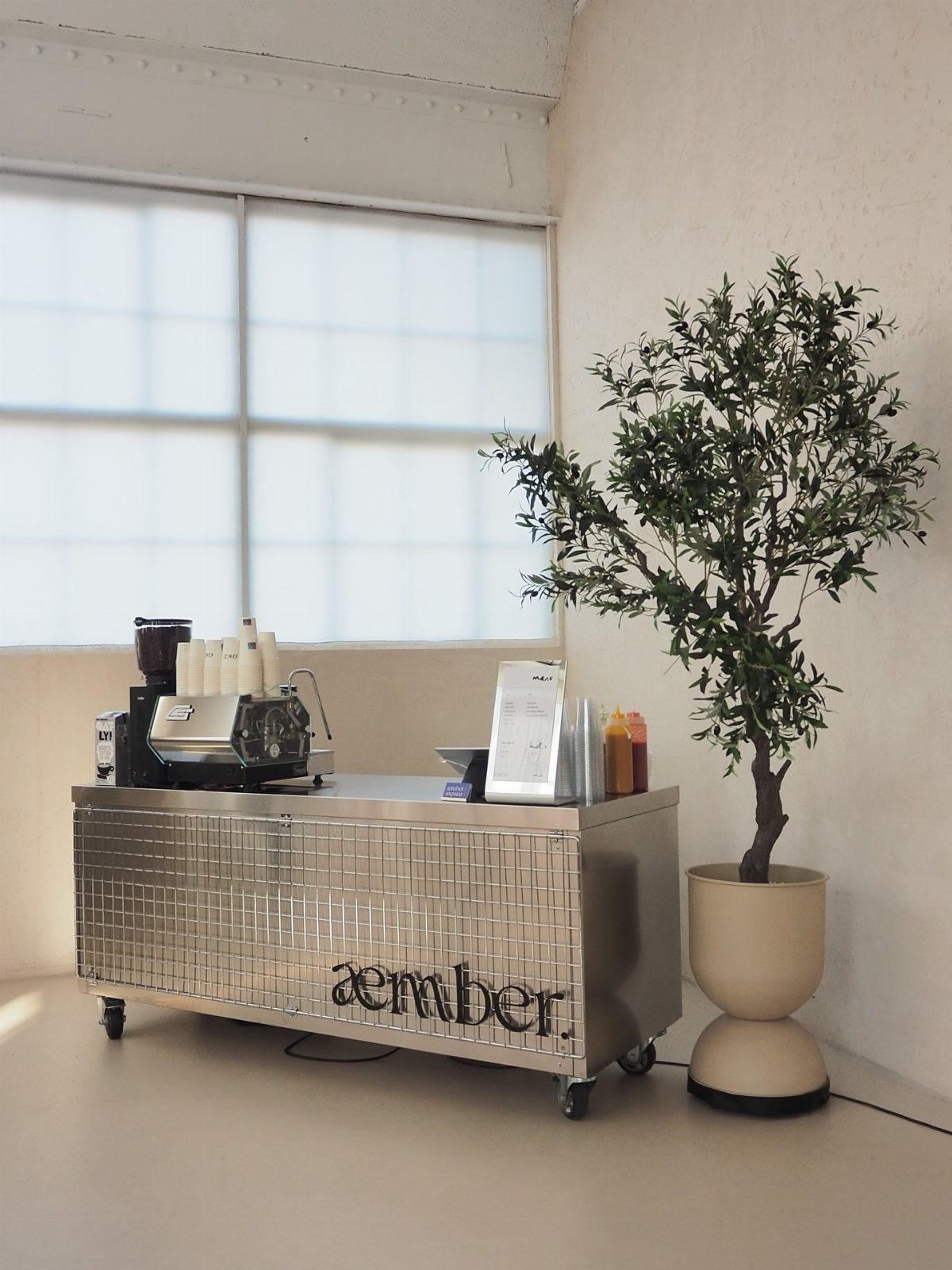
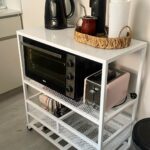
A cart with wheels turns any spot into a coffee station you can move wherever you need it.
If your kitchen counter is already packed, you can roll it next to the table during breakfast and back against a wall when you are done.
Most metal carts land in budget-friendly territory, and the open shelves give you room for the machine plus canisters, mugs, and a grinder.
The setup stays simple enough that you can wheel it into another room or out to the porch when you want coffee somewhere else.
2. Floating Shelves
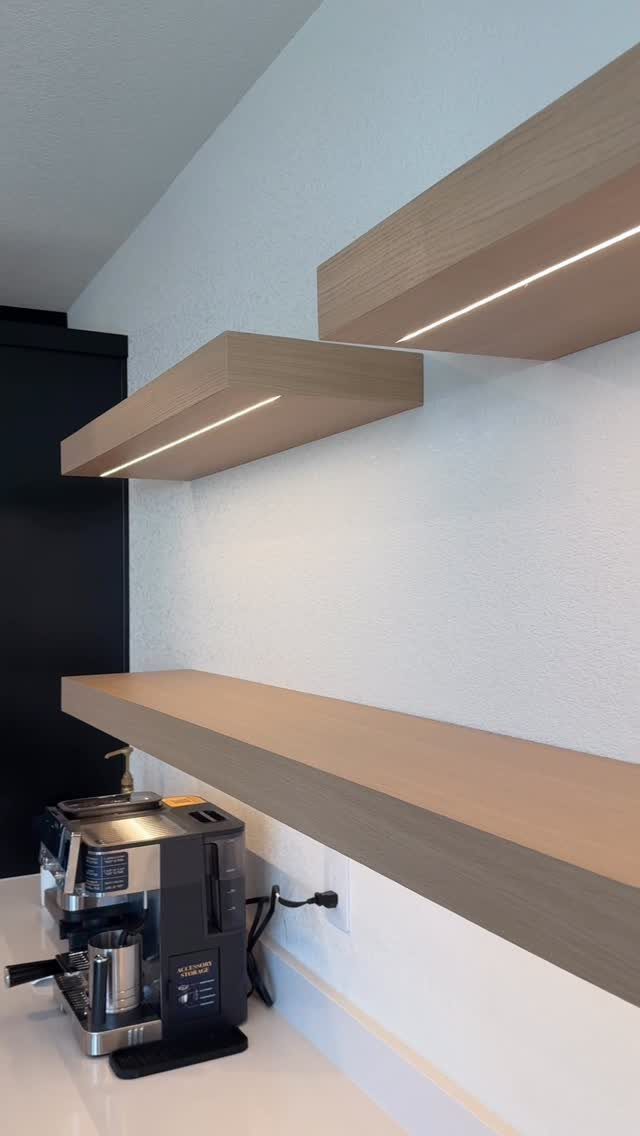
Shelves mounted straight to the wall hold mugs, canisters, and filters and keep your counter clear.
If your kitchen has a narrow stretch of wall above an outlet, you can hang one or two shelves and set the coffee maker directly underneath.
The built-in LED strips in this setup light the counter below and make it easier to see what you are doing early in the morning.
Most floating shelves install with hidden brackets, so the front edge stays clean. A single shelf gives you enough room for several mugs and a canister or two.
3. Coffee Cabinet

A cabinet keeps everything out of sight until you open the doors.
If you want the coffee setup off the counter entirely, you can build or buy a cabinet with an interior shelf for the machine, room for mugs on a higher shelf, and storage below for filters and beans.
Closing the doors hides the machine and any cords, so the kitchen stays tidy between uses.
4. Coffee Nook
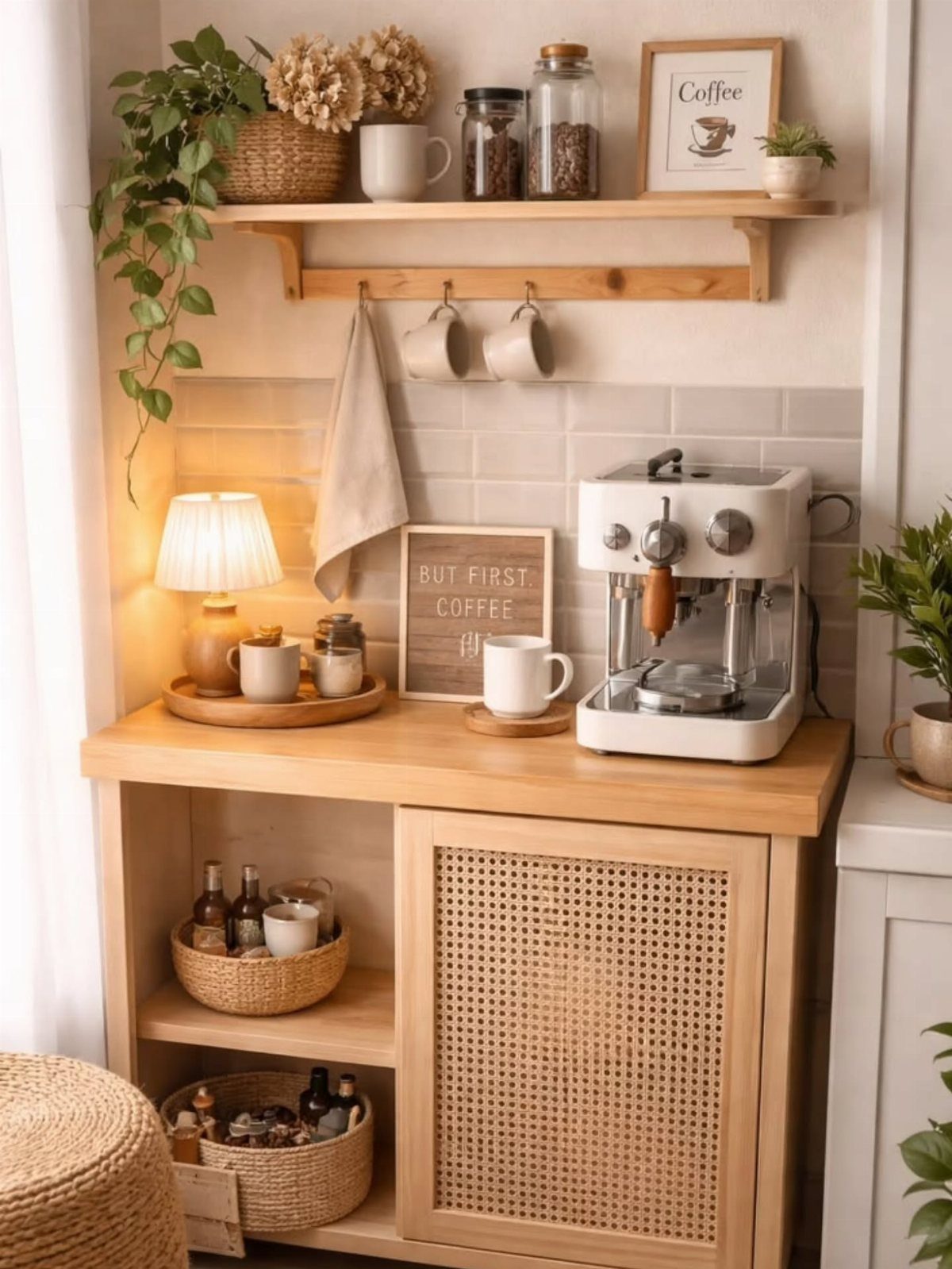
An alcove, corner, or any narrow stretch of wall that does not get much use can become a full coffee setup.
If your kitchen has a spot that is too small for a full workstation, you can fit a machine on a small cabinet or shelf with just enough room for a few mugs and a basket for filters.
The vertical layout here stacks storage instead of spreading it out, so the whole setup stays narrow. A floating shelf above the machine keeps things you reach for often within arm’s reach.
5. Coffee and Tea Bar
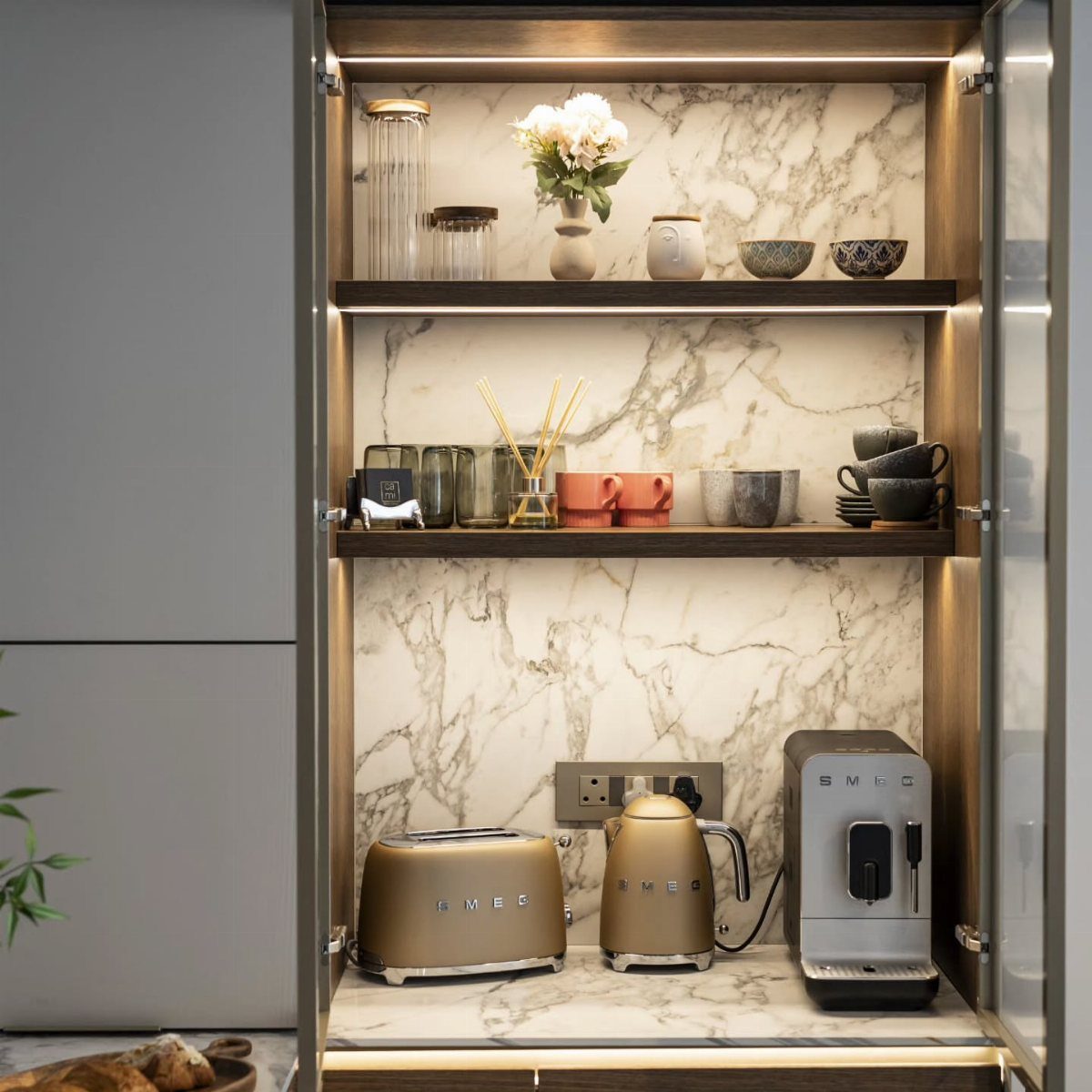
A shared bar holds coffee, tea, and anything else you drink in the morning.
If more than one person in your house makes different drinks, a single station with space for a coffee machine, a kettle, and storage for tea bags and mugs keeps everything in one spot.
The marble backsplash and matching appliances make this version look polished, but the same idea works on an open counter with mismatched gear. The cabinet doors close to hide it all when you are not using it.
6. Sideboard Coffee Bar
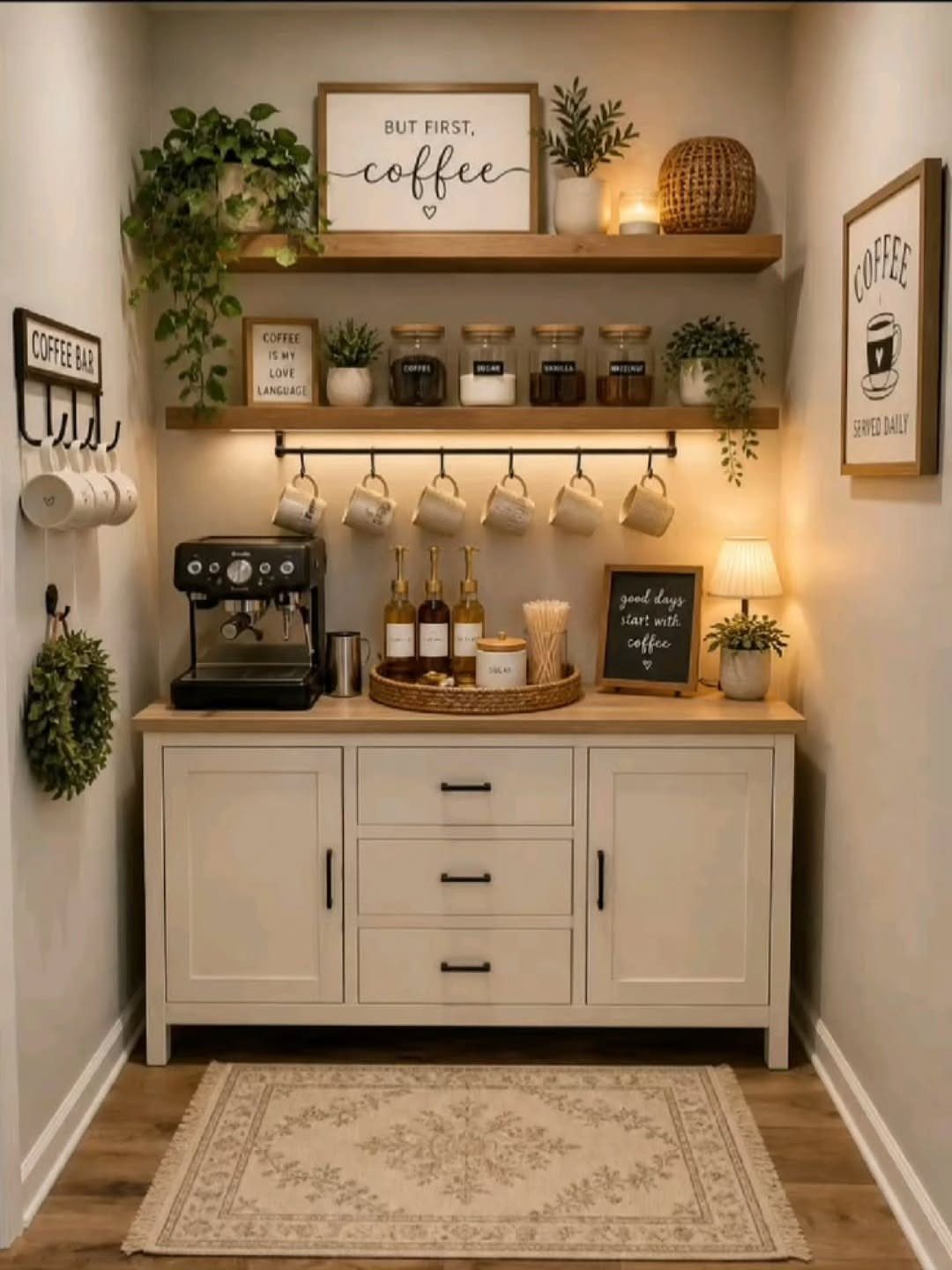
A low sideboard gives you a wide surface to spread out the machine, a grinder, and whatever else you use, with drawers and cabinets underneath for beans, filters, and extra mugs.
If your kitchen does not have open wall space, a sideboard can sit against any wall or even in a hallway near the kitchen.
Most sideboards sit low enough that you can hang shelves or art above them without crowding the wall.
7. Open Mug Display
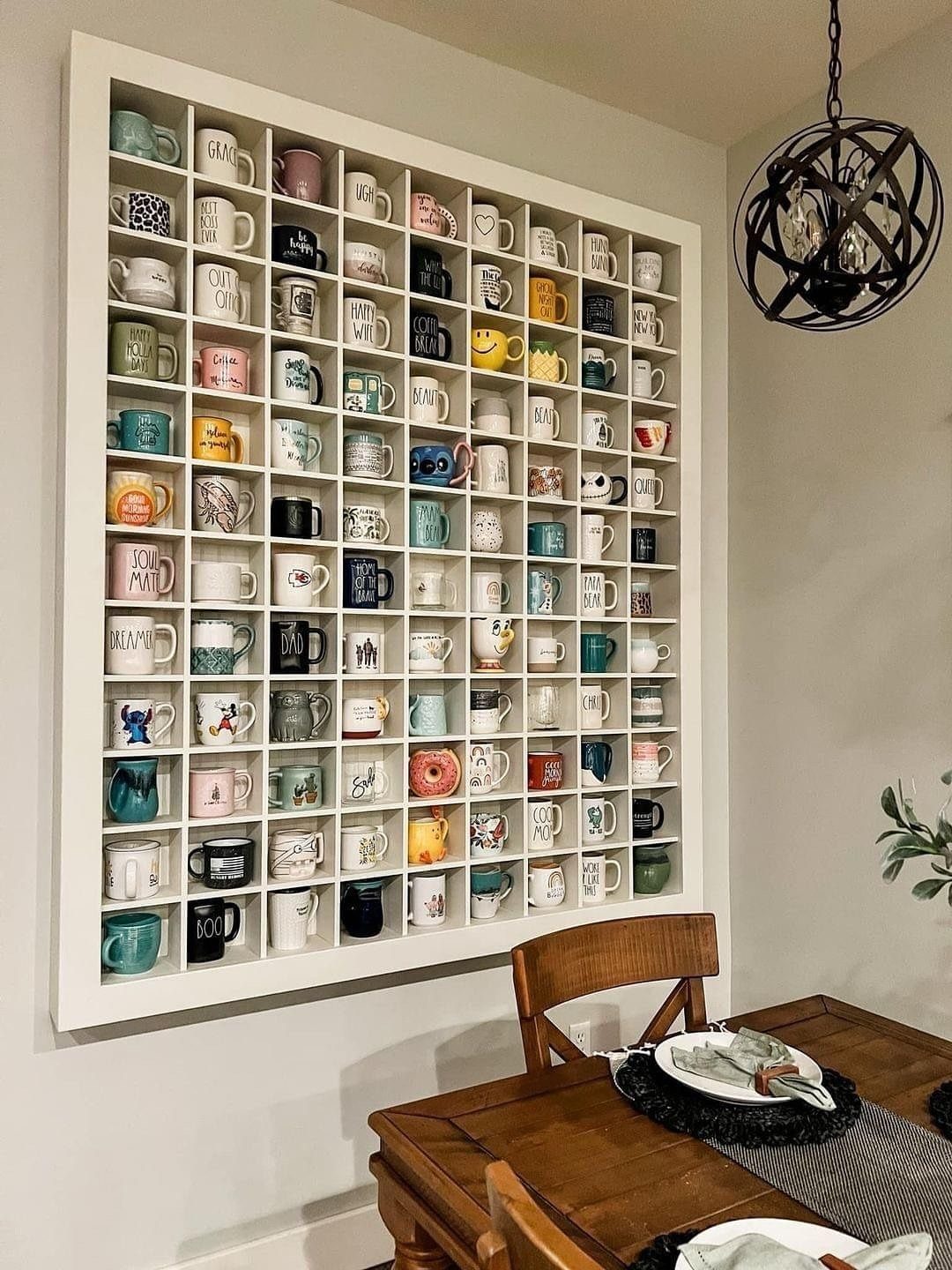
A wall-mounted grid or shelf turns mugs into something you see every time you walk past. If you have more mugs than cabinet space, hanging them on the wall keeps them accessible and adds color to a blank stretch.
The grid here holds dozens of mugs in a small footprint. Most wire or wood grid panels mount with a few screws, and you can hang mugs from hooks or rest them on horizontal rails.
The open layout makes it easy to grab what you want without moving anything else out of the way.
8. Coffee Bar Tray
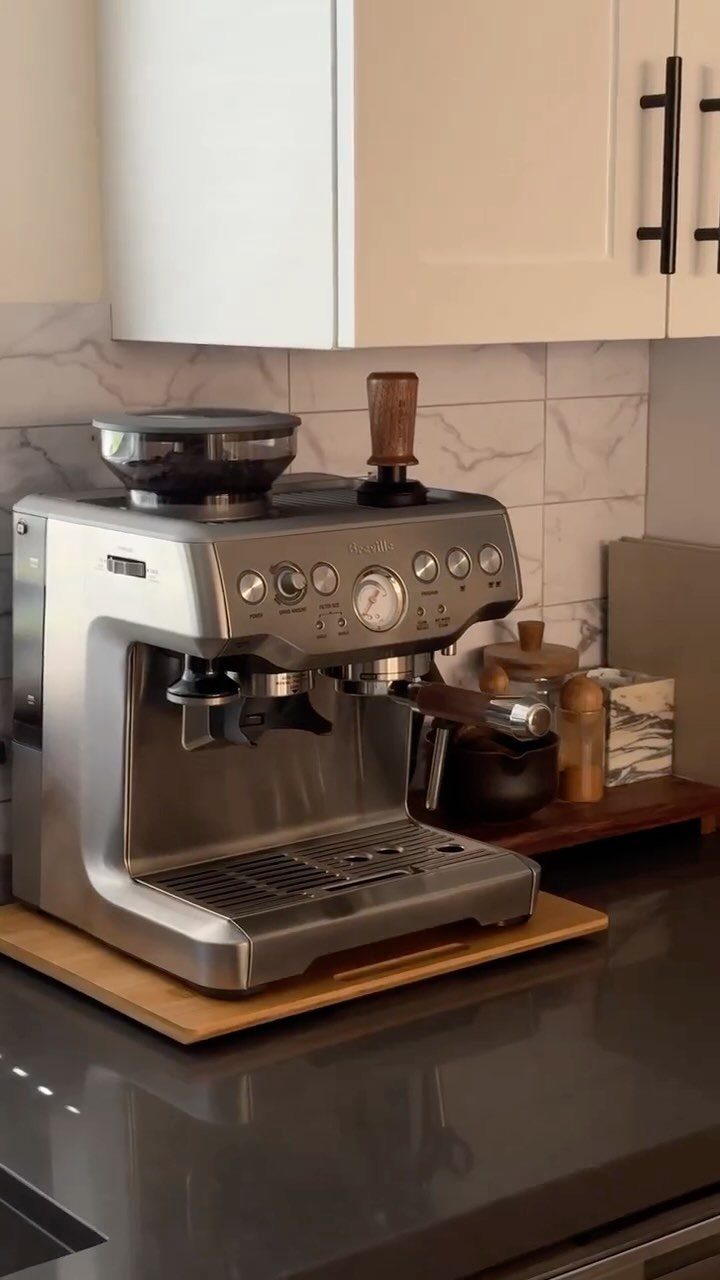
A tray corrals the machine, beans, and a few tools so you can slide the whole setup out of the way or move it to a different counter when you need the space.
If your kitchen counter gets used for different tasks, a tray keeps the coffee gear together without claiming a permanent spot.
Wood or metal trays with low sides work best since they give the machine a stable base.
A tray keeps the machine, grinder, and your mug in one compact zone. You can pull it off the counter when you are done and store it on a shelf or in a cabinet.
9. Coffee Bar with Plants
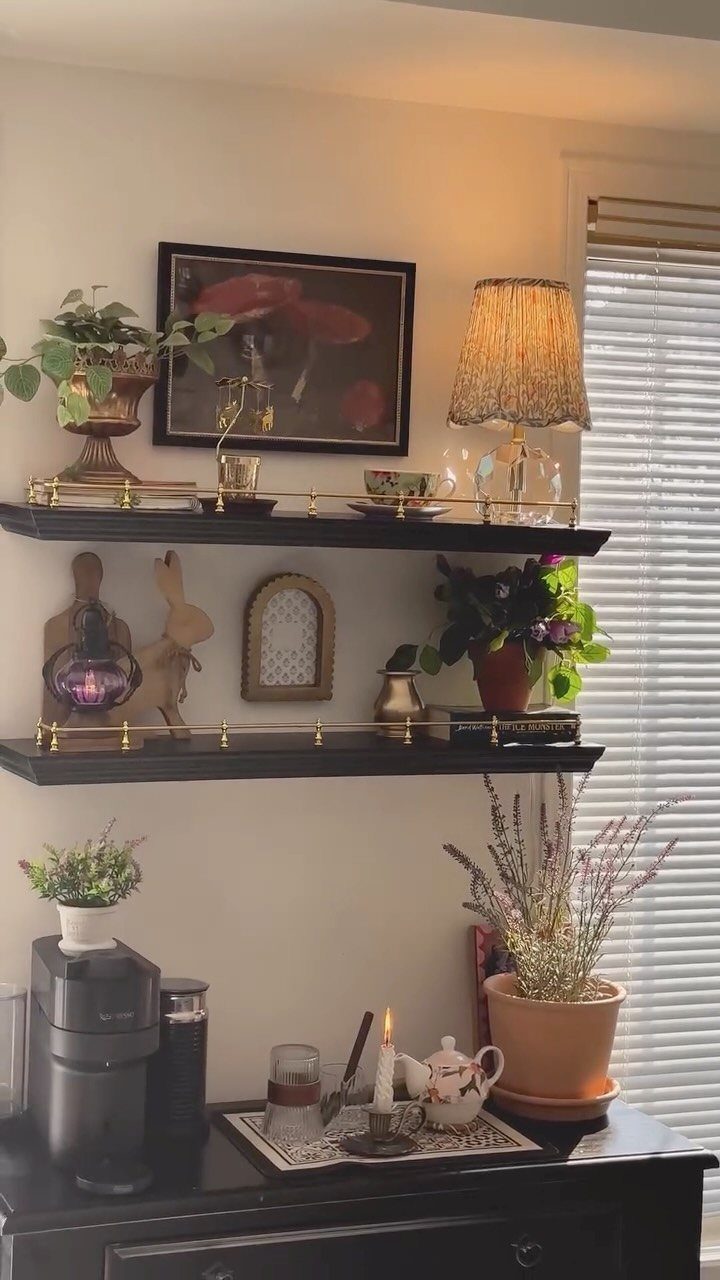
Plants soften the look of a coffee station and fill vertical space without adding more shelves.
If your setup sits on a sideboard or counter with room above it, a few potted plants on the surface or on floating shelves turn the area into something that feels a little more finished.
Low-light plants like pothos or snake plants hold up well indoors, and most thrive near a window. You can swap them out seasonally or move them around without changing the layout underneath.
Even if you don’t have a built-in bar space, you can easily create one by adding corner shelves, repurposing an area of the home (like that gap under the stairs!) or simply setting up a rolling bar cart with all your essentials.
10. Coffee Bar with Artwork
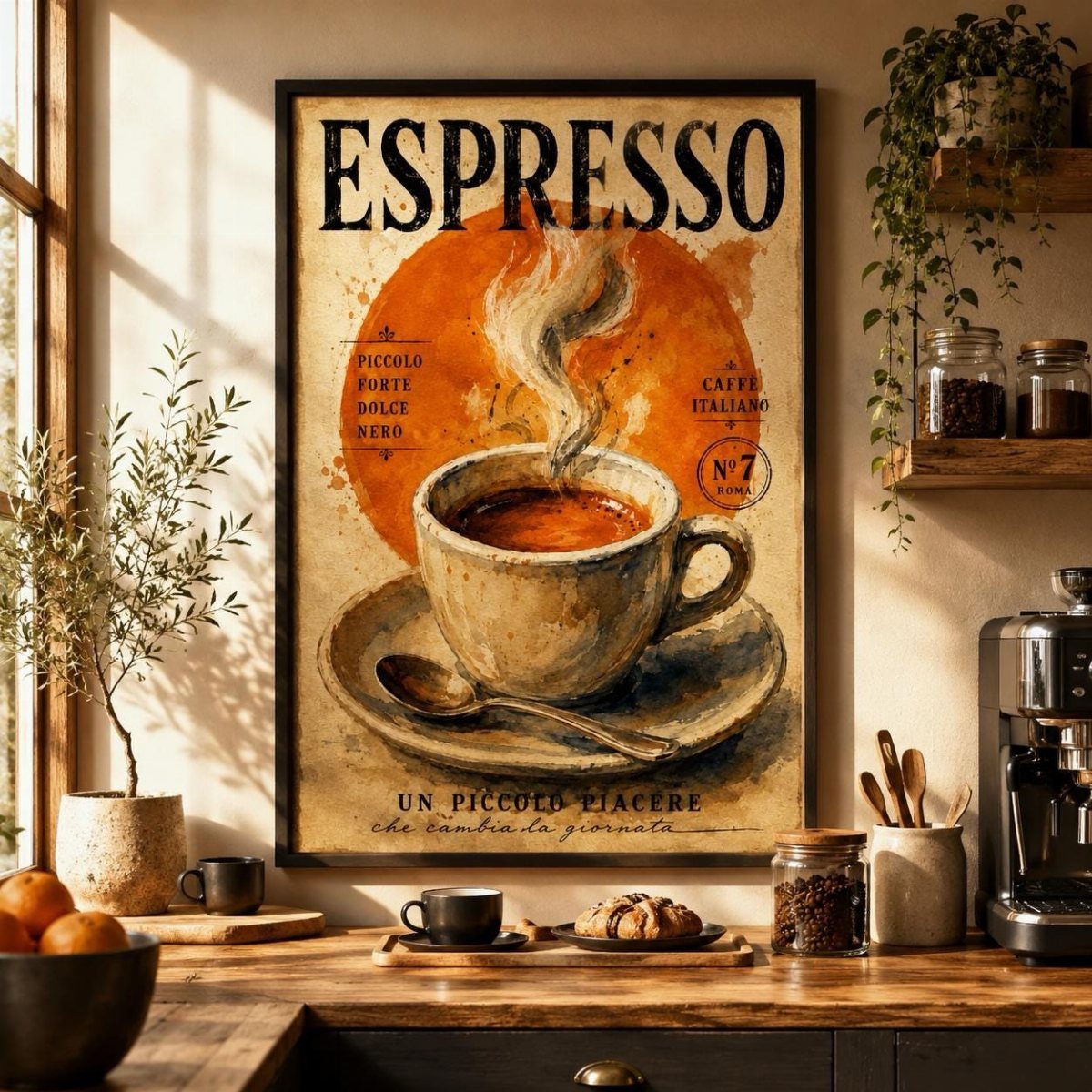
A print or painting hung above the coffee area gives the station a focal point that pulls your eye up instead of letting it stop at the machine.
If your coffee setup sits on a bare wall, art fills the space and pulls it into the room.
The framed print here sits large enough to anchor the wall without crowding the counter below.
You can hang a single piece or group a few smaller frames, and swapping the art out later takes less than a minute. Coffee-themed prints work, but so does anything that matches the room.
11. Coffee Station with Storage
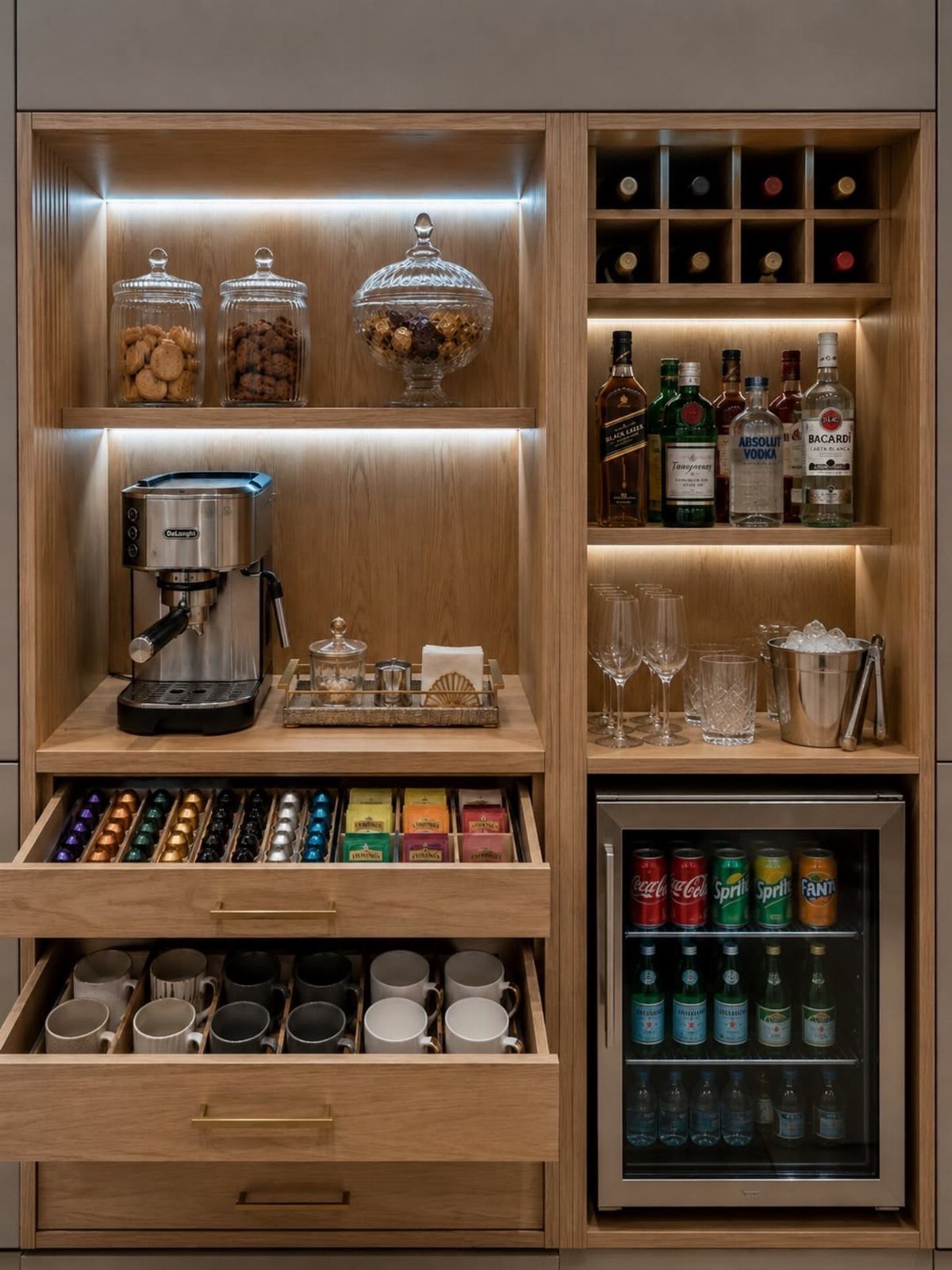
Built-in or freestanding cabinets with shelves and drawers keep pods, beans, filters, and backup mugs within reach but out of sight.
If you make coffee several times a day, storage that sits right next to the machine means you do not have to walk across the kitchen for supplies.
A cabinet tucks the machine on top, pods in pull-out drawers, and a mini fridge below for milk. Most freestanding bar cabinets offer similar layouts, and you can add drawer organizers to separate different types of pods or tea bags.
12. Coffee Bar with Seasonal Decor

Swapping in seasonal greenery, small signs, or decor keeps the coffee area feeling current without redoing the whole setup.
If your station is out in the open, a few autumn leaves or spring stems next to the machine bring in the season and take barely any space.
The garland and pumpkin here sit on the shelf above the coffee maker, so they do not crowd the counter itself.
You can hang a wreath, set out a candle, or tuck in a small plant, and most seasonal pieces store flat when you are ready to switch them out.
13. Minimal Coffee Bar
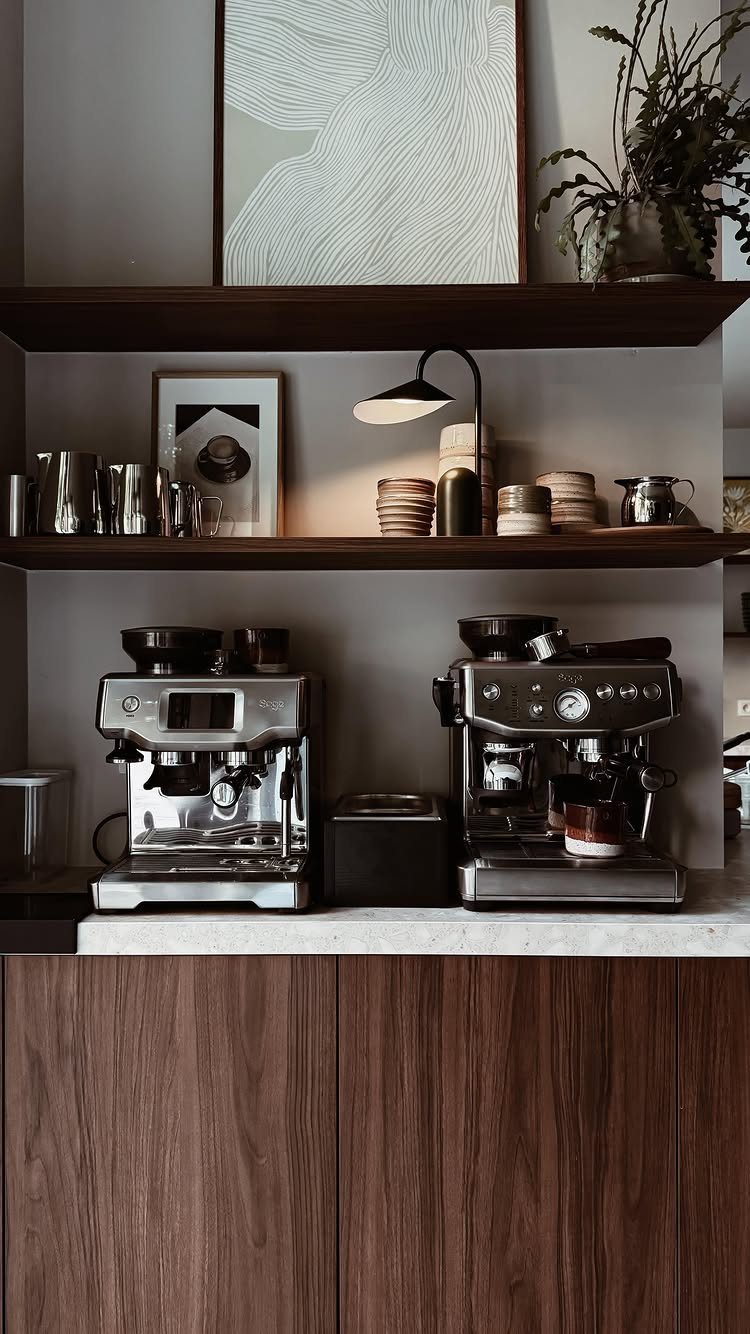
A few pieces on a clear counter keep the focus on making coffee without visual clutter.
If your counter is small or you want the setup to disappear into the kitchen, limiting what sits out to the machine, a canister, and one or two mugs means less to clean around and nothing extra to dust.
A vertical layout puts the machine on the counter and mugs on a shelf above, which keeps the footprint narrow instead of spreading sideways.
Most minimal setups benefit from matching containers and a single finish across the machine and any tools.
14. Vintage Coffee Bar
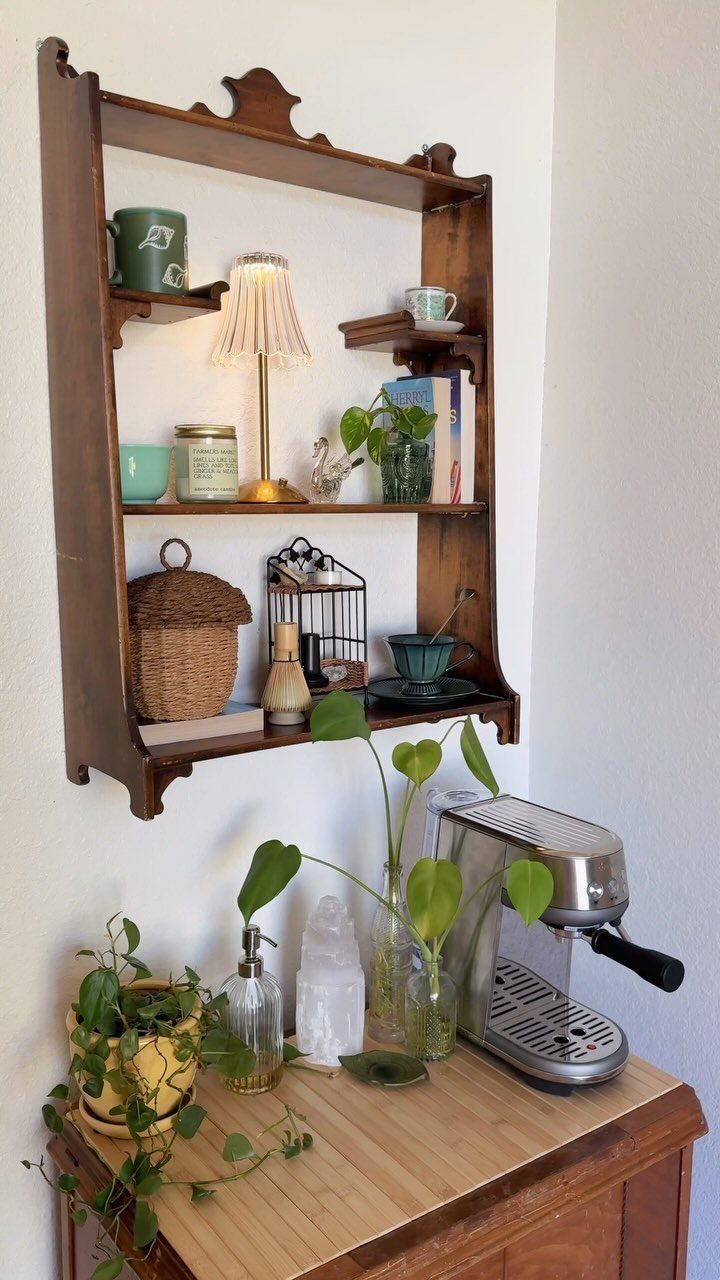
Older wood furniture and secondhand shelves bring a worn-in feel that new pieces rarely match.
If you find a cabinet or shelf unit at a thrift store or estate sale, the patina and joinery give the station character without needing much decoration.
Most vintage pieces need a wipe-down and maybe fresh brackets, but the finish stays as you found it. Mismatched mugs and older ceramics fit the look better than a matched set.
15. Farmhouse Coffee Bar

Wood shelves, white paint, and a few rustic signs give the area a country kitchen look. If your home already leans farmhouse, a shiplap backsplash or reclaimed wood shelf ties the coffee station into what you already have.
Open shelves sit above the machine for mugs and canisters, with painted wood and metal signs adding texture.
Most farmhouse bars benefit from warm wood tones and a mix of old and new pieces. You can paint behind the station or leave it plain if the shelves already carry enough detail.
16. Colorful Coffee Bar
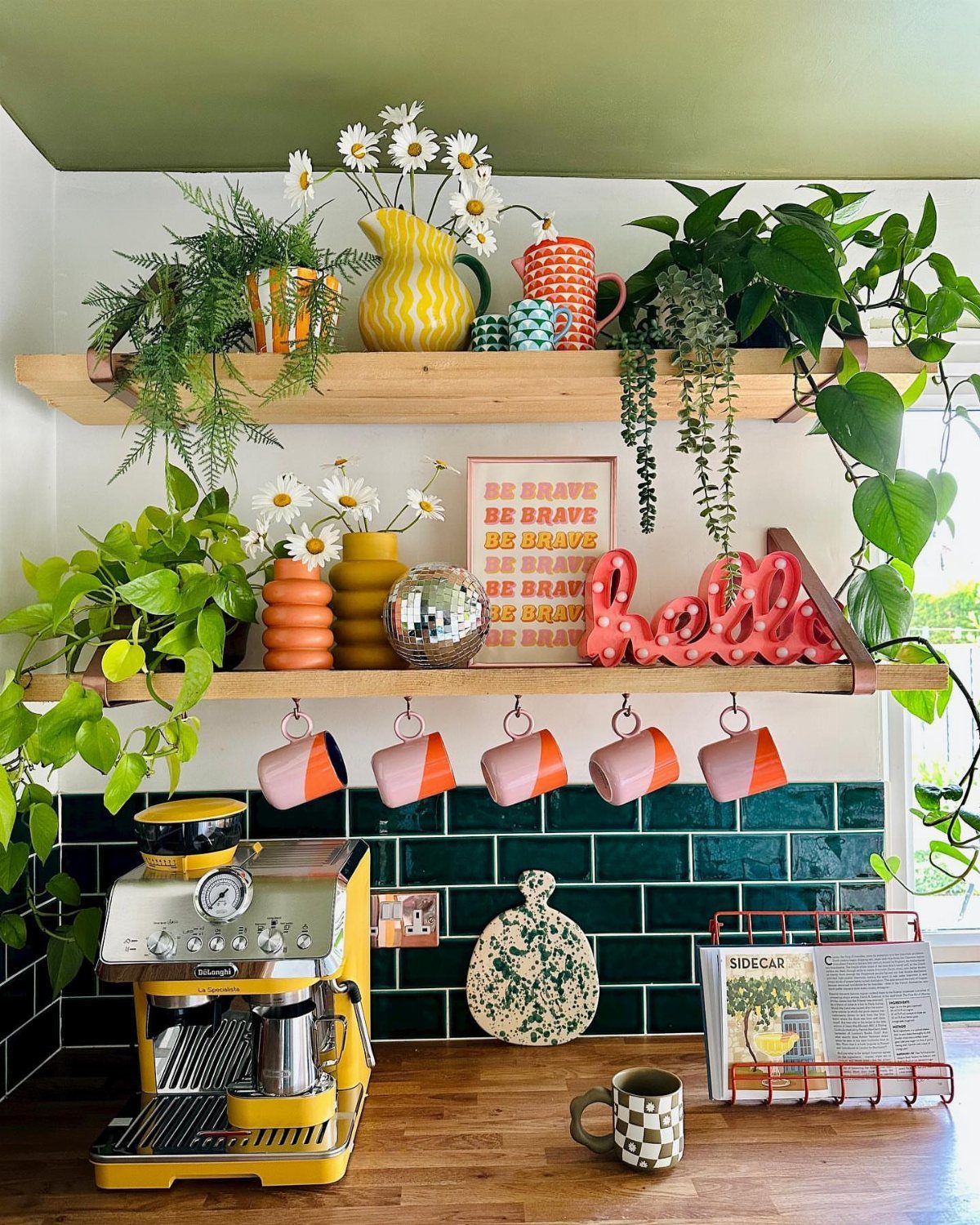
Bright mugs, a colored machine, and bold tile turn the coffee area into something that stands out.
If your kitchen feels neutral and you want one spot with personality, a few saturated colors on the backsplash or the appliances make the station feel intentional.
The yellow machine and green tile here sit against white walls, so the color reads immediately.
You can paint a single wall, add a tile backsplash in a few hours, or swap in a brightly colored kettle or grinder. Mugs in different shades fill the shelves without matching exactly.
17. Coffee Bar with a Mug Tree
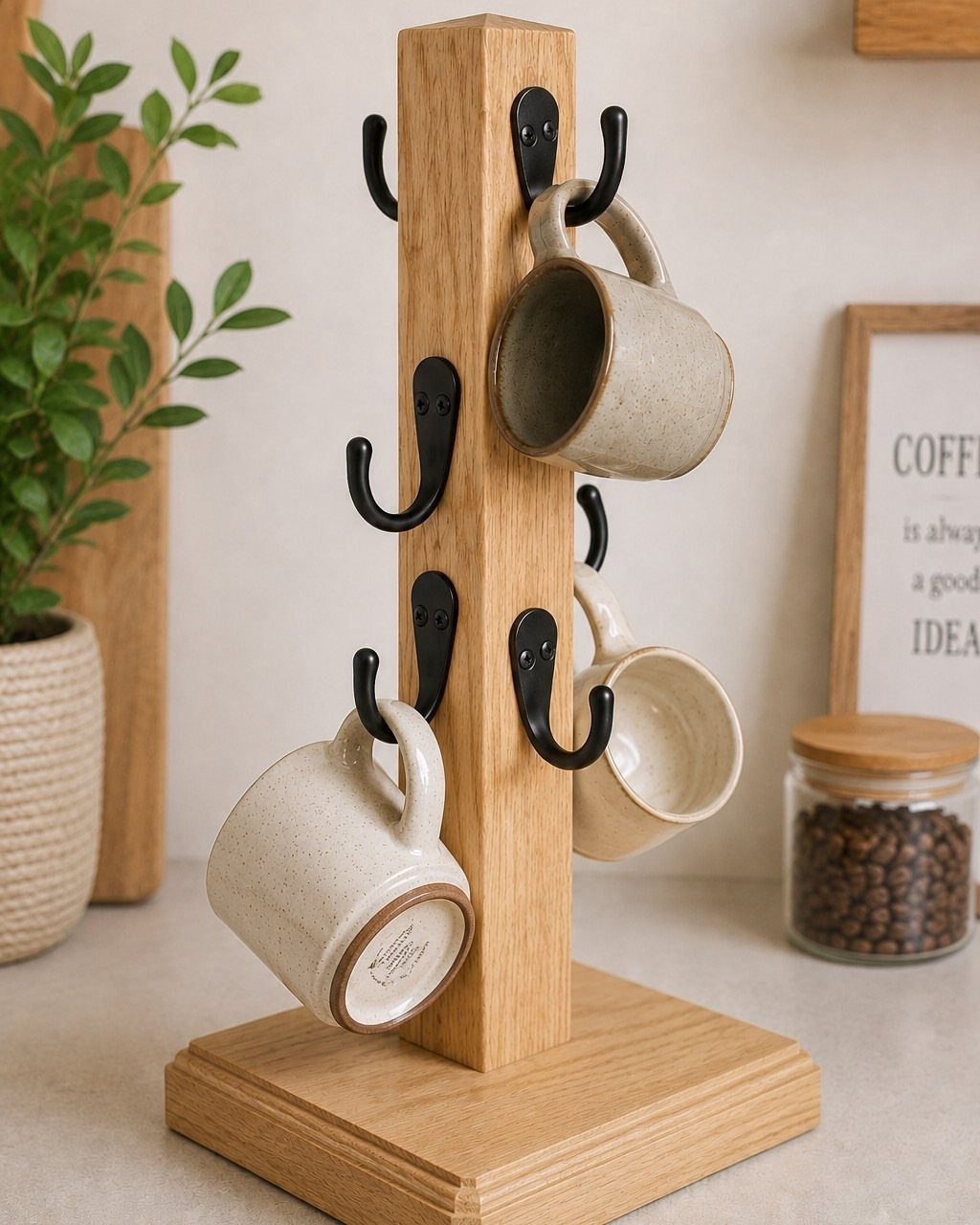
A freestanding tree holds mugs in a compact footprint and does not require drilling into the wall.
If you rent or do not want to commit to shelves, a mug tree sits on the counter next to the machine and moves with you if you rearrange.
Most trees are wood or metal with hooks around a central post.
The one here holds 3 mugs on a countertop beside a canister and a plant. A mug tree holds 3 mugs in barely more space than a single mug laid flat and keeps your most-used cups within reach without opening a cabinet.
18. Coffee Bar with a Riser
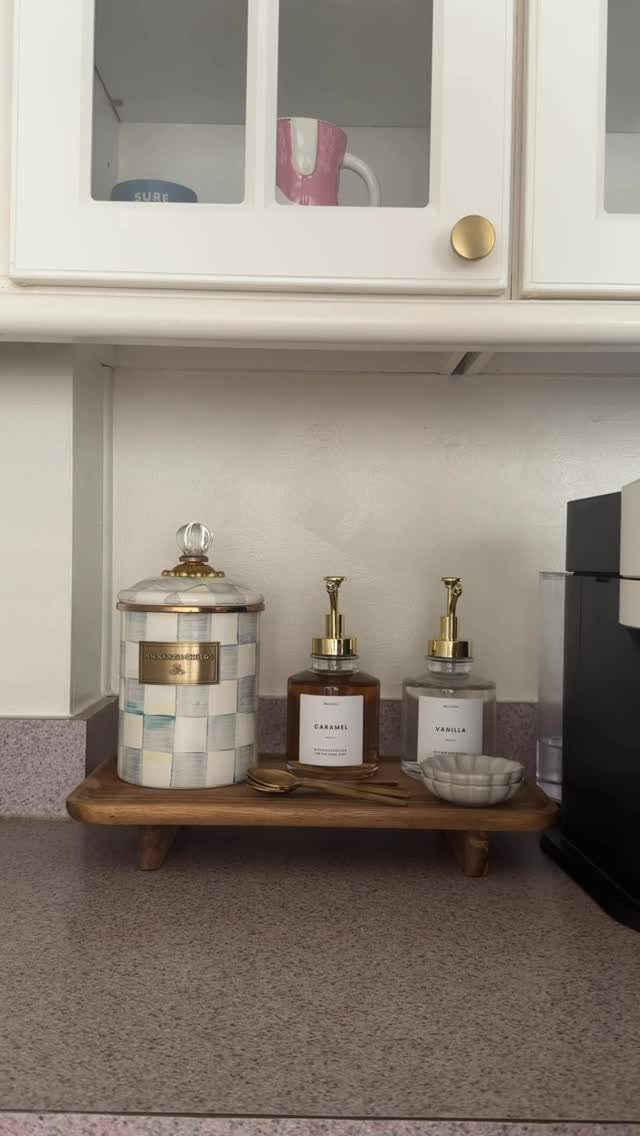
A riser lifts small items off the counter and groups them in one place.
If your coffee station has syrups, spoons, or sweeteners that get lost in the back corner, a raised platform brings them up to eye level and lets you wipe the counter underneath.
The wood riser holds a canister and syrup dispensers together instead of spreading them across the counter.
Most risers are wood or acrylic and measure a few inches tall. You can buy one or build a simple platform from scrap wood.
Plan Workflow Before Decoration
Pick your main brewer first and give it enough room to open, pour, and refill without moving anything else.
A drip machine needs clearance above the lid; an espresso machine needs space in front for the portafilter and underneath for a scale or drip tray.
Place the station near a sink if you refill the reservoir daily, and near the trash if you toss filters or pods.
If the counter sits between the fridge and the table, morning traffic will walk through your work zone while you are brewing.
Keep beans, your grinder, and the mugs you use most within one step of the machine. When the workflow stays tight, you are less likely to abandon the setup and let it fill with mail or dish towels.
Choose Equipment and Supplies
Match your gear to how you actually make coffee.
A French press setup needs a burr grinder and a kettle that lets you control the pour. Pour-over depends on a cone dripper, filters, and a kettle with a narrow gooseneck.
Drip machines ask for nothing but a stack of filters. Espresso setups do better with a small pitcher for steaming milk, or a separate frother if lattes are in the rotation.
Stock the counter with what you reach for every morning: mugs, an airtight canister for beans, sugar or syrup, a small pitcher for milk, stirrers, napkins, and a cloth for cleanup.
If you drink tea or someone else in the house does, add a kettle and a container for bags.
Start Small and Control Clutter
Start with the machine and supplies you already own, then add pieces one at a time as you figure out what you actually use. Repurpose jars or canisters you have before buying new ones.
Tuck anything that looks messy inside a cabinet or a lidded bin: backup filters, half-empty pod boxes, cleaning supplies.
A stand or riser lifts syrups, sugar, and small containers off the counter so the whole setup reads as organized instead of scattered.
A turntable in a corner cabinet or a pull-out drawer organizer keeps extras within reach without crowding the surface. One or two feet of counter space holds a functional station when you keep only daily-use items out.
Frequently Asked Questions
What are some good ideas for a coffee area in my house?
A rolling cart, floating shelves above an outlet, or a sideboard give you flexibility without committing counter space permanently. If you have an underused corner or alcove, a narrow shelf and a small cabinet turn it into a full station.
What are some ideas for a coffee station in a small space?
Vertical layouts stack storage instead of spreading sideways: a floating shelf above the machine holds mugs and canisters without claiming more counter.
A cart with open shelves rolls against a wall when you are done and moves wherever you need it. A cabinet with the machine on an interior shelf keeps everything behind closed doors, so the setup disappears entirely between uses.
What is a home coffee station?
A home coffee station is a dedicated spot where you keep the machine and everything you need to make a cup without hunting through cabinets.
It keeps the machine, mugs, beans, filters, and anything else you reach for in one place so you are not gathering supplies from different drawers between steps.
Most stations sit on a counter, inside a cabinet, or on a cart, and the setup can be as simple as a machine and a canister or large enough to include a grinder, frother, and storage for several types of drinks.
Why should I consider creating a coffee bar?
A dedicated station makes restocking obvious when you can see what is running low, and it keeps morning traffic from turning into a scavenger hunt.
If you host, guests can serve themselves without opening cabinets or asking where things are. Seasonal swaps like autumn leaves or spring stems take less than a minute and give the area a current look without redoing the whole setup.
Where should I place a home coffee station—on the counter, in a cabinet, or on a rolling cart?
Countertops suit daily setups or seasonal displays if you have the space and do not mind the gear staying visible.