
Removing uppers works only if you can move that volume somewhere else without losing what you use most.
Deep base drawers and a floor-to-ceiling pantry wall absorb the capacity if you have the floor or wall space to give them; open shelving and a butler’s pantry let you shift gear you reach for often.
Full-height tile and hardwired sconces can pull back material savings from skipping uppers, and buyers in some markets see the layout as a compromise they would need to reverse.
1. Deep Base Drawers
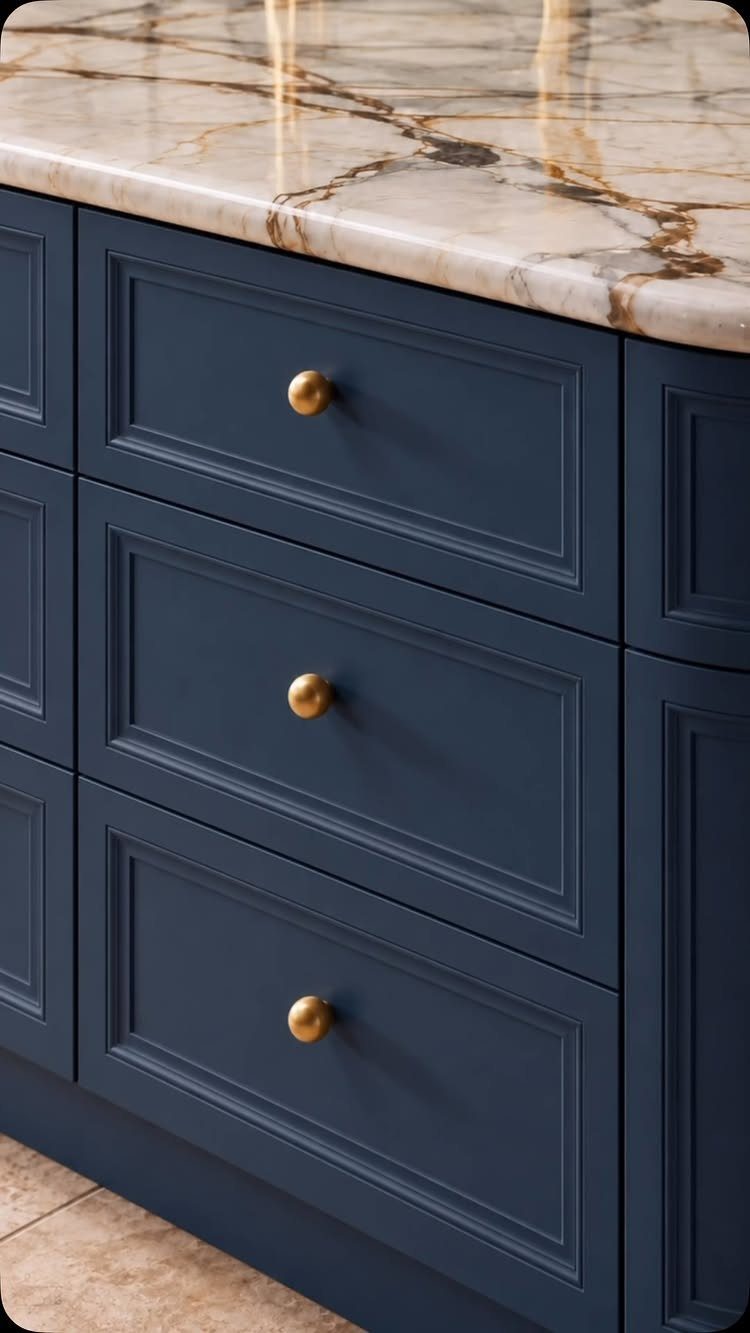
Base drawers that run deep hold stacks of dinner plates, mixing bowls, and sheet pans without the reach overhead cabinets ask for. Everything sits at counter height or below, so you bend instead of climb.
If the lower cabinets are already there, pullout drawer boxes retrofit into most frameless cabinets. A full remodel gives you the chance to spec deep soft-close drawers from the start, which run smoother and handle more weight than retrofitted inserts.
The catch: you lose the high-up storage that costs nothing to access when you’re already standing. Anything used less than once a week moves to a pantry or a different room.
2. Open Shelving

Floating shelves work when you have a handful of items you actually like looking at and can keep clean.
Glassware, a few stacked bowls, or a row of matching jars make sense. A jumble of mismatched mugs and plastic lids does not.
Brackets mount to studs or require toggles rated to carry weight if you’re hanging between studs. Wood shelves that run deep enough and thick enough hold dinner plates without sagging; anything thinner needs a steel brace behind it.
I would not use open shelves as the only storage on a wall. They hold about a third of what an upper cabinet does, and dust lands on everything.
3. Tall Pantry Wall

Floor-to-ceiling cabinets along one wall replace the storage you would otherwise spread across upper cabinets on 2 or 3 walls.
Most run the same depth as base cabinets, so they hold small appliances, bulk goods, and serving pieces that do not fit in a standard upper.
A tall pantry cabinet holds about as much as several linear feet of uppers. If your kitchen has wall space you can spare, the math works.
Pullout shelves or drawers inside the pantry cabinet put everything within reach. Fixed shelves waste the bottom third, where you have to crouch and dig.
4. Butler’s Pantry

A butler’s pantry takes the small appliances, extra dishes, and bulk storage out of the main kitchen so the working walls stay clean.
It sits just off the kitchen, usually through a doorway or a pass-through, and holds everything you do not need during daily cooking.
The space does not have to be large. A narrow closet with floor-to-ceiling shelves and one section of counter works if it keeps the coffee maker, mixer, and serving platters out of sight.
This only makes sense if you have the adjacent room. Carving a pantry out of the kitchen itself leaves you worse off than you started.
5. Statement Backsplash
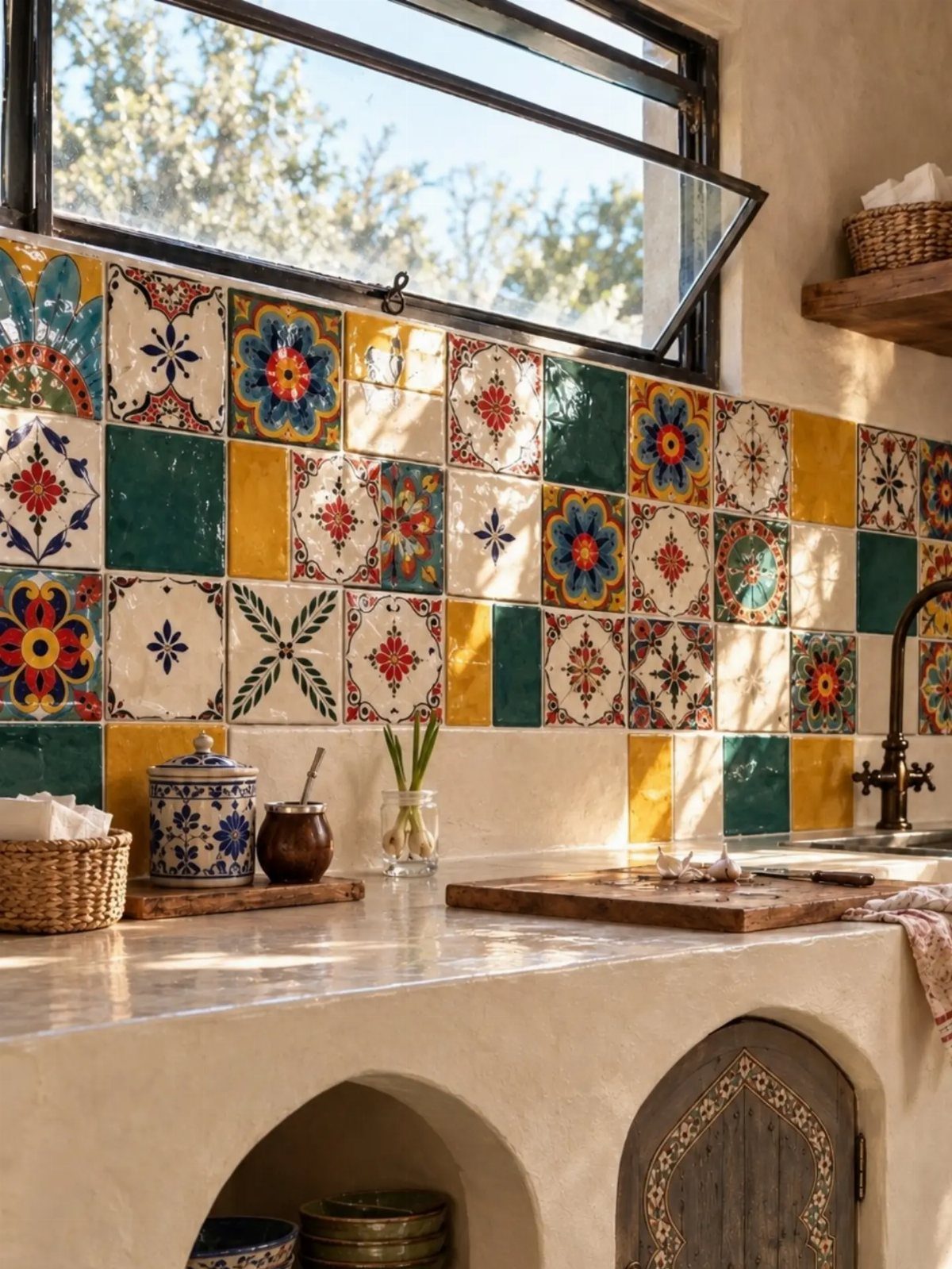
Without upper cabinets blocking the view, the backsplash runs floor to ceiling and becomes the largest surface in the room. Tile with pattern or color turns that into an intentional focal point instead of a blank stretch of drywall.
Full-height tile costs more than a standard backsplash, but the labor matters more than the material.
Grout maintenance goes up with the square footage. Sealed grout lines need attention every 1–2 years, or staining shows.
6. Wall Sconces
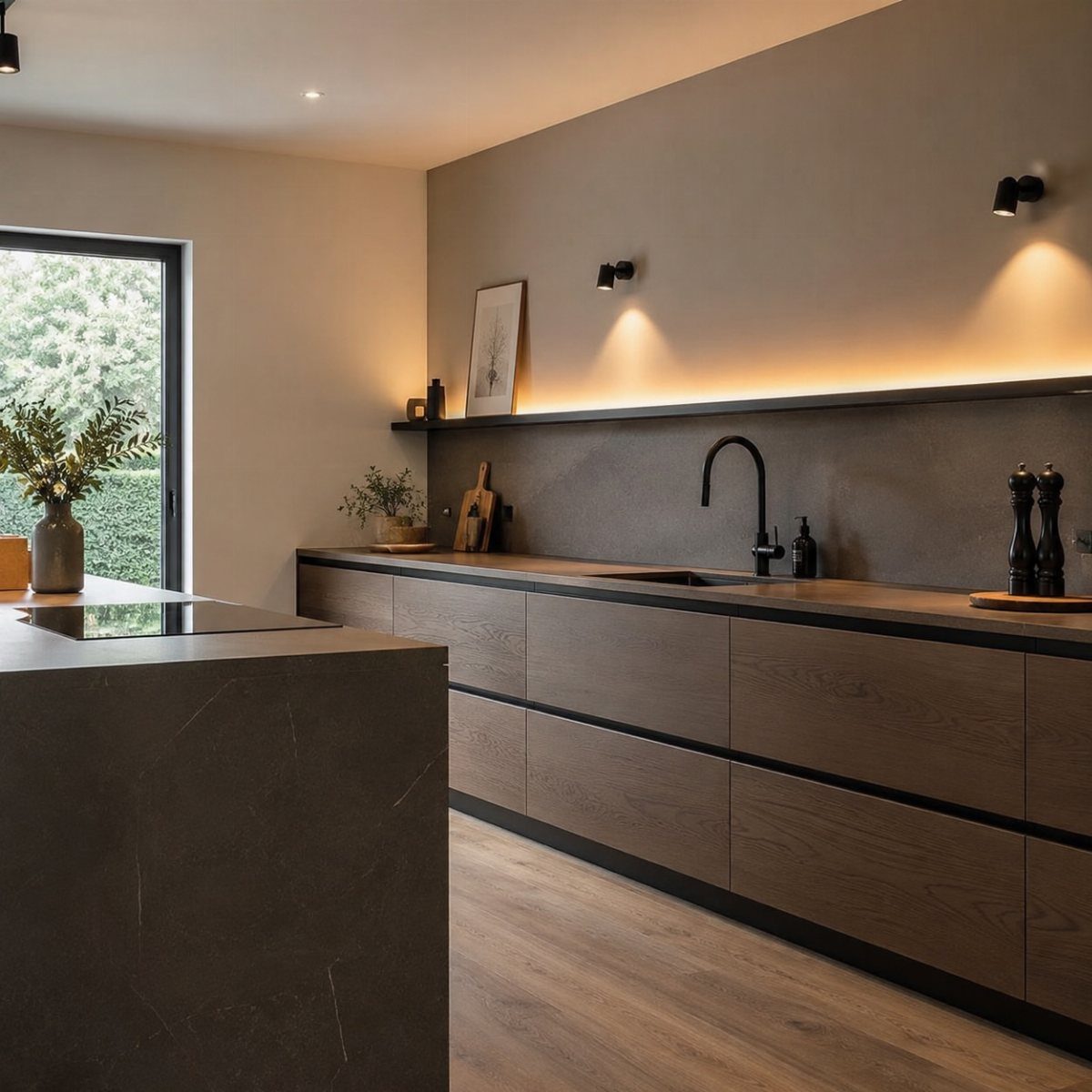
Sconces mounted at the right height above the floor replace the task lighting that usually hides under upper cabinets. They throw light down onto the counter and across the backsplash, so prep work does not happen in shadow.
Hardwired sconces need an electrical box behind the wall, which means opening drywall if the wiring is not already there. Plug-in versions with a cord cover avoid the rough-in but leave a visible line running to the nearest outlet.
2 sconces spaced apart light a standard run of counter. A single fixture leaves the ends dark.
7. Tall Appliance Storage Zone

A tall cabinet fitted with outlets and pullouts keeps the coffee maker, toaster, and blender in one spot so counters stay clear. Doors close over the whole setup when it is not in use.
Corner or end-of-run space makes this easiest to fit. The cabinet needs to be deep enough to hold small appliances without the doors hitting them when they close.
Outlets inside the cabinet let you leave things plugged in. Without them, cords trail out the bottom or you unplug after every use.
8. Statement Range Hood

A hood with wood detailing, custom metalwork, or color becomes the room’s centerpiece when upper cabinets are not there to balance it. The shape and finish matter more than venting power, though both need to work.
Custom hoods cost more than insert-and-surround versions, but the visible parts are what you pay for. A wood surround with metal straps or a painted plaster finish gives you something to look at that a flat panel does not.
Most codes require a hood over a gas range. If you are planning the kitchen from scratch, the hood is required anyway, so making it stand out uses space you have to fill.
9. Kitchen Art Wall
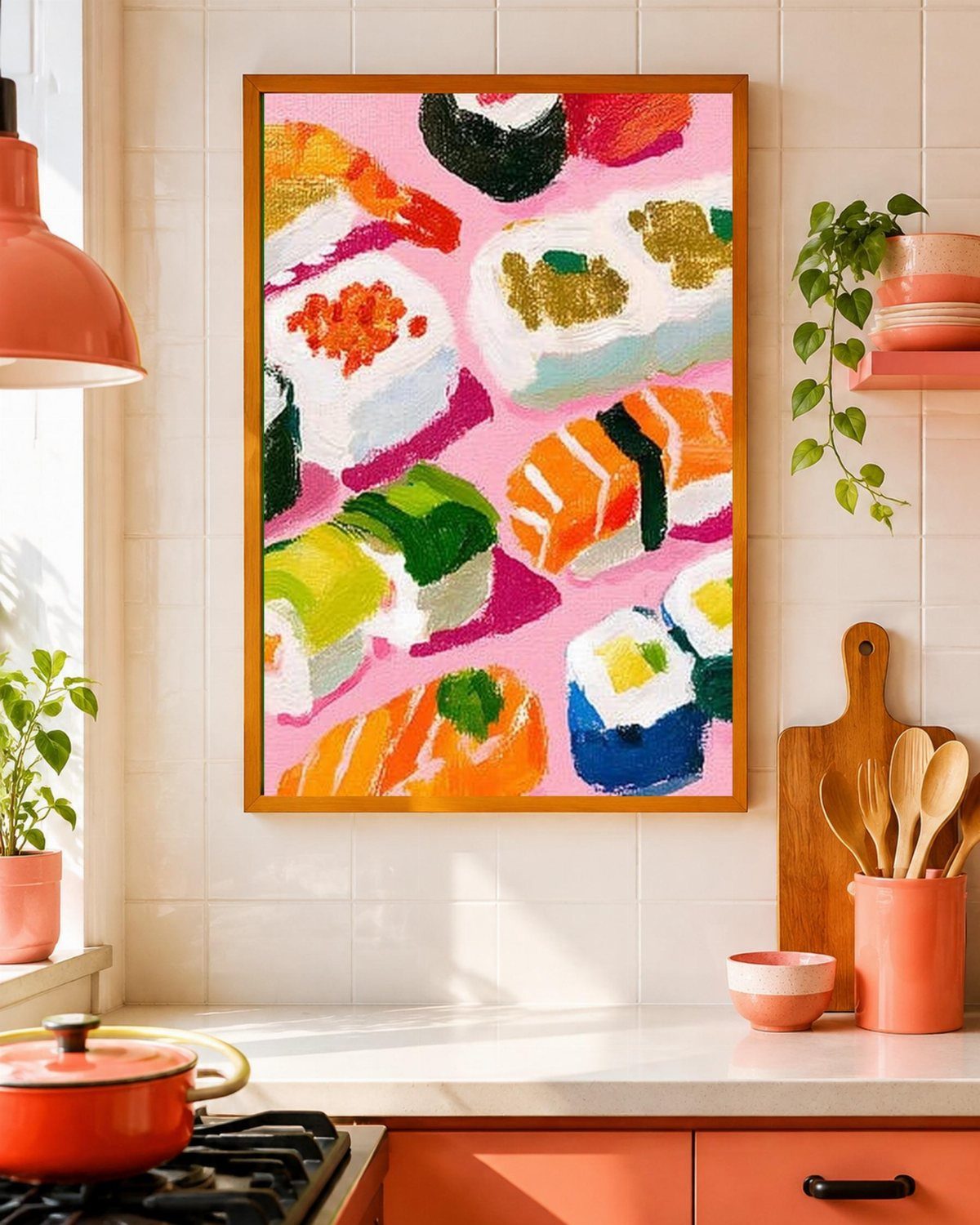
Hang a piece you like looking at instead of filling the wall with storage. The space reads as finished without cabinets if something intentional is there.
Art that can handle heat and moisture belongs in a kitchen. Canvas and works on paper warp near the stove or sink; framed prints under glass or stretched canvas away from direct steam last longer.
This trades function for appearance. If you need the storage an upper cabinet would hold, a painting does not replace it.
The decision to ditch upper cabinets translates to getting creative with storage solutions.
10. Drawer Organizers

Adjustable dividers and inserts keep utensils, lids, and small containers from sliding into a pile every time you open a drawer. Wood or plastic inserts fit most standard drawer boxes and lock items into sections.
Drawer pegs and tension rods hold plates and bowls upright so you can lift one out without moving the stack. Peg systems cost more than fixed dividers but adjust to different dish sizes.
Measure the drawer interior before you buy inserts. A quarter inch too wide and the organizer will not fit; too narrow and it shifts around.
11. Pull-out Pantry Drawers
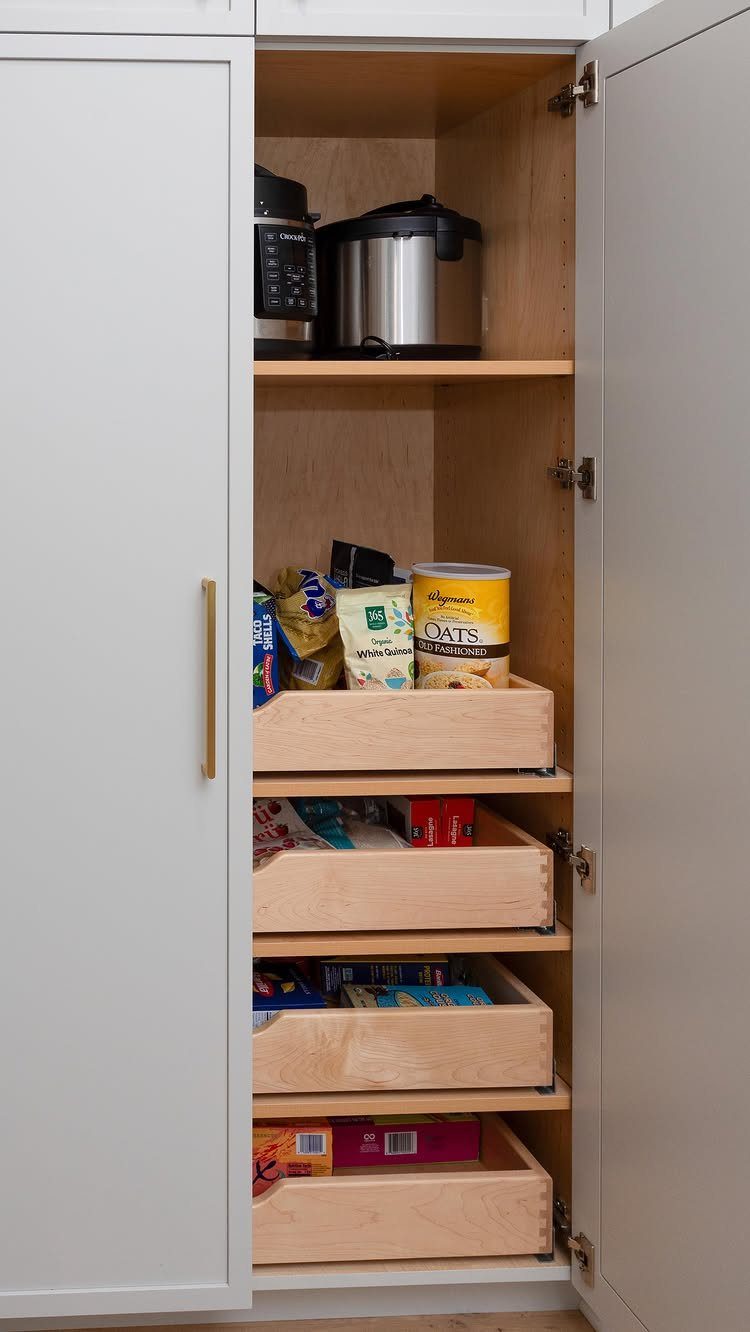
Narrow pullout drawers installed inside a base cabinet bring canned goods, grains, and boxed items out where you can see them instead of stacking them on a fixed shelf.
Each drawer slides out independently, so you reach what you need without unloading the row in front.
Most pullout pantry systems need a strip of cabinet width to fit. Wider cabinets can hold 2 columns of drawers side by side.
The weight capacity matters. Metal drawer slides rated to handle bulk goods and jars hold up; lighter-duty slides sag under the load.
12. Roll-out Shelves

Shelves that roll forward on slides bring pots, mixing bowls, and pantry items out of a deep cabinet so you do not have to reach past the front row.
Each shelf pulls toward you like a drawer but stays attached to the cabinet frame.
These retrofit into most base cabinets with side-mount or under-mount slides. The cabinet needs to be frameless or have enough clearance for the slide hardware to fit along the sides.
Full-extension slides cost more than partial-extension versions but let you see and reach everything on the shelf. Partial slides leave the back out of reach, which defeats the point.
13. Glass-front Cabinets

Glass doors let you keep dishes visible without opening up the storage entirely. You get the storage of a closed cabinet with some of the display quality of a shelf.
Clear glass shows everything inside, so what you store there needs to look intentional. Seeded or frosted glass softens the view when perfect stacks aren’t your style but you still like how light moves through.
This works best for a single run of cabinets, not the whole kitchen. Too much glass tips things toward retail display territory.
Trade-offs and Household Fit
The layout feels lighter and less enclosed, but you give up a lot of concealed storage in return.
What used to hide behind doors now needs a place in base cabinets, a pantry, or on open shelves where grease and dust settle.
If you cook frequently or keep a lot of ingredients and small appliances on hand, the lost capacity can become a real problem.
Everything has to fit in drawers and lower cabinets, which means more bending and less room for overflow.
People with mobility limits or back trouble may find a kitchen with all storage below counter height harder to use than one where everyday dishes and glasses sit on upper shelves.
The open look comes with a functional cost, and not every household can absorb it.
Plan Storage Before Removing Uppers
Pull everything out of your current upper cabinets and write it down.
Plates, bowls, glasses, mugs, spices, baking supplies, vitamins, snacks, serving platters. Every item needs a specific spot in the new layout before you finalize cabinet drawings, or you will end up with a kitchen that looks calmer but functions worse.
Most wall cabinets are 12 inches deep and hold 3 levels of storage when you count the cabinet floor and 2 shelves.
Base cabinets run 24 inches deep, so you get more volume per shelf, but fewer shelves overall. The difference is not one-to-one.
Add up how many linear feet of upper cabinets you have now, then check if your plan includes enough deep drawers, pantry shelves, and tall cabinets to absorb what you are removing.
Resale and Remodeling Costs
Skipping upper cabinets can cut cabinetry material costs by 15–20%, but that savings gets pulled back by higher spending on wall finishes and lighting. Full-height tile, custom hoods, and hardwired sconces add up faster than a row of standard cabinets would.
Some buyers prefer the open look, but others see a kitchen without upper storage as a compromise they would have to fix.
If resale value matters, check what is typical in your area. A layout that appeals to fewer people can slow a sale or lower offers, even if the kitchen itself is well done.
The financial case depends on how long you plan to stay and whether you value the look enough to absorb the cost if it does not pay back at closing.
Frequently Asked Questions
Is it possible to have a kitchen without cabinets on top?
Yes, when you move storage into deep base drawers, a tall pantry wall, or a butler’s pantry that holds what upper cabinets used to.
The layout works if every item from your current uppers has a specific spot below counter height or in an adjacent room before you finalize the design.
What to use instead of upper cabinets in a kitchen?
Deep base drawers for dishes and pots, a floor-to-ceiling pantry cabinet for bulk goods and small appliances, and open shelving for items you use daily.
Can a kitchen work without upper cabinets?
It works if you replace the lost storage with deep base drawers, a tall pantry wall, or a combination of both.
Where do I store my everyday dishes and glassware?
Plates and bowls go in deep base drawers fitted with peg organizers that hold stacks upright so you can lift one out without moving the rest.
Glassware fits on one floating shelf near the sink or in a sideboard pushed against an open wall. Drawer storage near the dishwasher cuts the distance you carry clean dishes.
How do I handle the dust and grease issue on open shelves?
Store only items you use every day on open shelves, so they get washed and put back before dust settles.
A row of glassware or a few stacked bowls makes sense; plastic lids and mismatched mugs do not. Anything used less than once a week belongs in a closed cabinet or pantry where grease and dust cannot land on it.