
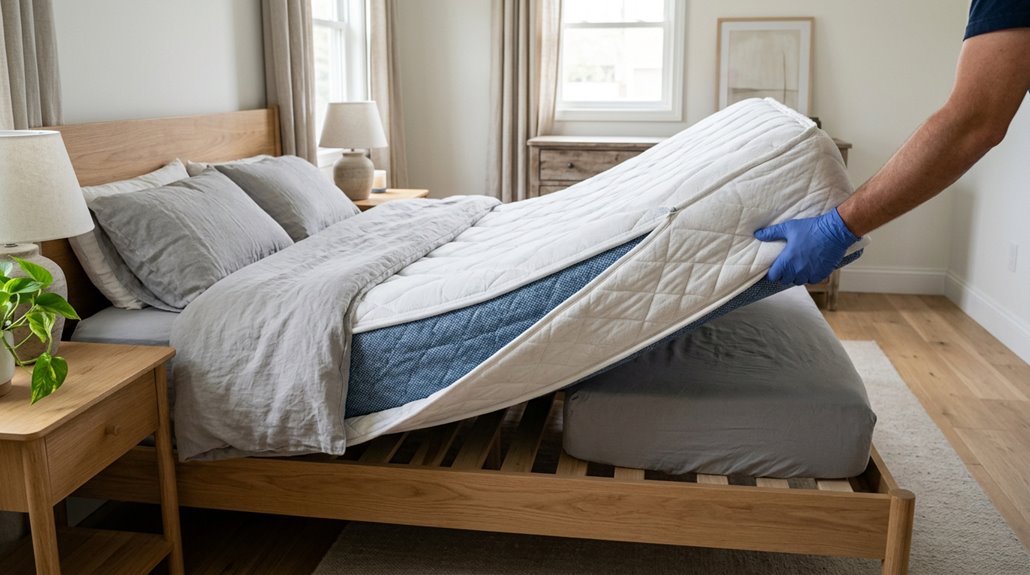
Look, flipping your mattress is easier than you’d think. Just check that label first, because some mattresses are one-sided and shouldn’t be flipped at all.
For two-sided mattresses, rotate every 6–12 months and flip every 3–6 months to distribute wear evenly.
Clear your space, grab a buddy if it’s heavy, and lift with your legs, not your back.
Make it a cleaning day too; strip bedding, vacuum, spot-clean stains, then flip.
Set calendar reminders so you actually remember.
Stick with it, and you’ll prevent those annoying body-shaped dips that make sleeping feel like settling into a crater.
The specifics get way more interesting depending on your mattress type.
Check Your Mattress Label for Flip and Rotation Guidelines
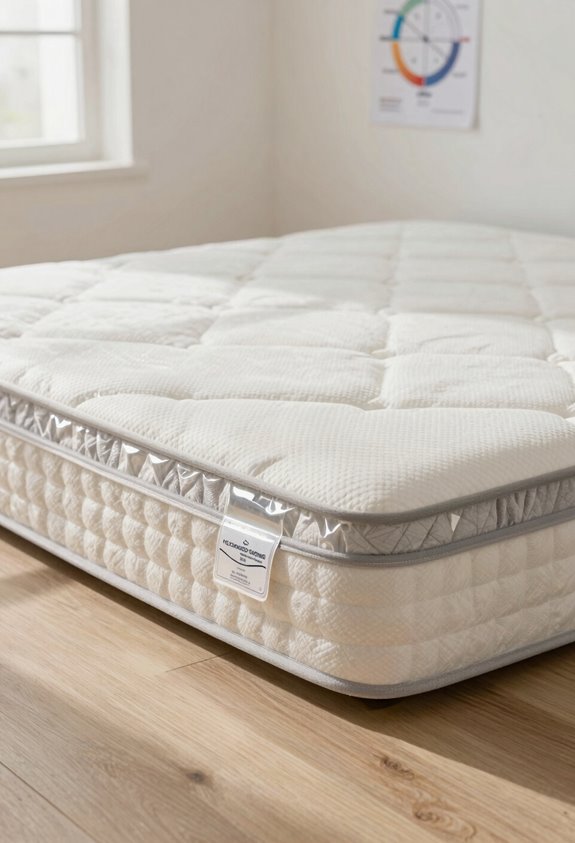
Your mattress label contains important care instructions that determine whether your mattress needs flipping and rotating. Some mattresses are one-sided only, meaning no flipping is required. Others feature double-sided designs that need flipping every 3–6 months to wear evenly. The label specifies exact frequencies, whether that’s rotating every quarter or leaving it completely alone. Do not guess about your mattress care requirements.
Check whether your specific mattress demands action or requires you to avoid flipping it. When confusion arises, contact your manufacturer directly. They will clarify your specific model’s needs, preventing premature wear and extending the lifespan of your investment.
Why Flipping Your Mattress Extends Its Lifespan
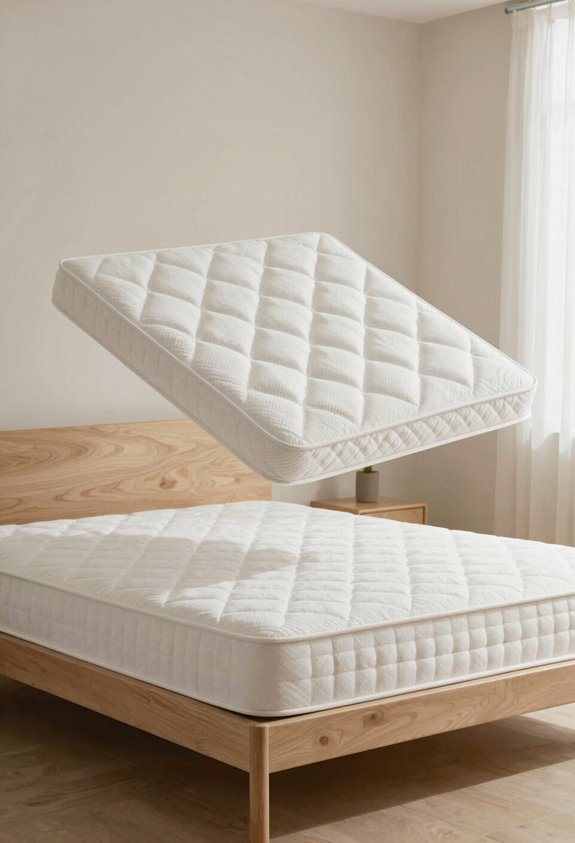
Imagine your mattress as a sponge that absorbs all your body weight night after night. It’s getting hammered on one side while the other side remains untouched. That’s where sagging happens. When you flip your mattress regularly, you’re giving both sides equal use. This distributes wear evenly, preventing those annoying body-shaped dips that make sleeping uncomfortable. Combined with rotation, flipping becomes your secret weapon for extending your mattress’s lifespan substantially.
Not all mattresses cooperate. Some are non-flippable by design, so check your manufacturer guidance before flipping. Flippable mattresses sometimes offer two different firmness levels, giving you bonus variety while protecting your investment. You essentially get two mattresses for the price of one.
The Difference Between Flipping and Rotating
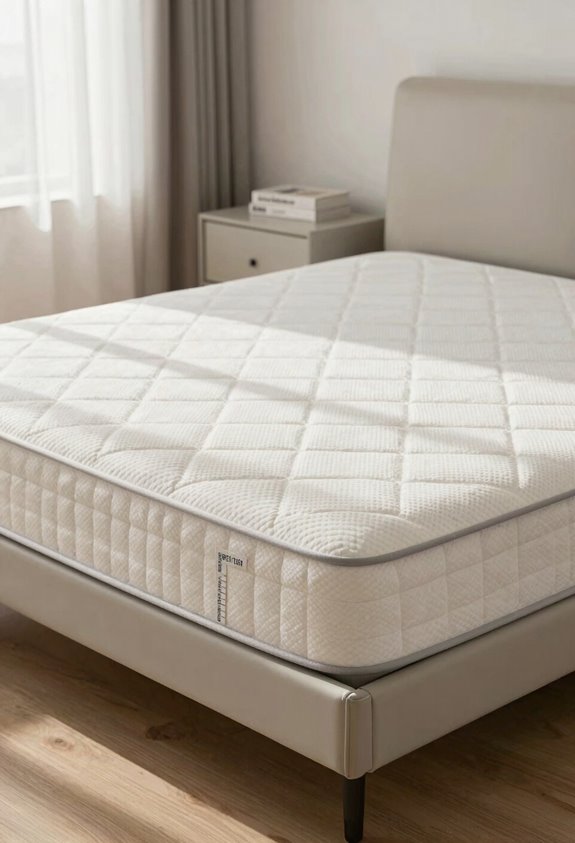
What’s the actual difference between flipping and rotating your mattress? Rotating means turning your mattress 180 degrees so the head and foot swap places, while flipping means completely flipping it over to sleep on the opposite side. Rotating is a half-turn; flipping is the full flip.
| Action | Movement | Best For | Frequency |
|---|---|---|---|
| Rotating | 180-degree turn | One-sided mattresses | Every 3-6 months |
| Flipping | Complete turnover | Two-sided mattresses | Every 3-6 months |
| Both | Rotate + flip | Flippable mattresses | Alternating pattern |
Follow your manufacturer guidance. One-sided mattresses shouldn’t be flipped, as this will damage them. Two-sided, flippable mattresses benefit from both rotating and flipping to maximize lifespan extension.
How Often Should You Flip Your Mattress?
Now that you know the difference between flipping and rotating, let’s talk about the real question: how often should you actually do it. Most modern mattresses need rotation every 6–12 months. But if you’ve got an older two-sided innerspring mattress, the kind your grandparents had, you’re looking at 2–5 times yearly. The key is to follow your manufacturer guidelines. Reading instructions will tell you the specific mattress maintenance schedule that keeps your bed in good condition. Whether you’re flipping or rotating, consistency prevents uneven wear. Regular maintenance extends your mattress lifespan and maintains proper support.
Prepare Your Space and Gather Help Before Flipping
Before you touch that mattress, set yourself up for success. First, clear everything around your bed: nightstands, lamps, clocks, and other items. You need flat, open space to rotate the mattress safely without knocking things over.
Next, assess whether you can handle this alone. If your mattress feels heavy, enlist help from a friend. Attempting to flip a 100-pound mattress alone risks back injury. You and your helper should grab the turning handles if available and position the mattress on its side or on the floor carefully.
Preparing your space leads to successful mattress flipping. Safe flipping requires adequate room and a second person to assist.
Step-by-Step Instructions for Safely Flipping Your Mattress
Once you’ve cleared your space and found your helper, it’s time to flip the mattress. First, check if you have a flippable mattress designed for two-sided use. If not, rotate instead of flipping. For safe lifting, bend your knees rather than your back. Stand on opposite sides with your helper. Together, lift using your legs and rotate the mattress end-over-end or side-to-side. For king or queen beds, rotate 90 degrees to prevent middle sag. Once you’ve turned the mattress, reposition it back on the frame and center it carefully. Using proper lifting form protects your spine from injury.
Rotate Your Mattress (If Flipping Isn’t Possible)
Most modern mattresses, about 90% of what’s on the market today, aren’t actually designed for flipping at all. Instead, you’ll want to rotate your mattress head-to-foot every 6–12 months. Mattress rotation is essential for extending your mattress’s life.
Rotating distributes weight evenly across the surface, preventing those annoying saggy spots where your hips and shoulders sink in. Just remove your bedding, grab a friend (it’s easier with backup), and flip that mattress end-for-end. Some one-sided mattresses can’t be flipped, but they absolutely need regular rotation for even wear.
Always check your manufacturer instructions first. Some mattresses have specific rotation schedules that differ from standard guidelines. Following those directions ensures optimal mattress performance.
Why Your Mattress Base Affects Flipping Success
Your mattress foundation matters significantly more than most people realize. A solid base compatibility between your mattress and foundation, whether that’s a bunkie board, platform bed, or adjustable base, distributes pressure evenly and prevents sagging. Without proper support, you sabotage your own flipping success before you even start.
Worn-out or inadequate bases amplify sagging and uneven wear, making your flipping efforts ineffective. You need a sturdy mattress foundation that allows easy lifting and reduces damage risk during flips. Always verify your base-mattress combination works together by checking manufacturer instructions carefully. Getting this part right directly improves your flipping success.
Spot Sagging and Soft Spots: When to Flip More Often
I’ve noticed that if you’re spotting soft spots or dips forming under your hips and shoulders, which is where you’re spending most of your time, that’s your mattress signaling it needs more attention. When I see that happening, I flip or rotate far more often than the standard 3 to 6 months, sometimes bumping it up to every 4 to 8 weeks, because those concentrated pressure zones will keep getting worse if you don’t redistribute the wear. The key is catching these early signs before they become permanent impressions, which saves you from replacing your whole mattress sooner than you’d like.
Identifying Early Sagging Signs
Why does your mattress always seem to sag in the exact same spot, usually right where you sleep? That’s spot sagging, and it’s a normal wear pattern that happens to all mattresses.
Early sagging signs show up when you don’t rotate your mattress regularly. You’ll notice soft spots developing under your hips or shoulders, which are the areas that experience the most repeated pressure. Foam and latex mattresses are especially prone to this because they compress with repeated pressure.
| Sign | Timeline | Action |
|---|---|---|
| Slight dips | 6 months | Rotate mattress |
| Visible indents | 12 months | Flip and rotate |
| Deep sagging | 18+ months | Consider replacement |
| Uneven support | 2 years | Definitely replace |
| Persistent spots | Any time | Increase rotation |
Distribute wear evenly by flipping every 6–12 months. Regular rotation prevents concentrated compression in high-pressure zones and extends your mattress lifespan.
Adjusting Flip Frequency Accordingly
Knowing those early warning signs is just the first step, because your mattress doesn’t always cooperate with a one-size-fits-all schedule. If you’re spotting soft spots or sagging at your hips and shoulders, your manufacturer guidelines might need tweaking. Heavier sleepers should flip their mattresses more often than every 6–12 months. Memory foam mattresses compress differently than expected, especially if you’ve got a sleep partner with different weight. Rotating and flipping every 3–6 months is more effective for heavier users. By adjusting your routine to target spot sagging specifically, you prevent accelerated wear in high-pressure areas. This personalized approach keeps your surface feeling consistently comfortable and extends its lifespan significantly.
Make Flipping Day Your Cleaning Day Too
Since you’re already going to haul your mattress around every 3–6 months anyway, why not knock out your cleaning routine at the same time? I combine my flipping day with cleaning, and it significantly extends your mattress lifespan. Strip everything first: sheets, pillows, duvet. This gives you room to work. Then dust the bed area, vacuum that mattress surface, and spot-clean any stains you’ve been ignoring. It takes maybe an extra 30 minutes.
| Task | Time | Benefit |
|---|---|---|
| Strip bedding | 5 min | Clear workspace |
| Dust & vacuum | 15 min | Remove allergens |
| Spot-clean stains | 10 min | Prevent damage |
| Flip mattress | 10 min | Even wear |
| Fresh sheets & protector | 5 min | Maintain cleanliness |
Sleeping on a truly clean, maintained mattress means better hygiene and durability.
Common Mistakes to Avoid When Flipping Your Mattress
All that hard work cleaning and flipping means nothing if you’re flipping the wrong way or flipping a mattress that shouldn’t be flipped at all. Many modern mattresses are one-sided, and flipping them actually destroys their support system. Always check the manufacturer’s label first; don’t skip this step.
When you do flip or rotate, go end-to-end, not side-to-side. It seems small, but it distributes wear evenly across the entire surface. People frequently attempt this solo with heavy mattresses. Get assistance during flipping. Those turning handles exist for a reason; they’re not just fancy accessories. Finally, re-center your mattress afterward. Small adjustments make significant comfort differences.
Build a Mattress Flipping Schedule
Creating a solid flipping schedule is essential for mattress maintenance because without a plan, you’ll forget about it.
Rotate memory foam every 3 months to keep wear distribution even across the whole surface. If your mattress is double-sided, flip it too, combining both tasks every 6-12 months. Follow manufacturer guidelines first, as they provide the most accurate recommendations for your specific mattress.
Use calendar alerts on your phone to maintain consistency. Set reminders for spring, summer, fall, and winter. This simple flipping schedule prevents body-shaped dips and extends your mattress lifespan.