
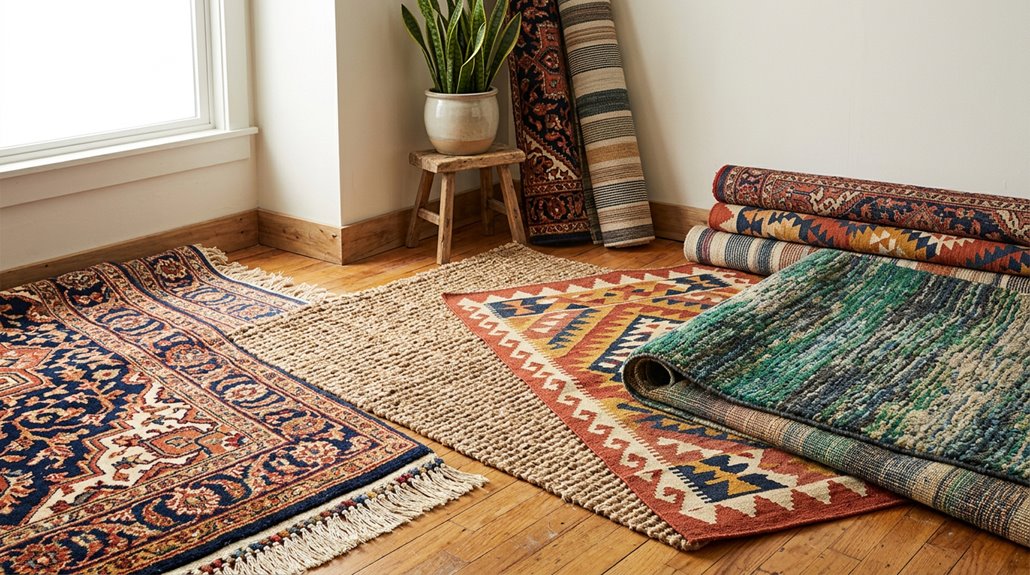
Area rugs split into two main camps: traditional hand-knotted pieces with intricate patterns and rich jewel tones that offer timeless elegance, or transitional rugs blending classic and contemporary vibes with softer palettes. Construction methods vary; hand-knotted wool lasts decades, while tufted and machine-made options offer budget-friendly durability. Material matters significantly. Wool resists stains, synthetics handle spills effectively, and natural fibers bring rustic charm. Placement follows simple guidelines: furniture should land on or fully sit on the rug edge. Understanding which style, material, and size works for your space depends on your specific room requirements and design preferences.
Finding Your Style: Traditional or Contemporary
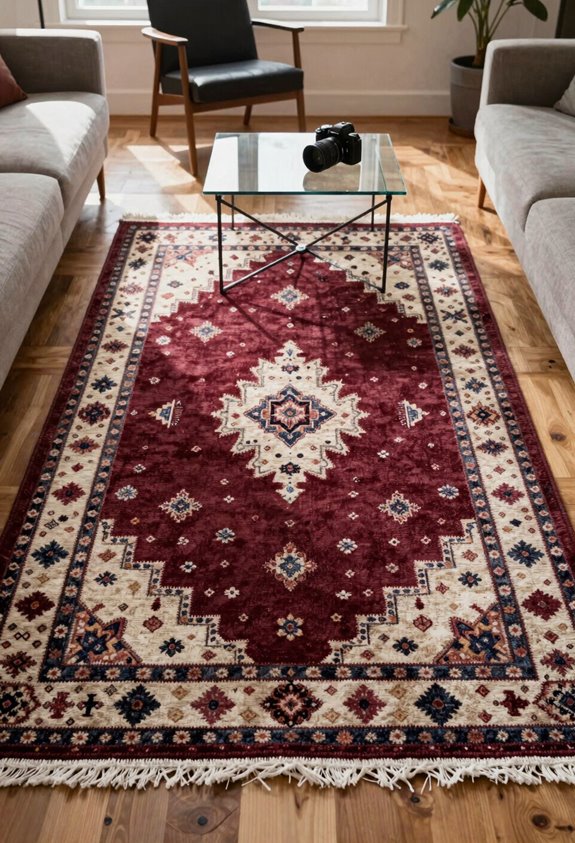
How do you want your space to feel: timeless and formal, or fresh and modern? Choosing between traditional and transitional styles comes down to your personal preference.
Traditional rugs function like the classic leather jacket of interior design. Hand-knotted oriental pieces feature intricate patterns, floral motifs, and rich palettes, including deep reds, blues, and earth tones. They anchor formal spaces with serious elegance.
Traditional rugs anchor formal spaces with serious elegance, functioning like the classic leather jacket of interior design.
Transitional rugs blend both worlds, using softened palettes like greys and creams while keeping updated patterns. They serve as the perfect bridge between classic and contemporary aesthetics.
Both styles create timeless room definitions that work for years. The key is selecting what aligns with your needs and preferences.
Rug Construction Methods Explained
| Construction Type | What It Is | Best For |
|---|---|---|
| Hand-knotted | Meticulous hand-tying, wool material | Lifetime investment pieces |
| Tufted | Tufting gun insertion, cotton backing | Budget-friendly durability |
| Flatweave | Woven without pile, thin design | Contemporary aesthetics |
| Machine-made | Printed designs, synthetic fibers | Quick replacements |
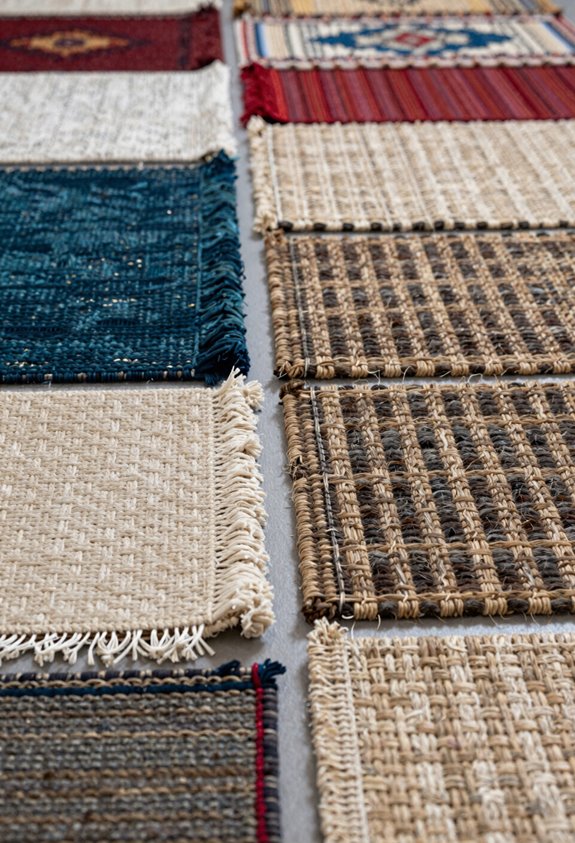
Hand-knotted rugs cost significantly more but retain quality for decades. Tufted rugs provide comparable aesthetics at lower price points. Flatweave rugs suit modern design schemes, though they require gentle vacuuming to prevent damage. Machine-made options offer convenience with reduced durability compared to other methods. Backing materials substantially affect longevity and maintenance requirements; cotton and synthetic fibers perform differently in terms of wear resistance and cleaning needs.
Wool, Synthetic, Cotton, and Natural Fibers
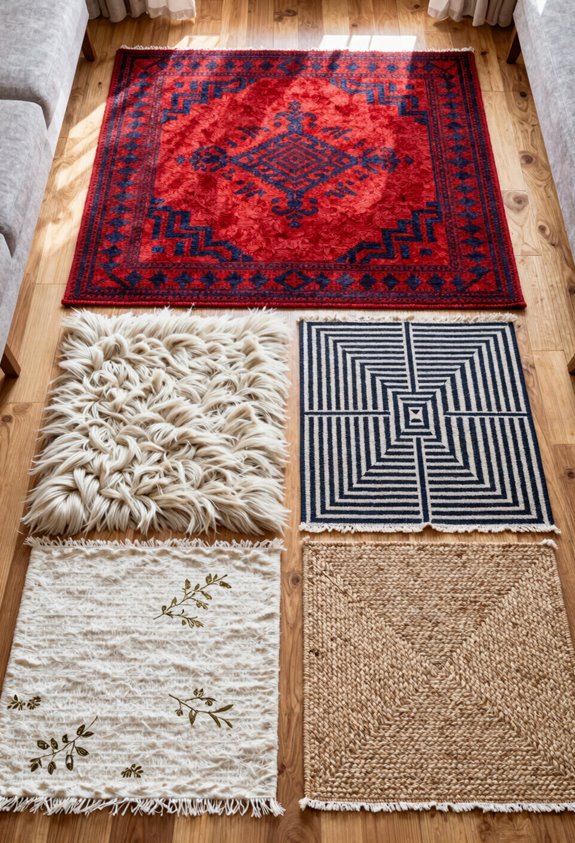
I’ve found that picking the right rug material really comes down to what your space actually needs. Wool is a durable choice; it resists crushing and stains naturally, though it will shed for a few weeks before settling down. Synthetics like polypropylene work well in high-traffic areas where you need easy spot-cleaning and can’t afford constant maintenance. Natural fibers like jute look gorgeous and rustic, but they trap crumbs easily under dining tables, so they’re not ideal for those spaces.
Durability and Maintenance Needs
When you’re picking out a rug, the material you choose significantly affects its durability and maintenance requirements. Different materials need different care levels, so understanding your options helps you make a confident decision.
Here’s what you’re working with:
- Wool rugs inherently resist stains and crushing, though they shed initially, much like a new sweater
- Polypropylene handles spills brilliantly and spot-cleans easily, making it ideal for high-traffic households
- Polyester feels softer underfoot but requires machine-washing capability
- Natural fibers like jute trap crumbs and deteriorate under dining tables
Your lifestyle determines the best choice. Busy households benefit most from polypropylene’s stain resistance and easy cleaning. If you want a luxury option, wool provides durability without demanding constant maintenance. Select the material that matches your actual living situation rather than an idealized version.
Natural Fiber Benefits
Because you’re investing real money in a rug, you need to know what you’re actually getting. Understanding fiber types gives you a clear advantage. Wool offers superior durability, inherently resisting stains and crushing. Cotton and jute provide a cozy, rustic aesthetic with genuine texture and character. Cotton does wear faster than wool, and jute requires additional care in high-traffic zones, but natural fibers deliver real benefits: softness, authentic feel, and sustainable materials. These options provide lasting durability and reduce the need for frequent replacements, allowing you to express your space’s character without excessive long-term costs.
The Right Size and Shape for Your Room
How do you pick a rug that doesn’t look like it’s floating in your room like some lonely island? Area rug sizing and smart rug placement make all the difference.
- Rectangular rugs anchor large furniture groupings by letting front legs sit on the rug
- Round rugs work magic under round tables and soften boxy spaces
- Runner rugs guide movement down hallways and beside beds with style
- Square or oval rugs fit unique room layouts and add personality
The key is ensuring your furniture on the rug actually lands on the rug edge or fully sits on it. This creates cohesion throughout your space. Your room layout determines which rug shapes work best. The right fit transforms everything.
Picking Rug Colors That Match Your Home
Picking the right rug color determines whether your whole room feels intentional or haphazard. Whether you’re drawn to 2026 trends like moody charcoals and navy or prefer timeless warm neutrals like beige and taupe, your rug color must coordinate with your existing furniture and the atmosphere you want to create. Test your swatches in actual daylight and evening light, because colors shift throughout the day, and you don’t want surprises after purchase.
Color Trends for 2026
What’s trending in rug colors for 2026? The palette is shifting toward colors that create a sense of home and comfort.
- Warm neutrals like beige and creamy off-whites create that soft, inviting vibe
- Earthy tones, terracotta, olive, and rust pair beautifully with wood and natural textures
- Moody colors like charcoal, navy, and emerald make bold statements in modern spaces
- Pastel layers including blush and lavender work well in Scandinavian-inspired rooms
Align your rug’s color with your room’s mood. Whether you’re choosing natural fiber rugs in wool or polypropylene, durable materials are important. Low pile options paired with a rug pad keep everything stable and prevent shifting. Your color choice establishes the atmosphere in your space.
Matching Aesthetics to Palettes
Once you’ve established your room’s vibe, picking the right rug color becomes easier. Connect what you already have with elements that will tie everything together. Match your color palettes to your interior design themes by considering existing pieces. If you’re using warm neutrals like beige or taupe, you have a versatile foundation that works with mahogany furniture or minimalist styles. For boho aesthetics, layer Moroccan prints and earthy textures together. For moody and modern designs, charcoal, navy, and emerald create grounded, bold statements. Your area rug styles should reflect your palette matching strategy, with rug textures such as jute, low-pile, or flat-woven complementing your overall aesthetic.
Choosing Your Rug by Room Purpose
A living room rug anchors your seating, while a bedroom rug needs 18–24 inches extending past the bed. Different spaces require different sizing approaches.
- Living rooms: Use 8×10 or 9×12 rugs with front furniture legs on the rug
- Bedrooms: Extend rugs 18–24 inches past all sides for balanced coverage
- Dining rooms: Size your rug so pulled-out chairs still sit on it; add 24 inches extra per side
- Kitchens: Choose washable, durable fibers that handle spills effectively
Room purpose determines your rug selection.