
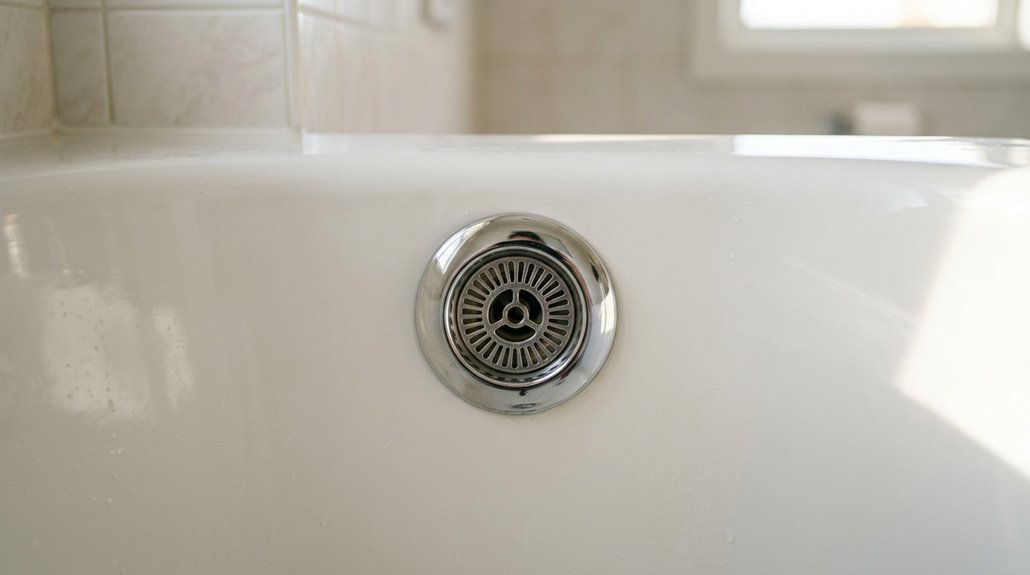
Your bathtub trap’s basically a sewer-gas bouncer that stops stinky odors and dangerous gases from creeping back into your bathroom. Water sits in the bend, forming a protective seal that blocks everything nasty trying to escape the pipes. Without it, you’d be dealing with foul smells constantly.
The trap also catches debris, which means you’ll need to clean it periodically to keep drainage flowing smoothly and prevent clogs. Learn what happens when yours goes bad.
What Bathtub Traps Do: Blocking Sewer Gas and Odors
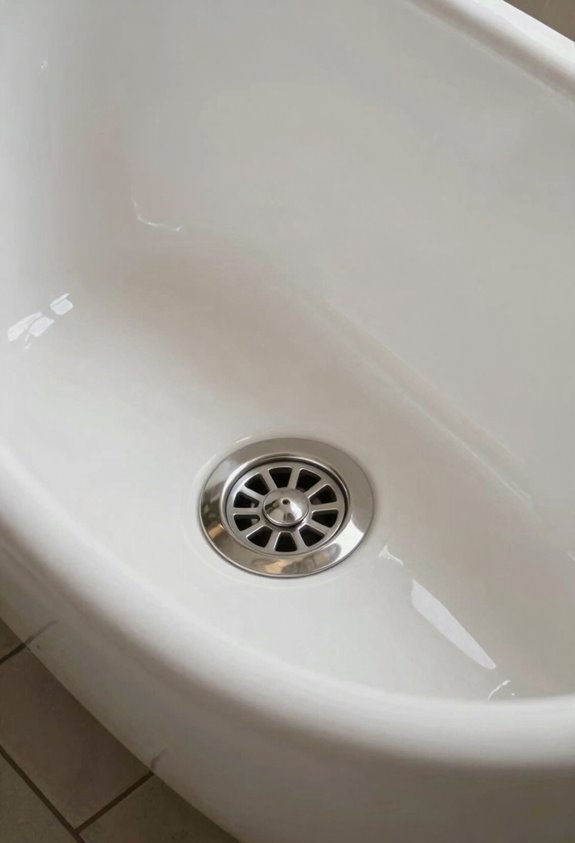
Ever wonder why your bathroom doesn’t smell like a sewer. Your bathtub trap does the heavy lifting. Sewer gases travel up through your pipes constantly. Your trap holds water in a bend, basically a protective barrier, that blocks those odors from entering your living space. Without it, you’d be breathing in foul air every time you shower.
Older drum trap models are notorious for clogging and becoming maintenance nightmares. That’s why modern plumbing codes favor self-scouring P-traps instead. They’re reliable, efficient, and require less maintenance. Your trap keeps sewer gases and odors out of your home.
How a Trap’s Water Seal Actually Works
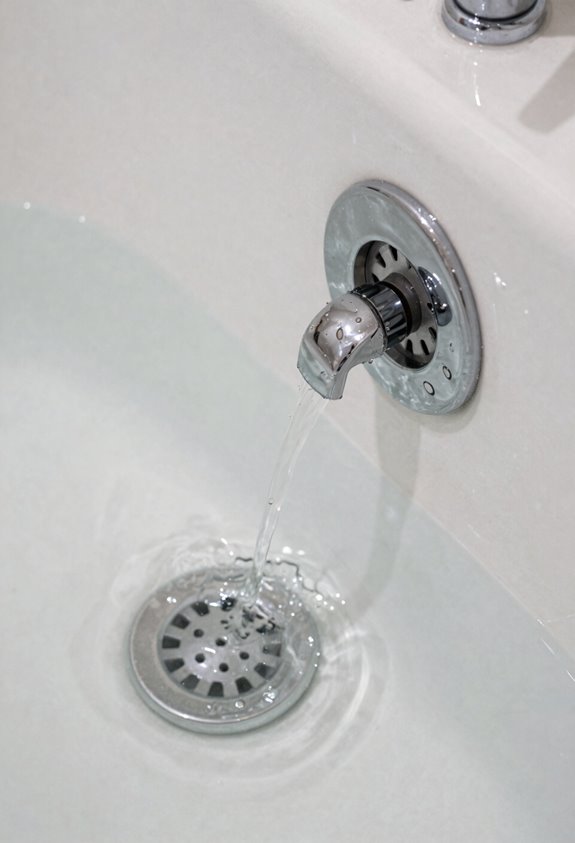
So the water seal is where the real protection happens. When wastewater flows down, it fills that U- or P-shaped bend with water, creating a barrier between you and the sewer system. The water sits there continuously. Your regular drain usage keeps it topped off, maintaining the seal.
However, if your trap dries out or springs a leak, that protective water barrier vanishes. Sewer gases then creep back up into your bathroom. You’ll notice those odors wafting around as a result.
The water sitting in the trap provides constant protection for your space. Maintaining that seal requires consistent drain usage and regular inspection to catch any leaks early.
Drum Traps vs. P-Traps: Which One Should Your Bathtub Have
What’s lurking under your bathtub right now: a drum trap or a P-trap? If you’ve got an older home, you might be stuck with a drum trap. However, upgrading to a P-trap is worth considering. Here’s why P-traps are the better choice:
- Self-cleaning design means less clogs and headaches
- Rust-proof PVC construction beats corroded iron every single time
- Easy access for cleaning without wrestling rusty lids
- Modern code compliance keeps inspectors happy and your home up to standard
Drum traps are basically maintenance nightmares. P-traps offer reliability, compatibility with professional snaking services, and significantly better long-term performance. You’ll experience fewer emergency repairs and lower maintenance costs over the life of your home.
Signs Your Bathtub Trap Needs Attention
How do you know when your bathtub trap needs attention? Watch for warning signs. Slow drains that won’t budge, funky smells creeping up, or worse, tiny bugs hanging around your bathroom like they’ve got a lease. These indicators matter most:
| Warning Sign | What It Means | Action to Take |
|---|---|---|
| Slow drainage | Trap’s clogged or cracking | Snake it or call a pro |
| Foul odors | Debris buildup inside | Apply insecticide treatment |
| Visible pests | Trap’s compromised, entry point open | Seal immediately with barrier |
If you’re seeing multiple signs happening together, don’t wait around. Your trap requires immediate attention. Post-construction insecticide application combined with sand works effectively when you catch problems early. Addressing this now prevents dealing with a full infestation later.
Why Older Homes Still Have Drum Traps (And What That Means)
Your older home likely still has a drum trap, which is a plumbing fixture from an earlier era when water retention at the bottom was considered adequate for blocking sewer gases. Drum traps were designed with a simple bottom inlet and higher outlet to prevent gas backup. However, modern plumbing codes now require better performance, easier access, and self-cleaning capabilities that drum traps cannot provide. If your home has one, you’re likely facing a retrofit situation. Rust-prone lids, difficult cleanouts, and incompatibility with current plumbing standards mean most jurisdictions prohibit keeping the original trap. Replacing it with a PVC P-trap is the standard solution most homeowners implement.
Historical Design And Function
Ever curious about why your grandma’s bathroom still works even though it looks like it belongs in a museum? Those old drum traps aren’t just decorative relics. They’re actually doing their job, even if they’re outdated.
- Bottom inlet design catches water and blocks nasty sewer gases from creeping back up
- Iron or lead construction means they’re built tough, surviving decades without major complaints
- Higher outlet placement creates a water seal that protects your home from odors
- Self-contained system doesn’t require modern plumbing knowledge to understand
Sure, they’re prone to clogging and their lids rust extensively. But they still function after decades, which demonstrates solid engineering. Modern P-traps are definitely better, but these vintage traps represent a significant advancement in plumbing history.
Modern Code Compliance Issues
Why are drum traps still present in older homes if they’re outdated? Older homes were grandfathered in before modern code requirements for self-scouring P-traps or equivalent setups took effect. You’re essentially living with plumbing from a previous era.
The issues are significant: drum traps clog more frequently, and their rust-prone lids make cleanouts difficult. Think of it like driving a car without power steering; technically functional, but problematic.
Today’s plumbing inspectors will not approve drum traps in new builds or major renovations. Retrofit options are available though. PVC P-trap drains or no-hub fittings can bring your system up to code without extensive replacement. Upgrading is a practical consideration.
What Modern Plumbing Code Actually Requires
Modern plumbing codes have eliminated drum traps in favor of P-traps because they’re more reliable, easier to clean out when clogs occur, and allow plumbers to work efficiently. Your local code inspector will verify three main requirements: that your trap is accessible for snaking or inspection, properly vented so air can flow and gases don’t back up, and free of components that trap debris like a lint filter.
If you’re still using an old drum trap, replacement is necessary. Upgrading to a modern PVC P-trap setup is a code requirement that will keep your drains flowing properly and ensure your home meets current plumbing standards.
P-Trap Modern Standards
So modern plumbing codes now mandate P-traps. There’s a substantive reason for this requirement.
- P-traps create a water seal blocking sewer gases from entering your bathroom
- They’re self-scouring, meaning water flow naturally cleans them out during drainage
- You get accessible cleanouts for maintenance without wrestling rusted lids
- Proper venting prevents siphoning, keeping that crucial water seal intact
These aren’t suggestions. They form the foundation of modern plumbing safety. P-traps outperform old drum traps in every measurable way. You get reliable, code-compliant systems that function effectively under daily use conditions. This standard protects your home through proven engineering principles.
Code Compliance Requirements
What exactly does your local plumbing inspector expect when they show up to verify your drains? They’re looking for three important things: proper venting, secure connections, and materials that meet current code standards. Your P-trap needs to seal against sewer gases. The inspector won’t accept old drum traps anymore. Why? They clog constantly, rust shut, and become maintenance nightmares. Modern codes demand self-scouring traps with accessible cleanouts you can actually reach. We’re talking PVC P-trap assemblies with threaded or no-hub connectors, depending on your setup. Even bathtubs in slab-on-grade construction must meet these requirements. Your inspector simply wants reliable seals and easy access when something inevitably goes wrong.
How to Clean Your Bathtub Trap (DIY Steps)
Ever wondered why your bathtub’s drainage gets sluggish even though you’ve cleared the obvious clogs? The culprit is hiding underneath your bathtub trap.
- Unscrew the bottom access panel carefully, as it will contain accumulated debris
- Pull out debris and gunk that has accumulated, wearing gloves for protection
- Scrub everything thoroughly with a brush to remove nasty residues
- Reseal and secure the trap to keep sewer gases out
The whole process takes approximately thirty minutes. Modern P-traps are significantly easier than those old drum traps our parents dealt with; those things were difficult to work with. Once you’ve resealed everything properly, your drainage flows like new.
When Replacement Is Your Only Option
Sometimes, no amount of scrubbing and elbow grease will save your bathtub trap. If you’ve got an old drum trap made of iron or lead, it’s probably fighting you every step of the way. These outdated relics don’t play well with modern plumbing codes, and they’re maintenance nightmares. Maybe your trap’s buried in a slab-on-grade home, making it nearly impossible to access. Or it keeps clogging despite your best efforts. That’s when replacement becomes necessary. Modern P-traps are self-scouring, easier to clean, and actually code-compliant. You can retrofit with PVC assemblies using threaded connectors or no-hub fittings, depending on your setup. Upgrading is often more practical than fighting a losing battle.
Installing or Upgrading to a Modern ABS Trap
If you’re thinking about ditching that old, corroded trap under your RV or mobile home, modern ABS traps offer significant advantages. They’re built from non-metallic thermoplastic that resists rust and corrosion, plus they’ve got those standard 1-1/2 inch socket connections that make retrofitting straightforward without special adapters needed. You’ll just need some ABS primer and solvent cement to lock everything in place. The result is a trap that effectively blocks sewer gases while allowing water to drain properly.
Modern ABS Material Benefits
Upgrading to a modern ABS tub trap is a smart move. These thermoplastic units deliver significant advantages:
- Corrosion resistance – Unlike older metal traps that rust and deteriorate, ABS won’t corrode, meaning your trap stays functional for years without degradation.
- Easy installation – The 1-1/2 inch socket inlet and adjustable union fit standard pipes perfectly, so alignment headaches disappear.
- Reliable gas blocking – That water barrier in the bend stops sewer gases from creeping back up, preventing odor issues in your bathroom.
- Compact design – At just 3.4 by 8.5 by 8.5 inches, it fits tight spaces where older traps won’t squeeze in.
ABS traps represent modern plumbing construction that meets current standards for durability and functionality.
Technical Specifications And Installation
What’s involved when you’re ready to swap out that old trap for a new ABS unit? You’ll need ABS primer and solvent weld cement before you start. The trap itself measures 3.4 inches long by 8.5 inches wide and tall, fitting perfectly into tight spaces. The swivel-ready union feature simplifies pipe alignment during installation. Your inlet and outlet both accept standard 1-1/2 inch ABS pipe, making connections straightforward. The water seal trapped inside blocks sewer gases from entering the space. Installation is manageable once you’ve gathered your materials. The unit includes a 1-year limited warranty that covers defects in materials and workmanship.
Upgrading From Older Trap Systems
Ever peered under your sink and spotted one of those massive drum traps that looks like it survived the 1970s? Upgrading that outdated system to a modern ABS trap offers significant performance improvements.
- Self-scouring design reduces clogs significantly
- 1-1/2 inch socket inlets fit standard ABS piping perfectly
- Swivel union connections allow easy alignment without complications
- Improved maintenance access means fewer plumber visits
The whole installation uses simple threaded or no-hub fittings. You’ll cement everything with primer and solvent weld, maintaining that crucial water seal blocking sewer gases. Modern ABS trap systems provide a cleaner, more reliable setup that prevents leaks and eliminates pest entry points.
Maintaining Your Trap to Prevent Future Clogs
Since your plumbing trap’s basically a debris magnet, you need to stay on top of maintenance. Regular cleaning removes buildup that restricts water flow, keeping everything moving smoothly. I recommend checking your trap quarterly and sealing any gaps around it to block pests like cockroaches and termites. This prevents pest entry and reduces maintenance costs significantly.
| Task | Frequency | Why It Matters |
|---|---|---|
| Clean trap bottom | Every 3 months | Prevents clogs |
| Inspect for cracks | Twice yearly | Stops pest entry |
| Reseal after cleaning | After each cleaning | Maintains water seal |
| Check for odors | Monthly | Catches issues early |
Remove trapped debris periodically, then reseal everything properly. This approach eliminates future clogs and extends your drain’s operational lifespan.