
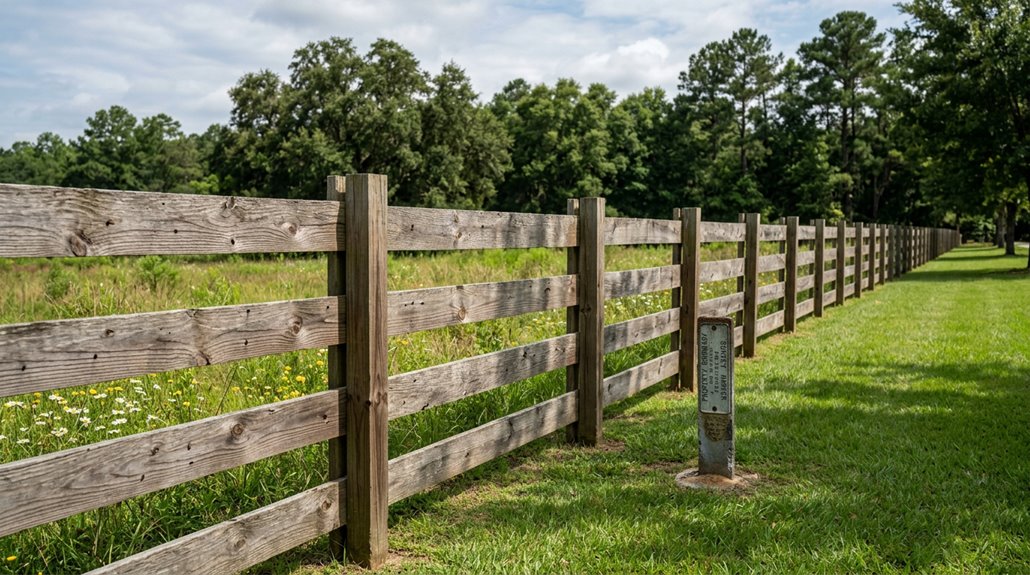
Look, fence setbacks aren’t universal. They’re locked down by your specific zone, and getting this wrong means ripping everything out later. Front yards typically require 4 feet minimum for solid fences, though open fencing can sneak closer in some areas. Side and rear fences are much more flexible, usually 6-8 feet tall. Corner lots demand stricter sightline compliance. Easements, HOAs, and historic overlays can completely change what’s allowed. Before you touch a shovel, call your planning department. Discovering constraints before you start beats discovering them after completion. Your zone’s specific requirements will become clear once you research them thoroughly.
How Far From Your Property Line: Front Setback Rules
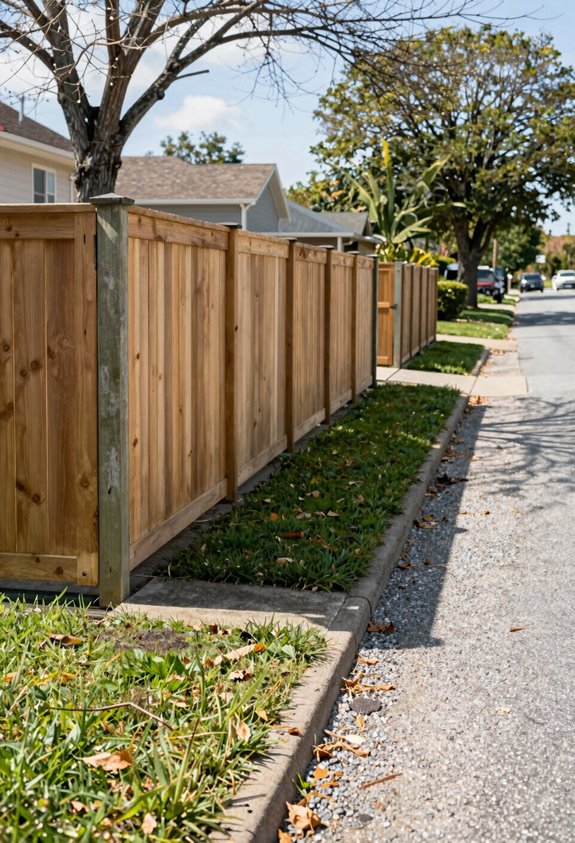
Your front setback is a no-build zone between your property line and the street. This buffer zone keeps neighborhoods looking cohesive and maintains clear sightlines. Local zoning codes control these distances, which vary by location. What works in your town may differ elsewhere.
Most solid fences require significant distance in the front setback, while you have more flexibility in your backyard. Open fences like chain link are subject to less restrictive regulations. Your local zoning rules specify exact measurements, typically calculated from your property line forward. Consult your municipality’s code before beginning any fence installation.
Can You Build Closer in the Front With Open Fencing?
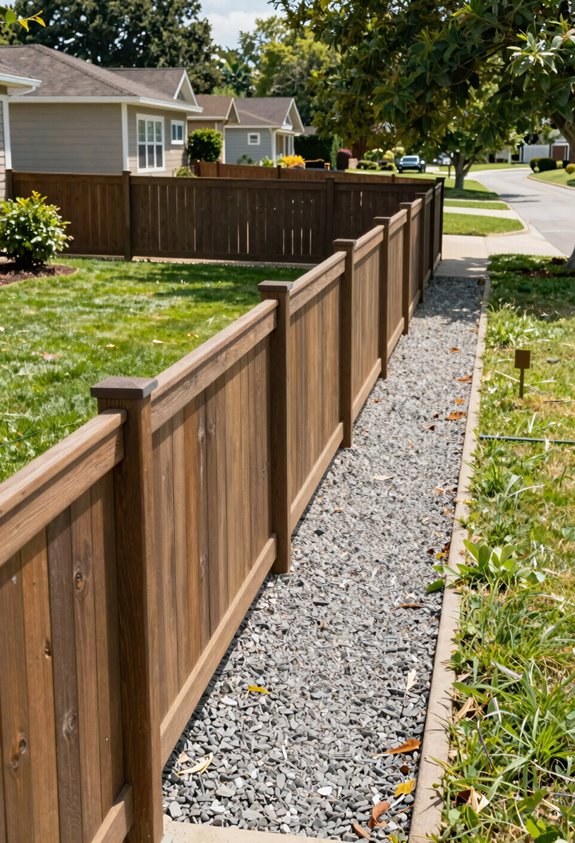
Some jurisdictions allow you to build open fences like chain link or wrought iron closer to your property line than solid fences. This can be beneficial if you’re working with limited space. Height limits for open fencing vary significantly depending on your location. Some areas permit taller open fences in front setbacks because they don’t block sightlines the same way solid barriers do, while others maintain the same four-foot restriction across the board.
Before planning your fence, check your specific city or county rules, especially if you have an HOA or historic overlay on your property. These entities can enforce stricter requirements that may restrict your open fence options.
Open Fence Setback Rules
Because open fences like chain link and wrought iron don’t block sightlines the way solid fences do, you can build them closer to your front property line, which maximizes your yard space. Your open fence setback is typically more lenient than solid fence rules. Some jurisdictions allow open fences up to 72 inches tall within the front setback area. However, visibility zones at street corners may restrict placement, so placement options are not unlimited. Check your local zoning regulations and neighborhood overlay rules to verify these details before construction to avoid violations.
Height Allowances For Open Fences
Open fences do allow greater height flexibility than solid fences. Within the first 10-foot front setback, you can build an open fence up to 72 inches (6 feet) tall, which is double what solid fences allow. Beyond that 10-foot zone, the maximum remains 6 feet. Front yards are capped at 4 feet with no exceptions. Local ordinances can impose stricter restrictions, so verify requirements with your municipality before construction. Corner lots face visibility restrictions as well. Open fences provide more height allowance, but local regulations supersede standard allowances. Check local codes before proceeding.
Height Limits at Different Setback Distances
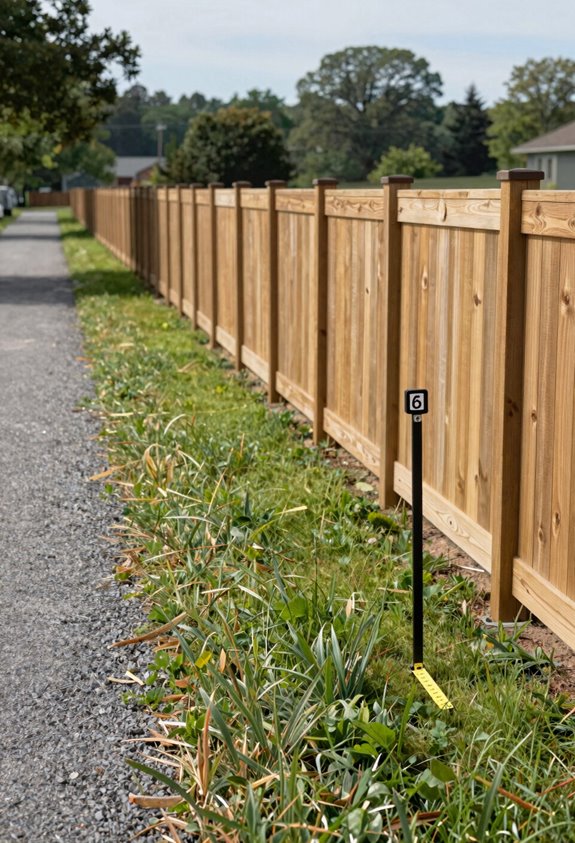
What’s the deal with fence heights changing depending on where you build? The rules are straightforward once you understand them. Your fence height limits shift based on setback distance from your property line. Within your 10-foot front yard setback, you’re limited to 6 feet max for solid fences, your baseline. If you’re building an open fence like chain link, you can push that to 72 inches in the front setback distance. Once you move beyond the front yard setback toward your house, you’re still capped at 6 feet. At the side or rear, you’ve got more flexibility; 8 feet becomes your new ceiling. The regulations function as distinct zones based on property location.
Side and Rear Fences: Fewer Restrictions, More Freedom
When planning a side or rear fence, you have significantly more flexibility than front-yard installations. Most jurisdictions permit side and rear fences up to 6 or 8 feet tall, compared to the 4-foot front-yard limit. You’ll need to verify setback distances from your property line and height caps for back areas to avoid neighbor complaints. Check your local ordinances first, as regulations vary by jurisdiction. While side and rear fences have fewer restrictions, you must still comply with local rules to avoid violations and potential enforcement action.
Setback Requirements For Side Fences
Unlike front fences, which face strict setback rules, side and rear fences offer significantly more flexibility. Most jurisdictions provide relaxed requirements for these fence types. Your local ordinances will specify the exact setback requirements for side fences, and they typically allow more freedom than front-yard restrictions. Some areas permit construction right on the property line if your neighbor consents, though you should verify this locally first.
Even with these relaxed rules, you must respect easements and utilities running through your property. Corner lots present an exception to this flexibility. You will face stricter sightline requirements on corner lots to maintain safe intersections.
Before beginning construction, check your city’s specific codes for setback requirements and any additional restrictions that may apply to your property.
Rear Property Line Considerations
height limits and HOA rules still apply. Check your municipality’s specific requirements first.
| Rear Fence Factor | Front Yard | Rear Yard |
|---|---|---|
| Setback Distance | 15-25 feet | 0-5 feet |
| Height Limit | 3-4 feet | 6-8 feet |
| Permit Required | Usually yes | Often no |
Rear fences come with legal responsibilities. Encroachment or nuisance claims can arise if your rear fence unreasonably blocks light, air, or your neighbor’s property use. Always confirm local requirements before construction.
Height Limitations In Back Areas
Why do back fences get to be the cool, tall siblings while front fences stay short and demure? Back areas offer significantly more freedom for fence construction. Most jurisdictions permit fences up to seven feet tall in rear and side yards, compared to the four-foot limit in front areas.
Back areas provide these key advantages:
- Fence height jumps from four to seven feet in residential zones
- No mandatory property line setback required for rear/side yards
- Commercial properties get eight-foot allowances in some areas
- HOA rules might still apply, but you retain more flexibility
Your backyard functions as the primary zone for fencing without the restrictions that apply to front properties. You can create genuine privacy and protection while remaining compliant with local codes.
Corner Lots: Extra Visibility Requirements Explained
Ever notice how corner lots have their own rulebook? They do. You’ve got a 35-foot visibility zone, which is a clear area protecting sight lines for drivers and pedestrians at intersections. Your fence placement can’t intrude into this zone, regardless of what material you’re using. This requirement is strict.
If your property sits within an Urban Zoning Overlay (UZO), that 35-foot requirement might get waived or changed entirely. The rules shift dramatically depending on local interpretations. You must verify with your local Planning Department before breaking ground. Don’t assume anything. Corner lot visibility compliance takes precedence over standard height and setback rules.
Property Line and Easement Setback Exceptions
While corner lots grab all the attention with their visibility zones, property lines and easements create their own headaches. You cannot build right up to your property line without checking for hidden easements. Utility companies, drainage systems, and future access routes might claim invisible chunks of your land.
- Easements often sit 10-20 feet from property lines, letting sewer or power crews access infrastructure without crossing neighbors’ yards
- Setback requirements typically demand you stay 5-15 feet back, depending on your zone and fence type
- Open fences (chain-link) sometimes allow closer placement than solid structures, giving you more flexibility
- Local zoning codes spell out exact distances with no room for estimation
Before you dig that first post hole, contact your planning department. Discovering an easement mid-construction is far preferable to discovering it after construction is complete.
When Your HOA or Historic District Changes Everything
You’ve checked the zoning codes, measured your setbacks, and you’re ready to build. Then you discover your neighborhood has an HOA or sits in a historic district overlay. Your fence just got significantly more complicated.
HOA rules and historic overlays can demand stricter requirements than your city allows. You might face tighter setbacks, specific materials, or design approval requirements before construction begins. Historic districts care deeply about compatibility with surrounding architecture. You may need architectural review board sign-off or variances you didn’t anticipate. Even if municipal codes give you the green light, your HOA could reject your plans entirely.
This creates a dual approval system with different rule books. Check those CC&Rs and overlay restrictions first, before proceeding with any plans.